
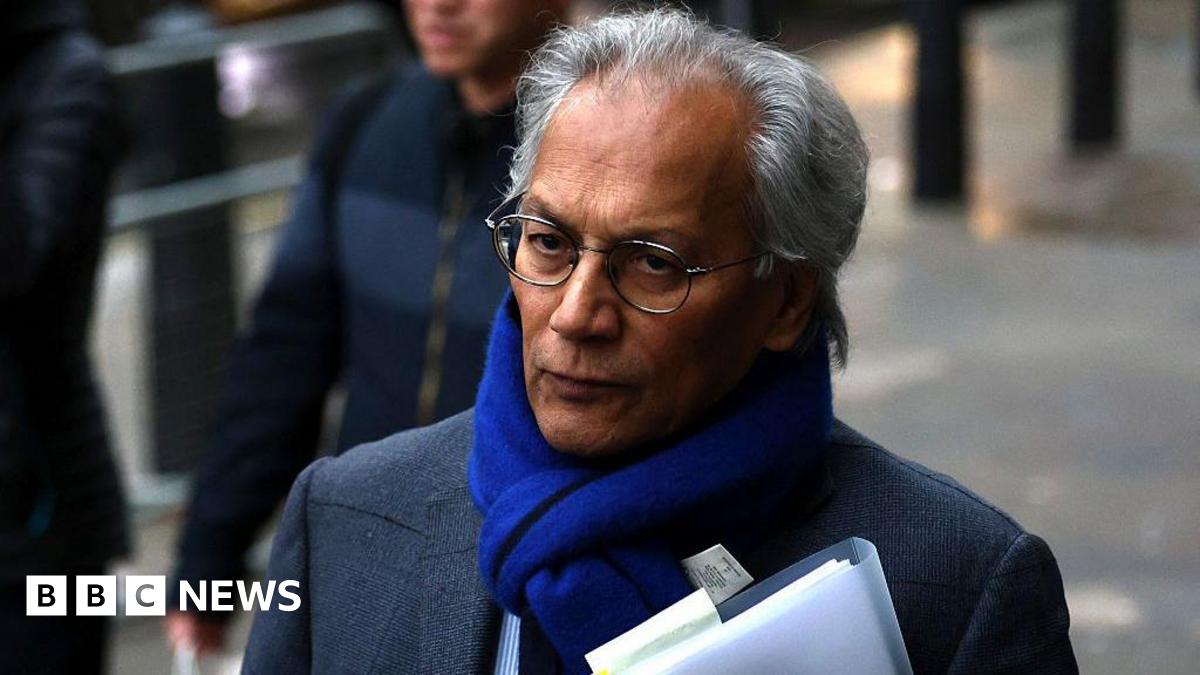
Shah told the committee the search for a new director general had begun, and that he wanted to create a deputy role because the job was “too big for one person”.
He also told the committee the BBC had been too slow to respond to controversy over how Trump’s speech from 6 January 2021 had been edited.
In that speech, Trump said: “We’re going to walk down to the Capitol, and we’re going to cheer on our brave senators and congressmen and women.”
More than 50 minutes later in the speech, he said: “And we fight. We fight like hell.”
In the Panorama programme the clip shows him as saying: “We’re going to walk down to the Capitol… and I’ll be there with you. And we fight. We fight like hell.”
The BBC apologised for the edit after the leaked memo triggered public scrutiny and criticism from the White House more than a year after it had first been broadcast.
The corporation later said it had given “the mistaken impression [Trump] had made a direct call for violent action”, but Shah said on Monday that it had taken too long to do so due to an internal dispute over the wording and nature of the apology.
He told the committee: “It took time to get it right, what the actual apology was for.”
While the BBC has apologised for the edit, it has strongly rejected Trump’s position that he has cause to sue the corporation for defamation, and said it would not pay financial compensation, which the president’s lawyers had demanded.
The leaked memo was authored by Michael Prescott, who previously acted as an external advisor to the BBC on editorial matters.
He claimed there had been “systemic” failings over a range of topics, including claims of bias in how BBC Arabic had covered the Israel-Gaza conflict, and in the BBC’s coverage of trans issues.
Giving evidence to the same committee, Prescott said he believed issues were “getting worse” at the BBC, and that the board was “not taking stuff as seriously as I hoped” – though added that he did not believe the organisation to be “institutionally biased”.
Monday’s hearing also took evidence from other senior figures connected to the BBC. Their evidence included:
Board member Sir Robbie Gibb, a former BBC editor and ex-communications director for Conservative Prime Minister Theresa May, rejected claims he had orchestrated a politically motivated coup against the director general and head of news as “complete nonsense”
Caroline Thomson told MPs that BBC News had argued the Trump edit was “justified” but was not “transparent enough”, while the board felt it was “misleading”
Caroline Daniel, another former external editorial advisor, said there had been “robust debate” on some issues within the BBC, and described the leaked memo as Prescott’s “personal account”
In an email to staff on Monday, Shah said recruiting a new director general, the most senior position in the BBC, to replace Tim Davie would be a “top priority” for him in the coming months.
He said work was under way to assess whether action taken in response to issues raised in the leaked memo was “appropriate” or whether “further action is required”.
Shah also said a review would be carried out into how the BBC’s Editorial Guidelines and Standards Committee operates, in order to ensure it has the necessary powers, represents a “broad range of voices”, and is accountable.
Both Davie and head of news Deborah Turness, who quit within hours of each other in an unprecedented shake-up at the top of the BBC, rejected there was systemic bias in the corporation’s reporting.