
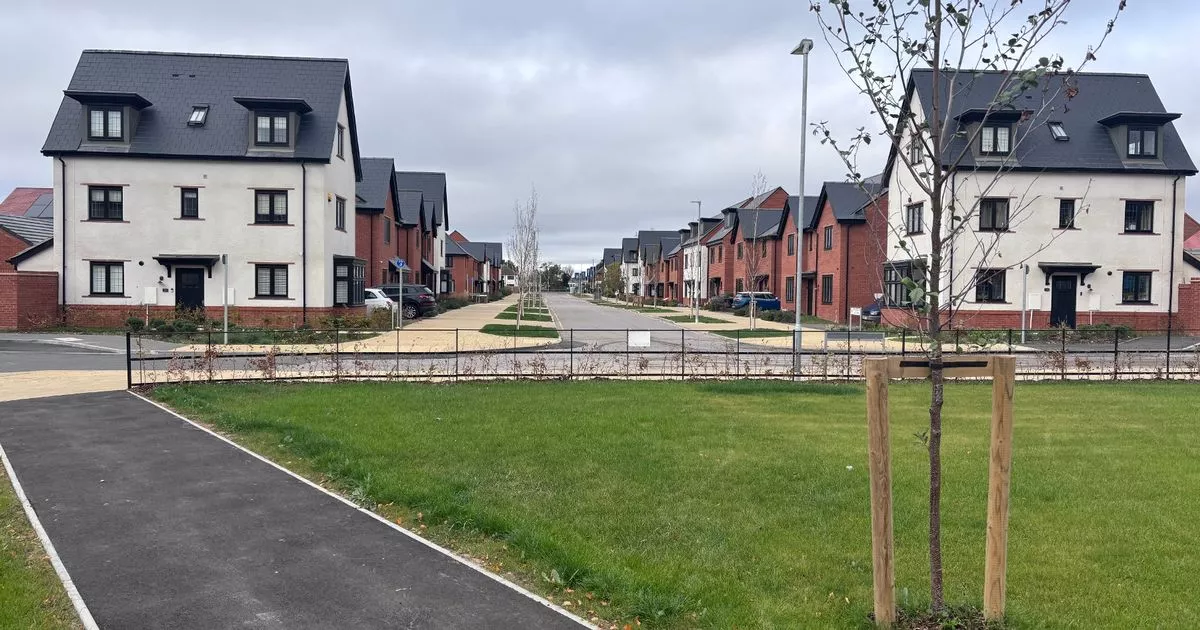
‘I worry it means it will be even harder to get appointments and treatment’ Locals have said they are fed up with the constant disruption caused by the development’s construction(Image: LDRS)
Plans for a “desperately needed” new medical centre, at a 660 home development, have been scrapped – sparking serious fears for the “creaking” health service. The NHS has announced the proposed health centre, planned for the Kings Hill Park estate, off Ashingdon Road, Rochford, is not affordable, despite Bloor Homes contributing more than a quarter of a million pounds.
The housing development has been very controversial, with campaigners fighting the proposals which were agreed at an appeal. Residents and councillors have raised concerns about the medical centre being scrapped.
Amy Browne, 33, said: “I am so shocked about this, it can only be a very bad thing for the town and residents. A medical centre is desperately needed here as our health services are creaking and so stretched due to demand. This can only get much worse with 660 new homes added into the mix too. I worry it means it will be even harder to get appointments and treatment.”
Luke Aldgate, 69, said: “It is so frustrating and it just doesn’t make sense. I can’t get my head around this, how do we even get to this point where plans can be scrapped. It feels like the system for getting new services and infrastructure is just not working. It seems unbelievable. We already have major issues with stretched doctors surgeries and medical centres across Rochford and the nearby towns.”
William Guy, director of primary care at NHS Mid and South Essex said: “While we welcome all investment in local health services, new healthcare facilities require multi-million-pound, multi-year funding commitments that are not affordable within the integrated care board’s current capital limits. It is also important to be clear about what £262,300 funding means in the context of NHS care. This would cover the costs of around 20 to 35 hip replacements in a year. Healthcare is highly complex and resource-intensive, and even modest service improvements require significant and sustained funding.”