
The man who oversaw the hailed redevelopment of King’s Cross railway station has proposed a last-minute alternative design for the controversial redevelopment of Liverpool Street, as heritage bodies call on Network Rail to withdraw an existing application for a much taller building.
The transport body, in partnership with the British architectural firm ACME, has submitted a planning application for an 18-storey office tower that would require the partial demolition of Britain’s busiest railway station, including some listed aspects. It was Network Rail’s second proposal for the site, the first of which was pulled after universal criticism from heritage campaigners, and it received a similar reaction.
Griff Rhys Jones, the TV presenter and president of the Victorian Society, described Network Rail’s decision to push ahead with the demolition of the concourse roof as “perverse”.
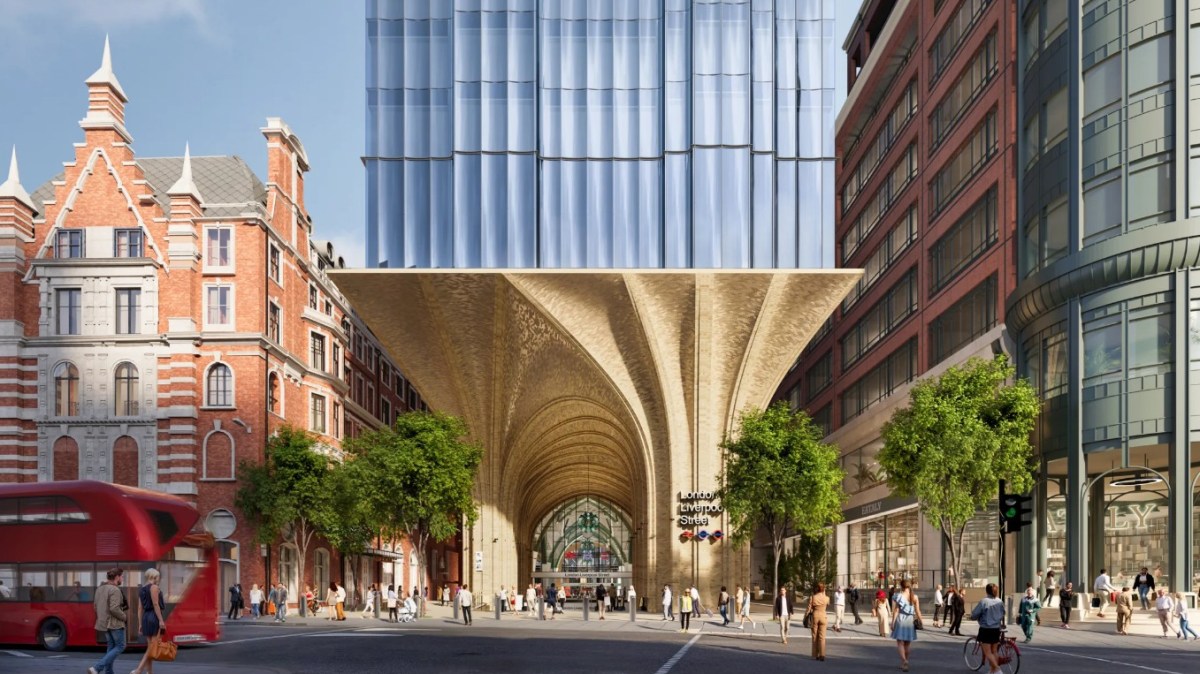
The new proposal would “float” a nine-storey building above the station and train shed, which would be preserved

McAslan’s design from street level
The scheme ran into further trouble when a report commissioned by Network Rail, conducted by JLL, said the £1.2 billion scheme was “not technically viable”.
Heritage campaigners now hope that this third scheme, unveiled on Wednesday by John McAslan & Partners and first reported by the Architects’ Journal, will make Network Rail rethink their approach.
• Your guide to London: read the latest news from the capital here
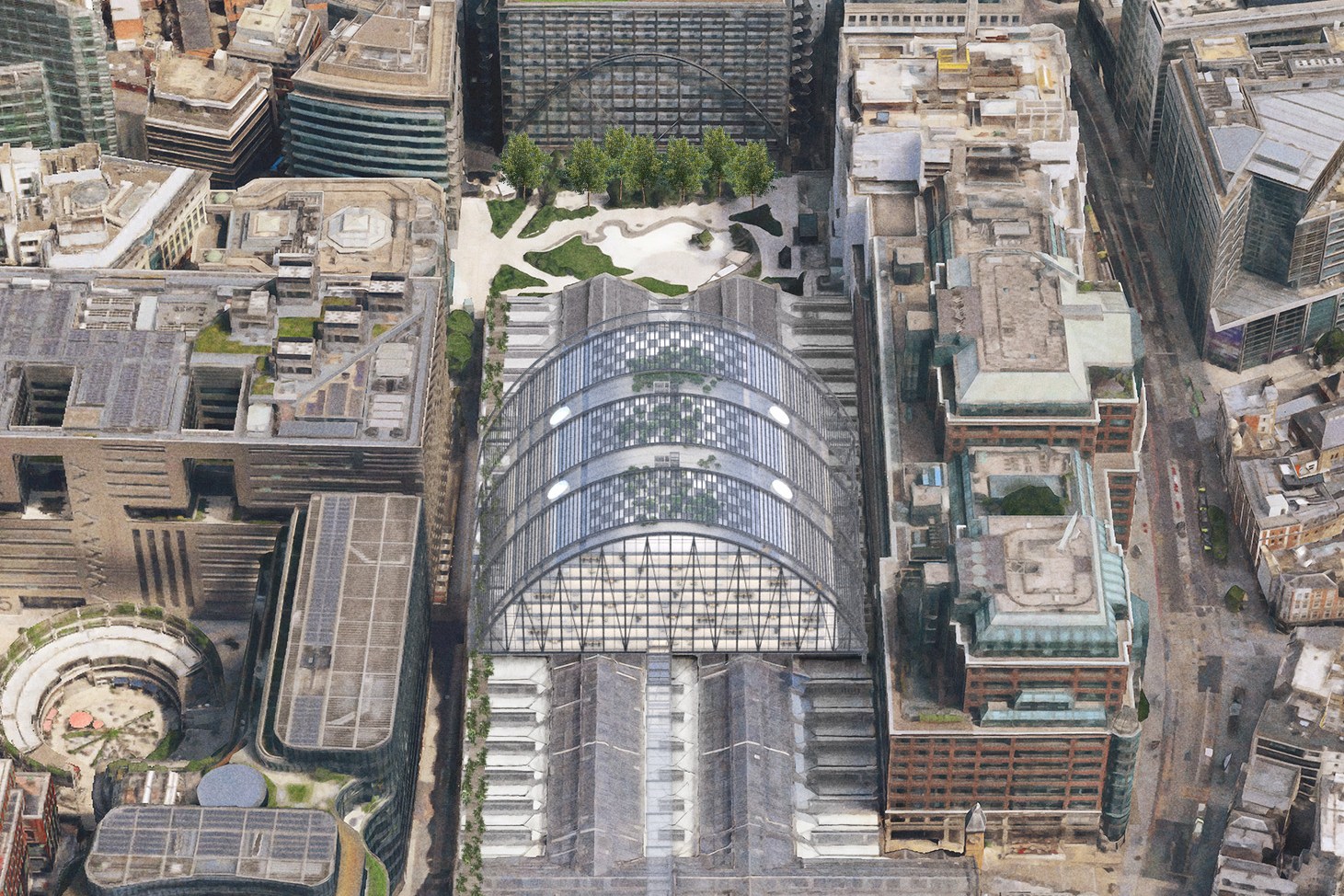
The McAslan plan mirrors the celebrated refurbishment of King’s Cross in reusing rather than demolishing much of the existing railway infrastructure. It envisages a nine-storey development “floating” above the existing station and train shed, keeping almost all of the grade II listed elements in the station.

By “floating” the new building, the existing Victorian structure, below, could be kept

The architect claimed his scheme would cost “half the current £1.2 billion ACME scheme, take up two thirds of the area and take half the time to be delivered” due to more lightweight construction schemes.
“What we want is Network Rail to take notice, to pause the current application, and assess this as an alternative because it’s time to step back a moment and look at something else, with the ACME scheme requiring such destruction.”
• Regen X: the £3 billion making of King’s Cross
The campaign group Save Britain’s Heritage has backed McAslan’s plans and on Tuesday night its director, Henrietta Billings, called them a “fresh and exciting vision”.
She said: “It shows that there are alternative approaches to upgrading this celebrated public building in more sympathetic and imaginative ways that won’t cause years of disruption to commuters.”
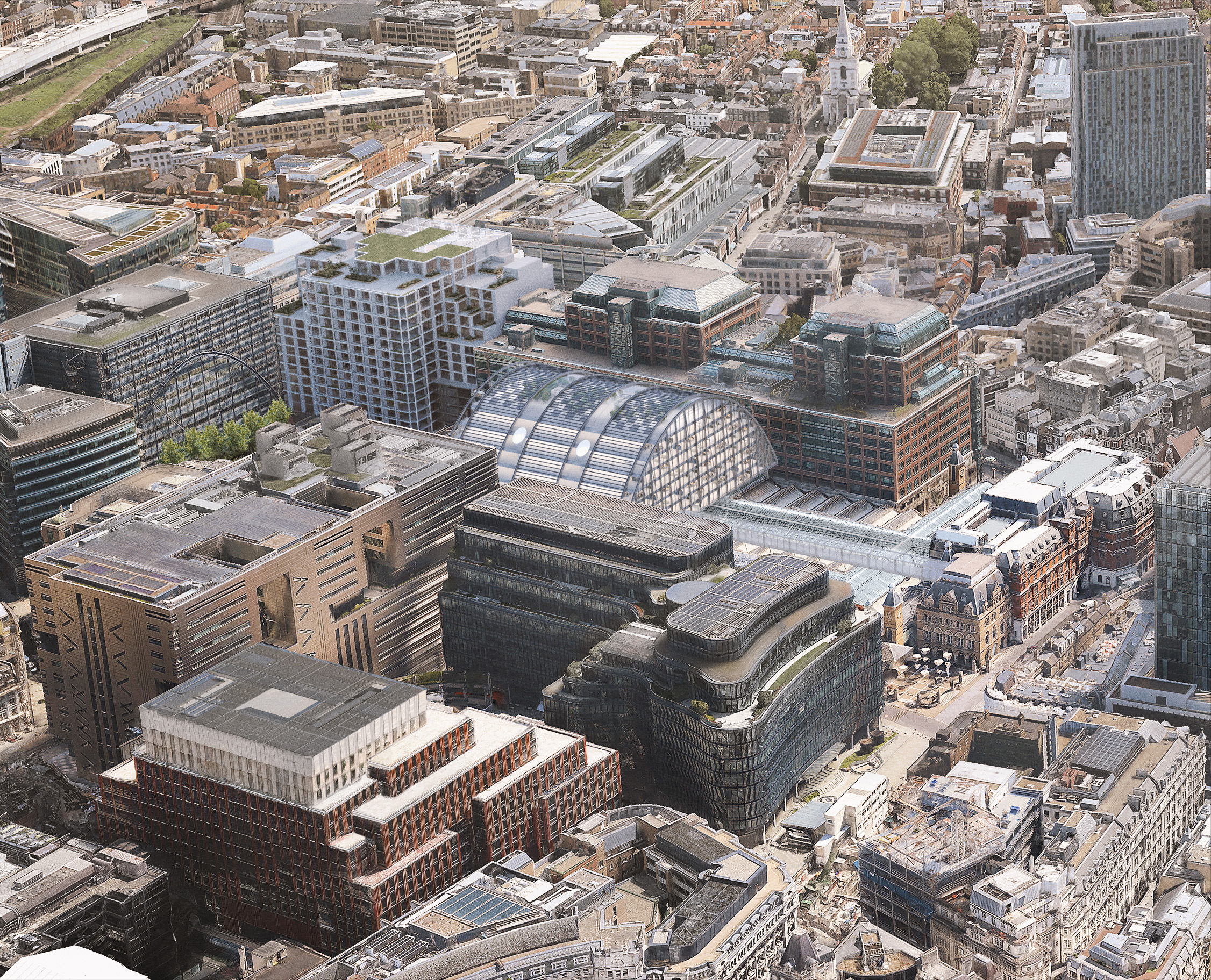
The McAslan design from above
The plans were also backed by Sir Tim Smit, founder of the Eden Project, Catherine Croft, director of the Twentieth Century Society, and James Hughes, director of the Victorian Society.
The key difference is the maintaining of the concourse to the south of the station, towards Old Broad Street, where a Kindertransport statue stands. ACME’s scheme involves effectively demolishing the concourse, although the statue would remain a “prominent focal point”.
The scheme was expected to go before the City of London’s planning committee this year but revisions to the scheme by the developer and architect have pushed the decision back into the new year.
It is understood that Network Rail have seen McAslan’s proposals.

Proposed walkways within the McAslan design
McAslan’s redevelopment of King’s Cross, which was completed in 2013, has won more than 30 international design awards. The firm has since been contracted to deliver transport stations across the world, including Sydney’s Central railway station, which also went on to win merit awards.
• King’s Cross 20 years on: what next for London’s best redevelopment?
ACME said their scheme would enable the station to serve more than 200 million passengers a year, boosting London’s economy and establishing “a landmark gateway to the City of London”.
The firm says on its website: “The recently submitted plans will turn Liverpool Street station into a destination in its own right with a new retail, leisure and workspace offer. The transformed station will improve connections to the wider City and public spaces, and provide a catalyst to deliver the City of London’s plans to secure long-term economic growth, prosperity and opportunity for London and beyond.”
Network Rail said it had conducted a thorough review of all development options, adding: “The JMP alternative scheme closely mirrors one of the many options we explored in detail and included in the planning application — and concluded it was undeliverable.
“We commissioned an independent team to review the JMP proposal to ensure no areas or options were overlooked or discounted. They endorsed our findings: building over the Victorian train shed is undeliverable due to structural complexity, the need for prolonged station closures, and securing the necessary funding required. The JMP scheme also proposes building on land outside Network Rail’s ownership and building on the original Victorian train shed it claims to protect.”