
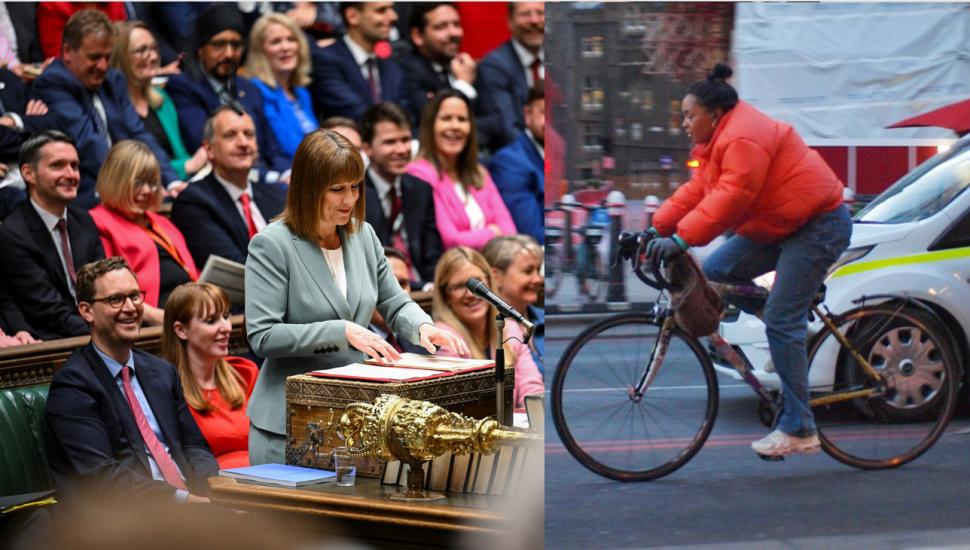
The Cycle to Work scheme has been left unaffected by the Chancellor’s Budget despite reports suggesting a spending cap would be introduced, as confirmed by a Treasury spokesperson in an email to road.cc.
Government sources had briefed the Financial Times leading up to the announcement that there would be a clampdown on “tax breaks for high earners riding £4,000 e-bikes in the Surrey Hills”. But no mention of the scheme was made in either the chancellor’s speech, or the report from the Office for Budget Responsibility (OBR), a Treasury-funded fiscal watchdog that leaked details of the Budget before Reeves made her announcement. It later apologised and said the report was released early due to “a technical error”.
Following a request for comment, the Treasury confirmed to road.cc that there was “nothing announced on Cycle to Work at the Budget” and no policy change to be made.
Reacting this afternoon, Steve Edgell, Managing Director of Cycle Solutions and Chair of the Cycle to Work Alliance told road.cc he is “happy” there are “no changes” being made to the scheme.
“Following speculation, we are happy to confirm no changes to the Cycle to Work Scheme have been announced in the Chancellor’s Budget this afternoon,” he commented.
Cycling UK’s Director of External Affairs Sarah McMonagle told us that, while “the picture for walking and cycling investment in today’s Budget is still unclear”, it is “reassuring to hear the Chancellor call infrastructure the backbone of economic growth”.
“Cycling and active travel investment comes at little cost to the taxpayer and can be built more quickly than other forms of transport infrastructure,” she commented. “If the government is serious about boosting the UK economy, we need greater investment in walking and cycling, putting more power in the hands of local leaders to unlock regional growth and giving us all more freedom to travel.
“For every £1 spent on cycling and walking schemes in the UK, nearly £6 back in benefits. From better public health to more people shopping on the high-street, investment in cycling and walking carries huge potential to revitalise communities across the country.
“There’s still time to unlock this potential, and we impress upon the government the benefits of a long-term, integrated approach to active travel that better connects and strengthens our communities.”
The Cycle to Work scheme enables people to buy a bike and cycling accessories through salary sacrifice, offering savings of up to 42 per cent on a full price bike for higher rate taxpayers and 30 per cent for lower earners.
Employees effectively ‘loan’ a bike from their employer tax-free, initially for a year. That loan can then be extended, with employees able to eventually buy the bike at a nominal price, calculated based on the bike’s depreciated value.
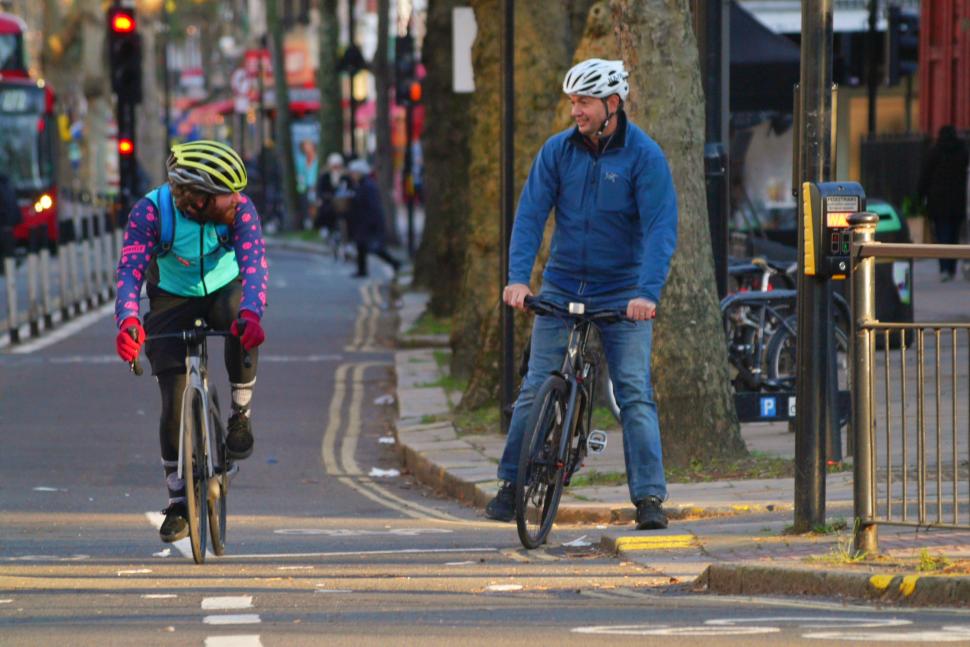 Cyclists in London talking in cycle lane (credit: Simon MacMichael)
The scheme was initially introduced in 1999 by Tony Blair’s Labour Government, when Gordon Brown was chancellor. Whilst the purchase scheme was initially capped at £1000, that cap was lifted by the Conservatives in 2019 to encourage the use and purchase of e-bikes and cargo bikes, typically more expensive than their standard counterparts, to “help tackle congestion, speed up commutes, and cut travel costs”, and to encourage families to commute by bike. News of the rumoured cap to the scheme was met with criticism from industry insiders and charities.
It was initially unclear whether the announcement of a cap had only been postponed to a later date, or delegated to a junior minister. News of Cycle to Work’s expansion in 2019 was announced by the Department for Transport and the then Minister for Cycling. However, confirmation arrived this afternoon that the spending cap proposal has been shelved.
Earlier today, insurance company YuLife suggested that “the proposed cap on Cycle-to-Work tax benefits could disproportionately affect younger workers, the same group with the lowest, least stable activity levels”. YuLife CEO Sammy Rubin added that “data shows that younger workers are cycling the least and are far more sensitive to cost. Any change that increases the financial barrier to entry risks deterring the workers who would benefit most.”
However, the Cycle to Work scheme has been criticised in the past. In March, the All-Party Parliamentary Group for Cycling and Walking (APPGCW) released a report calling for “urgent reform”, saying the scheme unfairly excluded low-income employees and freelance workers, whilst reinforcing “wide [economic] disparities”. Bike shops had also previously told the APPGCW of the business difficulties that the scheme was causing. The scheme has also been criticised on the political right.