
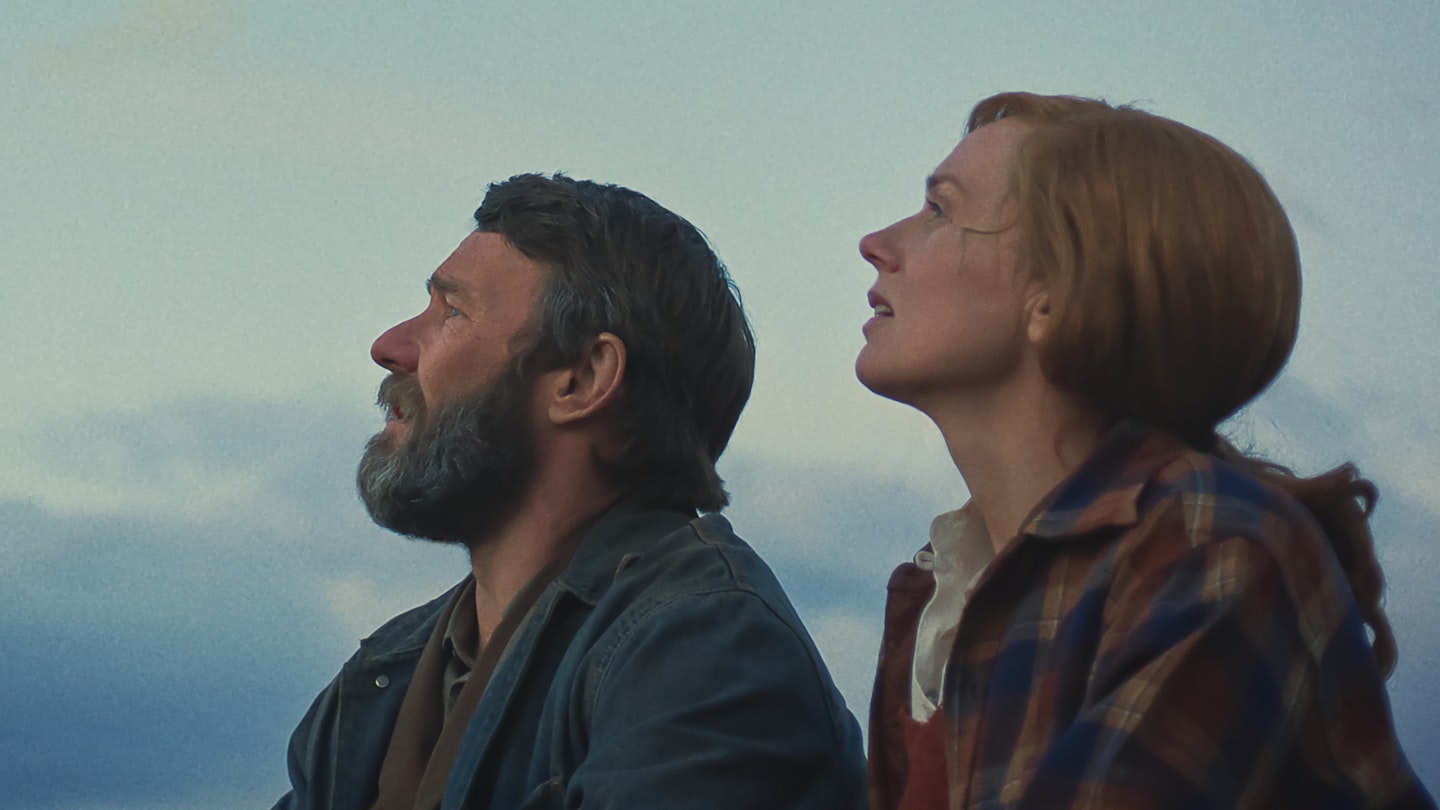
The life and times of Robert Grainier (Joel Edgerton), a gentle man who makes a living logging in early-20th-century Washington State, searching for meaning in his life.
Here is a true hidden gem of a film, a meditative tone poem on what it means to live a good life. It is directed by Clint Bentley, and written by Bentley and Greg Kwedar, the creative team behind 2023’s similarly impressive and emotionally resonant Sing Sing. This effort, based on the novella by Denis Johnson, plays a little like a full-life novel, a Stoner or an East Of Eden, with thoughtful narration delivered by Will Patton reinforcing this notion.
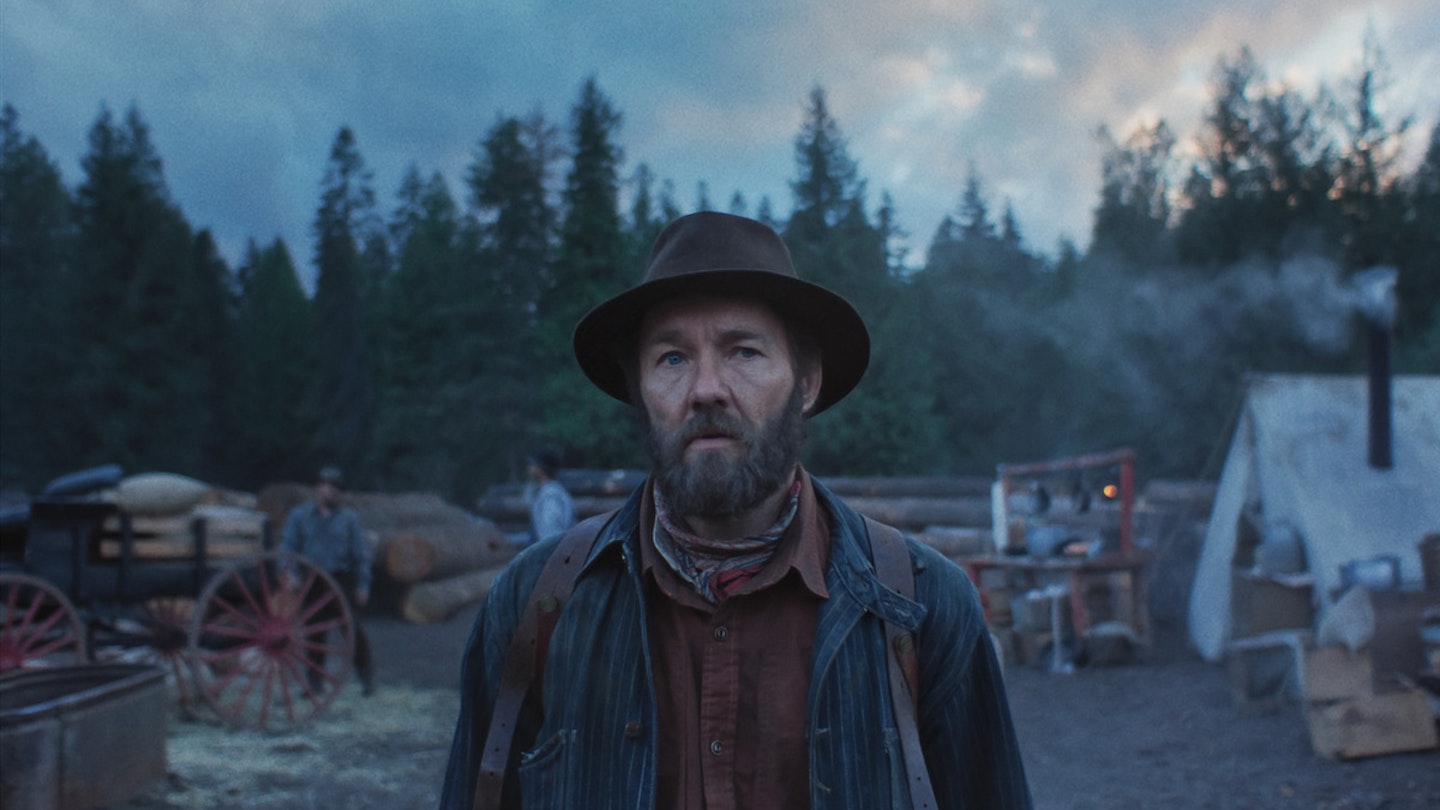
Joel Edgerton’s Robert Grainier is the strong, silent type: a placid, contemplative man, possessing sad, soulful eyes, his expression largely masked by a thick beard. As the narration tells us, he enters the world quietly and inconsequentially as an orphan who never knew his parents. As a young man, he soon finds work as a logger and train construction-worker in the Pacific Northwest, as the 20th century dawns and America’s hunger for expansion becomes unquenchable.
The film was shot on location in real-life Washington, Bentley filming it all with golden and pink sunsets, grainy cinematography and rich silhouettes. Comparisons to the likes of Terrence Malick or Chloé Zhao are hard to escape, especially with its dreamy existential yearning, quasi-divine spirit and juxtaposition of human and nature.
There is not much of a propulsive narrative here. Grainier simply works his way through life, trying to earn an honest living and picking up wisdom along the way. William H. Macy has a great turn as Arn Peeples, a harmonica-playing old-timer with prospector accent and a propensity for explosives. Grainier finds a kindred spirit in him, someone also grappling with the mystery of the human condition. “If I could figure it out,” Peeples tells Grainier, “I reckon I’d be sleeping next to someone a lot better-looking than you.” Later, Peeples worries about the impact of logging as a profession, in its ungracious destruction of centuries-old living things: “It upsets a man’s soul.”
Throughout, Grainier softly searches for great revelations and connections like these. He finds it most of all in his wife Gladys (an excellent Felicity Jones) and daughter Katie (Zoe Rose Short). Their love is simple, but motivates Grainier’s fear of death, in a job with a short life-expectancy. It is not an irrational fear: one man on his team is thrown off a bridge, in a seeming racially motivated attack, which haunts Grainier; another is shot in revenge; three more die in a tree-felling accident. The tragedies he experiences in life might feel a little over-egged, with maybe one too many emotional montages of precious memories, and you can’t help feeling like Gladys might have been a bit short-changed in all of this.
But it leaves you on a powerfully bittersweet note, especially as we watch Grainier grow old, and the wild country around him grow rich and modern, with Edgerton’s gentle gaze finding new depths as the film goes on. It’s his understated performance that takes you the rest of the way.
Haunting, serenely composed and beautiful, this is an elegy for a life and a country that America used to be.