
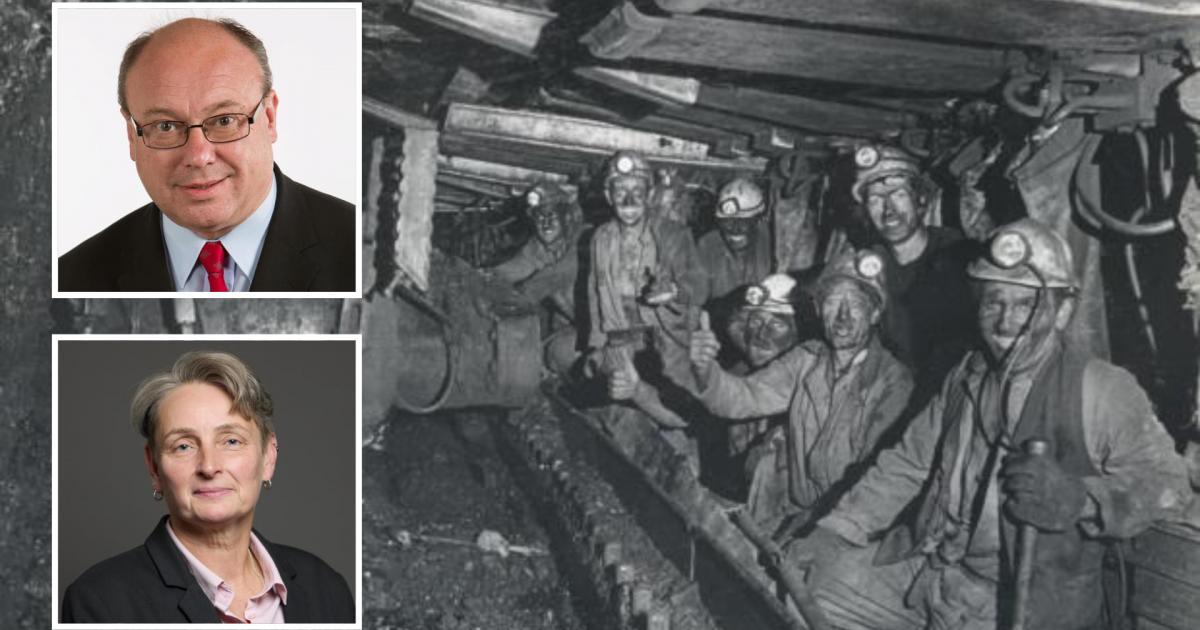
During Wednesday’s Budget Rachel Reeves announced the government will return the £2.3bn investment reserve held within the British Coal Staff Superannuation Scheme (BCSSS) back to its members.
The last deep mine in the Durham coalfield closed in 1993 (Image: SUBMIT)
The move follows sustained pressure from MPs who argued former pit staff had been unfairly denied money that was rightfully theirs.
The Chancellor told the Commons: “I will transfer the investment reserve fund of the BCSSS to its members so that the men and women who worked in our coal industry get a fair deal in their retirement too.”
In the North East hundreds of retired mineworkers and their families are expected to benefit.
Easington MP Grahame Morris, chair of the Labour group of coalfield MPs, said the decision marks “a hard-won victory for all in the coal industry.”
Grahame Morris MP (Image: PARLIAMENT)
He added that 738 BCSSS pensioners in his Easington constituency alone will now receive a “significant uplift” to their pensions.
“Thank you to the campaigners, constituents, and coalfield MPs who have worked relentlessly over the last year as we lobbied for the return of the British Coal Staff Superannuation Scheme £2.3bn Investment Reserve,” said Mr Morris.
“Everyone who worked in the coal industry deserves to see this long-standing injustice finally put right.”
Kate Osborne, MP for Jarrow and Gateshead East, welcomed the announcement as a major step in correcting a historic injustice.
Kate Osbourne MP (Image: PARLIAMENT)
She said 120 pensioners in her constituency will benefit.
“These achievements are never easy wins,” she said.
“They are hard-fought gains made possible only through the tireless dedication of thousands of people working together toward a shared goal.”
The BCSSS, created in 1947, covers around 40,000 former coal industry staff, including many widows of miners.
After the coal industry was privatised in 1994, the government became the scheme’s guarantor and was entitled to half of its surpluses.
Between 1995 and 2015, the government received £3.1bn from the scheme.
Although the agreement ended in 2015, another £1.87bn payment was due in 2023.
Coalfield MPs have argued for years that the reserves should instead be redistributed to pensioners, many of whom live in former mining communities still facing economic hardship.