
The local campaign group Save Wimbledon Park (SWP) has been given the go-ahead to take the case in the Court of Appeal having lost its legal action against the Greater London Authority (GLA) in the High Court in July.
The campaigners had brought a judicial review action against the GLA’s approval in September 2024 of the contentious £200 million scheme. The GLA had taken the decision out of the hands of two local councils after they reached a deadlock on the application.
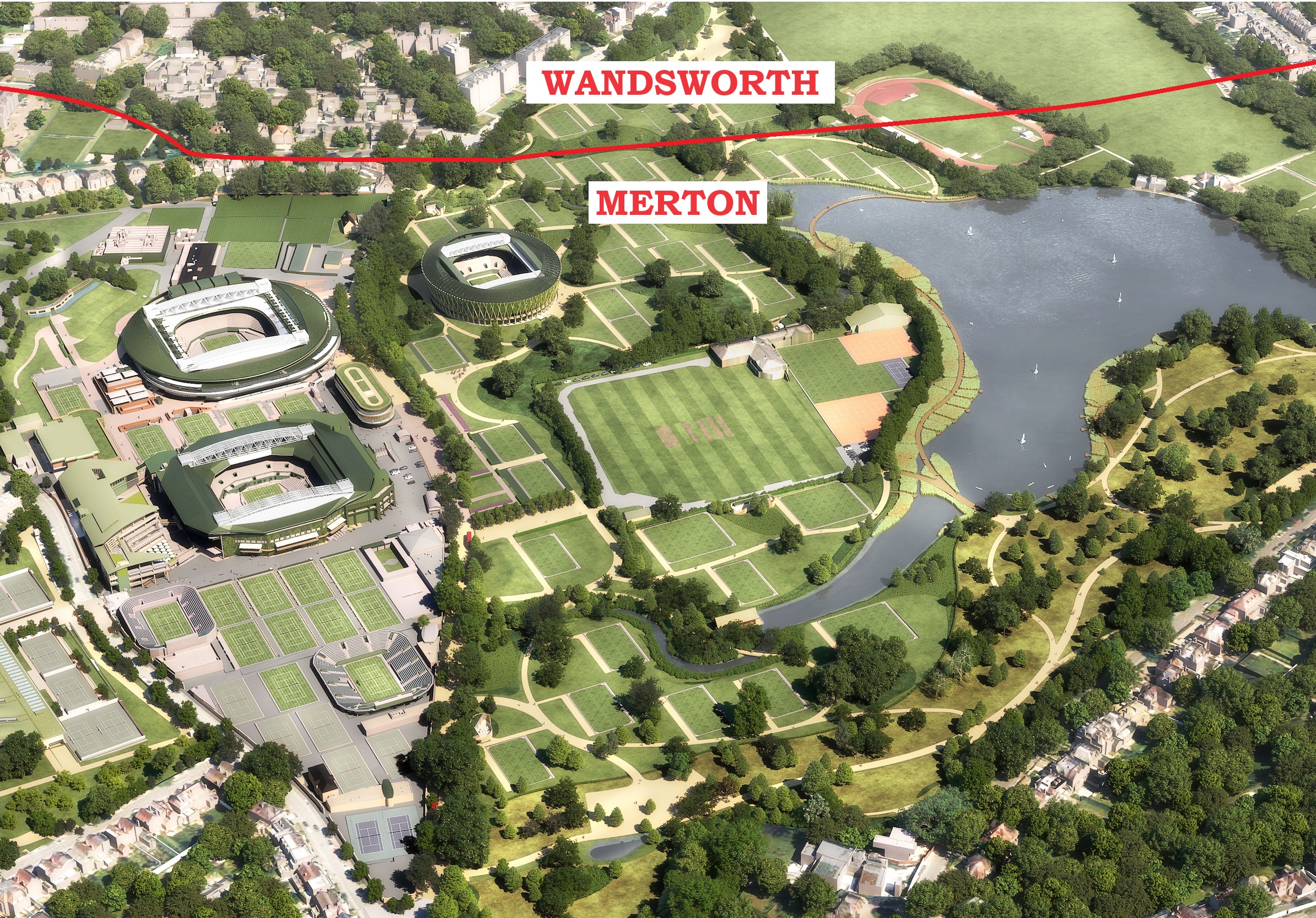
The site straddles the two south-west London boroughs, but while Merton Council approved the scheme in October 2023, Wandsworth Council refused it the following month, citing ‘inappropriate development’.
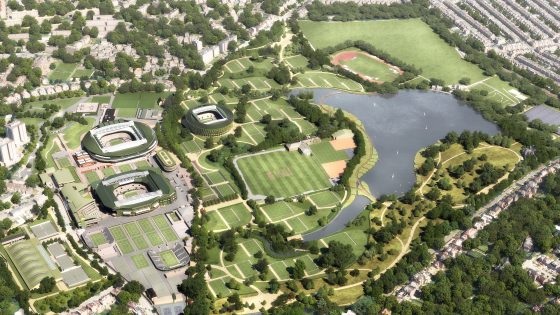
The All England Lawn Tennis Club’s redevelopment scheme triples the size of the famous London tennis club, creating 39 new grass courts on the site of a golf course across a road from the club’s grounds.
According to BBC News, SWP described its efforts to stop the expansion as a ‘David and Goliath struggle’, and said that it was ‘delighted’ to be allowed to take the case to the Court of Appeal, showing that ‘the community and SWP can’t be steam-rollered’.
The earmarked land is a Grade II*-listed Registered Park and Garden (RPG) landscaped by Capability Brown in the 18th century. The 29.5ha of green space is designated as Metropolitan Open Land, which gives it the same protection as green belt, and the scheme was rejected by one of the two borough councils required to give consent.
During the hearing in July, SWP warned of the loss of green space and years of disruption in the area, branding the GLA’s support ‘irrational’.
It also questioned the legality of the GLA’s approval. The group believes the tennis club, which bought the golf course from Merton Council for £5.2 million in 1993, has broken a pledge or covenant agreeing not to use the land other than for leisure, recreational purposes or as open space.
After the ruling by the High Court judge, SWP said that the judge had taken ‘insufficient account of the statutory trust and the restrictive covenants’.
A separate High Court case is underway on the question of whether a legally binding pledge existed at the time of the tennis club’s purchase, with a hearing set for January 2026.
Following the decision to allow an appeal, a GLA spokesperson said: ‘The mayor believes this scheme will bring a significant range of benefits, including environmental, economic, social and cultural benefits to the local area, the wider capital and the UK economy.
‘It will create new jobs, public green spaces and cement Wimbledon’s reputation as the greatest tennis competition in the world.’
The All England Lawn Tennis Club responded to the prospect of an appeal, saying: ‘Following the High Court’s dismissal on all grounds of the recent Judicial Review, we are confident that the Court of Appeal will ultimately judge that the High Court made the correct decision in upholding the GLA’s grant of planning permission for a development that will enable us to deliver one of the greatest sporting transformations since the 2012 Olympic and Paralympic Games.
‘Our plans will create a permanent home for the Wimbledon Qualifying Competition but crucially they also deliver 27 acres of beautiful new parkland for local people to enjoy, providing the public access to green space that has been used as a private members golf club for more than 100 years.’
‘We have spoken to more than 10,000 people who have taken the time to come in person and understand our plans in detail. The vast majority of people just want us to get on and deliver the many benefits on offer as soon as possible.’
According to The Times, counsel Sasha White, acting for SWP, said in written submissions the land was subject to a ‘statutory trust requiring it to be kept available for public recreation use’ and when the club acquired the land it entered into ‘restrictive covenants’ governing its use.
In July’s hearing, White said: ‘You could not have a more protected piece of land within the planning system, frankly.’
The GLA and the All England Lawn Tennis Club defended the challenge. Their barrister told the court that the GLA decision was a ‘planning judgment properly exercised’ and that the restrictions were not ‘material’.
In a 31-page ruling, Mr Justice Saini agreed, saying the authority had ‘properly considered the implications of the development on public open space’.
He added: ‘In short, the defendant’s decision on the relevance of deliverability, applying to both the statutory trust and the restrictive covenants, was a planning judgment rationally exercised and having regard to appropriate and relevant factors.’
Allies and Morrison’s scheme includes a new landmark 8,000-seat Wimbledon show court and 38 other grass tennis courts with associated temporary seating and players’ facilities.
It will open up 11.1ha of public parkland in Wimbledon Park and restore the Serpentine Lake.
The proposal was granted permission by the London mayor’s office late last year during a public hearing at City Hall, despite hundreds of objections and a petition signed by more than 21,000 people. The GLA said ‘very special circumstances’ justified the development.
Allies and Morrison has been contacted for comment.
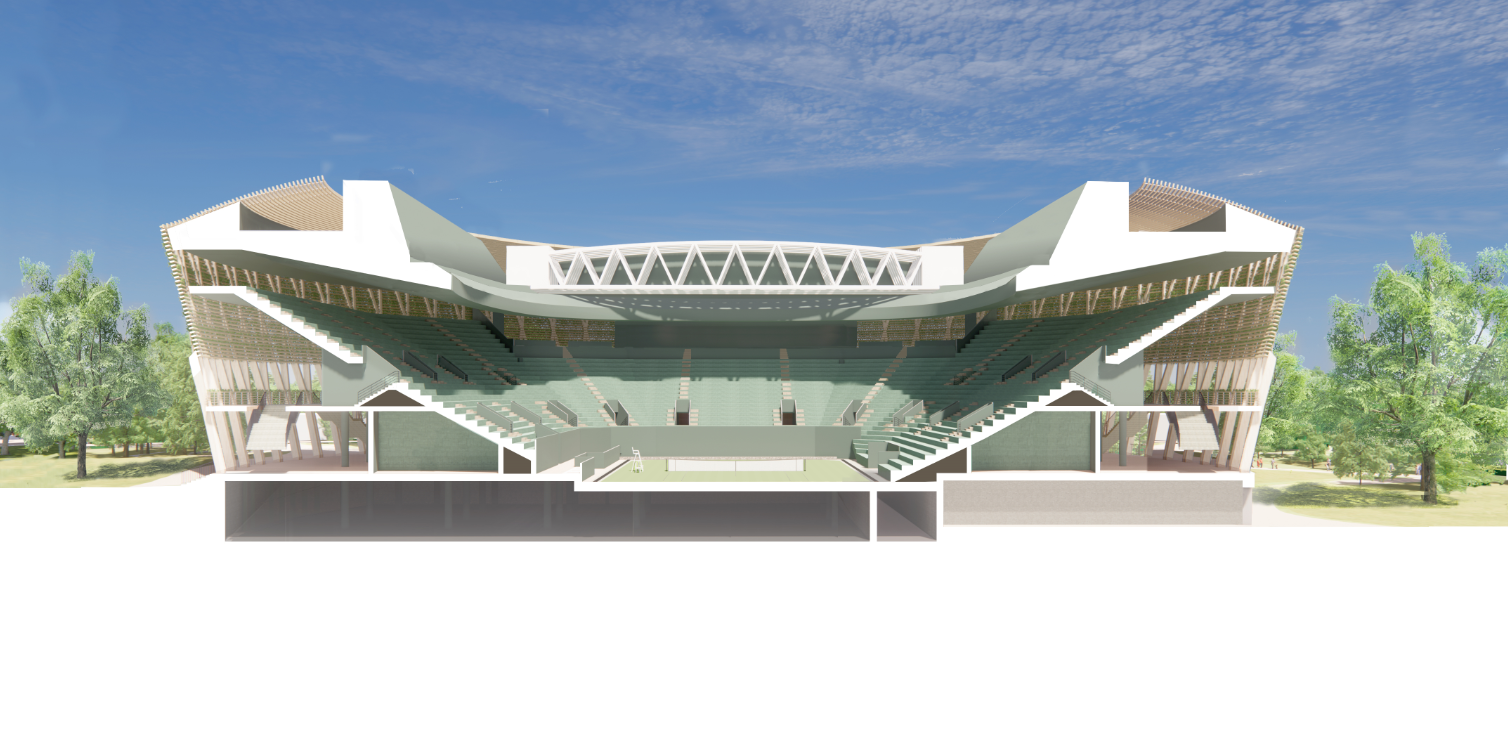
Show court – section.