
Labour backtracked on its plans to introduce a spending cap on purchases made as part of the Cycle to Work scheme just two weeks before the Autumn Budget, after concluding that the potential political fall-out to the proposed changes “wouldn’t be worth the revenue”, a senior government source has claimed.
Meanwhile, the Association of Cycle Traders, representing independent bike shops across the UK, has praised the U-turn, describing it as “common sense prevailing” and arguing that any cap would have “slammed the door on exactly the people we should be helping”.
However, the group also warned that the Budget’s business rates reforms fell short of promises previously made by the government and that the delayed closure of the low-value import duty loophole will force bike shops in the UK to “endure another four years of unfair competition”.
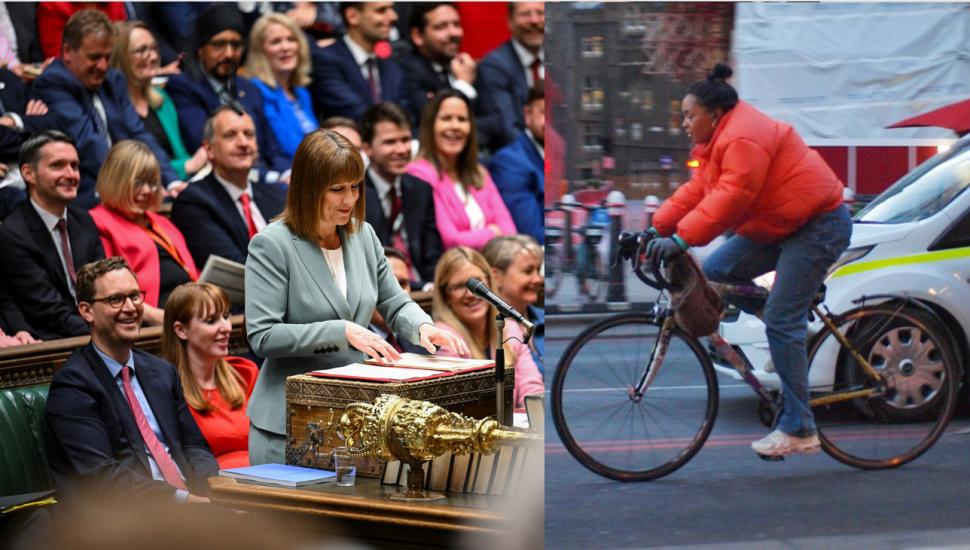
Earlier this month, the Financial Times reported that Chancellor of the Exchequer Rachel Reeves was planning to limit how much users of the Cycle to Work scheme can spend on bikes and other cycling equipment as part of the government’s Autumn Budget.
Introduced in 1999 by Tony Blair’s Labour administration, the UK government’s Cycle to Work employee benefit scheme offers a tax-friendly initiative which enables people to buy a bike and cycling accessories through salary sacrifice.
In 2019, the Conservative government announced a revamp of the Cycle to Work scheme, making it easier for bikes worth over £1,000 to be purchased using the initiative. This formed part of a drive to increase the use of e-bikes and cargo bikes, typically more expensive than their standard counterparts, to “help tackle congestion, speed up commutes, and cut travel costs”, and to encourage families to commute by bike.
But according to the report in the FT earlier this month, Labour ministers believe that this decision to lift the cap was not the best use of public funds, with one source concluding that “taxpayers shouldn’t be footing the bill for luxury leisure”.
“Cycle to Work should be about helping ordinary commuters switch to greener travel, not giving tax breaks to high earners buying £4,000 e-bikes for weekend rides in the Surrey Hills,” the government source reportedly said, though no details were provided about what that cap would entail.
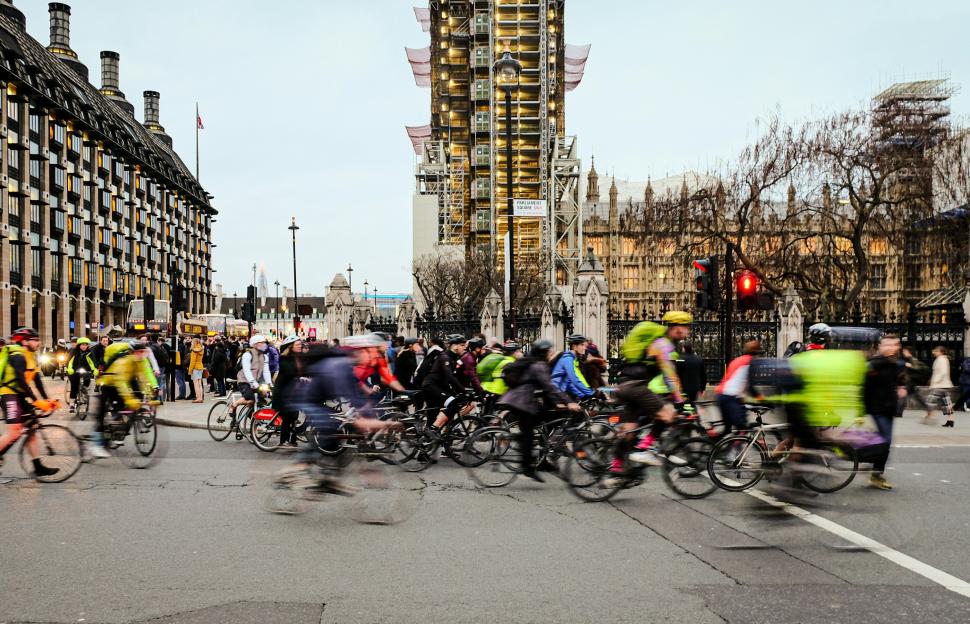 London cyclists (credit: Ayad Hendy via Unsplash)
However, when the Autumn Budget was unveiled by the Chancellor on Wednesday, there was no mention of the Cycle to Work scheme or its spending cap. Later that afternoon, the Treasury confirmed to road.cc that there was “nothing announced on Cycle to Work at the Budget” and no policy change was set to be made.
The apparent U-turn was praised by the Cycle to Work Alliance, a group representing the scheme’s five largest providers, with chair and retailer Steve Edgell saying he was “happy” that no changes had been made and that he will continue to “work closely with government to ensure the scheme remains one of the most popular and successful workplace initiatives”.
So what happened to Labour’s reported attempt to reintroduce a Cycling to Work spending cap?
On Thursday morning, the Financial Times reported that a government source – seemingly the same figure who leaked the plans in the first place – has claimed that the Chancellor had been planning to forge ahead with the proposals as recently as two weeks ago.
However, the source said that officials had since “recalibrated their calculations” for how much money the raid would raise.
“In the end it wasn’t worth the revenue,” he told the FT.
To underline the negligible impact overhauling the scheme would have had on the government’s coffers, the total cost of running Cycle to Work in the 2024-25 financial year was £130m.
“I think the whole fiddling around the edges and creating a lot of noise over something that would have had very little effect was slightly bananas,” Will Pearson, a director of high-end bike manufacturer Pearson Cycles, told the Financial Times.
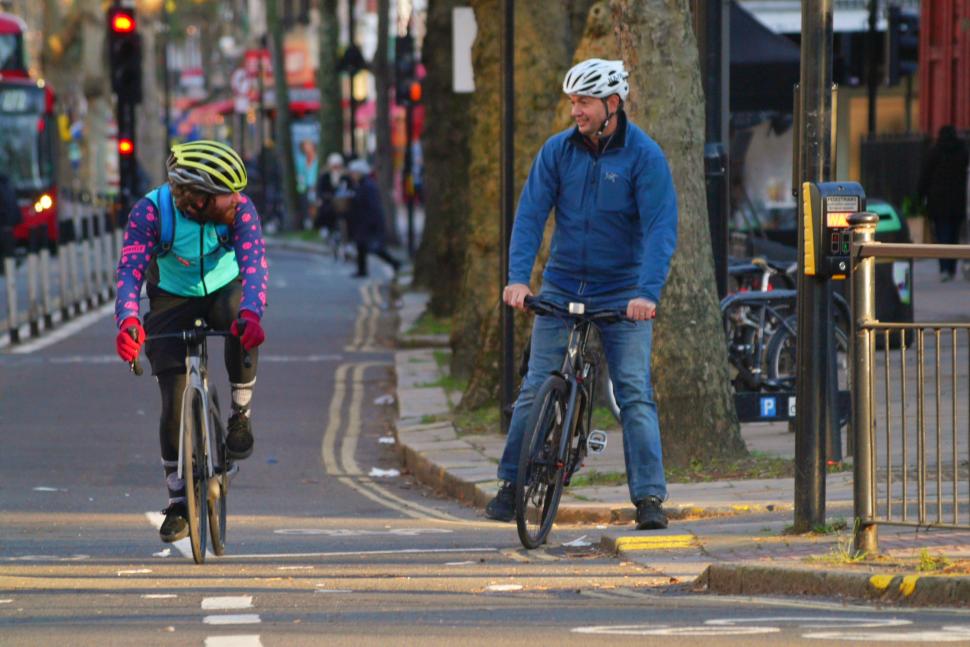 Cyclists in London talking in cycle lane (credit: Simon MacMichael)
Meanwhile, the Association of Cycle Traders (ACT), which represents 4,000 independent bike shops in the UK, praised the last-ditch decision to scrap the policy change, and said that rumours of a new £1,000 limit on the scheme had caused unnecessary uncertainty for both retailers and employees.
“The Cycle to Work scheme is a lifeline for thousands of workers who want to swap the car for the bike, and for the independent retailers who help them do it,” the ACT’s director Jonathan Harrison said in a statement.
“Reimposing a cap would have been a backwards step at exactly the time we need to be encouraging cleaner, healthier travel. We’re relieved the Chancellor has listened to the evidence and left the scheme alone.”
Harrison argued that a cap would have particularly harmed families seeking to purchase e-cargo bikes as an alternative to car journeys, as well as older cyclists reliant on e-bikes for longer commutes, and disabled employees requiring specially adapted cycles.
“E-bikes and cargo bikes cost more, but they’re the tools that make cycling practical for people who couldn’t otherwise manage it,” he said.
“A cap would have slammed the door on exactly the people we should be helping.”
Nevertheless, the association – which has in the past been critical of how the Cycle to Work scheme is administered and its impact on independent retailers – also pointed out that the initiative is in need of reform in a number of areas, including high commission rates charged to retailers, the “restrictive” commute-to-work element, and access for those on minimum wage.
Away from Cycle to Work, the ACT also welcomed wider Budget measures affecting independent cycle retailers, including permanent business rates relief for retail, hospitality, and leisure properties.
However, Harrison said that he is disappointed at the decision to delay the closure of the low-value import duty loophole.
“Independent bike shops have been hammered by business rates for years while online giants operate from warehouses on a fraction of the cost,” he said.
“Permanently lower multipliers for high street retail is exactly the reform we’ve been calling for. However, waiting until 2029 to close the import duty loophole is far too long. The USA closed their loophole in six months and Europe is acting next year. Why should UK bike shops endure another four years of unfair competition from overseas sellers dodging duties and safety standards?”
And Andrew Goodacre, the CEO of Bira independent retailers group, of which ACT is a part, also warned that the Budget’s business rates reforms fell short of promises previously made by Labour, leading to a “perfect storm of cost pressures” for bike shops and other retailers.
“The original proposals talked about reducing multipliers by up to 20p for smaller properties,” Goodacre said.
“What we’ve actually got is a 5p reduction. The government has missed a real opportunity to tackle an unfair tax. Despite claims of support, many independent retailers will face bill increases of up to 30 per cent next year. With the National Living Wage rising to £12.71 and another four years before import duty loopholes close, independent retailers are facing a perfect storm of cost pressures.”