
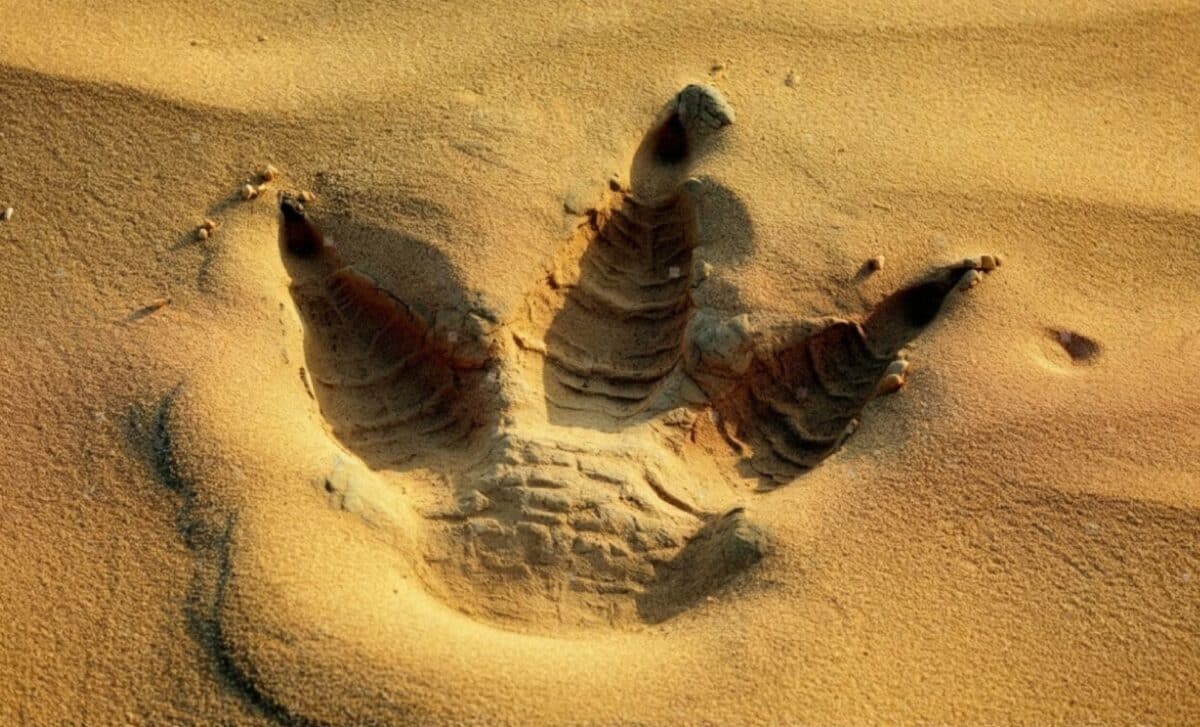
In a joint expedition between Japanese and Mongolian scientists, the team uncovered a fossilized footprint of a titanosaur, a colossal herbivorous dinosaur that roamed the Earth during the Late Cretaceous period. This discovery, reported by the Washington Post, marks a significant moment in paleontology. The jurassic creature that left the footprint would have been one of the largest animals to ever walk the Earth.
The Gobi Desert, known for its harsh conditions and fossil-rich terrain, continues to yield significant discoveries about the ancient world. This latest finding adds to the growing body of evidence about titanosaurs, a group of enormous dinosaurs whose remains are typically poorly preserved. Though only the footprint has been found so far, scientists remain hopeful that a more complete skeleton will eventually emerge from this region.
A Giant Footprint in the Sands of Time
The imprint measures 1.06 meters in length and 0.77 meters in width, suggesting that the creature that left it was massive. Paleontologists estimate that the dinosaur was at least 30 meters long and 20 meters tall, which is approximately the size of a modern-day football field if one were to stand on top of another.
The discovery was made by a team from Okayama University of Science (OUS) in Japan, who are now scouring the area for additional evidence of this ancient giant. According to Professor Shinobu Ishigaki from OUS, the footprint may be just the beginning of an even more significant find.
“A whole skeleton of a giant dinosaur that left such a massive footprint has yet to be uncovered in Mongolia.” He added, “A fossilized skeleton of such a dinosaur is expected to be eventually discovered.”
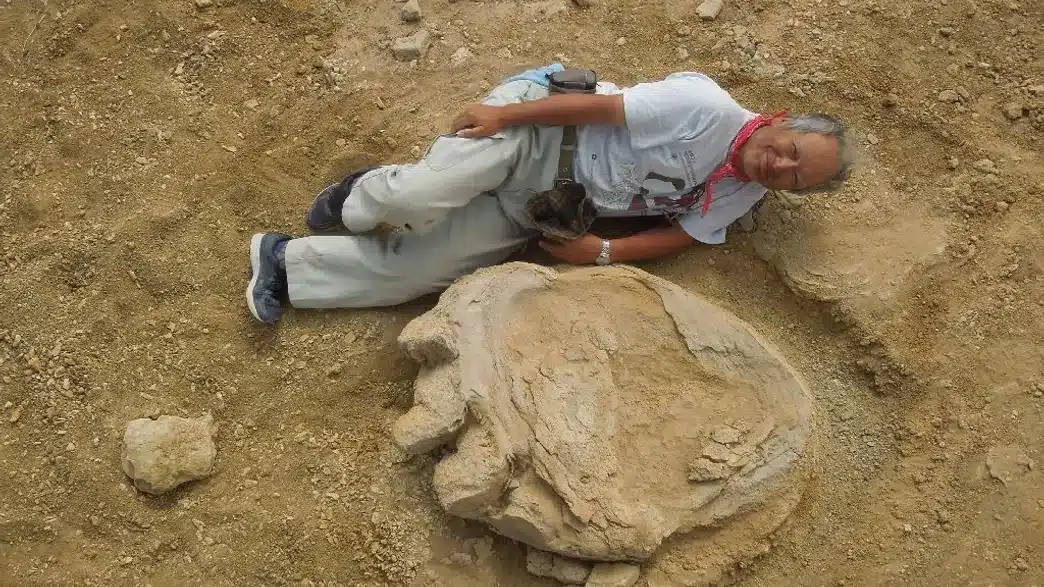 Professor Shinobu Ishigaki from Okayama University of Science stands beside the Titanosaur footprint in the Gobi Desert. Credit: Okayama University of Science
How Big Was the Titanosaur?
Titanosaurs, a group of sauropods, were among the largest land animals to have ever existed. According to the same source, these plant-eating giants lived between 90 and 70 million years ago, during the Late Cretaceous period. Their massive size allowed them to dominate their environment, with some species reaching up to 40 meters (131 feet) in length and weighing up to 80 tons. The titanosaur that left the footprint in the Gobi Desert likely weighed around 70 tons, about ten times heavier than a Tyrannosaurus rex.
“This is a very rare discovery as it’s a well-preserved fossil footprint that is more than a meter long with imprints of its claws,” said the researchers of Okayama University of Science.
Its sheer size is one of the reasons they have captured the imaginations of paleontologists. Despite their enormous size, little is known about their behavior, as most of their remains are fragmentary.
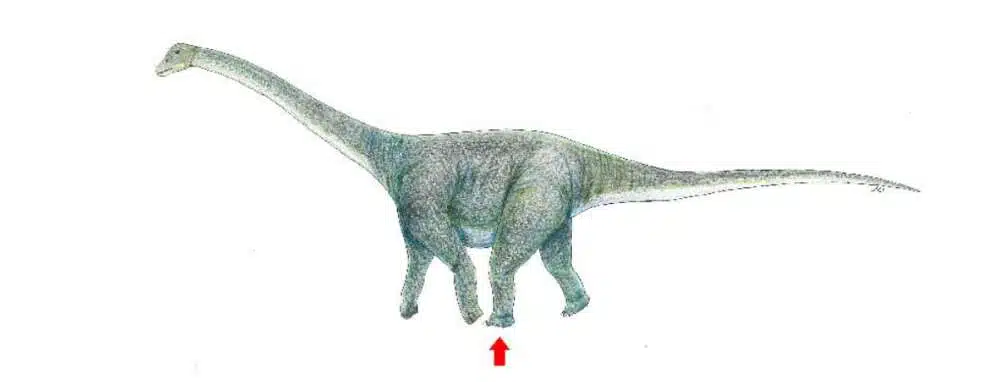 A drawing depicting the estimated appearance of the Titanosaur that left the footprint. Credit: Okayama University of Science