
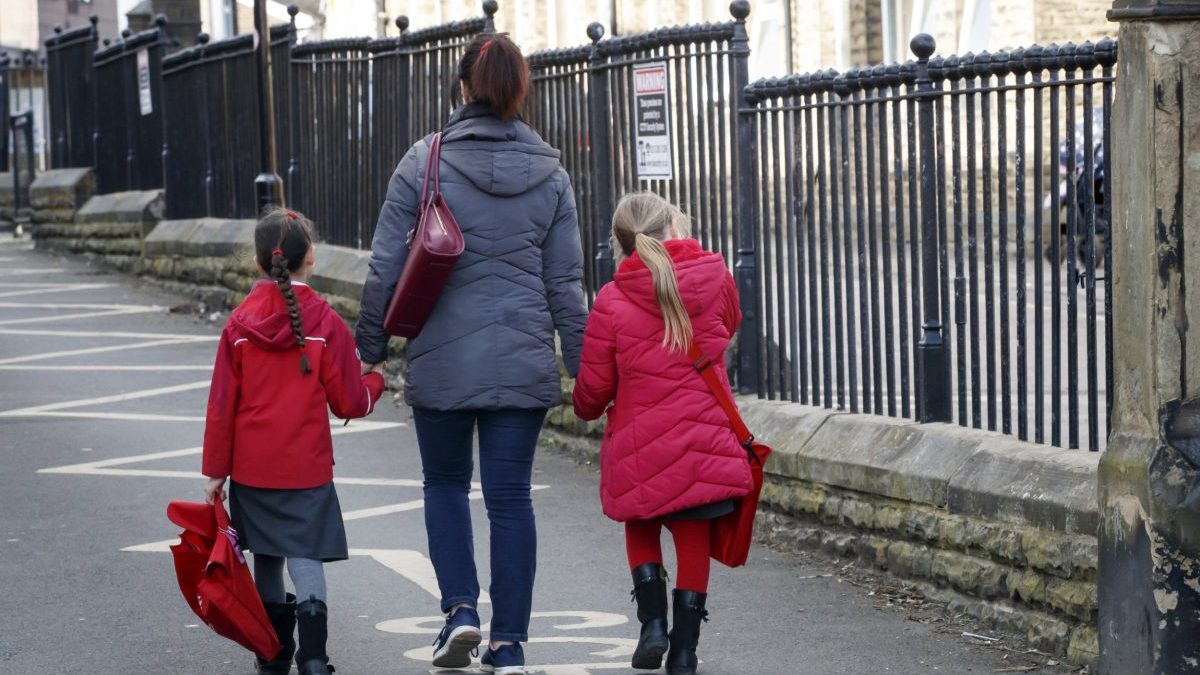
Ministers face immediate political pressure to reconsider the household benefit cap which limits the amount of welfare a family can receive
Ministers have come under immediate pressure to reconsider household welfare caps despite Chancellor Rachel Reeves’s £3bn intervention in lifting the two-child limit.
Reeves – who resisted fully scrapping the child benefit limit for months – told delighted Labour MPs she would not “preside over a status quo that punishes children for the circumstances of their birth”.
Ditching the policy, a move Labour backbenchers have long called for alongside campaigners, will lift an estimated 450,000 out of poverty by 2029.
New FeatureIn ShortQuick Stories. Same trusted journalism.
The Office for Budget Responsibility said scrapping the policy, which prevented parents on welfare from claiming benefits for a third or subsequent child, will lead to an estimated 560,000 families seeing an increase in their universal credit award, averaging £5,310 per year.
Calls for the government to go further
But almost as soon as the decision was confirmed, the Government faced calls to reconsider wider benefit caps that limit the amount households can receive.
Ahead of the publication of the child poverty strategy, which government sources say is due “imminently”, ministers were urged to consider how many families would miss out on the full impact of lifting the two-child limit because their benefits are already capped.
The overall benefit cap limits the total amount of welfare out-of-work households can claim to £23,320 for those living in London, and £22,020 for those outside the capital.
It does not apply to some claimants, such as disabled people or carers.
In 2024, the left-leaning thinktank the Resolution Foundation estimated that if the two-child limit were lifted without raising the household cap, around 9 per cent (39,000) of families would not receive the full benefit.
This would be in addition to the 8 per cent, already subject to the benefit cap, who would see no gain at all.
Labour chairs of the cross-party committees for Education and Work and Pensions, Helen Hayes and Debbie Abrahams, said the two-child cap was responsible for “damaging the opportunities of a generation of children, who were dragged into poverty through no fault of their own”.
They warned that many families who will receive more money due to it being scrapped would come up against the household benefit cap that limits the amount of welfare that can be claimed.
The senior MPs stopped short of explicitly calling for the government to lift the limit, but made it clear the Chancellor, and other senior colleagues, must consider the wider impact of lifting the two-child limit.
Government sources have made it clear that its child poverty pledge will be judged against how many fewer children are living in deprivation at the end of this parliament.
‘A positive start’
Calling the removal of the two-child limit a “positive start”, Abrahams and Hayes hinted that further measures may be needed to avoid families immediately hitting another benefit restriction.
“Additional cash support to families with more than two children will make a direct and positive impact on their children’s wellbeing. However, many families will very quickly come up against the benefit cap…” they said in a joint statement.
“Cash support through the social security system is essential to alleviate poverty but the comprehensive child poverty strategy needs to go much further and wider, involving all Government departments…”
Their comments lay the ground for another potentially difficult political decision for the Government, which has repeatedly promised to lower the overall welfare bill.
‘A second harmful block’
Green Party MP Sian Berry said the overall benefit cap meant thousands of children in larger families “will see no impact at all on their wellbeing from this policy”.
“The struggle against poverty will not be over for every child until this second harmful block on the rights of families to basic wellbeing is removed,” she said.
“In my constituency, hundreds of children are subject to the overall benefit cap, with 993 households affected across Brighton and Hove.”
The feminist economic thinktank, the Women’s Budget Group, said the decision to remove the limit was a “landmark step towards tackling child poverty,” which would help lift around half a million children out of deprivation.
According to the WBG’s Interim Director, Dr Sara Reis, the move would particularly support single parents, who, she said, make up more than half of the households affected by the policy.
“For some families this relief will be short-lived when they find their income is still subject to the benefit cap,” she said, explaining that the cap applies to households earning less than the equivalent of 16 hours a week at the minimum wage.
“For single parents, most of whom are women, balancing parenting and paid work is harder than for dual-parent households, so it is no surprise that they make up nearly 70 per cent of families whose benefits are capped.
“Over half of capped single-parent households have a youngest child under five years old.”
Addressing MPs, Reeves said moves to reform gambling taxes, fraud in the welfare system, and tax avoidance would all go towards funding the policy change.
Later, when asked if she believed the decision would be enough to appease frustrated Labour backbenchers, the Chancellor said scrapping the policy was “about addressing child poverty and also reducing some of those costs on other parts of the system, including in our NHS and in our schools”.