
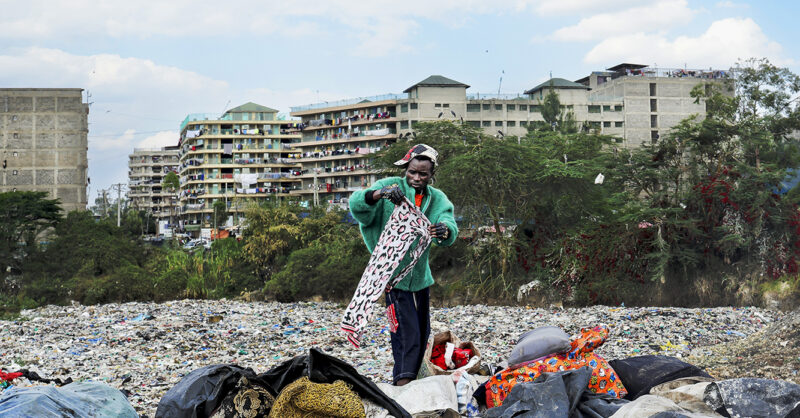
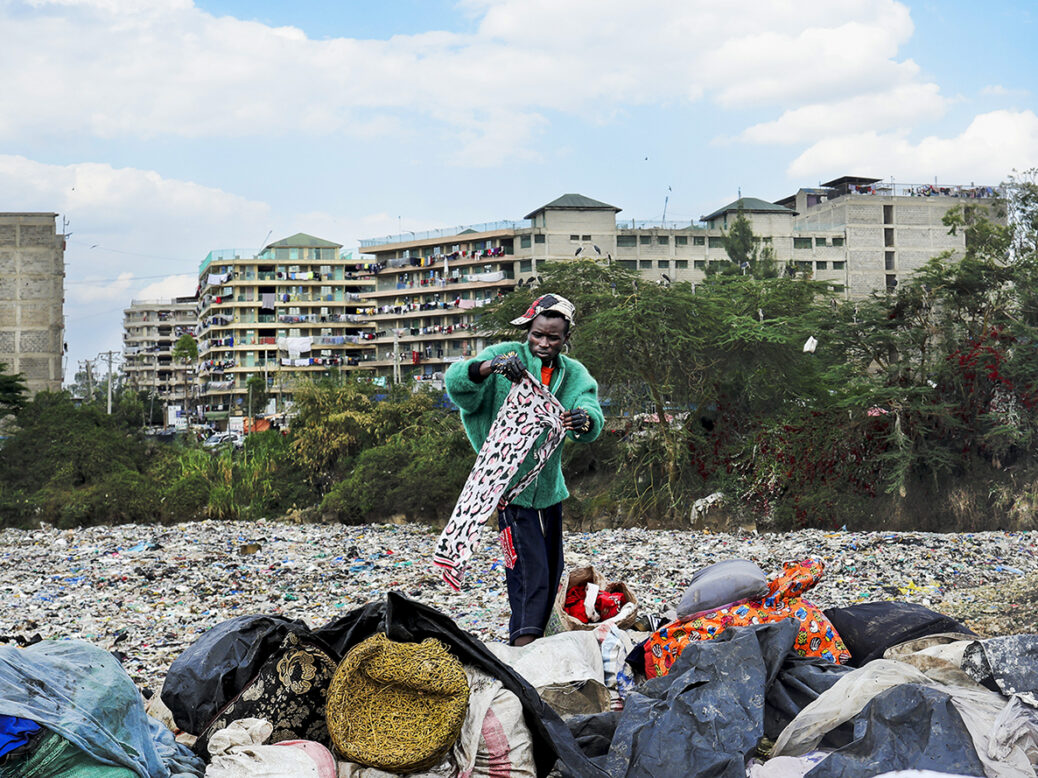
Photo by Tony Karumba/AFP via Getty Images
One of my New Statesman colleagues wears a jumper, much admired in the newsroom, that is older than him. It was bought by his father in the mid-1980s, from Marks & Spencer (when the high-street chain sold its clothes under the “St Michael” brand). It wasn’t a luxury item when it was bought and it has been worn and washed regularly. This jumper asks a question of the modern world: why has four decades of racing technological progress not produced a better garment? Why is nothing of this quality to be found in today’s Black Friday deals? Why does old clothing seem to be better quality than all the crap we buy today?
One answer is that the filter of history is at work; all the crap old clothes of the past wore out and were thrown away, and only the better garments persist into the present. Another explanation is that durable goods are becoming less durable, not by accident, but because that is how the most profit can be made. The invisible hand of the market is pulling the stitches from your clothes. What we see in the poor quality of today’s jumpers, furniture, appliances and electrical goods is the result of decades of crapflation.
The evidence for crapflation can be found in two sets of statistics collected by the Office for National Statistics. The ONS records the prices of things people are buying (the inflation “basket of goods”), but it also asks tens of thousands of households what they’re spending. Crapflation is found in the difference between the two.
In the two decades between China joining the World Trade Organisation in 2001, and the Covid pandemic in 2020, the real (inflation-adjusted) cost of the clothing and footwear in Britain fell by a third. But over the same period, household spending on clothing and footwear increased by 53 per cent. Clothing got a fair bit cheaper, but being clothed became a lot more expensive.
This is not just a British phenomenon. In the US, the inflation rate on household appliances was negative between 2001 and 2020 – prices fell by about 16 per cent. And yet spending on household appliances rose by about 25 per cent (after adjusting for inflation) over the same period. American toasters and washing machines got cheaper, but Americans didn’t spend less on toasting bread or washing clothes. They spent more. Two decades of globalisation and technological progress have somehow made eating toast and having clean clothes more expensive, even in the most advanced economy in the world.
On the American side, it could be argued this wasn’t a bad sign. Americans had rising disposable incomes over that period. Maybe they just bought flashier toasters? Maybe they bought a toaster for every room? But another – perhaps more convincing – explanation is that they bought toasters that simply didn’t last as long.

Treat yourself or a friend this Black Friday to a New Statesman digital subscription and save 75%
The British example seems to back this up. Our economy has not exactly ballooned over the last 25 years. In fact, from 2005 to 2020 most people’s real earnings in the UK did not rise at all. And yet the volume of sales in durable goods – clothing, furniture, lighting, watches, computers, phones, toys – kept rising. Stuff got cheaper, and yet – despite not being better off – we spent more on stuff.
That’s the crapflation principle: when purchasing power isn’t rising, profit will be returned to capital by reducing the value inherent in the goods or services sold. Profit does not just come from making goods cheaper but from making them worse. The way to make someone buy a new TV every two years is to make TVs that break after two years.
It has long been observed that cheap goods are a false economy. In Terry Pratchett’s 1993 novel Men at Arms, the guardsman Sam Vimes reflects that the cheap boots he could afford were “sort of OK for a season or two”, but really good boots, which cost five times the price, would last ten years. “A man who could afford fifty dollars had a pair of boots that’d still be keeping his feet dry in ten years’ time, while a poor man who could only afford cheap boots would have spent a hundred dollars on boots in the same time and would still have wet feet.”
Crapflation describes this principle as it applies to the people who make the boots. It describes how companies extract ever more consumer surplus by making both the cheap boots and the expensive boots to the lowest standard customers will accept.
Mark Miodownik is a materials scientist and engineer who takes a particular interest in how long goods last. The metric he uses is not the price of the thing but the price of the utility it provides: not how much the washing machine costs, but how much it costs to wash your clothes. In a sense, he looks at goods and services as the same thing. “If you buy the bottom-end washing machines”, he told me, “they’re cheaper than they’ve ever been… But if you’ve got the money to buy a more expensive one, your price per wash goes down.” This isn’t some sinister plan on the part of the manufacturers, he says: “talking to the manufacturers, they feel this increasing pressure to reduce prices [of goods], which is actually increasing the cost of the service of washing your clothes.”
Miodownik told me about the world crapflation has built, and the materials that hold it together. Furniture and appliances held together by glue; electronics made with weird screws (to prevent people fixing them); people wearing clothes laced with rubber. The Black Friday world is one in which elastomers are always in fashion.
“Clothing is now full of elastomers”, Miodownik explained. Elastomers are what enable fast fashion brands to sell clothes online, without their customers trying them on – they always fit, because they stretch, and they stretch because they’re full of elastomers. This is the economic force behind the athleisure trend and the global rise of stretchy jeans. Elastomer fabric, says Miodownik, is “very cheap to make” and “makes people feel good, because they don’t feel like they don’t fit their clothes anymore”. But it also means the clothes – like a rubber band left in drawer – tend to stretch and perish over time, and as they start to degrade they are thrown away (these types of fibres are also impossible to recycle). Again, this isn’t imposed on consumers. Disposability is the new luxury. “It’s weirdly being demanded by the customers. They buy into it. They’re not even wanting to for it to last.”
Consumers might care more about the disposable goods they buy if they realised that they are being subjected to a form of inflation. Like other forms of inflation, crapflation is more serious for people on lower incomes, because the less money you have, the higher the proportion of your disposable income will be eaten up by price rises (or by the need to buy things repeatedly).
The answer to crapflation can be found in the categories where it hasn’t taken hold. Cars, for example. It is increasingly rare to see cars in developed economies that really look like old bangers; a ten-year-old car today looks a lot newer, relative to the latest models, than a ten-year-old car did in decades past. Insurance and fuel have become more expensive but Miodownik says cars themselves have become significantly cheaper per mile of use, because they are more reliable and they last longer. The difference is regulation – cars in the UK have to pass a yearly MOT inspection – and the repairs and maintenance that regulation requires.
Regulation is something of a dirty word to government in the UK and US, but Miodownik says vehicle regulations are a good example of how red tape works to protect a local economy. When you get a car repaired or MOT’d, that money goes to your local mechanic and the money circulates in your neighbourhood economy. When you spend on disposable clothing, you’re sending the money straight back offshore, into the global supply chain. Regulation can also make manufacturers more innovative – Apple, for example, developed a new kind of adhesive for the iPhone 16 which releases the battery when a current is passed through it. This innovation happened because the EU legislated for all phones to have batteries that users can replace.
For a description of where crapflation might lead, if it is left unchecked, we should return to literature. In Douglas Adams’ The Restaurant at the End of the Universe, the planet of Frogstar World B falls prey to an overabundance of shoe shops: “the more shoe shops there were, the more shoes they had to make and the worse and more unwearable they became. And the worse they were to wear, the more people had to buy to keep themselves shod, and the more the shops proliferated”. When a civilisation passes this tipping point – the “Shoe Event Horizon” – it is doomed to collapse under the weight of its own poor-quality footwear. Adams was writing in 1980, when M&S jumpers were still of robust quality. Black Friday, the yearly juggernaut of disposable consumerism, is a reminder of how prescient he was.
[Further reading: Did Rachel Reeves do enough?]
Content from our partners