
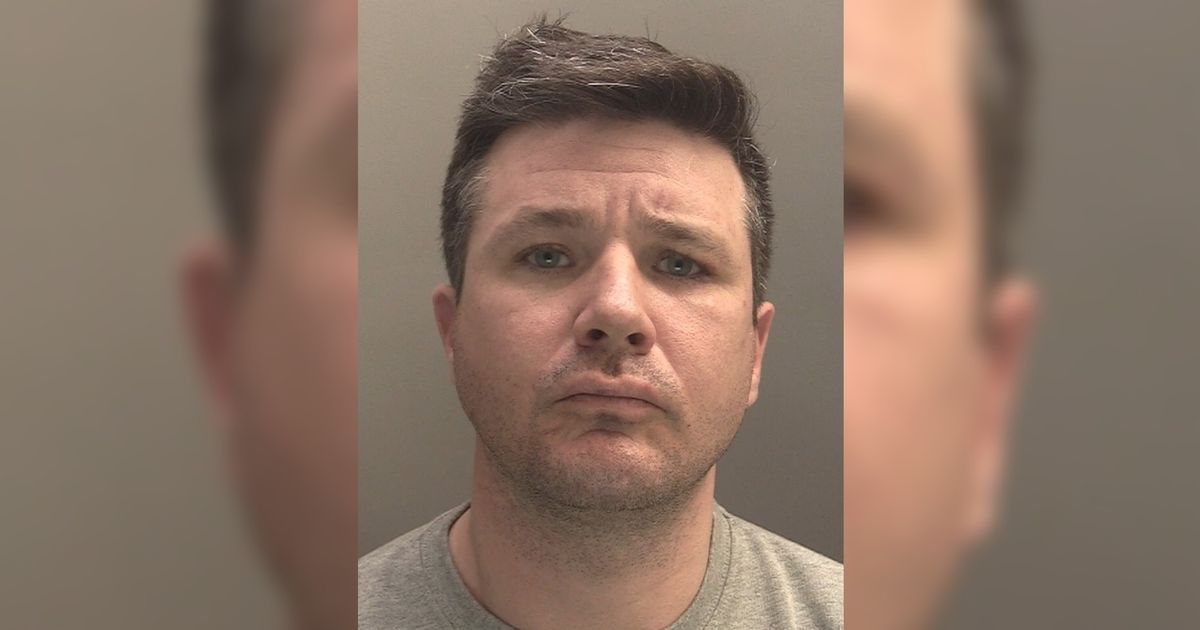
Stephen Bates has been jailed for life after running over and killing his girlfriend’s brother on the night they first met
13:15, 28 Nov 2025Updated 13:36, 28 Nov 2025
 Stephen Bates was found guilty of the murder of Martin O’Donovan(Image: Merseyside Police)
A man who ran over and killed his girlfriend’s brother on the night they first met has been jailed for life. Martin O’Donovan died aged 47 after being hit by Stephen Bates’ Ford Fiesta outside his sister’s home on Stonyhurst Road in Woolton following his mum’s 70th birthday party.
While the two were initially said to have “hit it off straight away”, they later became embroiled in a drunken punch up when the 42-year-old defendant apparently insisted on driving home, despite having downed a cocktail of Jagerbombs, Stella Artois, Red Bull and vodka. He then allegedly threatened that he would “pay someone to come and get” the other man before returning to the scene in his car and “deliberately driving straight at him”.
Mr O’Donovan was left trapped beneath the chassis as a result, with his uncles and cousins having to work together in order to lift the vehicle up and free him. However, he subsequently died in hospital after suffering serious head injuries during the incident.
Bates, of Herondale Road in Mossley Hill, meanwhile went on to tell the officers who arrested him “I know what I’ve done, I’ve f***ed up”. He was found guilty of Mr O’Donovan’s murder earlier this month following a trial.
Returning to Liverpool Crown Court in order to be sentenced this morning, Friday, he stood with his head bowed and showed no reaction as he was handed a life sentence with a minimum term of 18 years behind bars. Sentencing, Judge Neil Flewitt KC said: “I want to begin by saying something about Martin O’Donovan, who was only 47 years of age when he died on the 19 of April this year.
“He died on what should have been a day of celebration, to mark his mother’s 70th birthday. Instead, the day ended in tragedy, with guests at the party being devastated by the violent death of a man who they loved dearly.
“To his mother, he was a man with a beautiful soul who made impact on everyone he met. His father’s life has been destroyed by the loss of his best friend. His brother describes him as a loyal and devoted friend, a man whose energy and warmth touched many lives. He was an accomplished avionics engineer, a skilled outdoorsman and an exemplary human being.
“His sisters have lost their protector, a man who they regarded as loving, strong and fiercely loyal. Susanne [Lewzey, Bates’ girlfriend]’s grief has been made even worse by the knowledge that the man who killed her beloved brother was a man who she trusted and never thought would do anything to harm her or her family.
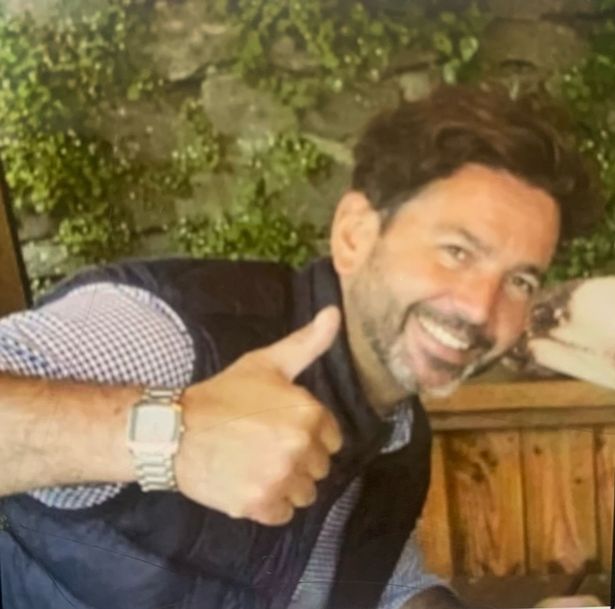 46-year-old Martin O’Donovan, who died following an incident on Stonyhurst Road, Woolton(Image: Merseyside Police )
“You were invited to that party. Also present was Martin O’Donovan, who, at the time, was living in Birmingham. You had not previously met Martin O’Donovan, but you got on well. There we no indication of the violence that was to erupt later that evening.
“Although you decided to go home, you initially insisted on driving yourself, despite the fact you were clearly unfit to do so. When Susanne Lewzey tried to stop you from getting into your car, you became abusive towards her. Rather than continuing to engage with you, she went inside the house and asked her brother to see if he could stop you driving home.
“As a result of something one of you said to the other, a fight broke out between you and Martin O’Donovan. Although I cannot be sure you started that fight, there is no doubt it was your nasty and drunken behaviour that caused it to happen.
“Eventually, you agreed to let Natalie O’Donovan [another of Martin’s sisters] to drive you home in your car. Following the fight, and during the journey home, you were abusive towards Susanne Lewzey’s family and repeatedly threatened to kill Martin O’Donovan or arrange for someone else to kill him. I cannot be sure that you meant those threats to be taken seriously, but they indicate your state of mind and continued animosity to Martin O’Donovan.
“You drove off and returned to Stonyhurst Road. By that time, Martin O’Donovan was sitting on the low wall outside, having a drink and perhaps a cigarette. You drove quickly along Stonyhurst Road. You then quite deliberately drove onto the pavement and ran over Martin O’Donovan, trapping him under your car.
“That was no accident. It was a determined act of aggression, directed towards someone who had done nothing to provoke you to act in that way. Martin O’Donovan suffered extensive injuries to his skull and extensive chest and abdominal injuries. As a result of your actions, Martin O’Donovan died on the 19th of April.
“During your trial, you disavowed any connection between running over Martin O’Donovan and your earlier argument. That was clearly untrue, and a blatant attempt to avoid responsibility for your actions.
“At the scene and at the police station, you were obstructive and showed no concern for the wellbeing of Martin O’Donovan. You were only concerned for the impact of your actions on your own life.
“I have read references, written by your mother, sister, grandfather, friend and manager. It is clear that, in recent times, you have suffered with poor mental health, primarily as a result of the breakdown of your marriage.
“I shall also take into account the support that you provide to your immediate family and the high regard in which you are held by your colleagues at work. That said, personal mitigation is of limited value in such a serious case.
“I am sure that the main reason you returned to Stonyhurst Road was to confront Martin O’Dononvan because you were angry about and humiliated by what had happened earlier. Given what you said in the car to Natalie O’Donovan, I am sure that you intended to use violence towards Martin O’Donovan, even if you did not intend to kill him.
“I cannot be sure that, when you left the Mossley Hill area, you intended to use your car as a weapon or have it available as a weapon. I am sure that your decision to drive at Martin O’Donovan was a spontaneous decision, fuelled by alcohol and rage and made when you saw him sitting on the wall outside the house.
“Although I accept that the offence of murder was neither planned nor premeditated, you did make a determined effort to return to confront Martin O’Donovan. This offence was committed outside the home address of Martin O’Donovan’s sister. Family members of all ages saw him trapped under your car and fatally injured.
“I cannot be sure that you intended to kill Martin O’Donovan. In my judgement, what you did was so dangerous and carried with it such an obvious risk of death that you gain little benefit from the absence of an intention to kill.
“I accept that you have shown some remorse for causing the death Martin O’Donovan. However, that is tempered by your behaviour following the fatal incident, during which time you were clearly only concerned for yourself.”
John Benson KC previously told the jury during the prosecution’s opening that the party at the home of Mr O’Donovan’s sister Susanne Lewzey on the evening of April 18 this year had “started off as a happy family occasion”, with a “jolly atmosphere” being described as they celebrated their mum’s 70th birthday. However, Bates was said to have become “progressively more inebriated” during the course of the evening.
This led to a row between him and Ms Lewzey, his girlfriend of 19 months, during which he refused to take a taxi home and instead insisted on driving. Mr O’Donovan, who had only met his sister’s partner for the first time that evening but had “got on well” with him, was asked to reason with him as a result.
But the two men instead ended up exchanging punches in the front garden, with Bates shouting after the fighting had been broken up: “Look at you. You’re a f***ing p***y. You’re a c***. You’re all c***s.”
While Bates ultimately agreed that another sister, Natalie O’Donovan, could drive him home in his car, he was described as being “seething” during this 12-minute journey and “furious with Martin O’Donovan for what had happened earlier”. He was also said to have “said he’d kill him” and would “get someone to kill him”, adding that he “wasn’t going to get away with having punched him”.
Having directed Ms O’Donovan to drive to Barndale Road, the street next to where he lived, Bates then took hold of the car keys and “sped off” without her. With the return journey back to Stonyhurst Road having taken him only five minutes to complete, he reportedly “suddenly turned and drove straight at Martin O’Donovan”, who had been sitting on a wall outside the address.
Bates then apparently continued revving the engine as he seemingly attempted to continue driving, being labelled “completely unmoved” following the collision. Ms Lewzey, who had witnessed the crash, meanwhile banged on his window in a “hysterical” state while “screaming for him to stop”.
Mr Benson said of Mr O’Donovan’s injuries: “It was clear to medics that he was critically injured. He suffered two cardiac arrests before he was taken to hospital. Lifesaving procedures were undertaken. These were futile. He was pronounced life extinct at 4.32am on the 19th of April at 47 years of age.
“The injuries supported a conclusion that Martin O’Donovan had been run over at least once. The injuries to his skull were extensive. He also suffered extensive chest and abdominal injuries.”
Following the incident, Bates was said to have got out of his car and remarked “I’m sorry, I’m sorry, what have I done?”. Shortly after 11.45pm, he went on to make a 999 call in which he said: “I’ve just run someone over on Stonyhurst Road. I think they’re dead.
“They’re not moving. They’re not breathing. We had an argument, and I’ve run him over. You need to send someone quick. I’ve done the crime. I don’t know what we were arguing over, but it’s my girlfriend’s brother.”
Police who attended the scene noted that Bates was “extremely intoxicated”, while he told officers “I know mate, I’m not going anywhere” as he was handcuffed. Having then been told he would be required to undergo a breathalyser test, he added: “I know what I’ve done. I know what I’ve done is wrong. I’ve f***ed up.”
In his evidence, Bates told the court that he had returned to the scene to “try to sort our relationship out” and said he was intending to “park up outside, where I always park it”. He went on to recall: “I’ve come in and I’ve hit something, which was the wall. Then, I’ve tried to correct the steering and turned in the opposite direction.”
Asked whether he had seen Mr O’Donovan before he then struck him with his car, he replied “no”. He similarly denied having intended to hit the deceased with his vehicle, saying: “I was coming in to park. I tried to correct the car. It’s just a natural reaction. It come to a stop, the car. I tried to move it, and the car was just revving.
“I didn’t know what was going on. I think [Ms Lewzey] was saying, ‘you ran him over’. I can’t really remember. She was screaming and banging on the window, then she opened the door. I didn’t know what I did really.”
Asked when he first realised he had struck Mr O’Donovan, Bates appeared to become emotional as he responded: “When I got out the car and I saw his legs under the car. Just total shock. I didn’t know what I’d done. I couldn’t believe it.”
 Stephen Bates was found guilty of the murder of Martin O’Donovan(Image: Merseyside Police)
In cross-examination, Mr Benson put to him that the “red mist had descended on him”. But Bates said “there was no red mist to descend”, later adding: “I just wanted to sort things out between me and Susanne. I wanted to sort things out with my girlfriend.”
Andrew Haslam KC, defending, said on his behalf today: “We cannot sensibly argue but that the fact he drove his vehicle while heavily intoxicated and the fact that the circumstances of this murder occurred in a residential setting are not factors your honour can take into account to make an upward adjustment. It is not just the fact that the murder was committed in a residential setting. That venue was to hold the deceased’s mother’s 70th birthday party, and it was Susanne Lewzey’s home.
“There is an absence of significant planning or premeditation, on the facts of this case. The defendant left Mossley Hill to go to Stonyhurst Road in his vehicle as a means of transportation from A to B. It may be that the jury’s verdict is consistent with a finding that he did not go back to speak to Susanne Lewsey only, but went back to confront the deceased.”
When Judge Flewitt remarked that Bates had taken “quite a calculated decision to deceive” Natalie O’Donovan before returning to the scene, Mr Haslam continued: “Yes, albeit against the background of drink. Your honour knows the effect that alcohol has for one’s behaviour.
“It does appear that calculation is, given the contents of the references provided, out of character. We do submit that the facts of the offence itself lack planning or premeditation. Thankfully, in many regards the circumstances must have been very short lived. That is no consolation for anyone.
“Then, we turn to what we submit is a matter for your honour’s determination, which is a lack of intention to kill. We submit that the facts of this case demonstrate the defendant’s decision to drive at the deceased must have happened either by way of a spontaneous reaction or on the spur of the moment, given he could not have known the deceased would be outside and could not have seen the deceased until moments before.
“We recognise the fact that the defendant ultimately used his car as a weapon may balance that feature in your honour’s determination. We submit that there is scope for your honour to find, on the facts of this case, a lack of intention to kill.
“He has always accepted that he caused the deceased’s death by his unlawful act. He has to live with the knowledge that, even on his own admission, he caused the loss, the death of a father, of a son, of a brother and a much loved friend to many people, it would seem.
“Lastly, we turn to personal mitigation, which we readily concede is of limited relevance. Firstly, he sought to improve his life by studying for a degree, graduating with a 2:1 and working to support himself and his wife until he finished his studies, and thereafter gaining full time employment.
“Your honour knows just how valued he was as a project manager at the Whitechapel Centre, helping the homeless to find a home and maintain life skills for independent living. Described by his mother as his rock, he is, on any view, a loving son, grandson, uncle, brother and friend.
“People describe him as being both kind and considerate and, plainly, a man committed, in the past, to his family, particularly to both his nieces, a loyal brother and a loyal uncle, one, but for this tragedy, who did seem to have a positive future ahead of him. There is talk, in his sister’s statement, of him having plans to set up his own business.
“He has taken steps to advance his position whilst in prison. He has applied to become a mentor to help those who have suffered mental health issues as he, the defendant, has in the past. Whilst we acknowledge that those matters of personal mitigation are of limited relevance to a case of this nature, they do perhaps paint a picture of a very different man to the one that the jury convicted of the most serious crime of them all.”