
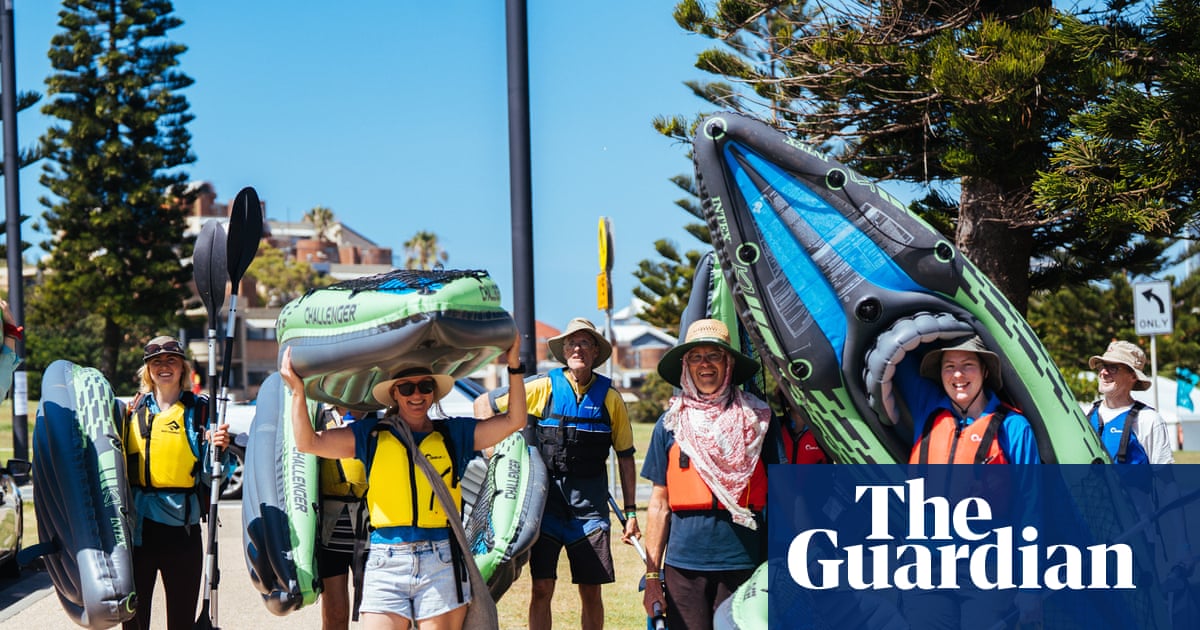
It has become an annual pilgrimage. Each November, thousands of protesters flock to the New South Wales city of Newcastle for an annual climate protest – and standoff with police – as a flotilla of kayaks and sailboats head out to block the world’s largest coal port.
Hundreds of people set up camp at Foreshore Park on Friday in preparation for the Rising Tide people’s blockade on Newcastle Harbour. The crowd was expected to swell to 7,000 over the weekend as protesters arrived from across the country for what organisers said had become a national gathering for Australians frustrated by a lack of government urgency to address the climate crisis.
Protesters who join the flotilla face breaching an exclusion zone that the New South Wales state government has imposed over most of the harbour from Friday until 7am Monday. At last year’s blockade, 173 protesters were arrested, with 133 of them charged. Four were found not guilty earlier this year and court matters for the remaining 129 are still pending.
Organisers are calling for three things: an end to new coal developments, a fair transition for workers and communities affected by the shift away from fossil fuels, and a 78% tax on fossil fuel export profits, a figure influenced by Norway’s taxes on its oil and gas sector.
Sign up: AU Breaking News email
“I think people are terrified about the impacts of climate change and we’re already starting to feel those impacts,” organiser Alexa Stuart says. “They’re angry our government isn’t doing more and is still continuing to approve new coal and gas projects.”
Organisers want three things: an end to new coal developments, a fair transition for workers affected by the shift away from fossil fuels, and a 78% tax on fossil fuel export profits. Photograph: Lee Illfield/Rising Tide
NSW police warned anyone who entered the exclusion zone would face arrest as it took a “a zero-tolerance approach” to protesters who “threaten public safety and the safe passage of vessels”. The state’s police minister, Yasmin Catley, said breaching the exclusion zone was “a deliberate decision to put your life at risk and to endanger those who may be forced to save you”.
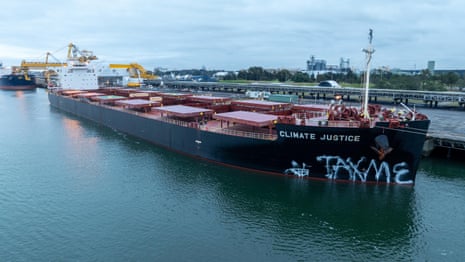 Climate activists paint ‘tax me’ on coal ship in Newcastle – video
“This group has repeatedly defied court orders and police directions, entering dangerous waters despite explicit, repeated safety warnings,” she said. “Anyone who engages in unlawful activity will face immediate, decisive enforcement action. Your actions carry consequences including arrest and very real risks to your life.”
Stuart, 22, has been protesting for stronger climate action since she was 15. She says the annual “protestival” – which also features a Saturday night waterfront concert, workshops and panel discussions – is a chance for people of all ages to come together in circumstances where they might otherwise “feel helpless at the scale of the devastation of the climate crisis”.
Protesters say the gathering in Newcastle is a chance for people of all ages to come together in circumstances where they might otherwise ‘feel helpless’. Photograph: Lee Illfield/Rising Tide
June Norman, a great-grandmother from Queensland’s Sunshine Coast who has travelled to Newcastle for the blockade the past three years, says: “I’m here because I’m 85 years old and I have grandchildren and great-grandchildren and I’m really concerned about their future.
“I think I’ve grown up in this beautiful country during the best years of Australia’s life and what am I leaving for them? Therefore I need to do everything I can to protect their future.”
Stuart criticises the Albanese government pushing through new national environment laws this week that included no measures to prevent or limit new coal and gas projects, and says the state government appears “more interested in silencing peaceful protesters on climate change than acting in line with the climate science”.
“The goal of the flotilla is to draw attention to state and federal government failure,” she says.
“It’s powerful that we’re all here together calling for the same thing – action on the climate science.”