
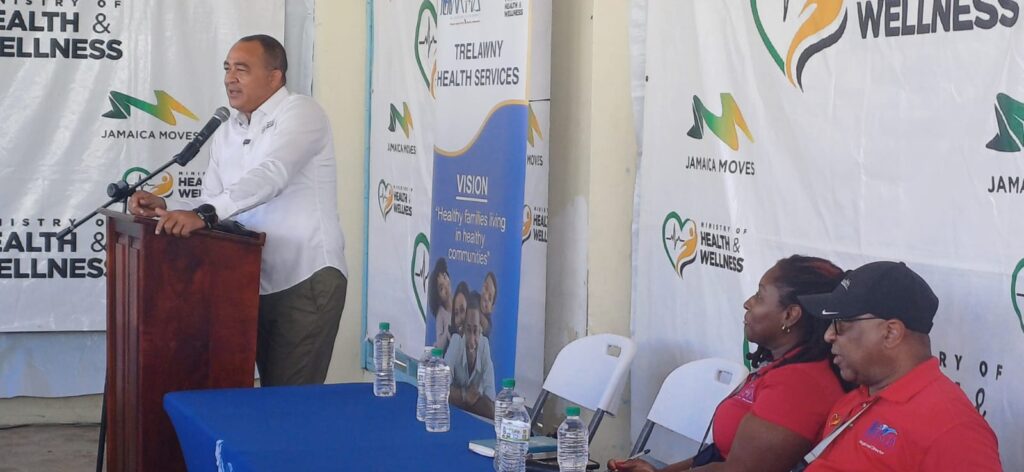
Health and Wellness Minister Dr Christopher Tufton (left) addressing healthier workers at the Falmouth Public General Hospital on Thursday. Looking on are: Keriesa Bell Cummings, parish manager of the Trelawny Health Services and St Andrade Sinclair (right), regional director of the Western Regional Health Authority.
TRELAWNY, Jamaica — Health and Wellness Minister Dr Christopher Tufton has warned that Jamaica is now entering what may become the most difficult phase of post-Hurricane Melissa recovery — the mental health fallout.
Speaking Thursday during a visit to the Falmouth Public General Hospital, Tufton said while the first days after the hurricane were focused on physical needs such as food, medical attention and shelter, the psychological toll is on the cusp of surfacing and could become the most widespread long-term impact.
“Right now, mental health is going to be the biggest challenge in the weeks and months to come,” he said.
“When we just started, people just wanted release from the initial trauma. They wanted water and food. They wanted to fix the cut inna dem foot bottom, or to just get back some semblance that everybody is okay and not needing emergency care,” he added.
He said reality is now settling in.
“Today, we are still trying to come to terms mentally with the stresses, the trauma of the impact of the storm. And if we are trained to manage that kind of stress… and we feel the way we feel, can you imagine the average man out there in the community?” he said.
Tufton said elderly persons, those who have lost loved ones, families experiencing severe property damage, and people with chronic illnesses made worse by stress are especially vulnerable.
“Mental health is the unseen enemy in the post-traumatic arrangement of [Hurricane] Melissa. It is the consequence, the logical consequence and potentially long-term consequence of the devastation of Melissa,” the health minister noted.
He warned that many Jamaicans may shut down emotionally, lose motivation or become overwhelmed by despair.
“Your mind, how you think, how you cope, your temptation to just resign yourself to destruction and don’t move forward. And many people will have difficulty managing it,” he said.
Consequently, Tufton charged frontline workers to strengthen community outreach and provide emotional support along with routine care.
“So community health aids, I have always said, are one of the most important segments of the workforce in public health,” he noted, adding that their role has now expanded.
“You have a bigger task today than you did before Melissa because you going to have to go out there and start explaining to people… explaining why the medication is important, explaining just the basics of why we will overcome the challenges that we have — and listen,” he charged.
The health minister argued that stress can be easily recognised and should be documented for follow-up care.
“You don’t have to have mental health training to know what stress is. You just look pon somebody and hear them talk and you know say dem under pressure. And you have your book and your pencil and you can make notes and bring that back,” he instructed.
Tufton emphasised that the response must involve every level of the public health workforce, not only mental health specialists.
“The mental health challenge… will have to be tackled by all our field officers in public health — not just the few mental health officers that we have,” he said.
Jamaica is receiving support from the Pan American Health Organization and volunteer partners, he said, and the response will be parish-based with home visits, assessments and continued monitoring.
“Where persons need additional help we provide that additional help for them,” he assured.