

On November 30, 2022, ChatGPT arrived on the internet as a “research preview” with little to hint that it would be the flagship product for a wide and still expanding range of products, even to the point of being used as a generic name for generative AI chatbots and tools. Running the still-new GPT-3.5 and full of disclaimers about its limits, ChatGPT still only took weeks to become one of the fastest-growing consumer apps in history. Analysts estimated it hit 100 million users in about two months, an adoption curve that made Instagram and TikTok seem niche in comparison.
Three years later, ChatGPT is more commonly considered a utility than a novelty. The logo sits on browser bookmarks and phone home screens next to email, calendars, and banking apps. The engine underneath has leapt from GPT-3.5 to GPT-4, GPT-4o, GPT-4.1, GPT-5, and its newest incarnation, GPT-5.1. ChatGPT can juggle text, images, audio, and video in fascinating ways, though it’s still arguably a clever autocomplete at heart.
The expectations have changed to match its capabilities. In 2022, people were thrilled if ChatGPT could draft an email that sounded less robotic than they did on a Monday morning. By late 2025, the benchmark is more like “plan my entire trip, wrangle my inbox, debug my code, design the slide deck, and paint an inspiring image for my week.”
Best picks for you
The big question is not whether ChatGPT has changed the world yet. The more pressing issue is how much further it can really go in the next three years, and whether that trajectory lines up with the grand promises of “AGI soon” that OpenAI CEO Sam Altman keeps dangling in front of investors and the public.
A clever text box
(Image credit: Apple, inc, OpenAI)
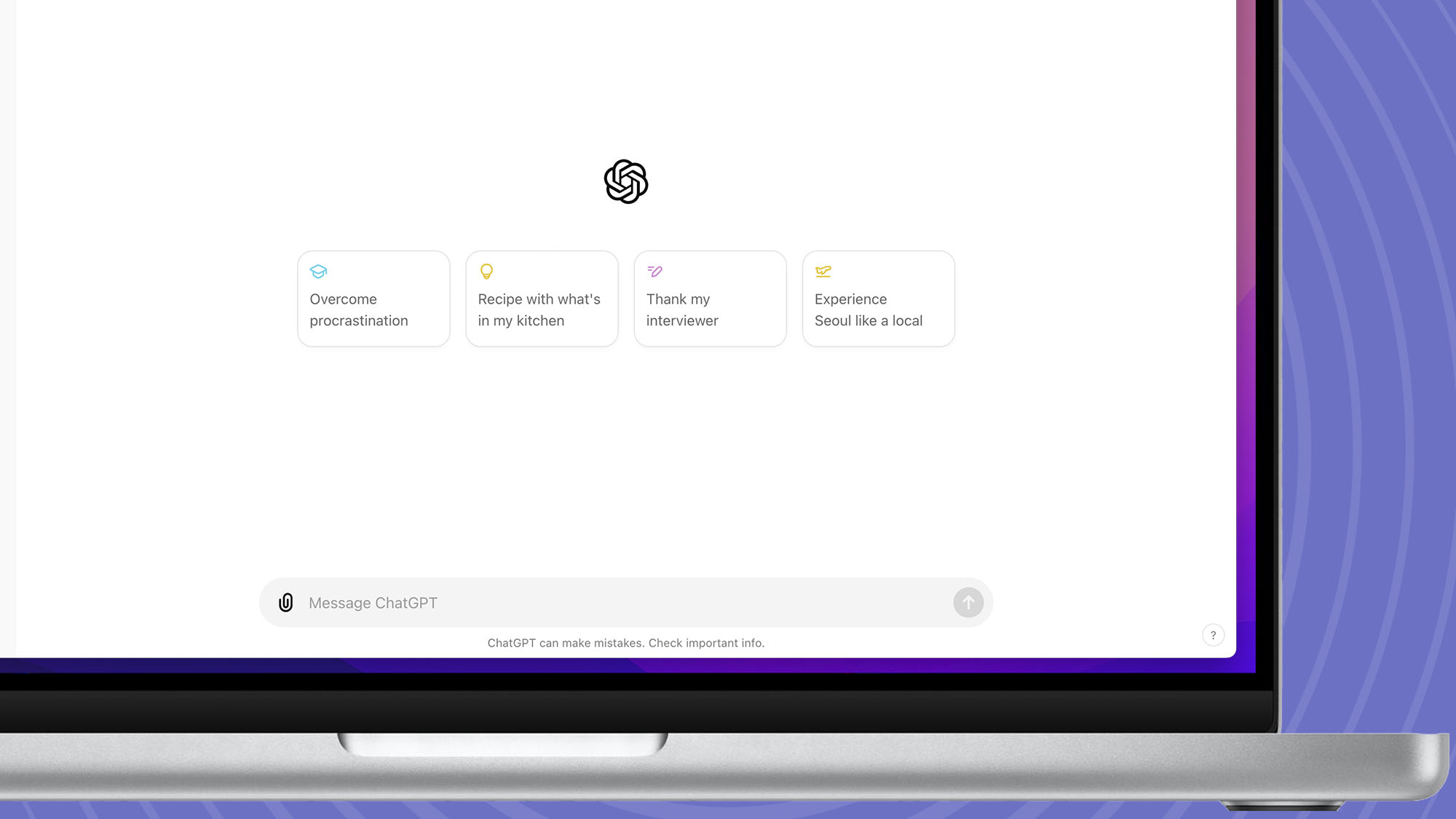
It is easy to forget how bare-bones the original ChatGPT really was. In late 2022, you opened a web page, wrote some text in a box, and got a text reply. That was almost it. No images, no PDFs, no voice, no app, no memory, no tools, no agents.
The magic was in how conversational it felt. People started by poking the edges: “explain quantum mechanics like I’m five,” “write a poem in the voice of Shakespeare about pizza,” “help me with this Python error.” It did those things well enough to be delightful. It also hallucinated aggressively, forgot context, and occasionally folded like a cheap chair when asked anything nuanced about current events.
This was not a system that even pretended to know the world in real time. It had a frozen knowledge cutoff, cheerfully made things up with enormous confidence, and would give you the same completely fabricated citations twice in a row without blinking. The guardrails were both over-sensitive and oddly porous: it would refuse to help you with harmless legal hypotheticals while blithely telling you elaborate nonsense about obscure historical events that never happened.
Still, for a lot of regular people, it was the first time they had interacted with AI that felt like more than a gimmick. Siri and Alexa could set timers and mishear you in new and interesting ways. ChatGPT could draft a cover letter, summarize a PDF, outline a Dungeons & Dragons campaign, and help your kid with algebra homework, all in the same chat window. It was flexible in a way that consumer tech simply had not been before.
That flexibility also made its weaknesses very visible. It could not see or hear. It had no consistent memory across sessions. It treated the world as a giant text corpus rather than a place where time passes and things happen. It was impressive, but also obviously limited.
Model growth spurt
(Image credit: OpenAI)
The next three years were essentially one long growth spurt. March 2023 brought GPT-4, which made ChatGPT noticeably sharper, more reliable, and more capable at coding and complex reasoning, with early vision features trickling in.
Don’t miss these
Then came GPT-4o in May 2024, a genuinely multimodal model that could handle text, images, and audio in one system. It powered ChatGPT’s first Advanced Voice Mode, where you could talk to the system, interrupt it mid-sentence, and have it respond in a reasonably natural voice. ChatGPT started to look less like a static web form and more like a many-headed interface that could adapt to whatever input you threw at it.
Throughout 2024 and into 2025, OpenAI layered more capability and more product scaffolding around these models: desktop apps, mobile apps, file tools, longer context windows, and then GPT-4.1 with a million-token context and further gains in coding and reasoning. GPT-4o mini replaced GPT-3.5 as the cheap workhorse model. GPT-5, and then GPT-5.1, pushed the main ChatGPT experience even further.
The technical improvements ran alongside a rapidly scaling user base of eventually hundreds of millions. OpenAI-linked research estimated something like 700 million ChatGPT users this year, all sending around 18 billion messages a week. That is astonishing for a single service.
The feature list expanded accordingly. In 2022, the idea of uploading folders of documents, making agents that take actions on your behalf in other apps, or creating and editing photos and videos would have provoked healthy skepticism. Now, they are standard elements of ChatGPT.
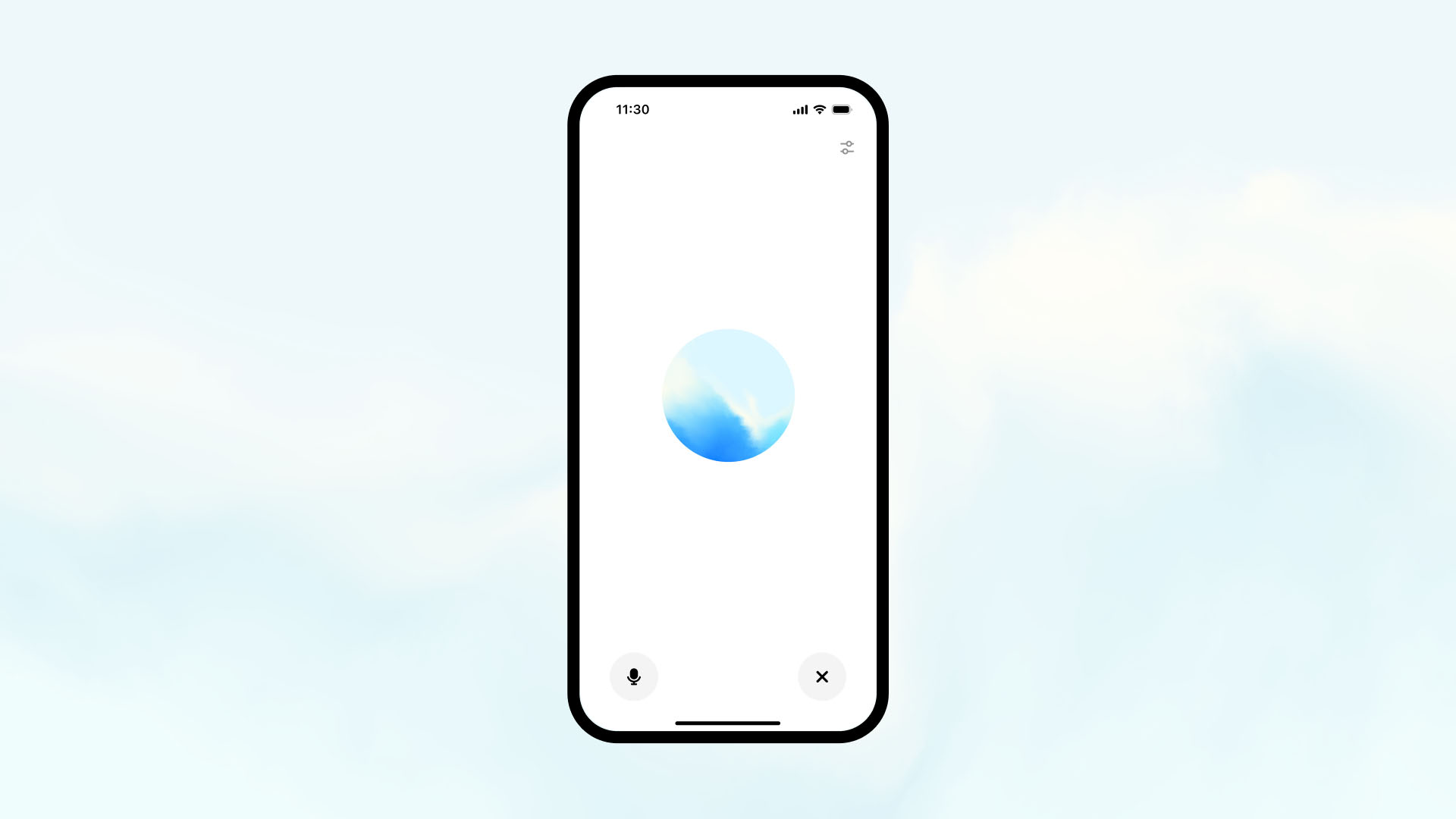
The creation and enhancement of ChatGPT’s Voice Mode tells the whole story in miniature. Voice mode once lived behind a separate button and a slightly theatrical floating orb interface. It felt like an add-on, fun for demos but easy to forget in daily use. The new update merging voice into the main chat interface changes how you engage with ChatGPT entirely. You can now turn on voice, speak directly inside an existing text conversation, and hear spoken replies alongside live transcripts, images, maps, or whatever else the model decides to show you, without jumping to a separate screen.
Practically, this changes the texture of using ChatGPT. On a laptop, you can be typing notes, toggle the microphone to talk through a tricky paragraph, see the edits appear in real time, then go back to typing. On a phone, you can ask it to summarize a PDF while you walk, glance at the summary on-screen, correct it with your voice, and have it adjust without losing the thread.
It also hints at how the next few years are likely to unfold. Not with one magical AGI moment, but with this kind of incremental but meaningful integration. Speech and text in one place. Files and tools in one place. The border between “chatting with an AI” and “using software” will get blurrier with every update.
Voice mode is still running different models than the deepest text chats, with GPT-4o and GPT-4o mini handling most of the heavy lifting for spoken interactions, while GPT-5.1 powers the most advanced text workflows. But for the average user, it feels more like one system that can meet you where you are, whether your hands are on a keyboard, a phone, or carrying groceries.
Public behemoth
(Image credit: Shutterstock/Mijansk786)
The other growth spurt has been financial and structural. In 2015, OpenAI was a nonprofit research lab with a mission statement about ensuring that AGI benefits “all of humanity.” Now, its main arm is a for-profit public benefit corporation, while the original nonprofit spun off as the OpenAI Foundation, holding around a quarter of the company.
On paper, a public benefit corporation is supposed to balance shareholder returns with a commitment to some broader societal mission. In practice, it is still a profit-oriented entity with investors expecting significant upside. OpenAI’s reported valuation in its latest secondary sale is hovering around the half-trillion-dollar mark, which is the kind of number that invites intense pressure to grow revenue.
You can see that pressure reflected in ChatGPT’s business model. The original research preview was simply free. Then came ChatGPT Plus, at twenty dollars a month. Then, Team, Enterprise, Edu, Pro, and various API pricing tiers for developers. Free users can still show up and chat, but the best models, longest context windows, native tools, and higher limits live behind paywalls.
Over the next three years, this is the most predictable trajectory of all. ChatGPT will keep getting more capable and more convenient. It will also get more heavily monetized. Not because OpenAI is uniquely villainous, but because keeping a planetary-scale AI service running is eye-wateringly expensive, and the new shareholder structure more or less guarantees that “benefit everyone” will be interpreted as “benefit everyone who brings revenue in some form.”
Three years ahead: incremental magic, not instant AGI
(Image credit: Shutterstock)
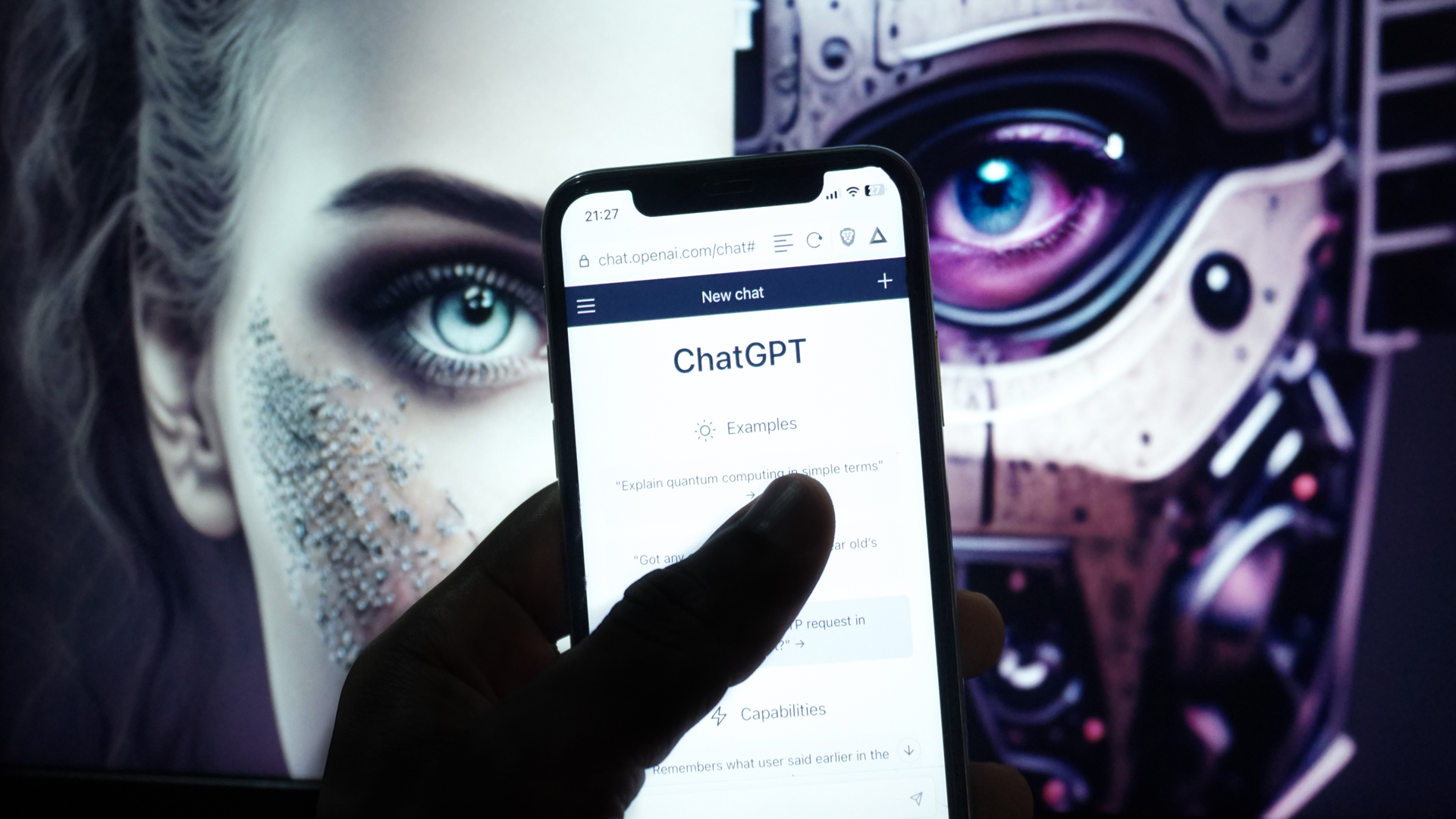
For all the AGI talk, I still hold on to skepticism. Altman has said AGI is not very far off for a long time now, and currently projects its arrival within years. That framing has seeped into the public imagination, where “AGI” has become a kind of floating signifier for AI that can basically be a human, only better.
I do not buy that timeline. Building something that matches or exceeds human general intelligence is not just a matter of stacking more GPUs and sprinkling in better fine-tuning. It’s not a product roadmap, it’s a generational ambition. The history of technology is littered with underestimated complexity, and the last three years of ChatGPT are a strong argument for the slower view.
Progress inside the product has been real and sometimes startling. It has also been uneven, occasionally chaotic, and always bounded by trade-offs around cost, latency, and safety. Don’t get me wrong, I expect over the next three years to see models that work better for longer, including with a better memory. I expect a deeper integration into operating systems and interactions by voice and video that feel like talking to a human.
Those would be impressive enough. They will make ChatGPT feel more human to average people needing help with mundane tasks. But they are still a far cry from a system that can stand in for a human mind across every domain.
Rather than a single AGI event, what we are likely to get is a specialized ChatGPT tool for different roles and domains, possibly hidden under another logo. What won’t happen is a sudden emergence of AGI. I won’t say OpenAI might not declare it has achieved AGI, just that the goal posts for it will have to be moved for that declaration to be accurate.
The competition might drive OpenAI to make such grandiose claims. Despite people calling any AI chatbot ChatGPT when not being specific, OpenAI can no longer assume it is the only game in town. Features like integrated voice, higher-quality free tiers, longer context windows, and tool ecosystems are not purely acts of generosity; they are responses to rivals shipping similar capabilities. That dynamic will only intensify over the next few years.
Culturally, ChatGPT has gone from a curiosity to a kind of ambient background presence. It shows up in classroom debates, workplace policies, and rules about homework. It is now part of political arguments, creative industries, and internet culture.
Used thoughtfully, ChatGPT is an incredible amplifier. It can shrink busywork, help people learn new skills, and open up creative possibilities for those who never thought of themselves as “good with words” or “technical.” The downside is just as real: over-reliance, privacy risks, bias baked into training data, and a creeping sense that your default move for any problem is to run it past a system you neither control nor fully understand.
ChatGPT has massively exceeded my expectations in adoption, influence, and raw capability. It has turned “large language model” from an obscure research term into common vocabulary.
It has also exposed just how messy it is to deploy systems this powerful at scale without any sort of regulation or clear guardrails. The hallucinations are still there, the safety debates are far from resolved, and questions of governance still roil OpenAI.
And ChatGPT’s improvements in the near future, no matter how impressive, will be less cinematic than the AGI countdown clock Altman often gestures toward. ChatGPT is already more deeply woven into people’s lives than I could have predicted three years ago. There’s every reason to believe ChatGPT will only tighten its grip before it turns six.
Follow TechRadar on Google News and add us as a preferred source to get our expert news, reviews, and opinion in your feeds. Make sure to click the Follow button!
And of course you can also follow TechRadar on TikTok for news, reviews, unboxings in video form, and get regular updates from us on WhatsApp too.

The best business laptops for all budgets
Our top picks, based on real-world testing and comparisons