
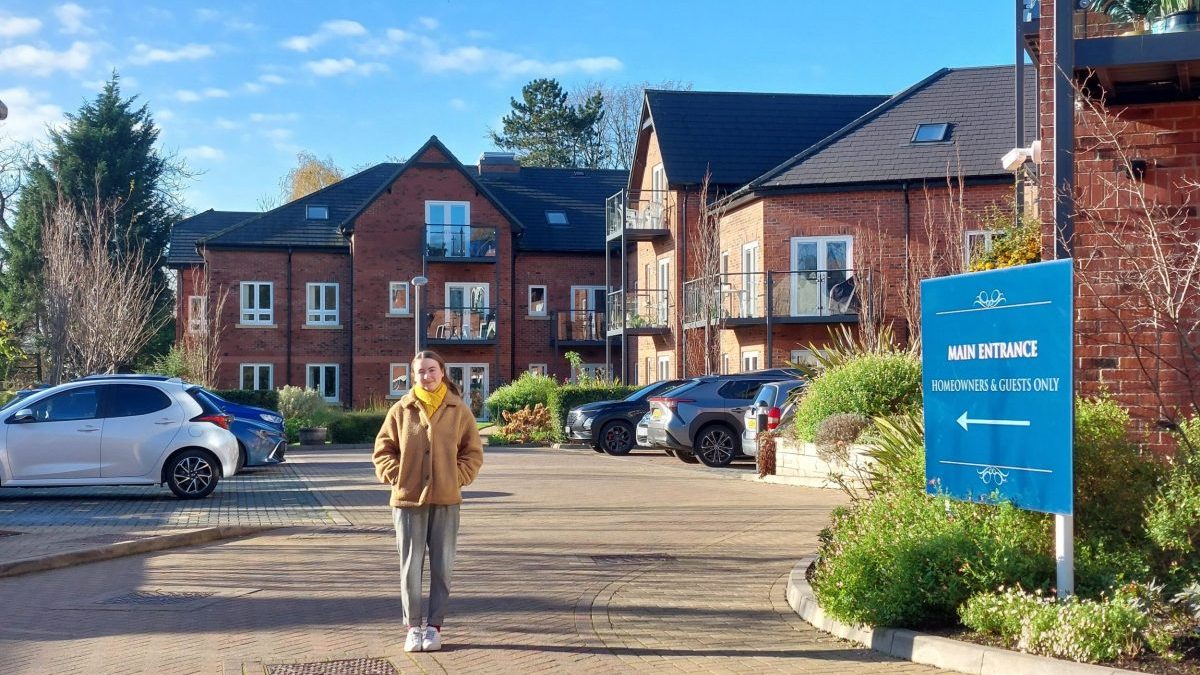
The i Paper visited a retirement development in Greater Manchester where residents say services have been taken away and they feel intimidated into silence
“We can’t risk anyone seeing us,” Elsie* tells me as we sit down, her eyes darting towards the window behind us. “You don’t know who you can trust around here.”
I’m in the living room of an apartment in a Manchester retirement development, waiting for a few other residents to join us.
They arrive one by one to avoid suspicion. I was hoping to take photos and speak to staff, but it quickly becomes clear that’s not on the cards – the residents are afraid to even be spotted together. It feels like a covert operation.
New FeatureIn ShortQuick Stories. Same trusted journalism.
Like many of these developments, this one, operated by Adlington Retirement Living, was built specifically for elderly, vulnerable residents and promised to offer them a sense of community and “peace of mind” in their old age.
Adlington has so far built 17 retirement complexes, mostly in the North of England and the Midlands, and the company reported a pre-tax loss of around £3.97m in its latest results filed at Companies House.
But over the past year, that promised peace of mind appears to have been incrementally dismantled for the residents here – where around 80 people live.
Vital services like regular bin collection and cleaning, initially guaranteed as part of their monthly service charge, have been withdrawn.
Yet, residents’ fees have continued to rise, with some paying over £900 per month, or around £11,000 per year. That’s on top of hefty exit fees of up to 20 per cent, which are charged when apartments are sold.
Some homeowners have been fighting to recover these lost services to no avail – and that’s why I’m visiting. Many of the residents are afraid to speak out.
As a result of this divide, residents say the community spirit has disappeared, and during my walk down the eerily quiet corridors and past empty lounges, it certainly felt less like a sanctuary and more like a surveillance state.
“It sounds like something out of the Thursday Murder Club, but this is real and it’s affecting us all every day,” Elsie says.
“We’re an ageing population of elderly residents with all sorts of health problems. We simply can’t lift industrial bin lids or do our own laundry and now it feels like we’re having to grovel for help.
“We thought we were buying peace of mind, but instead it’s just been constant uncertainty and anxiety,” she adds. “It’s not a happy place to live any more, the atmosphere is very tense.”
The loss of services
I’m sat in a circle with four women from different apartments – Elsie, and three other women who I’ll call Belinda, Patricia, and Jodie. They have all come armed with paperwork.
Elsie is recovering from cancer, while Belinda and Jodie are both in their nineties.
They tell me the saga began at the start of the year, when Adlington announced it was removing a system where residents could leave their bin bags outside their front door for collection.
Before the pandemic, they would leave a sign on their door if they wanted their bin to be collected, and a member of staff would knock and take it.
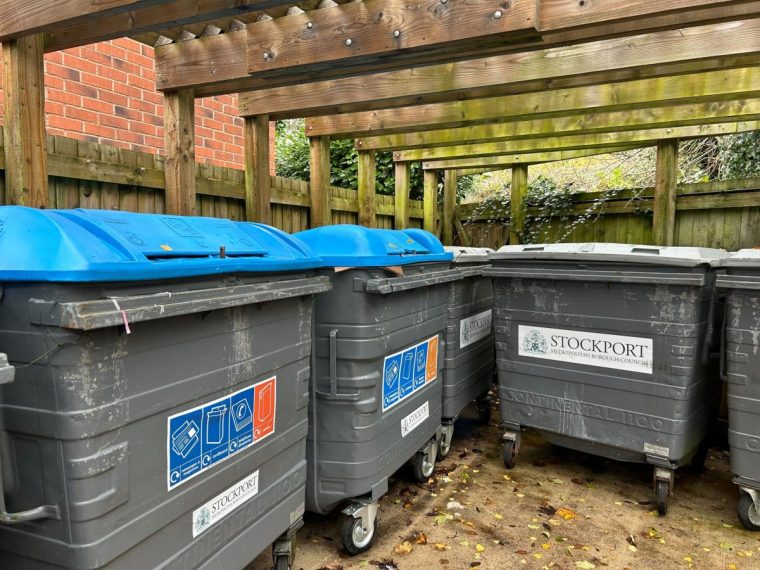 The outdoor bin store where elderly residents now have to take their rubbish
During Covid, residents began leaving their bags outside their door instead. But this year, Adlington said this posed a health risk and ended the service.
Residents now have to take their rubbish to a bin store in the car park and put it in large industrial waste bins. I tried doing this myself and found them heavy and difficult to manoeuvre, let alone for a 90-year-old with mobility issues.
Residents have petitioned to restore the old system, which would resolve the trip hazard concerns, but Adlington has refused.
“I brought it up in a meeting and the Adlington director just said ‘move on, move on’. He appeared not to be interested,” Patricia says, shaking her head at the memory.
“We’ve got disabled people here, many with a stick or a walker, and now they have to take their rubbish from, say, the second storey, down the stairs, across the car park, then lift the heavy bin lid and somehow also lift their rubbish in.”
“The lid has fallen on people’s arms and injured them, and the other day a resident got a nasty scratch from where squirrels had chewed the corners,” Jodie chips in. “It’s far more of a hazard than leaving bin bags outside our doors.”
Services have been removed:
Bin collection from residents’ apartments
Laundry and ironing service
Weekly cleaning service
Hot breakfast served to relatives/friends who stay in the on-site guest suite
The situation escalated when the service charge rise for 2025/26 was announced, which led to the cleaning service being excluded.
“My service charge was due to rise from £862 per month to £1,065 per month,” Belinda says. “We contested the increase, and so Adlington said it would lower it slightly, but in exchange, it would exclude the cleaning service. We had no say.”
Now, three-bed flats pay £908 per month, two-bed flats pay £845, and one-bed flats pay £784.
Residents now have to pay £21 per hour for a cleaner, considerably outweighing any savings on the service charge.
“Adlington said it was ‘inequitable’ to include cleaning in the service charge when not every resident used it – of course, almost everyone used it,” Belinda adds.
“Meanwhile, we all have to pay for the on-site restaurant, which far less people use.”
The service charge covers the running of the restaurant but not the full cost of the food.
A laundry and ironing service for residents has also been removed, as has a hot breakfast included with the guest suite for relatives or friends who stay over at the complex.
“It just feels like money-grabbing at every turn,” Belinda says.
Treatment by staff
Even more concerning for residents than the loss of services is that they feel unable to raise complaints with Adlington without putting a target on their backs.
Elsie tells me that on-site staff have warned homeowners against discussing complaints with other residents, and those who do voice concerns are “made to feel difficult”.
“The staff are very gossipy,” she says. “An on-site manager once said to me, ‘someone’s been talking about you, but I can’t tell you who’. It’s not a nice environment to be in.”
It’s at this point that Elsie hands me a letter sent by a director at Adlington, accusing residents of fabricating problems and bragging about Adlington’s generosity. It reads like a petty response to a poor TripAdvisor review.
“The residents’ committee purports to represent the views of homeowners…however, many homeowners have contacted us to say…they do not agree with the statements you have made,” the letter says.
“One must therefore question whether the residents’ committee truly represents the views of homeowners and therefore its legitimacy.”
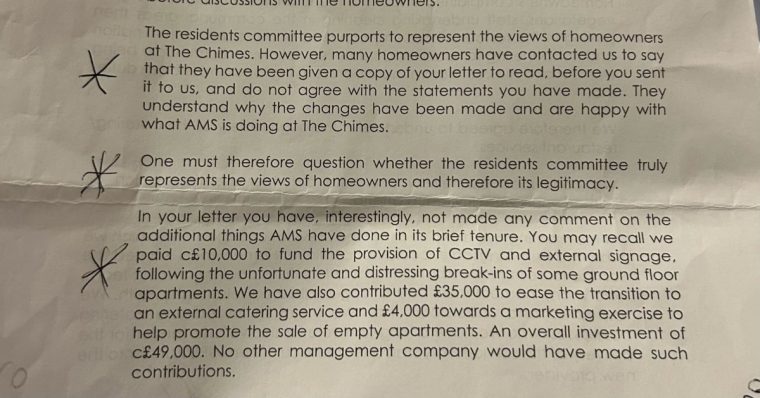 A snippet of a letter sent to the residents’ committee by a senior executive at Adlington
The same executive told residents they could take their complaints to the Property Ombudsman.
“Adlington have succeeded in getting rid of the residents’ committee because, understandably, nobody wants to stand again,” Elsie says. “Nobody wants to take all this flak for raising concerns.”
When I go to leave, the women repeatedly thank me for my time, but confess they don’t expect things will improve. Their next worry is that their loved ones won’t be able to sell the flats and will have to keep paying the high service fees.
“If my flat went on the market tomorrow, the exit fee would be 14 per cent of what this cost, which was just under £500,000. It is a lot of money. But anyway, we all know you cannot sell these,” Belinda says.
When your property is sold, Adlington will take a cut of the sale price. It goes up the longer you live there. Belinda says hers is two per cent for each year she lives there, up to a cap of ten years.
This means the maximum exit fee is 20 per cent of the sale price. For newer residents, it is now 1.75 per cent per year up to ten years – a maximum of 17.5 per cent. Adlington told The i Paper it has no plans to remove exit fees.
“I think the age of people wanting these retirement apartments has already passed,” Belinda adds. “Hopefully, we’re the last generation.”
To complain about service charges, you must first complain to the company and give them 8 weeks to respond before you can complain to the Property Ombudsman. This can be a complex process, but free services like Citizens Advice can offer guidance.
*Names have been changed to protect the identities of residents.
Adlington’s response
We put these concerns to Adlington to investigate and asked whether it would consider restoring the bin collection and other services.
A spokesperson said:
“The wellbeing and peace of mind of our homeowners is extremely important to us, and we take any suggestion that somebody feels anxious or unsupported very seriously.
“Across all our communities, we regularly review services to ensure they remain safe, sustainable and equitable for all homeowners and align with current regulations.”
Bins
“Waste cannot be left in communal corridors for hygiene and fire-safety reasons, in line with our fire-risk assessment and advice from fire officers.
“However, we recognise that taking rubbish to the external bins may present a challenge for some homeowners. To support them, our general assistants [Adlington’s paid-for cleaners] remove waste during housekeeping visits, and duty managers assist with larger items.
“We also recognise concerns about the weight and suitability of the external bins. The previous general manager contacted the local authority to request alternatives, and a new bin has been ordered. The team is also reconfiguring the layout of the bin store to make the area easier to use.”
Cleaning
The spokesperson reiterated that including cleaning as part of the service charges was “inequitable” for residents who may not need it, adding that the £21 per hour rate remains “within the local market range”.
Laundry
“A previous arrangement was a legacy process from a former management company. This was discontinued due to infection-control concerns.
“An alternative was put in place in which staff (paid-for cleaners) could assist using homeowners’ own washing machines, and we are also happy to help homeowners connect with a paid-for external laundry and ironing service.”
Guest suite breakfast
“Breakfast was removed from the inclusive rate as part of a wider standardisation across our communities.”
Staff conduct and homeowner experience
“We are deeply concerned to hear that some homeowners feel intimidated or that their concerns are not being listened to.
“These allegations are taken extremely seriously, and we will conduct a full investigation. We expect all staff to be professional, friendly and respectful at all times.
“With regard to correspondence with the homeowners’ residents committee, we will review the content and context of the letter you reference.
“We expect and reinforce high standards of professionalism across our teams, and we are committed to ensuring that every homeowner feels respected and supported.”
Service and exit fees
“Service charges reflect the actual cost of delivering communal services and are carefully budgeted. The service charge review process includes opportunities for homeowner questions and feedback.
“Exit fees form part of the financial model that supports the ongoing management of our Adlington communities. We keep all aspects of our model under regular review, but there are currently no plans to remove exit fees.”