
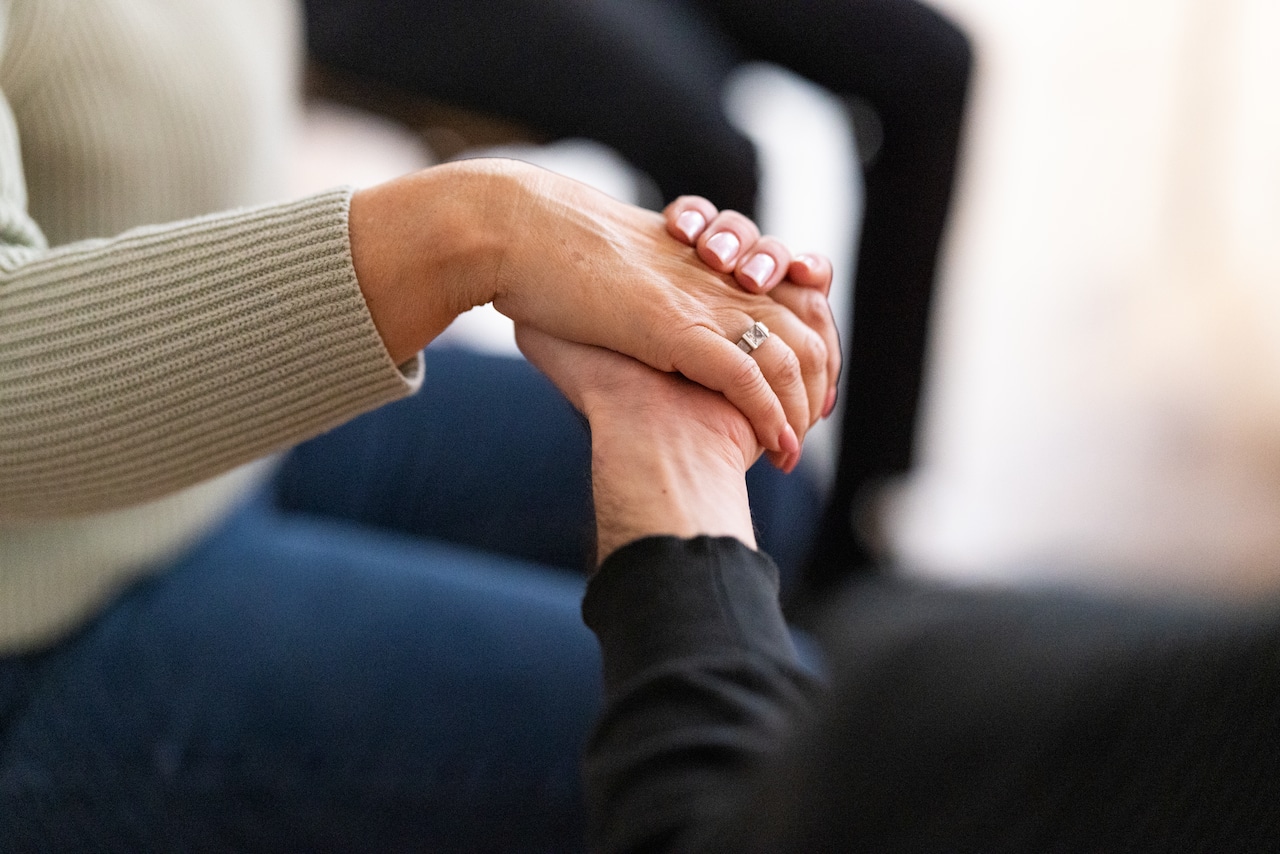
STATEN ISLAND, N.Y. — In a small room at the Joan and Alan Bernikow JCC in Sea View, a family in crisis gathers on a recent Wednesday morning, sharing, caring and crying.
The members aren’t technically a family; they don’t share genetics or surnames.
But they share a deep connection — the pain and helplessness only someone who loves a person with mental illness can truly understand.
So between the frustrations, disappointments and anger revealed at each 11 a.m. meeting, there are hugs, advice and reassurances that nobody is in this alone.
That’s what makes the members of the National Alliance on Mental Illness Staten Island Family Support Group a special kind of family, participants, who asked for anonymity, explained.
“You’re talking to people who are walking the walk,’’ said Lyn Ferrante, executive director of NAMI Staten Island, before a recent session began.
NAMI Staten Island is the local affiliate of the nation’s largest grassroots mental health organization dedicated to building better lives for the millions of Americans affected by mental illness. It also offers free support for those with mental illness and chronic pain, and hosts a speaker series featuring experts in related specialties.
With more than one in five U.S. adults experiencing mental illness each year, according to the 2024 National Survey on Drug Use and Health, and more than one in seven U.S. youth ages 6 to 17 experiencing a mental health disorder each year, according to Journal of the American Medical Association, the feelings expressed in the meeting are not uncommon.
On this particular Wednesday, under the supervision of Marlaine Goldberg and Rod Schneider, one member shared through tears the frustration of caring for her lonely and angry teen daughter. The girl has Tourette Syndrome, which has triggered obsessive-compulsive disorder, Attention Deficit Hyperactivity Disorder, Borderline Personality Disorder and anxiety, according to the mother.
“Every night in my house is another episode,’’ she said, explaining the pain it has caused other family members. ”It is destroying my family.”
Another participant said her husband has bipolar disorder and struggles with alcoholism.
And yet another cried over her grown son, who she said refuses to see a caseworker or accept professional help.
This situation creates both a financial and emotional burden on the mother, who said she aches for a better life for both of them. “My son lives in squalor,” she said with exasperation. “I want so much more for him. How do I get him to do these things?”
In the end, each person at the meeting has to prioritize problems and tackle them one at a time, Ferrante said to one group member, explaining that the approach applies to all.
“We’re not going to cure our loved ones, but we will learn to make life a lot better,’’ said Ferrante. ”You can have a full life.”
The goal is to spread understanding through the education sessions, leading to better relationships with children and adult family members after their diagnosis.
“I wish I’d joined NAMI when he was 15,’’ the heartbroken mom of the grown son lamented, blaming herself for missing the yellow flags that should have been red ones. ”Maybe I could have helped him more. I’m so angry and resentful and sad.”
Emotions ran high at the recent meeting, as others listened to excruciating tales, offering their own advice, as did the group moderators, who have been there themselves.
“I have a different diagnosis in my house, but when I talk to you, I know you understand,’’ said Goldberg, explaining to a new member the value of listening to others’ stories.
”Everybody has something different going on, but though it’s different, it’s still the same‚’’ another group member chimed in, trying to explain to a member that she understands.
Caregiving for another with a mental health condition in the United States is not uncommon, with at least 8.4 million people in the country providing care to an adult with a mental or emotional health issue, according to NAMI.
And the symptoms of mental illness evolve and change, Ferrante said to the group, explaining the value of listening to others’ experiences and solutions.
“Even though it may not be me today, it might be me tomorrow,’’ she said.
The group, which also meets on Tuesday and Wednesday evenings, is designed specifically for those trying to help another with mental illness. Other NAMI groups focus on the mental illness patient, or offer expert speakers on a variety of related subjects.
Before Wednesday’s meeting, Ferrante explained that situations people face at home are all they can think and talk about.
The group of empathetic ears changes that, she said.
“In NAMI, there is no judgment,’’ Ferrante said. ”In the beginning, you are talking to everyone, seeking advice from everyone. Once you have that freedom (NAMI) it gives you a chance to go to a birthday party and not talk about mental health.”
The Family Support Group also meets every Tuesday, from 6:30 to 9 p.m. in the Holy Rosary Parish Center, 85 Jerome Ave., South Beach, and every Wednesday from 6:30 to 9 p.m. at the Staten Island JCC, 1466 Victory Blvd., Sunnyside.
Other services
Some of the other free services offered by NAMI Staten Island include:
Teen and Young Adult Helpline: Monday through Friday, from 10 a.m. to 10 p.m. It offers free young adult peer support. Reach it by texting 62640, calling 1-800-950-NAMI or chat with a specialist at NAMI.org/talkouts.
Peer Connections Support Group: Created for individuals living with mental health conditions. It meets on the first and third Monday of each month at the Cespino-Russo American Legion Post, 200 McClean Ave., South Beach. No registration is required.
Let’s Talk: Everyday Struggles, Chronic Pain and Mental Health Pain: Meets on Wednesdays at 6:30 p.m. in the Cespino-Russo American Legion Post, 200 McClean Ave., South Beach
Basic Education Course: The six-week course provides the information, insight, understanding and empowerment that families need to deal with in mental illness with their children.
Helpline: 718-477-1700
Community Education Night: Second Wednesday of the month at 7 p.m. in the SIPPP Auditorium of Richmond University Medical Center, 355 Bard Ave., West Brighton.
To participate, visit the NAMI Staten Island website at NAMIstatenisland.org.