
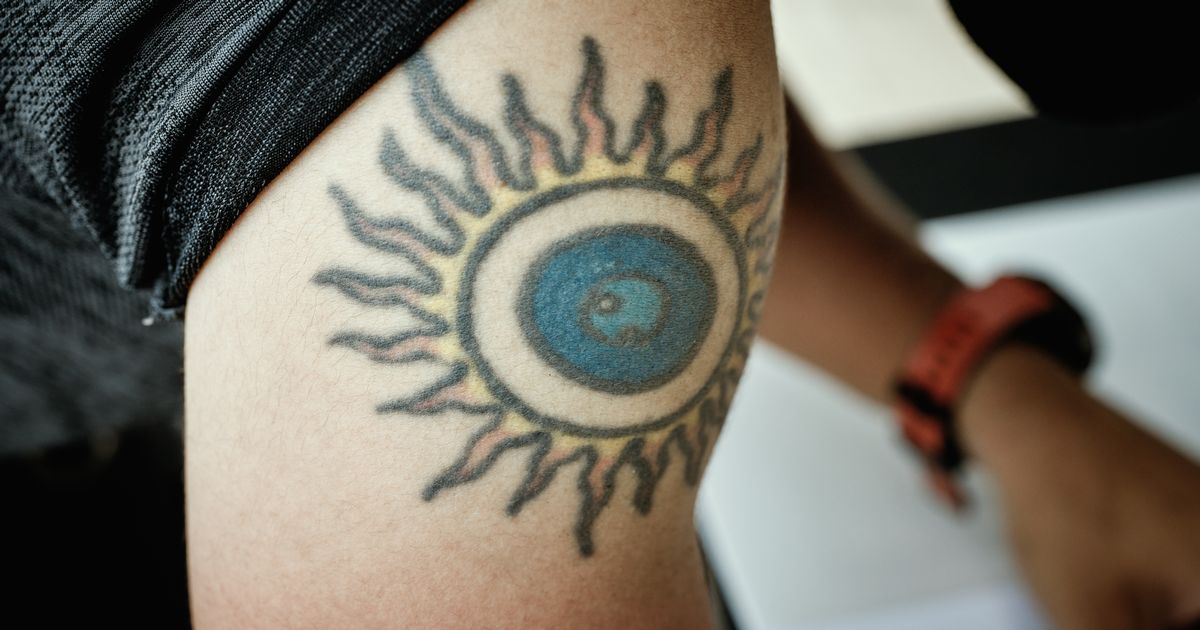
The research found people with tattoos are 29 per cent more likely to contract a dangerous form of cancer
08:16, 28 Nov 2025Updated 09:15, 28 Nov 2025
 People with tattoos develop cancer more often than those without
Experts have issued a cancer warning to anyone with a tattoo after finding a 29% higher risk of developing melanoma, a serious form of skin cancer often linked to ultraviolet (UV) exposure. New research found people with tattoos have a higher risk of dangerous melanoma, but no higher risk of the less dangerous carcinoma.
Christel Nielsen, Associate Professor of Epidemiology at Lund University, said: “Despite their popularity, scientists still do not know whether tattoos have any impact on health, or how any potential effects might unfold over time. Epidemiologists are now trying to answer these questions.
“The work is challenging because people who choose to get tattoos often differ from those who do not in ways that can influence health outcomes. Another difficulty is that most health records do not note whether someone is tattooed, which means long-term patterns are hard to study. Without this basic information, it becomes difficult to know whether tattoos themselves play a role in health or whether differences are driven by other factors.”
Professor Nielsen’s team took a group of people who had been diagnosed with cancer and looked to see who had tattoos. The team used medical records in Sweden and identified everyone aged 20 to 60 who was diagnosed with melanoma in 2017 or squamous cell carcinoma between 2014 and 2017.
This included 2,880 melanoma cases and 2,821 squamous cell carcinoma cases. The team sent questionnaires to all participants, asking about tattoos. 5,695 people took part in the melanoma study (1,598 with melanoma).
Professor Nielsen said: “People with tattoos were 29% more likely to develop melanoma compared with those without tattoos. The risk increase seemed to be highest in those who had tattoos for more than ten years, although the numbers were smaller in this group, so results should be interpreted cautiously.”
She added: “One possible explanation is that tattoo ink does not remain confined to the skin. The body’s immune system treats it as a foreign substance and transports some ink particles to the lymph nodes. These particles can stay there long-term. While we do not yet know whether this causes harm, it could potentially lead to chronic inflammation, which has been linked to cancer development.”
The study included data on sun exposure (both occupational and recreational), tanning bed use, smoking, education level, marital status and household income. It also factored in skin type, pigmentation, age and sex.
Professor Nielsen said: “These details matter because they can influence both who gets tattoos and who develops cancer. For instance, people who spend a lot of time in the sun may be more likely to have tattoos and to develop melanoma. Accounting for these differences reduces bias and strengthens confidence in the results.”
Recent US research suggested that large tattoos might reduce the risk of melanoma, but that study did not control for key factors such as skin type or UV exposure. The results may therefore reflect behaviour rather than biology. For example, people with large tattoos may avoid sunbathing or tanning beds to protect their body art, which would naturally reduce UV damage.
Professor Nielsen told The Conversation: “So, do tattoos cause skin cancer? The simple answer is that we do not know yet. Our results suggest a possible link between tattoos and melanoma, but one study is never enough to prove causation.
“More research is needed to explore potential biological mechanisms, such as chronic inflammation, and to examine how different types of ink or colours might interact with UV exposure. The composition of tattoo pigments varies widely, and many contain compounds that can break down into harmful by-products when exposed to sunlight or laser removal treatments.
“If you have tattoos, there is no need for panic, but awareness matters. Continue to protect your skin from UV radiation just as you would otherwise: use sunscreen, avoid excessive tanning and check your skin regularly for new or changing moles.”