
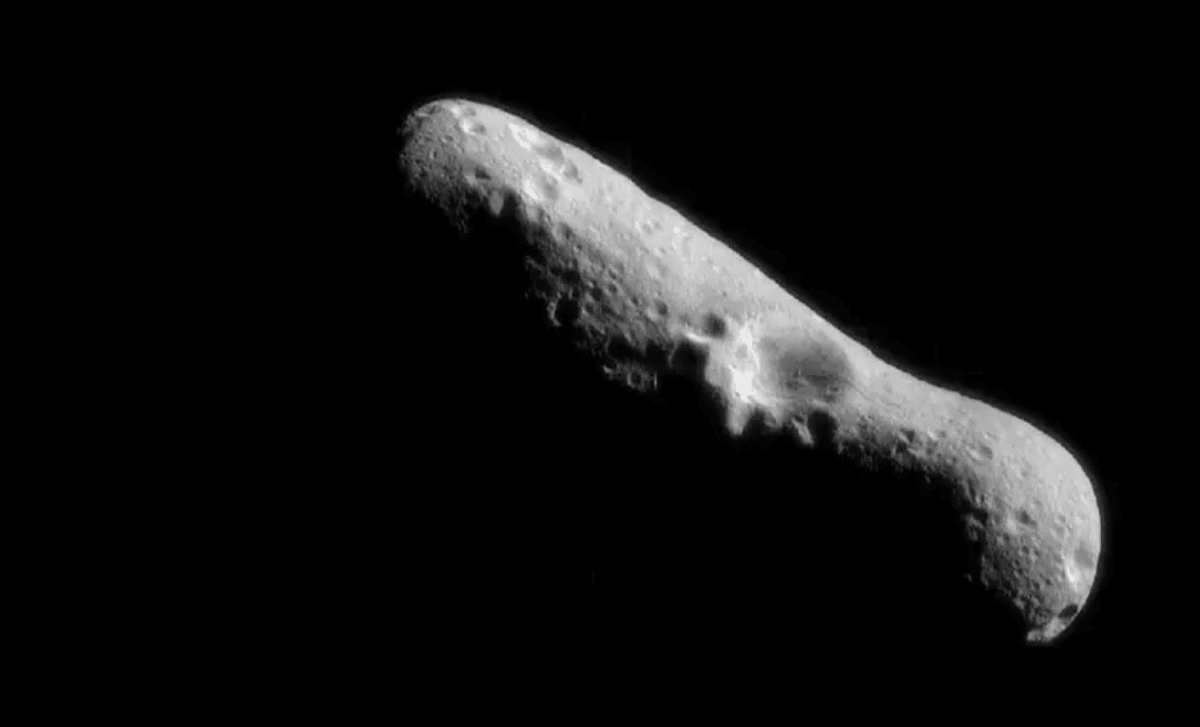
The legendary asteroid 433 Eros, a rocky world that once transformed our understanding of near-Earth space, is making its long-awaited return. This weekend, skywatchers will get a rare chance to glimpse this celestial traveler as it makes a close approach to our planet. The event will be live-streamed globally, allowing enthusiasts to witness history in real time through virtualtelescope.eu. For astronomers and casual stargazers alike, it’s a rendezvous with one of the most storied objects in the solar system.
A Historic Visitor Returns
When 433 Eros was first spotted in 1898, it opened a new chapter in human curiosity about asteroids and our cosmic neighborhood. Now, over a century later, it continues to intrigue scientists as it swings back through Earth’s vicinity this weekend. Measuring about 16.8 kilometers (10.4 miles) across, Eros is one of the largest near-Earth asteroids ever recorded. What makes this flyby especially thrilling is not its danger—Eros poses no threat—but its visibility.
The Virtual Telescope Project (virtualtelescope.eu) will broadcast the encounter live, providing a front-row seat to this astronomical spectacle. The team, led by astrophysicist Gianluca Masi, will use advanced telescopes in Italy to capture the asteroid’s motion across the starry backdrop. This initiative continues a tradition of making astronomy accessible to millions, offering both scientific value and public engagement. Through such projects, cosmic events once reserved for researchers are now shared experiences connecting people under the same night sky.
The Legacy Of 433 Eros
Beyond its scientific interest, Eros holds a special place in history. It was the first asteroid ever orbited and landed on by a spacecraft—NASA’s NEAR Shoemaker mission in 2000–2001. This mission revealed a surface littered with craters and boulders, helping scientists understand how asteroids evolve and interact with solar radiation. Data from Eros even helped refine our estimates of the Earth-Sun distance, a cornerstone of celestial mechanics.
Astronomers have long used Eros as a benchmark to study the composition and behavior of near-Earth objects (NEOs). Its elongated, peanut-like shape and distinctive rotation pattern make it an ideal candidate for studying the complex gravitational interactions between small bodies and planets. During this flyby, observatories worldwide will monitor subtle shifts in its trajectory, adding new data to refine models of asteroid dynamics.
How To Watch The Celestial Encounter
For those eager to experience the event, no telescope is required—just an internet connection. virtualtelescope.eu will host a live broadcast featuring expert commentary, real-time imagery, and scientific insights. Depending on light pollution and local conditions, Eros may even be faintly visible through amateur telescopes or high-powered binoculars in some regions.
The asteroid will appear as a slowly moving point of light against the stars, reminding us that space is far from static. It’s a subtle but profound encounter, linking modern technology with the ancient human instinct to look up and wonder. Events like this underscore how our growing network of global observatories continues to bridge the gap between science and the public imagination.