
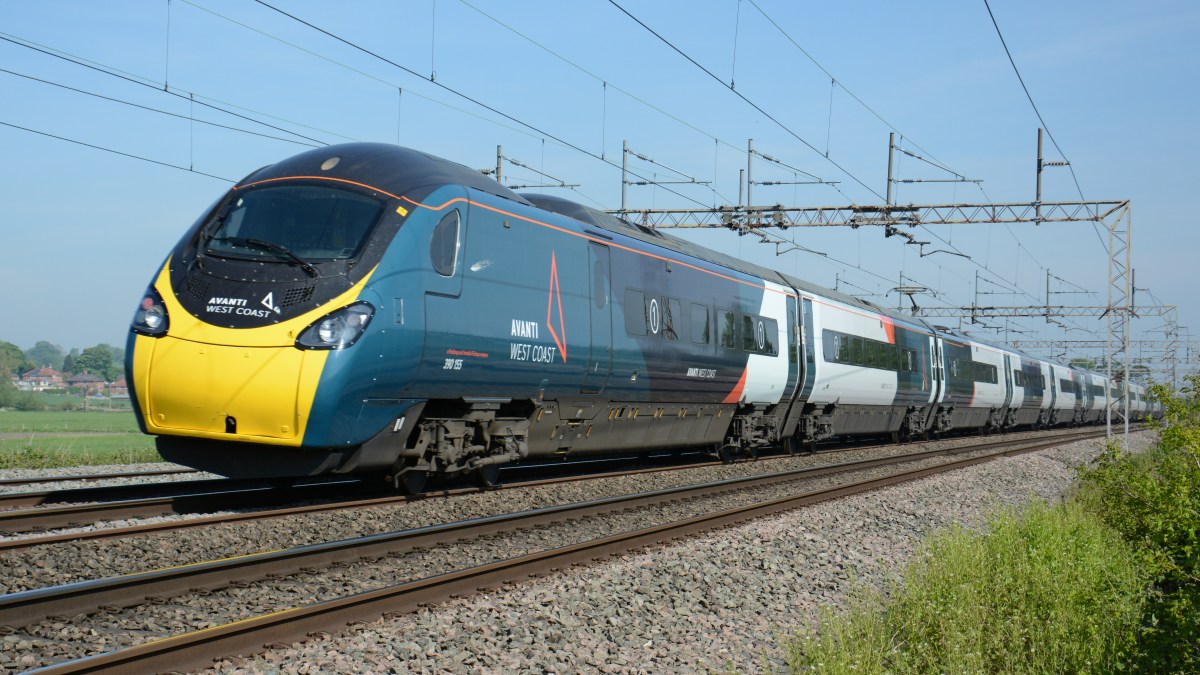
Train commuters across the UK are used to delays and cancellations, but this December they will have to face a more unusual issue.
The 7am departure from Manchester Piccadilly to London Euston, a sought-after service that stops only in Stockport and takes less than two hours to reach the capital, will now run with only staff on board.
Arriving in London just before 9am, it’s a service that has proved popular among MPs, financiers and even pop stars — it is not unusual to witness one of the Gallagher brothers boarding the service, perhaps returning home to London after a heavy night out, so say some regular users. It is one of the most lucrative intercity trains, with passengers parting with hundreds of pounds for a seat.
Yet the Office of Rail and Road (ORR) has said no passengers will be allowed on board Avanti West Coast service when timetables change on December 15.
The farcical situation is a product of the need for the train, carriages and crew to travel south to fulfil the needs of subsequent services. Carrying passengers risks impacting the overall reliability of the service, so the logic goes. A failure to stick to the schedule would have adverse ramifications for services thereafter.
Avanti is said to have opposed the decision.
Andy Burnham, the Greater Manchester mayor, was among those to call for common sense to prevail. “This is a wrong-headed decision which should be overturned forthwith,” he said.
• Giles Coren: Seven hours of train hell stops me going north
Burnham underlined the popularity of the service — scheduled to take just 1 hour 58 minutes — among politicians and business leaders. “Let’s say there’s a high-profile lobby of people heading on the way to the office,” he said. “Connecting two of the country’s most significant economic centres, this is the last service that should be sacrificed. And the idea of running it but no one allowed to get on it? It would become a symbol for an industry that sometimes seems to put its own convenience ahead of the convenience of passengers.”
The ORR, which is responsible for signing off the biannual changes to schedules, defended the decision. It said operating too many passenger trains during the critical time period risked a “detrimental impact on performance”.
It added: “If Avanti operates the service as empty coaching stock … it can be run more flexibly (delayed or re-routed) than a booked passenger service. This can assist with performance management and service recovery during disruption.”
Railway timetable changes, which typically occur twice a year in May and December, are complex undertakings. One troubled timetable in May 2018, described as the biggest since privatisation, led to hundreds of daily cancellations over the summer months.
• Nationalisation isn’t making the trains run on time, data shows
Avanti, a joint venture between UK company FirstGroup and Italian state-owned firm Trenitalia, has faced criticism over poor service levels since taking over from Sir Richard Branson’s Virgin Group in late 2019.
Virgin ran services on the west coast main line from Euston to Birmingham, Manchester and Glasgow for two decades, introducing the Pendolino tilting trains and leading to Branson being the poster child for the success of rail privatisation.
John Caudwell, the Stoke-based entrepreneur with a fortune put at £1.6 billion in the latest Sunday Times Rich List, said: “Virgin weren’t perfect, but they did deliver most of the time. It was a perfectly acceptable service. I would have rated Virgin as reasonably good … and I’d rate Avanti as reasonably bad.”
He described the passenger-free 7am service as “a complete nonsense” that “shouldn’t really be happening”.
If congestion or delays were the issue, Caudwell said, Avanti would be better off being open with customers and warning the service could be delayed. “Why wouldn’t Avanti be allowed to do that commercially, rather than the regulator saying you can’t run it?”
Northern business leaders said the debacle was evidence of the need to build the HS2 rail link to Manchester. The current government policy is to end the new line at Birmingham.
Henri Murison, chief executive of the Northern Powerhouse Partnership, a body whose co-president
is George Osborne, the former chancellor, said: “After the last government cancelled HS2 to Manchester it seems even trains we already had aren’t safe from the axe as there just isn’t enough capacity on the west coast mainline.”