
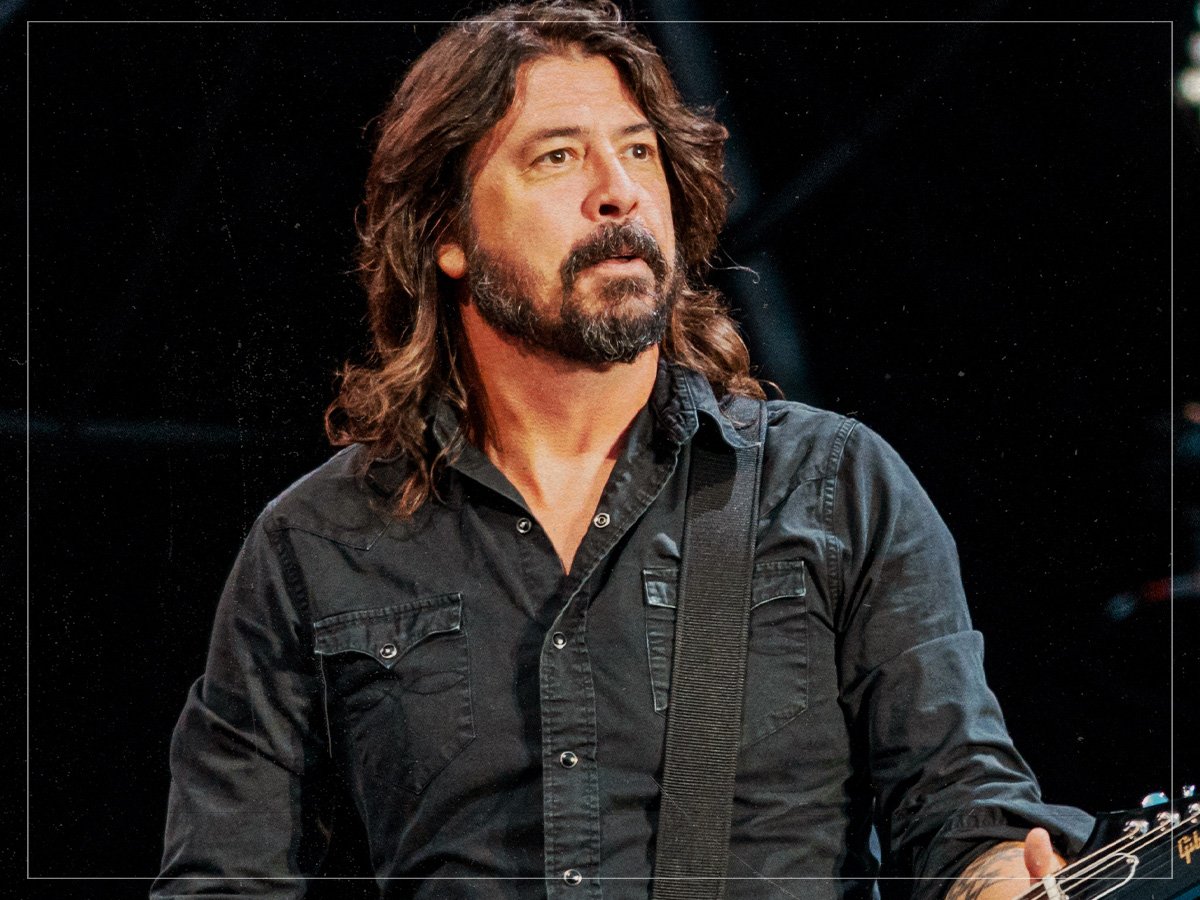
(Credits: Far Out / Raphael Pour-Hashemi)
Sun 30 November 2025 12:43, UK
As one of the most revered forces in modern rock, Dave Grohl’s love of The Beatles is well-documented.
Despite rising to fame as a member of one of the most iconoclastic guitar outfits of the 1990s, Grohl is a self-professed student of pop music. Indeed, it was Kurt Cobain’s own respect for the Fab Four’s pop craft that allowed the underground no-wave outfit to rise to such great heights. Behind all the angst, they weren’t ever venturing too far from structures established by The Beatles.
In fact, it’s often the pop side of the band that Grohl prefers to the experimental side of the group. Grohl has often talked about his affection for The Beatles’ 1970 album Abbey Road. During a conversation with BBC Radio 2 back in 2019, the Foo Fighters frontman was even asked to pick his favourite track from the album.
“The one that stands out to me the most, and has always been my favourite from that record, is called ‘I Want You (She’s So Heavy)’,” he said. “I love heavy music, I love Black Sabbath, I love Motörhead, but I think that nothing is heavier, melodically darker and deeper than the riff in this song.”
It broods and booms with an eeriness that weighs a ton. And the Foo Fighters’ man’s praise doesn’t stop there, either. Grohl has been noted to speak candidly about his love of the Fab Four whenever he’s got the chance. During the same conversation in 2019, the former Nirvana drummer revealed a host of his favourite tunes from the band, including ‘Hey Bulldog’, ‘Something’, ‘Taxman’, ‘Because’ and many more.
Grohl also revealed that the 1965 song ‘In My Life’ holds a special place in his heart after it was played at his friend and former bandmate Kurt Cobain’s funeral service. “It means a lot to me, because it was the song that was played at Kurt Cobain’s memorial,” Grohl explained to Radio 2. “That day, after everyone had said their piece, this next song came over the speakers and everyone got to celebrate Kurt’s love of The Beatles one last time together”.
 The Beatles’ 1968 press photo. (Credits: Far Out / Associated Press)
When it comes to actual songcraft, however, Grohl is more interested in John Lennon’s solo material. Dave’s Nirvana bandmate Kurt Cobain was equally obsessed with Lennon. During a 1993 interview with Rolling Stone, Cobain said: “John Lennon was definitely my favourite Beatle, hands down. I don’t know who wrote what parts of what Beatles songs, but McCartney embarrasses me. Lennon was obviously disturbed [laughs]. So I could relate to that.”
Cobain was rightly fascinated by Lennon’s ambiguous relationship with fame. Of course, that same notoriety allowed the former Beatle an important, unprecedented platform, one he used to share a message for peace. Few songs are as demonstrative of Lennon’s effort to use music as a tool for social change as 1971’s ‘Imagine’ from the album of the same name.
“I really wish that I had written ‘Imagine’,” Grohl said in an interview for the Red Bulletin, “Because it’s such a beautiful song with a really timeless quality – the song just never sounds old. When I was young and I first started playing guitar – around the age of ten or eleven years old – I would sit and strum along to [John Lennon’s] records all day long. That’s how I learned to play guitar – John was my teacher.”
Inspired by Yoko Ono’s 1964 book Grapefruit (a sort of forerunner to Brian Eno’s Oblique Strategies for artists), ‘Imagine’ tends to divide Beatles fans. And for good reason. The track was written by Lennon from the comfort of his expansive mansion on the Tittenhurst Park estate, which certainly makes it harder to take Lennon’s call for ordinary people to “imagine no possessions” seriously.
Grohl doesn’t seem to mind, though. He, like so many other listeners, found the humility at the centre of the track. While Lennon and many of his fans would later deride the tune as nothing more than pop poetry – and saccharine verse at that – Grohl saw the nugget of heartening empathy at the root of the track’s creation, and the melody can’t be disputed either.
Speaking about the iconic song, Lennon himself commented that it was “Anti-religious, anti-nationalistic, anti-conventional, anti-capitalistic, but because it is sugarcoated, it is accepted … Now I understand what you have to do. Put your political message across with a little honey.”
That sense of important messaging fit for the masses is something that the Nirvana drummer has always adored and admired in Lennon.
Related Topics