

The Athletic has launched a Cricket WhatsApp Channel. Click here to join.
Simon Harmer is a delighted, delirious, and — without wanting to libel him — potentially still drunk man.
Sat in the airport lounge in Dubai, the 36-year-old’s adrenaline is at odds with the anodyne surroundings of Gate 47. His mind, clearly, is still in Guwahati where, barely 48 hours earlier, he and his South Africa team-mates achieved one of cricket’s greatest feats.
Whitewashing India, in India.
“For the first time in my career,” Harmer says, “I was standing on the field being like, ‘You know what? I don’t give a f*** if I don’t bowl well here. I just want to win. I just want to beat India.’
“Everything was heightened. It’s mentally a lot more draining because you’re constantly waking up and understanding that, if you have a s*** day today, that could be it. The team’s won the first Test match against all odds. Now we need to win the second Test. Are we going to do that? Well, if you don’t bowl well, we’re not going to win, so get your s*** together and get to where you need to be.
“For us to beat them in their backyard has been special, and quite surreal.”

South Africa’s Simon Harmer bowling on the fifth day in Guwahati (Biju Boro/AFP via Getty Images)
Harmer did what he needed to do — and more.
He took 6-37 in the second innings in Guwahati as India were dismissed for 140 to lose by 408 runs, their heaviest ever defeat in terms of runs. Across the two matches, Harmer claimed 17 wickets at an average of 8.94, the best bowling average for South Africa in a Test series and the second best for anyone in India who has taken a minimum of 15 wickets.
His performances cemented his curious position in the world game as arguably the best off-spinner on the planet, but one who has hardly played any international cricket. This year he took his 1,000th first-class wicket. Yet of his 236 first-class matches, just 14 have been for South Africa.
“It’s been a hell of a journey,” Harmer says. “And I wouldn’t have wanted it any other way. It’s not that I’ve played 14 Tests for South Africa or 114. It’s that I’ve played one Test for South Africa.”
Five Tests in 2015 and another five in 2022-23 should have been Harmer’s lot. An obvious talent, his absence from the international game was long held up as the result of a broken world order where financial instability in South African cricket, combined with the domestic requirement for transformation targets which require domestic and international teams to contain a minimum number of players of colour, led to several players leaving for the UK and signing “Kolpak” deals in England.
Harmer, who was without a contract in South Africa, was one of them and, in 2017, he signed a six-month deal with Essex worth £30,000. He still plays for them.
“If things didn’t go according to plan at Essex,” Harmer said in an interview with ESPNcricinfo in 2019, “I’d have gone back to South Africa unemployed, and was probably looking at life after cricket.”
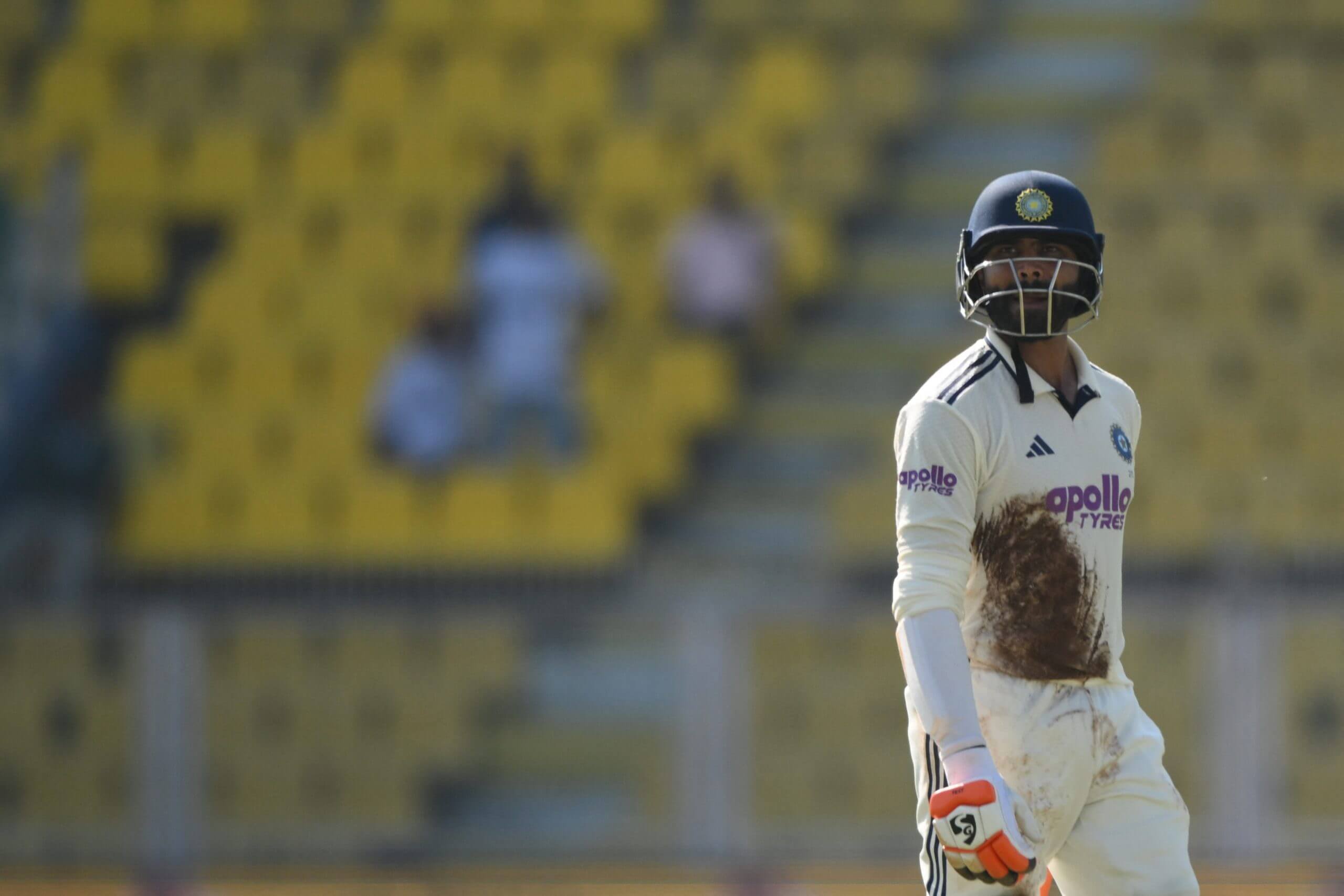
Ravindra Jadeja, who made a battling 54 in India’s second-innings 140, departs with the writing on the wall (Biju Boro/AFP via Getty Images)
To put it simply, if you are not playing domestic cricket in South Africa, you cannot play international cricket for South Africa. On occasion, Harmer would return and sign for a team locally, which led to his five further caps in 2022-23. But that chapter was done.
Then, in June of this year, he went to the pub.
A few days earlier, South Africa had won the World Test Championship at Lord’s, with Harmer watching on from home in Essex with “goosebumps”.
“I just wanted to be involved,” he says. “Like, I watched these guys win the World Test Championship. And I’m like, ‘You didn’t play domestic cricket in South Africa. (If you had) you could have been a part of this journey.’ I’m not saying that I would have played or anything, but I could have been sitting on the balcony, running drinks. And like, I want to be part of that.”
With a sparse winter ahead, Harmer had agreed to sign with the South African domestic team the Titans for a season, mainly to keep ticking over, but in the knowledge that South Africa had tours in the spin-friendly sub-continent coming up as well. Then, joining up at the pub with the victorious Proteas in the days after their win at Lord’s, he hit play on his plan.
“(South Africa captain) Temba Bavuma pulled in,” Harmer says. “And I was like: ‘Listen, I’ve signed to play domestic cricket in South Africa. I’m still keen to contribute. I still feel I can contribute.’
“And he says: ‘Just do me a favour, please send (the South Africa coach) Shukri Conrad a message.’”
Instructed by the captain to let the head coach know, Harmer messaged. “Leave it with me,” came the reply.
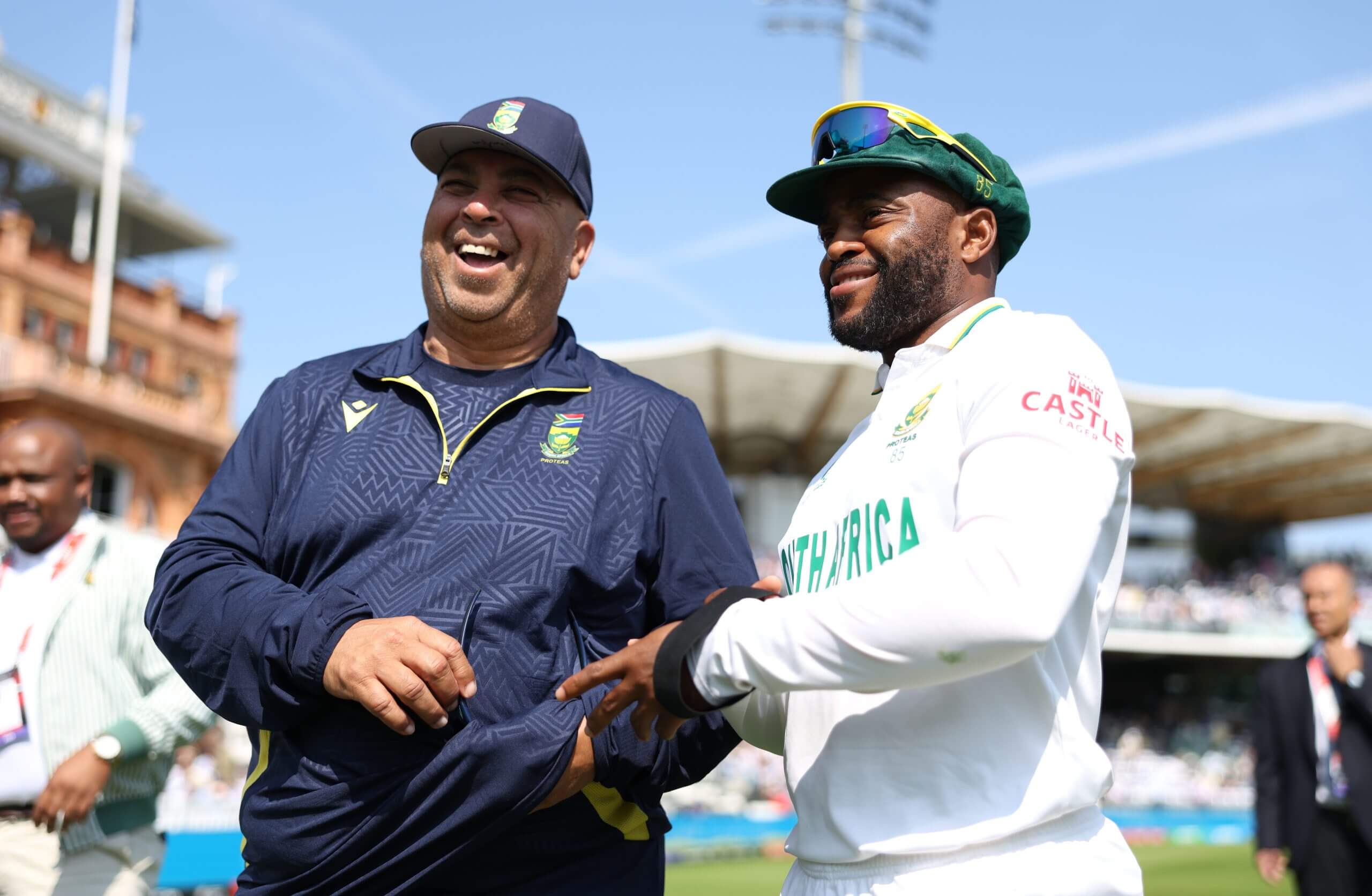
South Africa coach Shukri Conrad and captain Temba Bavuma at last summer’s World Test Championship final at Lord’s (Matthew Lewis-ICC/ICC via Getty Images)
Harmer had been eyeing up the trip to India where he had played twice in 2015 on a tour where, in his own words, South Africa had their “pants pulled down”. But to his surprise, he received the call to go to Pakistan as well, before he had even turned out once for the Titans.
It was in the second Test of that tour that Harmer took his 1,000th first-class wicket, becoming only the second man who debuted this century to reach that landmark. The series was drawn 1-1.
“When I knew there was a chance,” Harmer says, “it was the only milestone I wanted to achieve.”
Harmer’s contemporaries refer to him as a genius. An off-spinner, he is the leading craftsman in cricket’s least sexy trade. To misquote Jamie Carragher, right-arm off-spinners are failed batters, or failed fast bowlers. No one grows up wanting to be John Emburey, of Middlesex and England ‘fame’ in the 1980s.
And yet since he signed for Essex in 2017, Harmer has been the leading wicket taker in England, even in conditions which rarely lend themselves to spin. Cut to being unleashed on the dust bowls of Kolkata and Guwahati, and he was a man reborn.
“When it’s turning and things are going well,” he says, “you can screw around with all these things and it’s so much fun. You’re bowling to batters and you know exactly what’s going on and they’ve got no clue.”
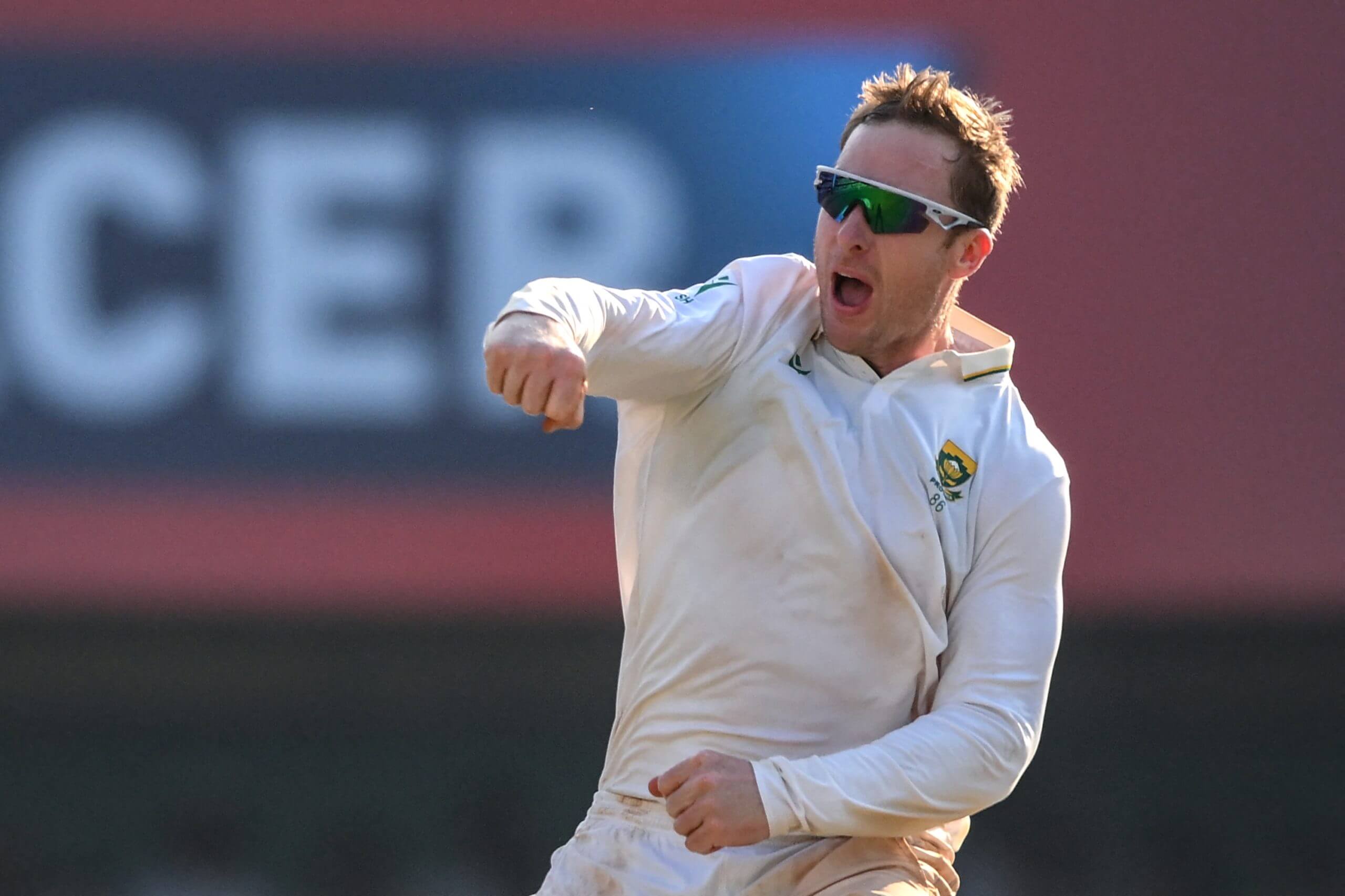
Simon Harmer celebrates the dismissal of India’s Washington Sundar on day three at Guwahati (Biju Boro/AFP via Getty Images)
The key for Harmer is controlling whether the ball lands on the seam or whether it lands on the side of the ball, known as the lacquer.
If it lands on the seam, the ball will spin and bounce more because of the textured surface. If it lands on the lacquer, which is smooth, it will skid. Harmer explains this by describing the ball as a clock. When he wants it to spin, the seam goes from one o’clock to seven o’clock. When he wants it to skid, he tilts it so the seam goes from two o’clock to eight o’clock. It looks identical to the batter, but with opposite results.
“I find a sick pleasure in it,” he says with a smile.
Such accuracy is a team effort. The balls used in India would go out of shape early and so fail to maintain a perfect rotation. Team-mate Aiden Markram was in charge of shining the ball and would tell Harmer if the imperfection caused by when it pitched was on the seam or on the lacquer. Harmer would then adjust accordingly.
“You’re constantly trying to find subtle changes,” he explains, talking through slight variations such as when he releases the ball from the front of his hand or more over the top. “It’s been so much fun to use all the stuff that I’ve learned on the international stage.”
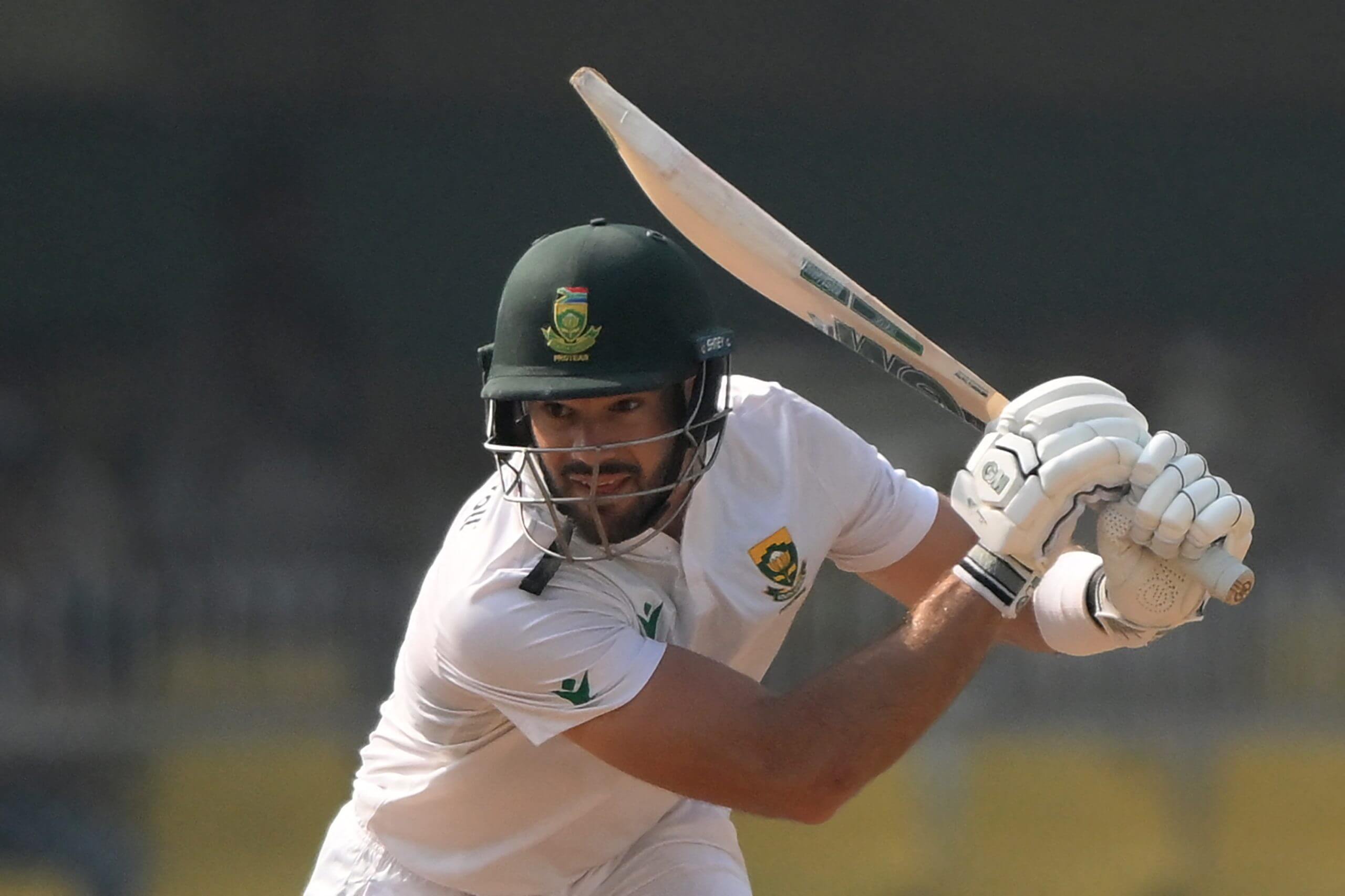
South Africa batter Aiden Markram was in charge of shining the ball to assist Simon Harmer (Biju Boro/AFP via Getty Images)
There is poetry in Harmer’s international moment coming in the country that had provided him with the most self-doubt.
In 2015, India had thrashed South Africa 3-0 across four matches. Harmer played in two of the defeats, both of which were heavy. “After that tour, I think I needed to know if I was ever going to be good enough,” he says. “I didn’t feel like I was back then and I needed to evolve and get better.
“Then for the opportunity that presented itself over the last six weeks to play against Pakistan and India, it just feels like my journey has culminated in this moment. If the grim reaper of cricket was waiting for me before I got on this plane and said, ‘Listen, it’s over’, I’d be so happy and content.”
Until that moment does come, Harmer wants to keep going.
He is under no illusion that he may only play when conditions suit, but that’s more than enough for him. “I know that the Springboks went through their own sort of transition period and now are dominating World Rugby,” he says. “And I feel like South African cricket’s kind of just been waiting for things to come together and it just feels that something special is brewing.”
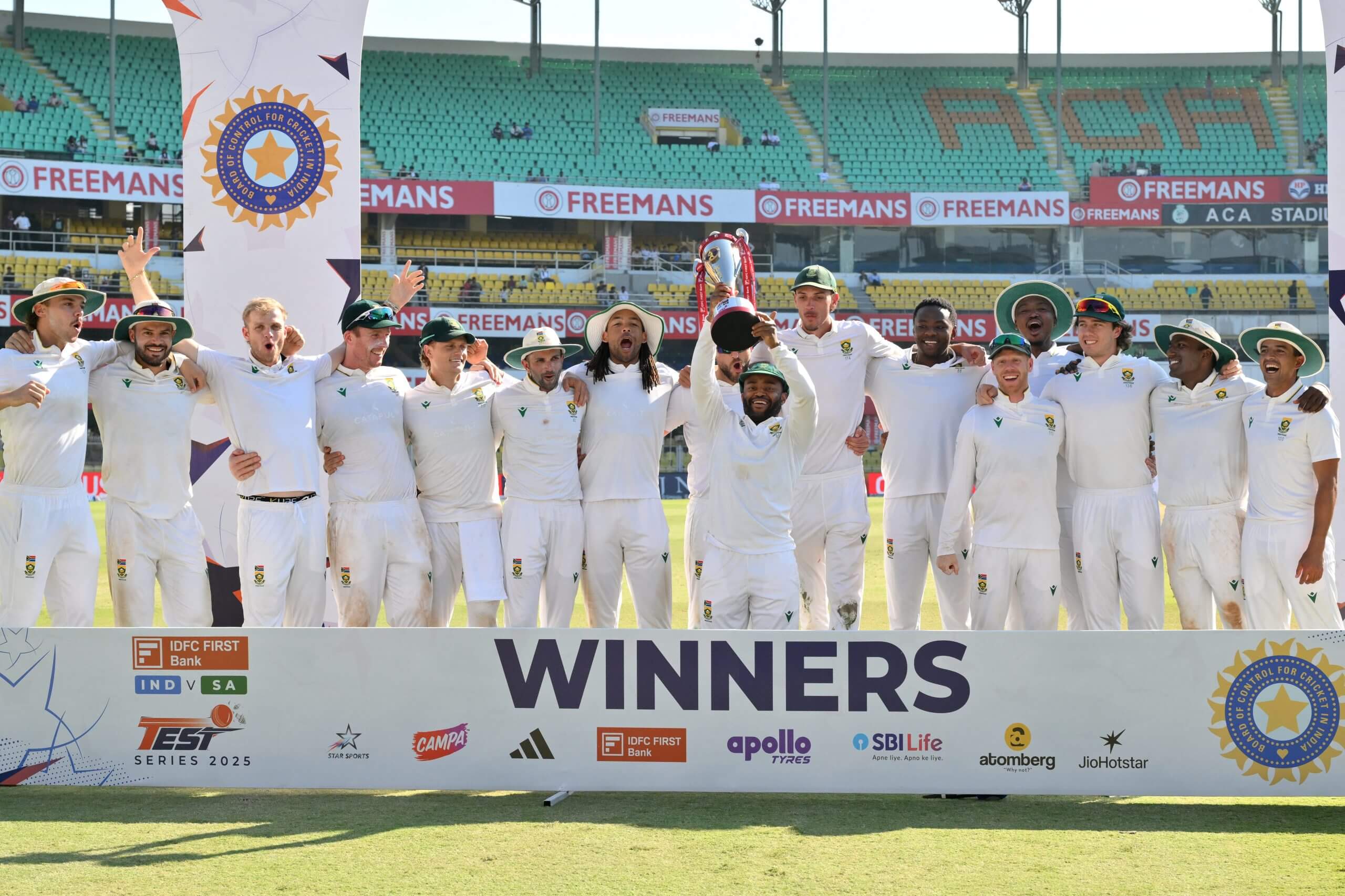
South Africa’s players celebrate an historic win in India (Biju Boro/AFP via Getty Images)
The joke had been that South Africa had only reached the World Test Championship final because they had not played any of The Big Three in England, Australia or India. They have since beaten Australia in the final, whitewashed India in their own backyard and welcome England for a tour next year.
Harmer is keen to stress that “one swallow doesn’t make a summer”, but they are doing a good job of collecting a fair few.
The imbalances of world cricket are such that, despite South Africa riding high, they do not have another Test match for close to a year. That is an indictment of the structure of the modern game, but one that the Proteas succeeded in spite of. In the meantime, it is time for Harmer to finally honour that Titans contract he signed back in April.
“I feel a bit guilty,” Harmer adds as he prepares to board the plane. “I haven’t even been to a training session.”
For years, the world knew that Harmer had what it takes to perform at the highest level. Now, they know.
And so does he.