
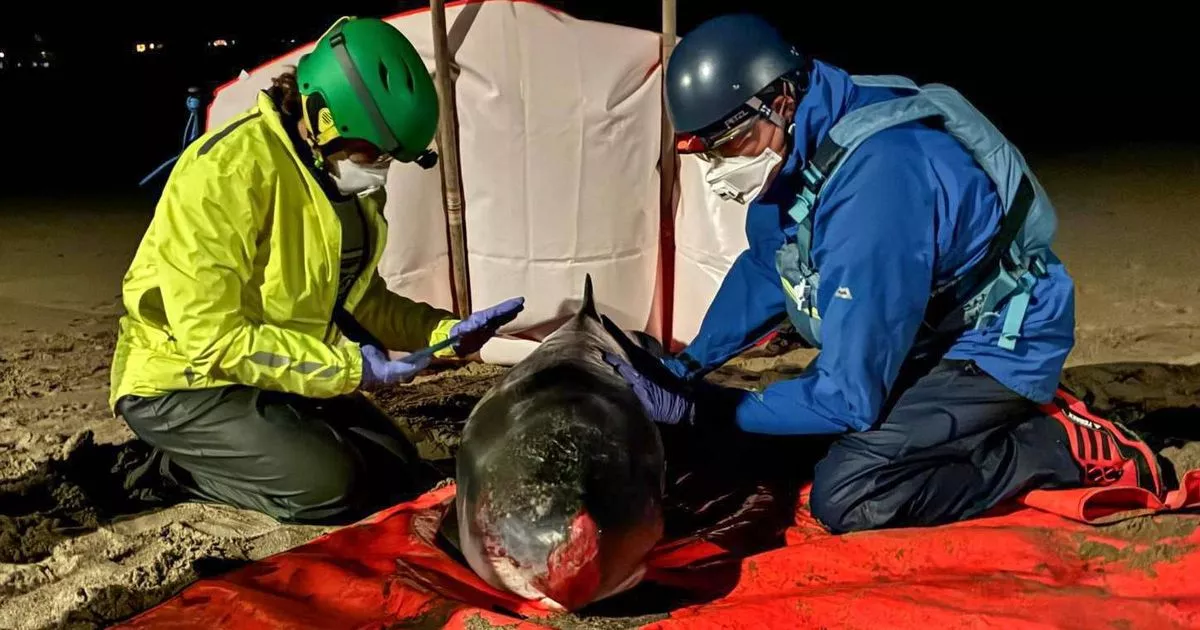
The pygmy sperm whale was stranded alive on Trearddur Bay beach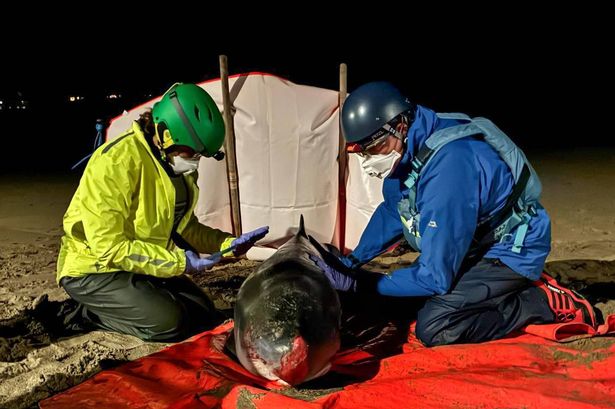 Experts try to save a rare pygmy sperm whale calf stranded on an Anglesey beach(Image: British Divers Marine Life Rescue)
A rare pygmy sperm whale has been found stranded on a Welsh beach. Despite the best efforts of experts who were called in to save it, the baby whale, which was discovered on Trearddur Bay in Anglesey, did not survive and a decision was made to euthanise it to end its suffering.
The whale was reportedly spotted by a member of the public at 6.40pm on Thursday. A spokesperson for HM Coastguard confirmed: “It was a really rare, Pygmy sperm whale. It was alive when they found it.
They let the British Divers Marine Life Rescue (BDMLR) know. They got water from the Sea Shanty cafe to keep it alive.” Read the biggest stories in Wales first by signing up to our daily newsletter here.
However, the spokesperson added that a veterinary surgeon who was also called out ultimately had to euthanise it, reports North Wales Live.
Coastguard Rescue Teams (CRT) from Holyhead and Rhosneigr were also present at the scene. Rhosneigr CRT shared on Facebook that they were tasked by the coastguard to assist their colleagues from Holyhead CRT with the stranded, live pygmy sperm whale on Trearddur Bay beach.
A spokesperson for Rhosneigr CRT wrote: “Both CRTs assisted marine mammal medics from the BDLMR (British Divers Marine Life Rescue) in working tirelessly throughout the evening and into the early hours in attempts to save this mammal.
“But after constant welfare observations and health checks carried out by the medics and veterinary specialists who had also arrived on scene, the decision was made to proceed with euthanasia in the best interests of the mammal to prevent any further stress or suffering due to a positive outcome being no longer possible.”
The spokesperson continued: “The whale was then carried off the beach to the awaiting vehicles of the BDLMR for transportation. Both CRTs standing down and returning to their stations to make ready for any future taskings.”
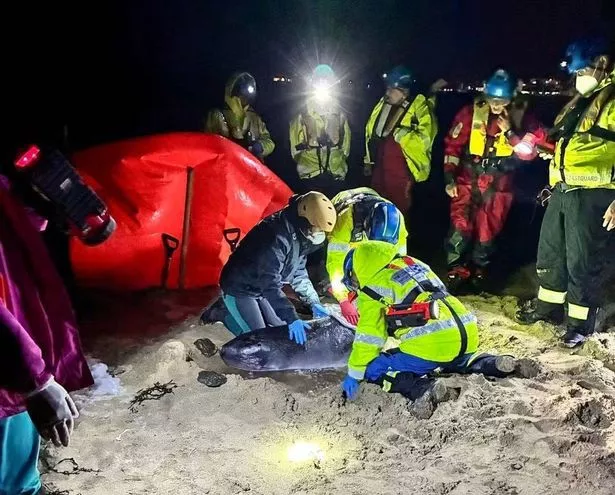 Experts from British Divers Marine Life Rescue charity and others try to save the life of a rare Pygmy whale on an Anglesey beach(Image: British Divers Marine Life Rescue/Rhosneigr Coastguard Rescue Team)
They added: “Pygmy sperm whales are rarely seen in the UK with only a few strandings ever recorded. Although they are small compared to true sperm whales, their deep-water habitat makes them one of the most rarely observed cetaceans.”
BDMLR confirmed it was a female cetacean measuring 1.7m in length. A spokesperson said: “The animal was assessed on scene by BDMLR Medics, who provided welfare support keeping the animal upright and hydrated, while two vets were en route.
“Careful ID assessment confirmed the animal to be a pygmy sperm whale, a rarely recorded species typically only seen in deep waters in temperate to tropical seas. There are less than 20 records of this species in the UK.”
They added: “Unfortunately the young animal had significant injuries across the head, body, fins and tail stock consistent with live stranding on to a sharp reef bed, as well as possible rake mark injuries from another marine animal. Her size indicated she was potentially still a maternally dependent calf, or recently weaned, but evidently not doing well on her own.”
No pygmy sperm whales in the UK and Ireland have ever been successfully refloated. Following expert consultation with a marine mammal veterinary surgeon, and based on evidence of the animal’s health status, “the decision was made that the kindest outcome was to euthanise the whale to stop further suffering.”
A complete post-mortem examination will be conducted by the Cetacean Strandings Investigation Programme and Marine Environmental Monitoring.
BDMLR expressed gratitude to members of the public who reported the stranding and veterinary staff from Bodrwnsiwn Veterinary Clinic.
In a separate incident yesterday, a dead porpoise was discovered on another Anglesey beach. The creature was found at Llanddwyn at 2.20pm by a member of the public.
They reported the discovery to HM Coastguard. It is understood the animal had been there for some time and was “badly degraded”, according to the coastguard.
An HM Coastguard spokesman confirmed it now has a duty to pass the information on to the Receiver of Wreck and the Natural History Museum. The death was not deemed suspicious.
The body has been left in situ, cordoned off to indicate it has been reported to the authorities. It may be taken for a post-mortem examination by the museum, added the HM Coastguard spokesman.
Get daily breaking news updates on your phone by joining our WhatsApp community here. We occasionally treat members to special offers, promotions and ads from us and our partners. See our Privacy Notice.