
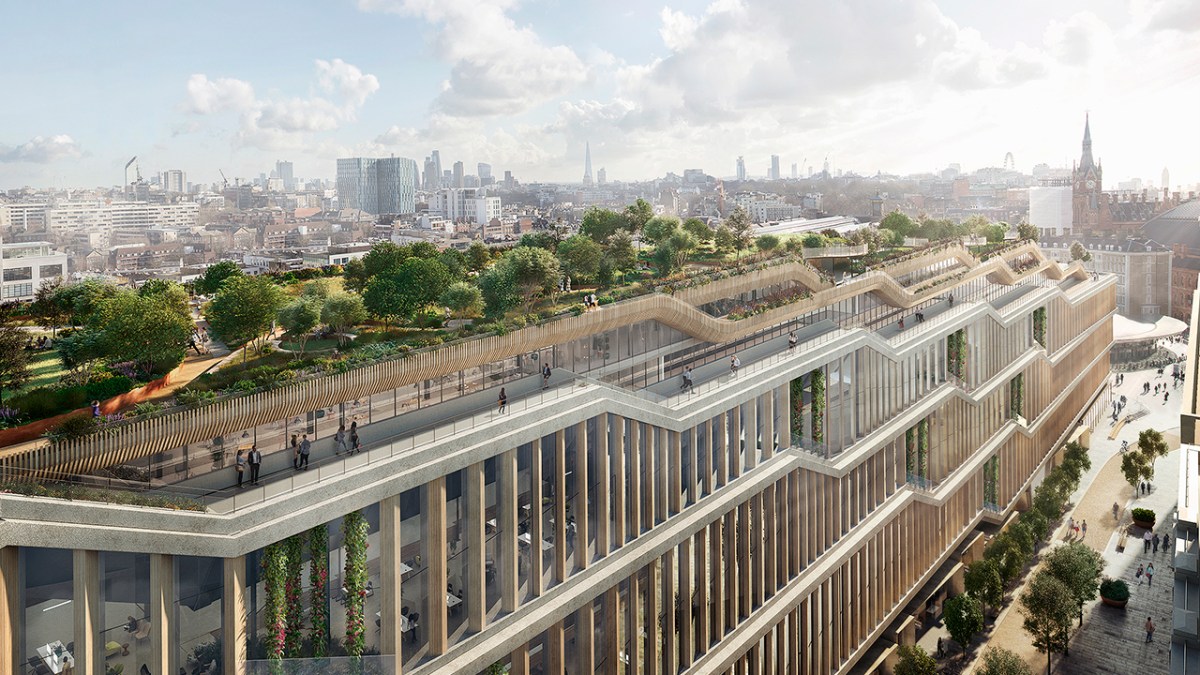
Google’s move into its London “landscraper” has been pushed back until next year, The Times understands.
Repeated delays to the works mean that teams will not start taking residence in the US tech company’s massive £1 billion European headquarters, known as Platform G, until some point in 2026. Google did not respond to requests for comment.
Ground was broken on the King’s Cross office in 2017, called a landscraper because the relatively low-rise building is longer than the Shard is tall, and the move-in date was originally supposed to be in 2024.
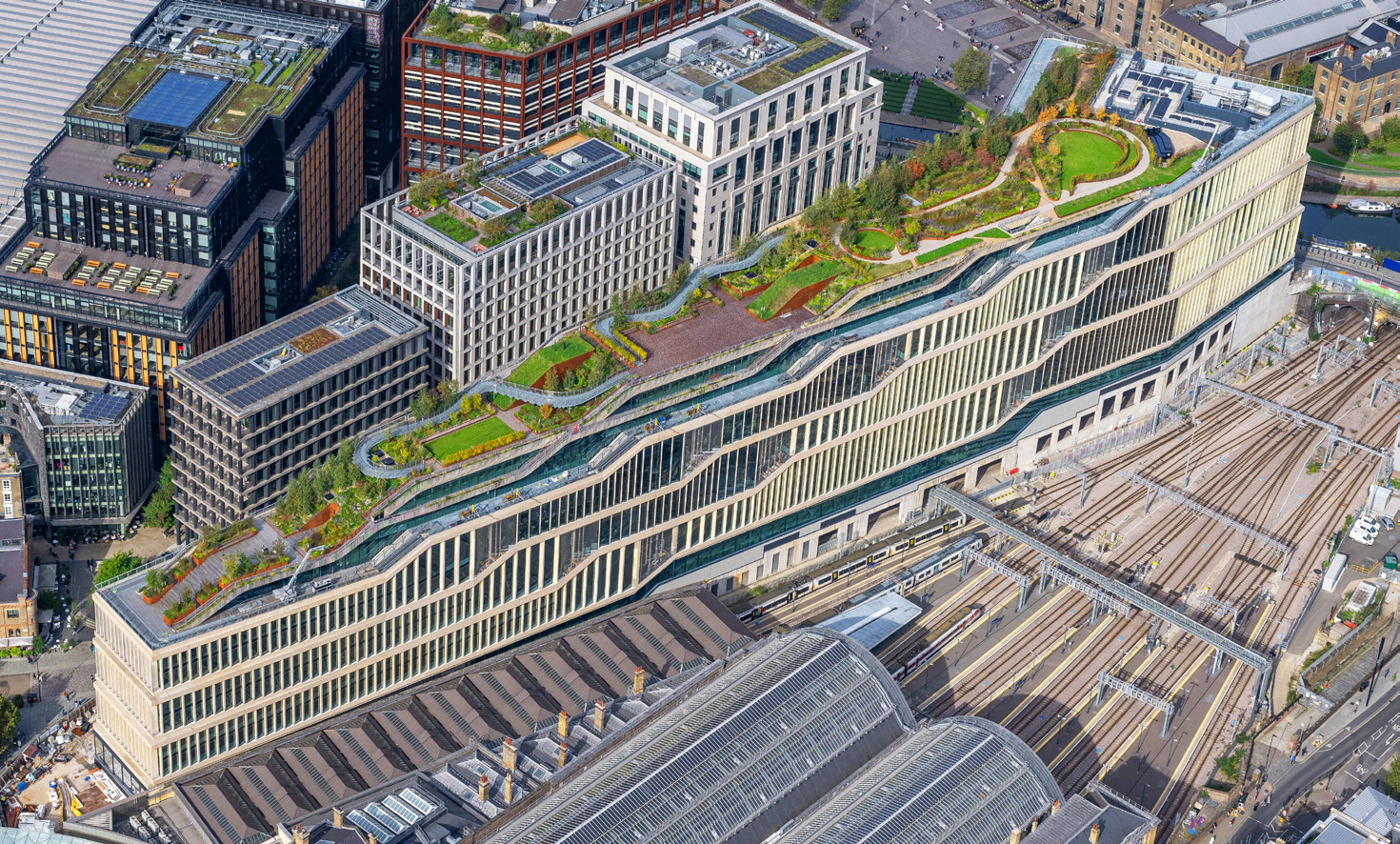
It is 72 metres tall and eleven storeys at its highest point and stretches to 330 metres in length. Among the amenities on offer are an indoor swimming pool, gym and basketball court. The structure is topped by an elaborate rooftop garden complete with 40,000 tonnes of soil to support 250 trees and a walking and running track.
Occupying almost one million square feet, Platform G can house 7,000 workers and has hanging floors, which are not fixed to the side of the building, to increase the sense of light and space.
• Google’s new ‘strategic market status’ could clip its wings
Yet although the landscaping work has been completed, the building remains empty and in June there were reports that the roof had been occupied by foxes, which had dug burrows into the soil. One visitor who viewed inside at this time described it as still being “a shell” and as a result there is some scepticism inside the company about even the new 2026 move.
There have been significant changes within two companies involved in the project, which is thought to have contributed to the delays. Construction was managed by Lendlease but it sold its UK construction business to private equity this year. The UK business was rebranded as Bovis, its former name. Bovis would not comment on the project and referred inquiries to Google.
Interior Services Group won the contract to fit out the building but collapsed under a mountain of debt in September 2024. The job is now being done by Structure Tone, which did not respond to a request for comment.
Insiders report that there is a tussle between divisions of Alphabet, Google’s parent company, over who will take the crown as the “anchor tenant”. DeepMind is said to be pushing for that role.
• Tempus: Is it a good time to buy shares in Alphabet?
Following the pandemic, Google has moved to curb remote working and requires staff to be on the premises at least three days a week. There will be little need for workers to leave the new London building once they move in, as there are plenty of places to eat on site. Sergey Brin, Google’s co-founder, had a mantra that “no one should be more than 200 feet away from food”.
Google’s office saga dates back to 2013, when it decided that the plans for its new offices were not ambitious enough. In 2016 the company brought in Thomas Heatherwick, the celebrity designer who had worked on its California offices along with the Danish architect Bjarke Ingels.
Adding to its British property portfolio, in 2022, Google spent $1 billion on its central London office site, in the West End. That same year it celebrated the final beam of the landscraper being put in place in a “topping out ceremony” attended by Sir Keir Starmer, the local MP and Labour leader, and Sir Sadiq Khan, the mayor of London.