
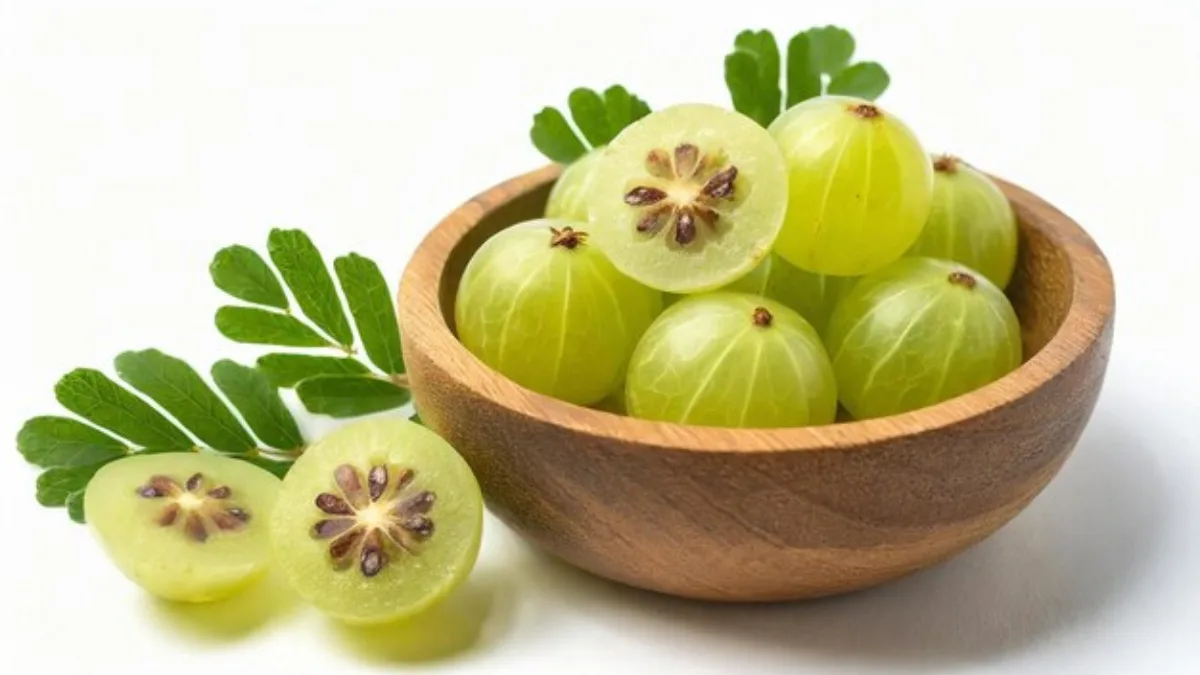
For generations, amla has been one of India’s strongest healing fruits. From immunity to digestion, every household swears by its benefits. But one part of the fruit never got any attention: the seed. It was always thrown away, treated as waste and forgotten.
Now, Patanjali Research has turned this old belief upside down. Under the guidance of Acharya Balkrishna, scientists at the Patanjali Research Institute decided to study the amla seed using modern scientific methods.
Advertisement
What they found has surprised both the traditional and scientific worlds.
Researchers discovered that the amla seed is not just useful. It is far richer in nutrients than the fruit pulp itself. The study shows that these tiny seeds hold extremely high levels of antioxidants, omega fatty acids, linoleic acid, quercetin, catechin, gallic acid, flavonoids and saponins.
In simple words, the seed carries a powerful mix of elements that can support the heart, skin, hair, immunity and even mental well-being.
Also Read: When life gives you lemons, detox your liver: Acharya Balkrishna’s simple tip
Using these findings, Patanjali has developed several new Ayurvedic products. These include capsules that support heart health, phytonutrient oil for skin and hair care, herbal tablets that help reduce stress and inflammation, special supplements designed for diabetes management.
The breakthrough has not gone unnoticed. The Ministry of AYUSH, CSIR and many international scientific bodies have recognised this research for its contribution to modern Ayurveda. Experts say this discovery strengthens India’s position as a global leader in natural medicine.
The impact of the study is visible beyond laboratories. It has changed things on three important levels.
Amla seeds that were once discarded are now being purchased by Patanjali. More than 70,000 farmers have gained a fresh source of earnings giving rural communities a major boost.
Using the seeds has encouraged zero-waste herbal farming. Nothing from the fruit goes to waste anymore, making the entire process more eco-friendly.
Products made from amla seeds are now being exported to the US, Europe and Southeast Asia, opening new trade possibilities for India.