
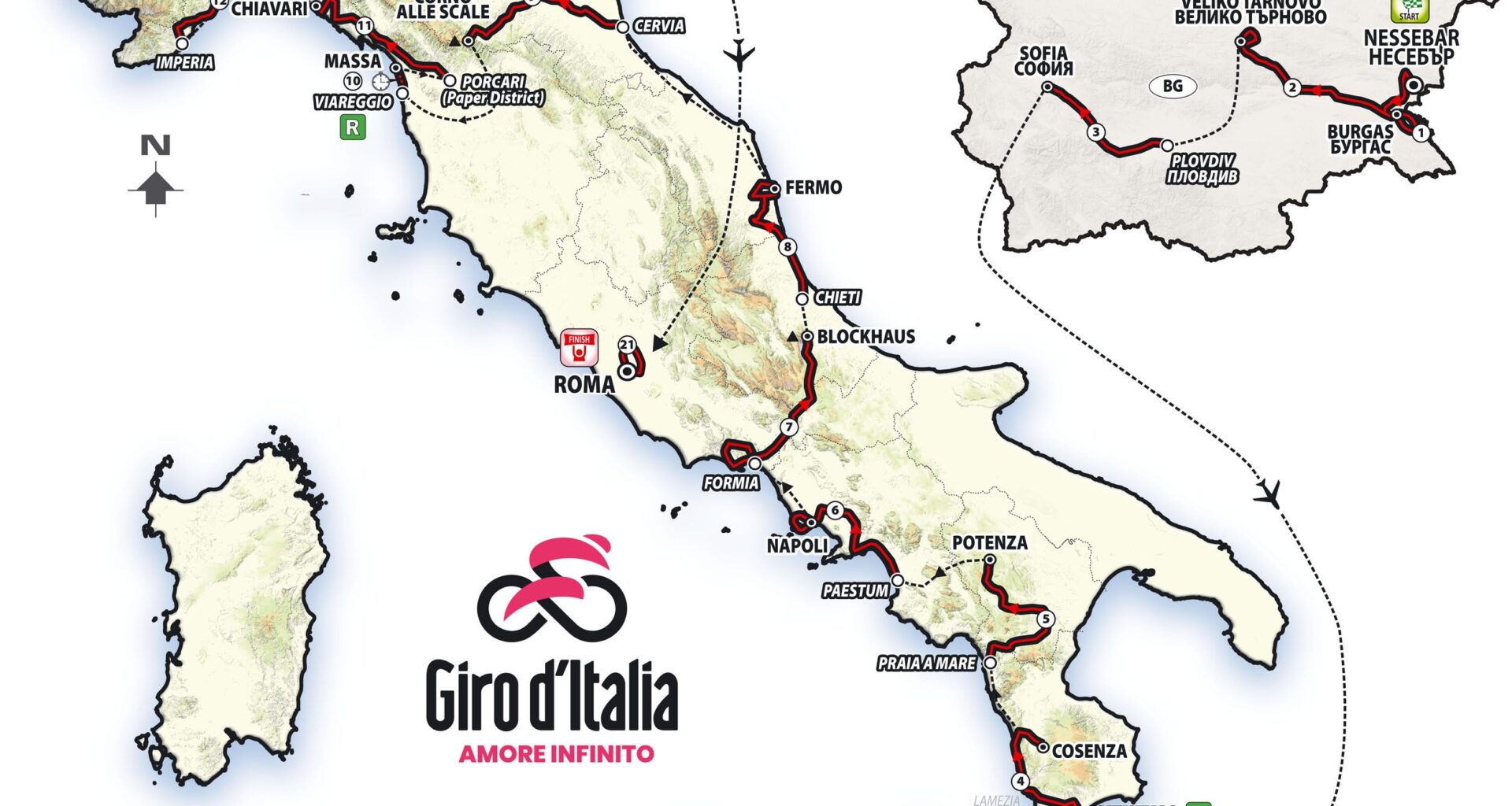
The 2026 Giro d’Italia will start in Bulgaria, on the edge of the Black Sea in Eastern Europe before traveling to southern Italy for the gradual ride north via Naples, Tuscany and Milan before the decisive mountain stages in the northeast and the final stage in Rome.
The 109th edition of the Corsa Rosa will start on Friday, May 8 and end on Sunday, May 31, with the UCI permitting an extra rest day for the transfer from Sofia to southern Italy after the three opening stages in Bulgaria. It is the 16th time the Giro starts outside of Italy.
Best picks for you
The key numbers
Stages: 21Total distance: 3,459kmTotal elevation: 49,150mSummit finishes: 7Time trials: 116th foreign Grande Partenza
The route of the 2026 Giro was presented in Rome on December 1, in the presence of the Bulgarian Prime Minister Rosen Zhelyazkov, 2025 Giro winner Simon Yates (Visma-Lease a Bike), 2025 Giro d’Italia Women winner Elisa Longo Borghini (UAE Team ADQ) and two-time Giro winner Vincenzo Nibali.
The 2026 Giro d’Italia Women will be held between May 30-June 7, a new date after the men’s race instead of during the men’s Tour de France. The nine-day Giro d’Italia Women will start in Cesenatico, Marco Pantani’s birthplace, and end in Saluzzo in Piemonte after climbing the spectacular Colle delle Finestre dirt road.
Details of the route of the 2026 Giro d’Italia Women can be found on the dedicated race page.
Simon Yates is expected to defend his 2025 victory, with his teammate Jonas Vingegaard also a possible contender. Primož Roglič is likely to lead Red Bull-Bora-Hansgrohe alongside talented young Italian Giulio Pellizzari, while Isaac del Toro (UAE Team Emirates-XRG) will be booking for revenge after his capitulation on the penultimate stage in 2025 that allowed Yates to take the maglia rosa.
Stage 1: Nessebar – Burgas (156km)
Image 1 of 2
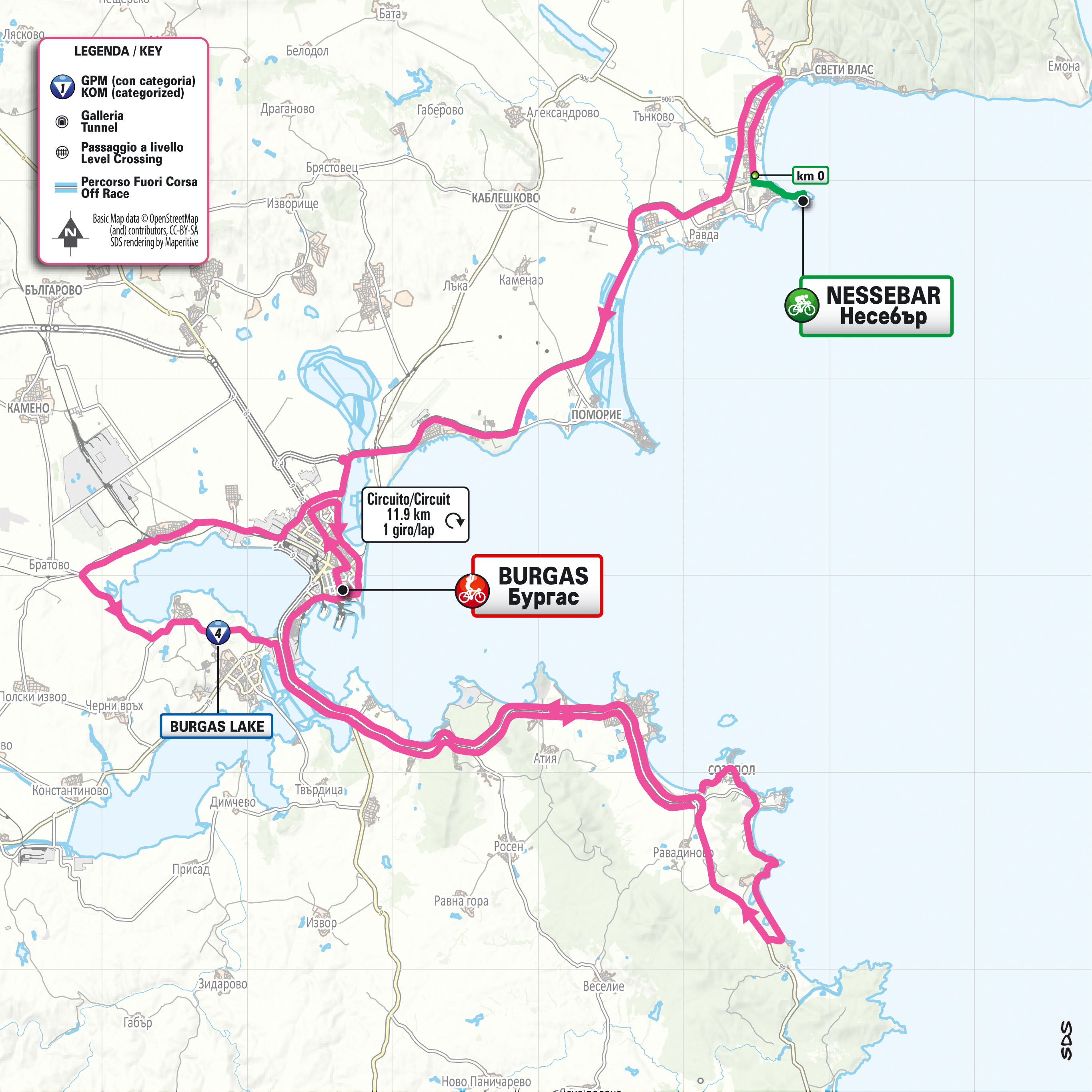 Giro d’Italia 2026 stage 1 map(Image credit: RCS)
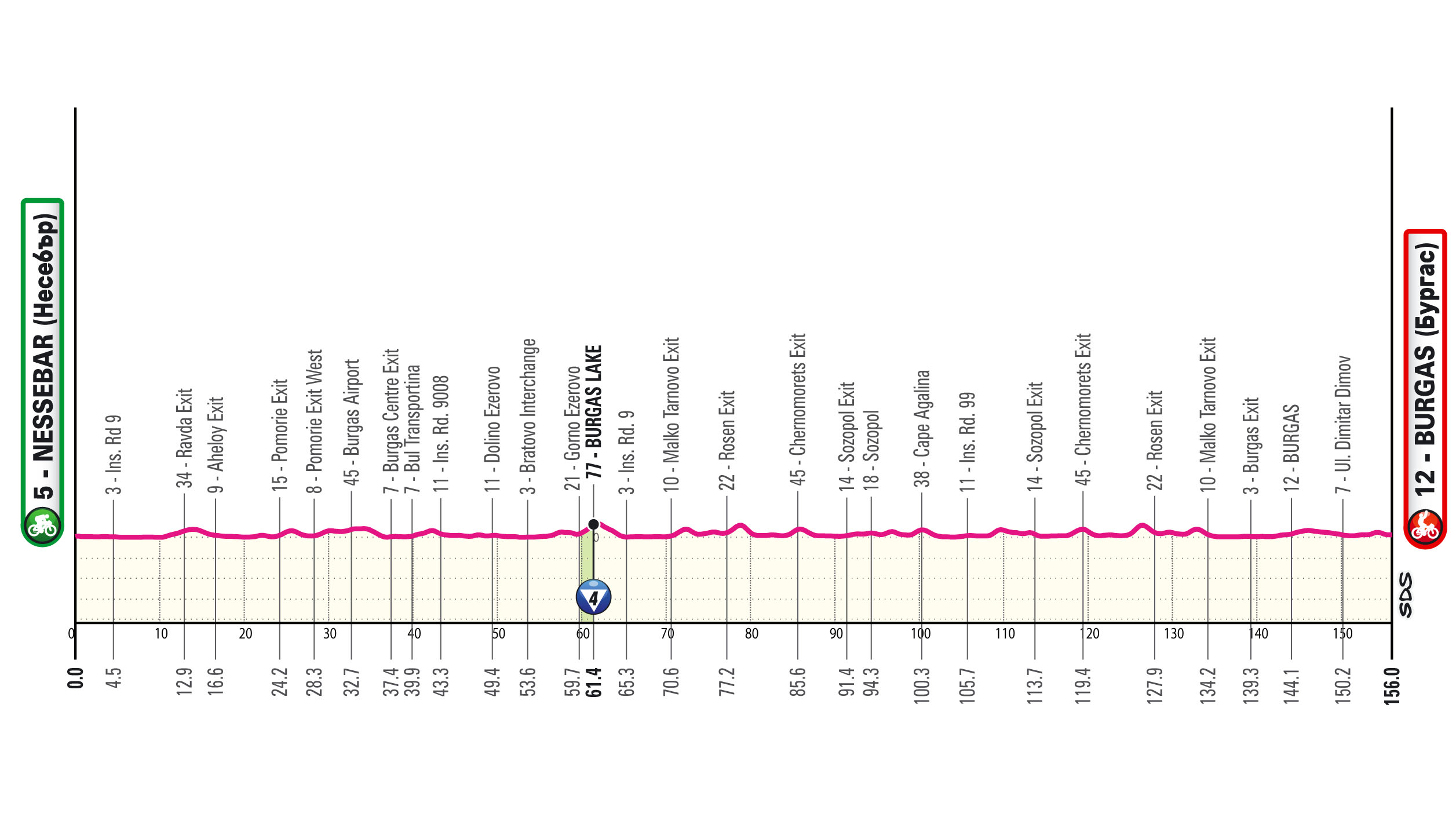 Giro d’Italia 2026 stage 1 profile(Image credit: RCS)
The first stage in Bulgaria starts and finishes on the Black Sea coast, highlighting the history and holiday resorts of the region. The 156km stage is flat and follows the coastline, with a final 11.9km finishing circuit. It seems perfect for the sprinters, who will fight for the maglia rosa of the 2026 Giro.
Don’t miss these
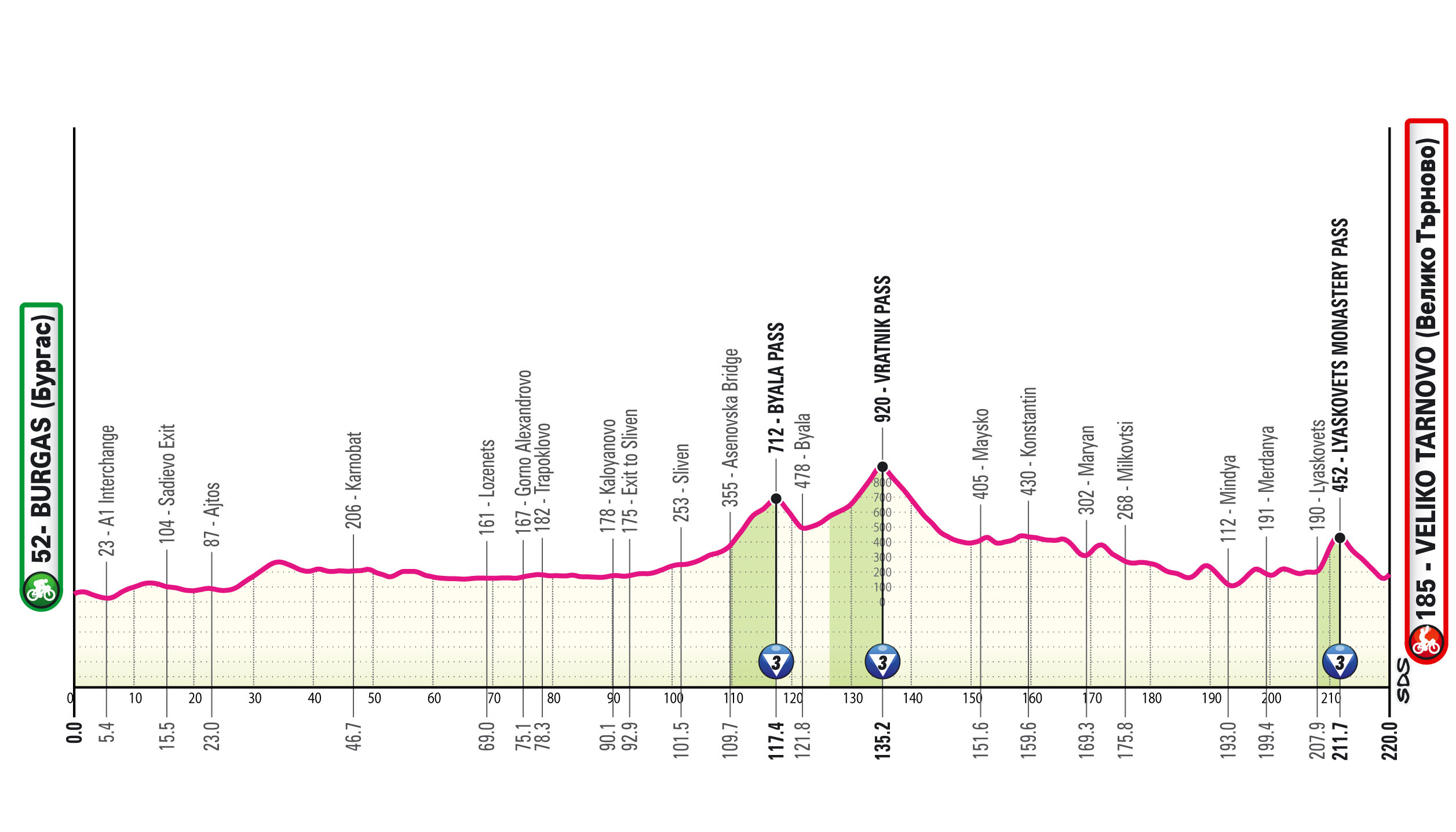
Stage 2: Burgas – Veliko Tarnovo (220km)
Image 1 of 2
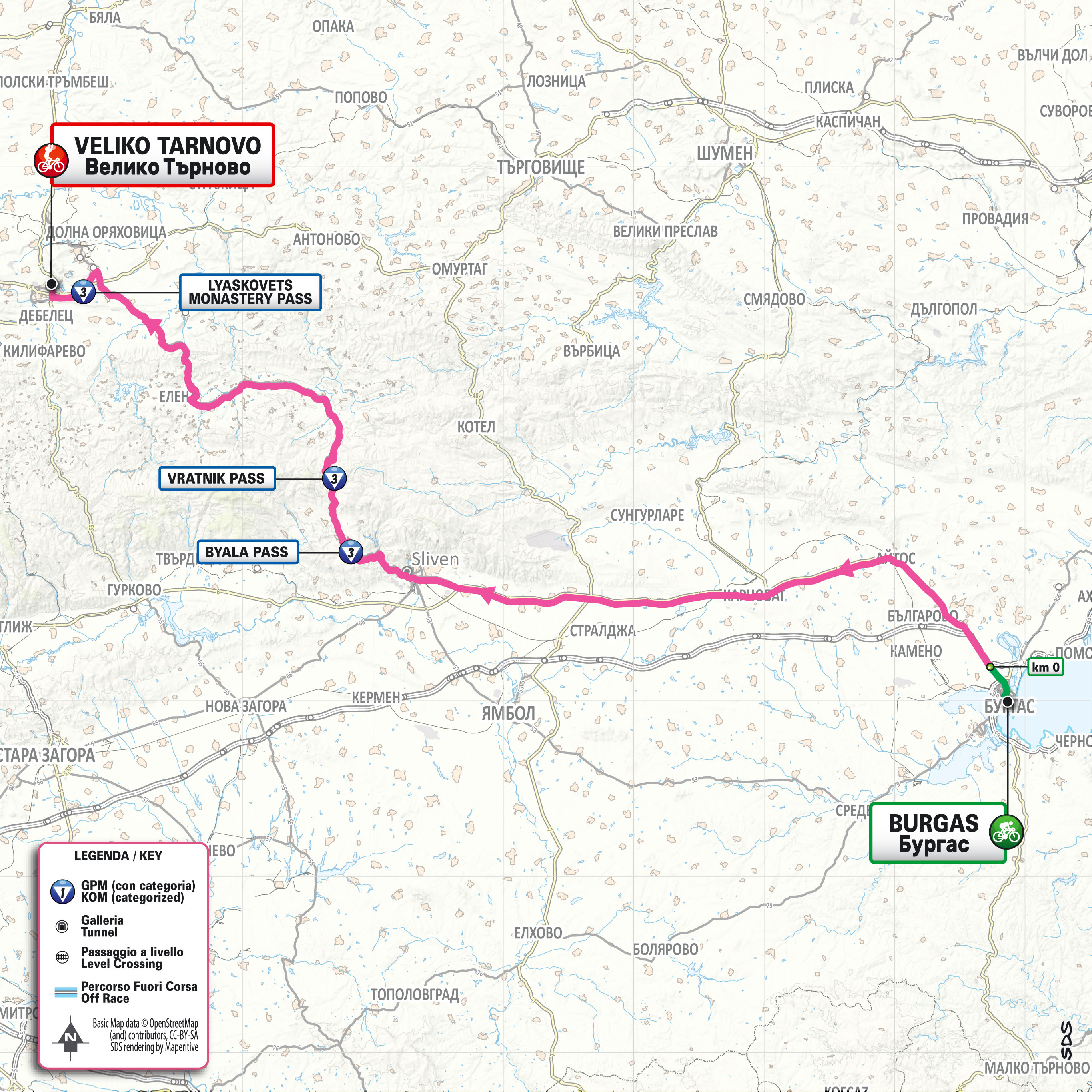 Giro d’Italia 2026 stage 2 map(Image credit: RCS)
 Giro d’Italia 2026 stage 2 profile(Image credit: RCS)
This long stage heads inland with two mid-stage climbs and then a four-kilometre climb that tops out just 8km from the finish. It seems perfect for an attack to stay away and perhaps the first GC tussle.
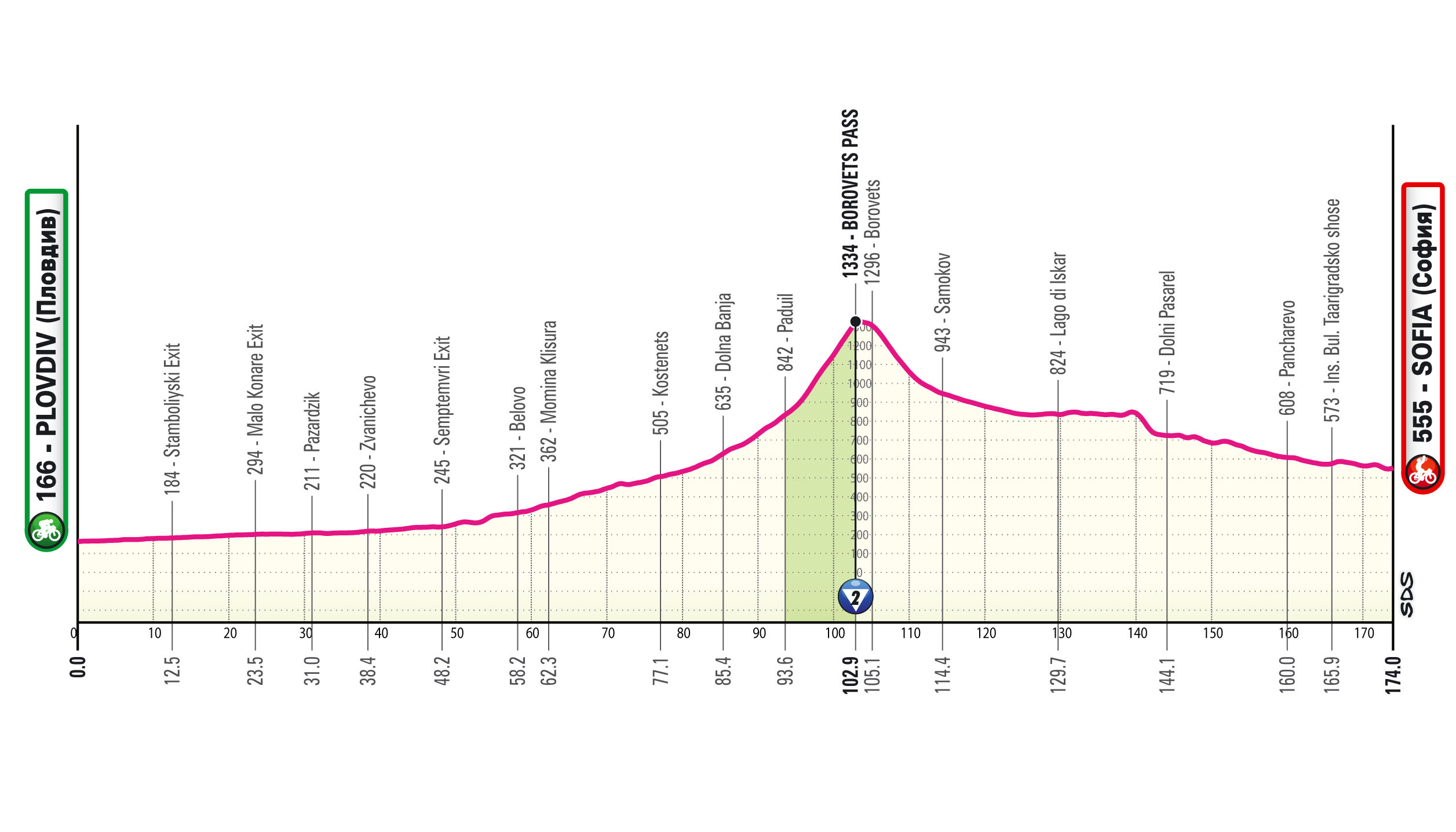
Stage 3: Plovdiv – Sofia (174km)
Image 1 of 2
 Giro d’Italia 2026 stage 3 map(Image credit: RCS)
 Giro d’Italia 2026 stage 3 profile(Image credit: RCS)
The final stage in Bulgaria finishes in the capital Sofia and once again favours the sprinters. However, the long mid-stage climb to Borovets gives the breakaway some hope of success.
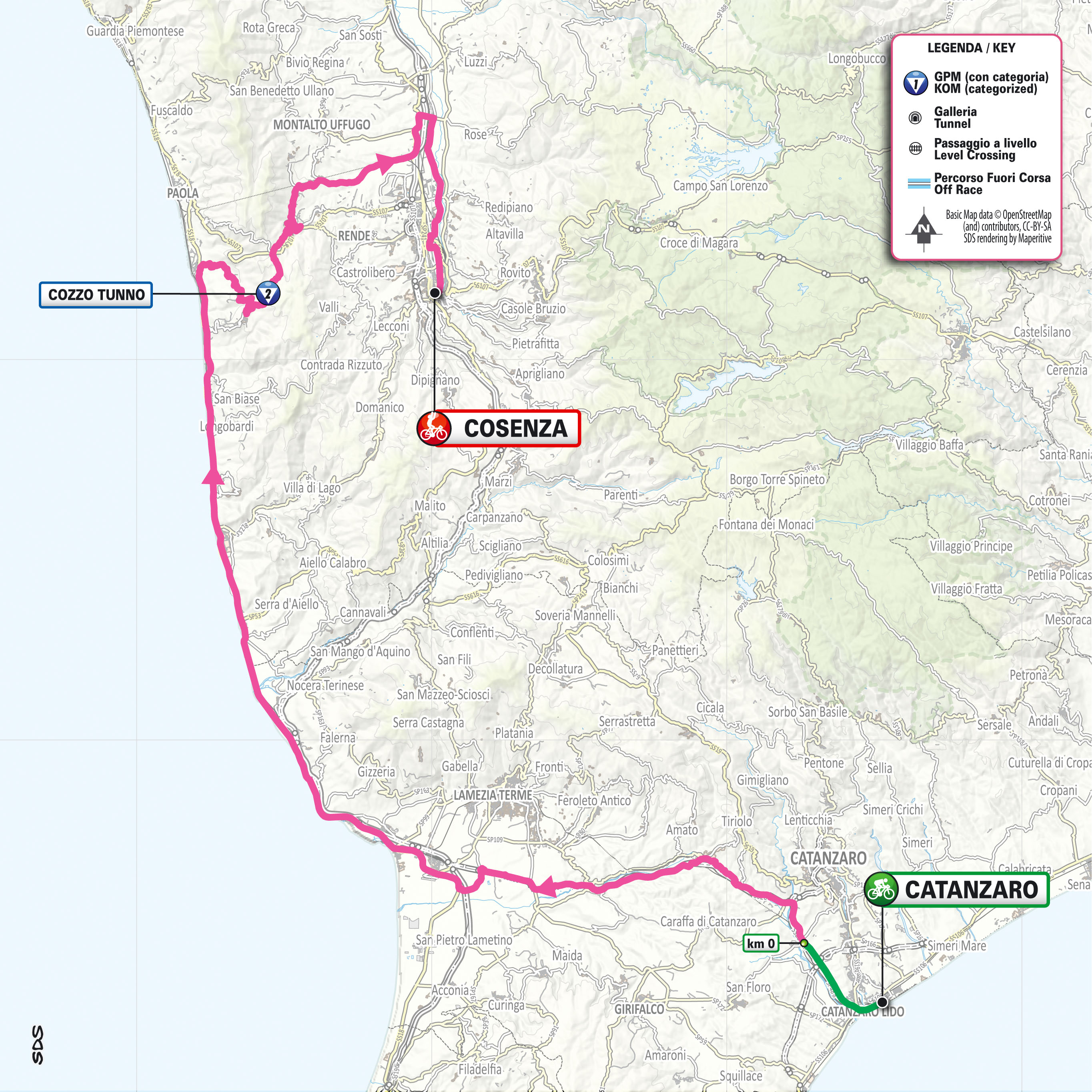
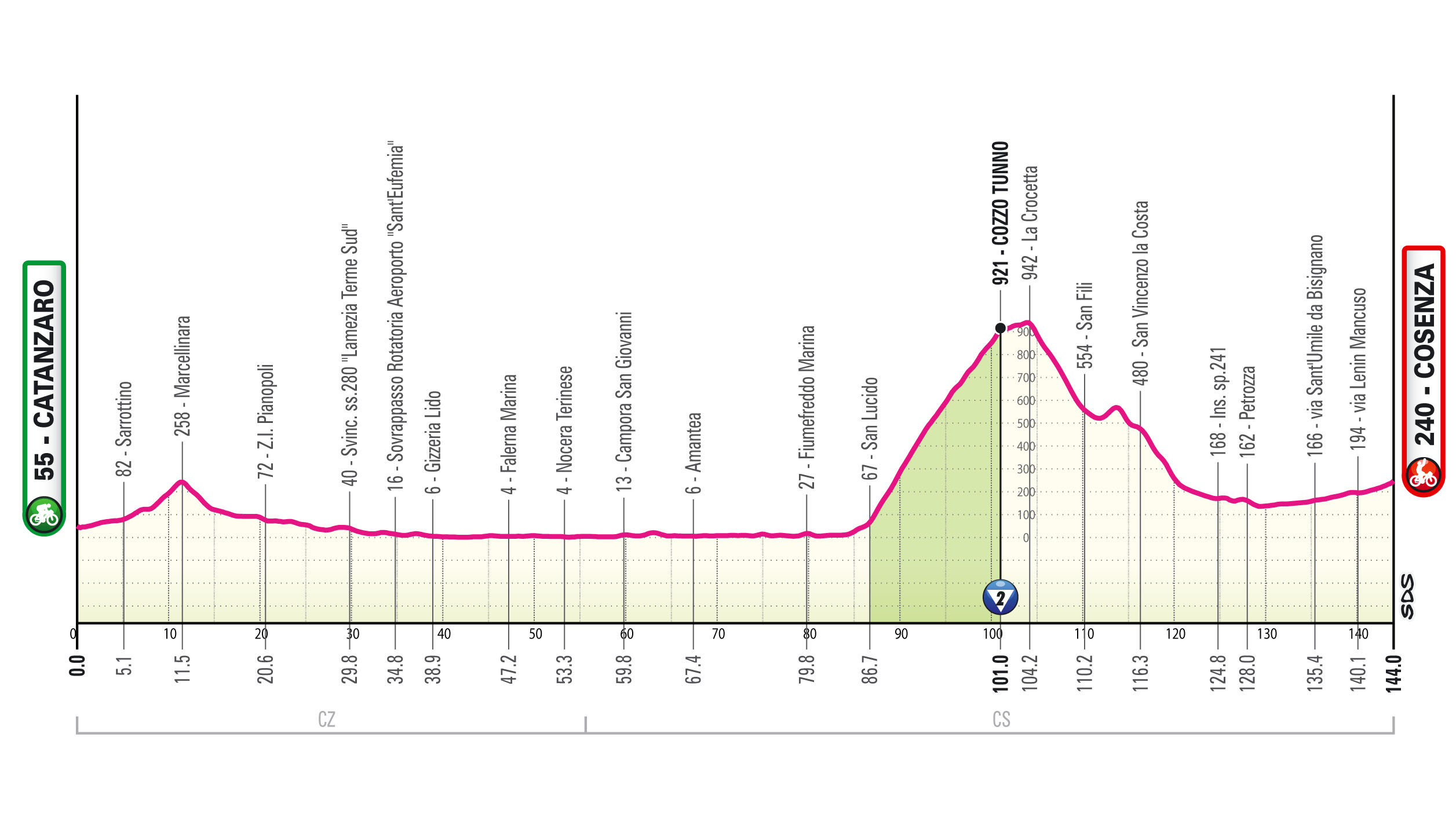
Stage 4: Catanzaro – Cosenza (144km)
Image 1 of 2
 Giro d’Italia 2026 stage 4 map(Image credit: RCS)
 Giro d’Italia 2026 stage 4 profile(Image credit: RCS)
The Giro caravan will fly from Bulgaria to Calabria in southern Italy on Monday, May 11 on a combined travel and rest day. The racing returns on Tuesday with a short stage to Cosenza which again suits the sprinters if they can survive the 13km Cozzo Tunno climb after 86km.
Stage 5: Praia a Mare – Potenza (204km)
Image 1 of 2
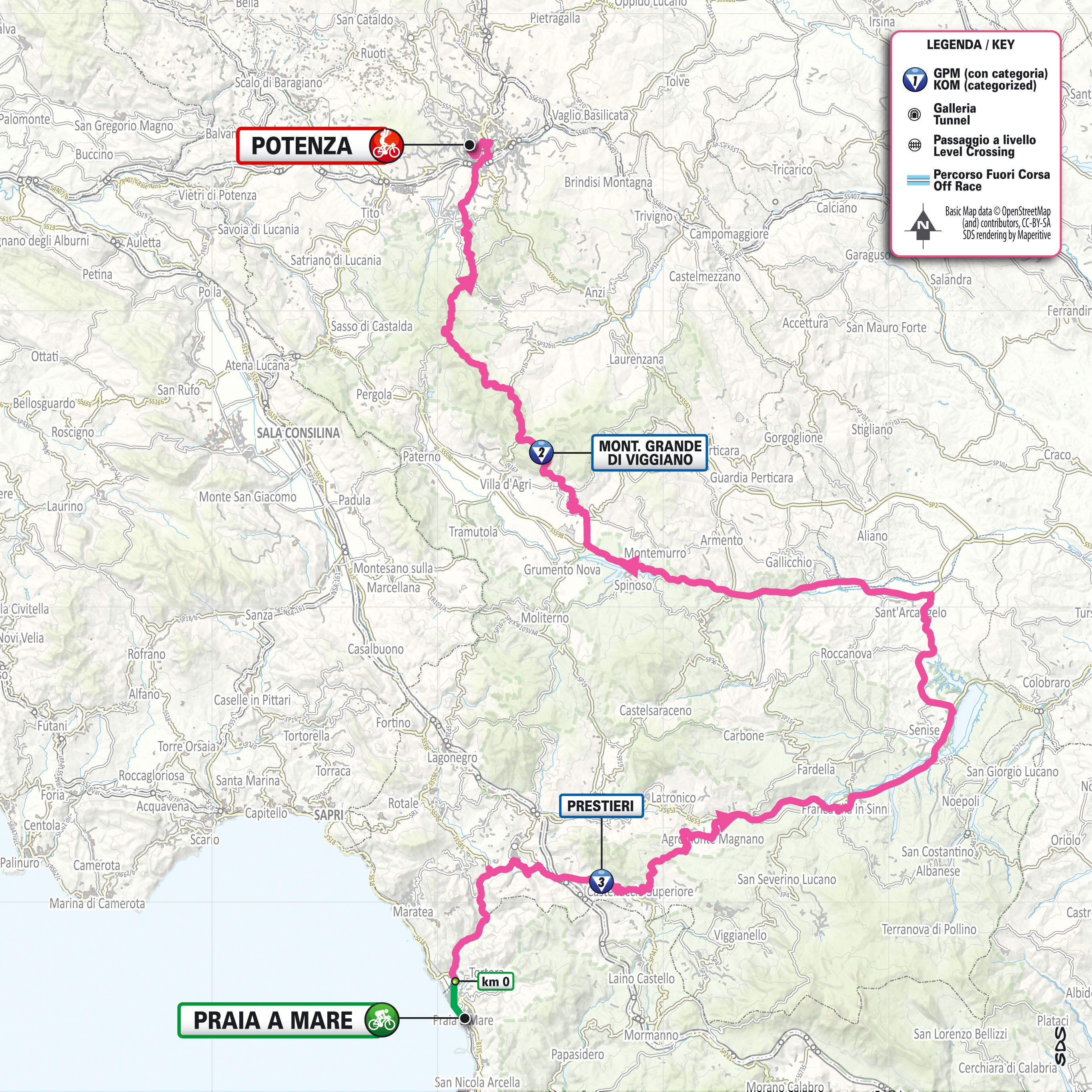 Giro d’Italia 2026 stage 5 map(Image credit: RCS)
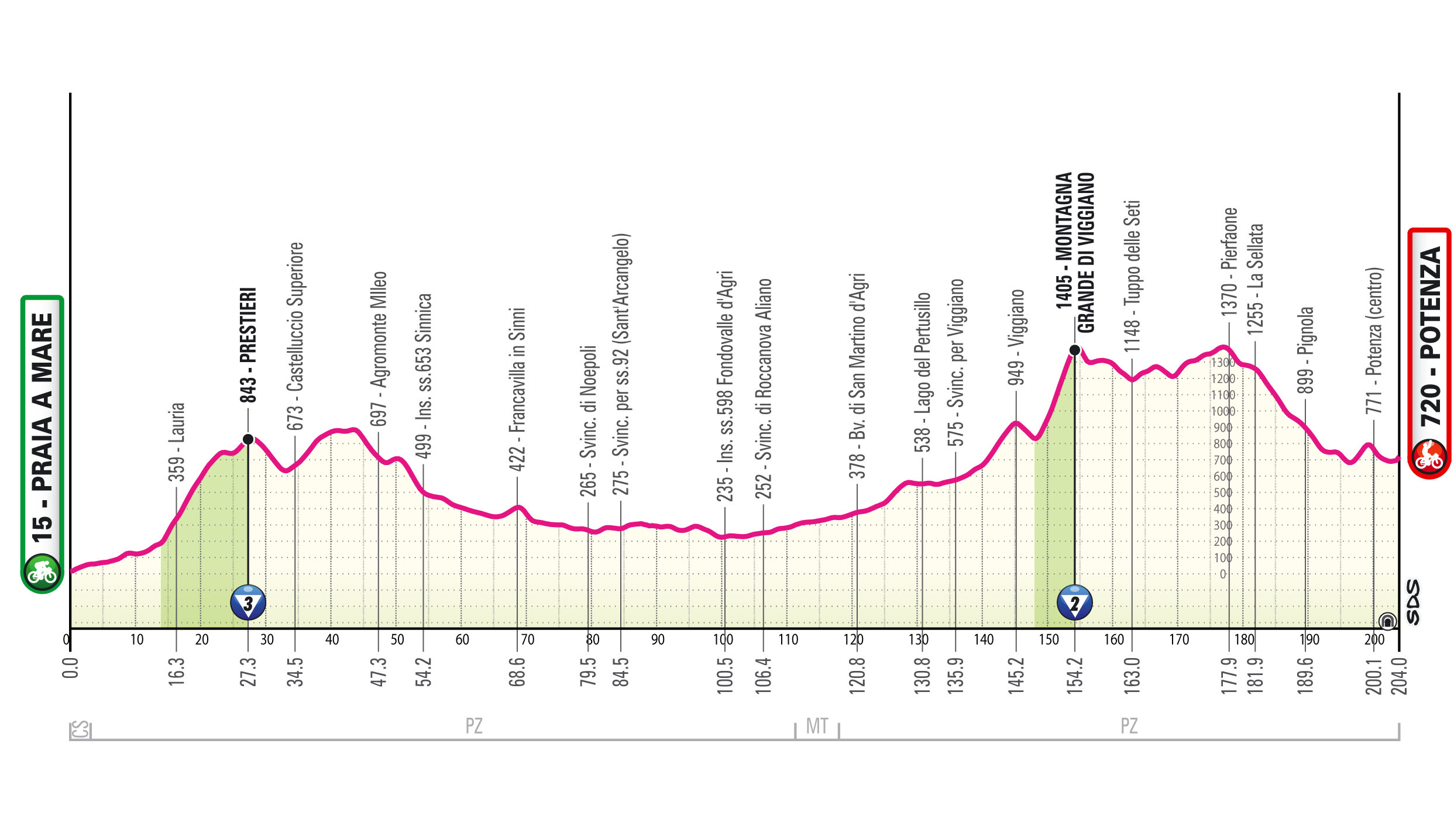 Giro d’Italia 2026 stage 5 profile(Image credit: RCS)
This stage is longer and harder and climbs into the southern hills of the little-known Basilicata region. The short but steep Grande Montagna di Viggiano comes after 150km, with a climb up to central Potenza adding an extra twist. It seems perfect for a breakaway and perhaps a change in race leadership but the GC riders will also have to be vigilant on the rolling roads of southern Italy.
Stage 6: Paestum – Napoli (161km)
Image 1 of 2
 Giro d’Italia 2026 stage 6 map(Image credit: RCS)
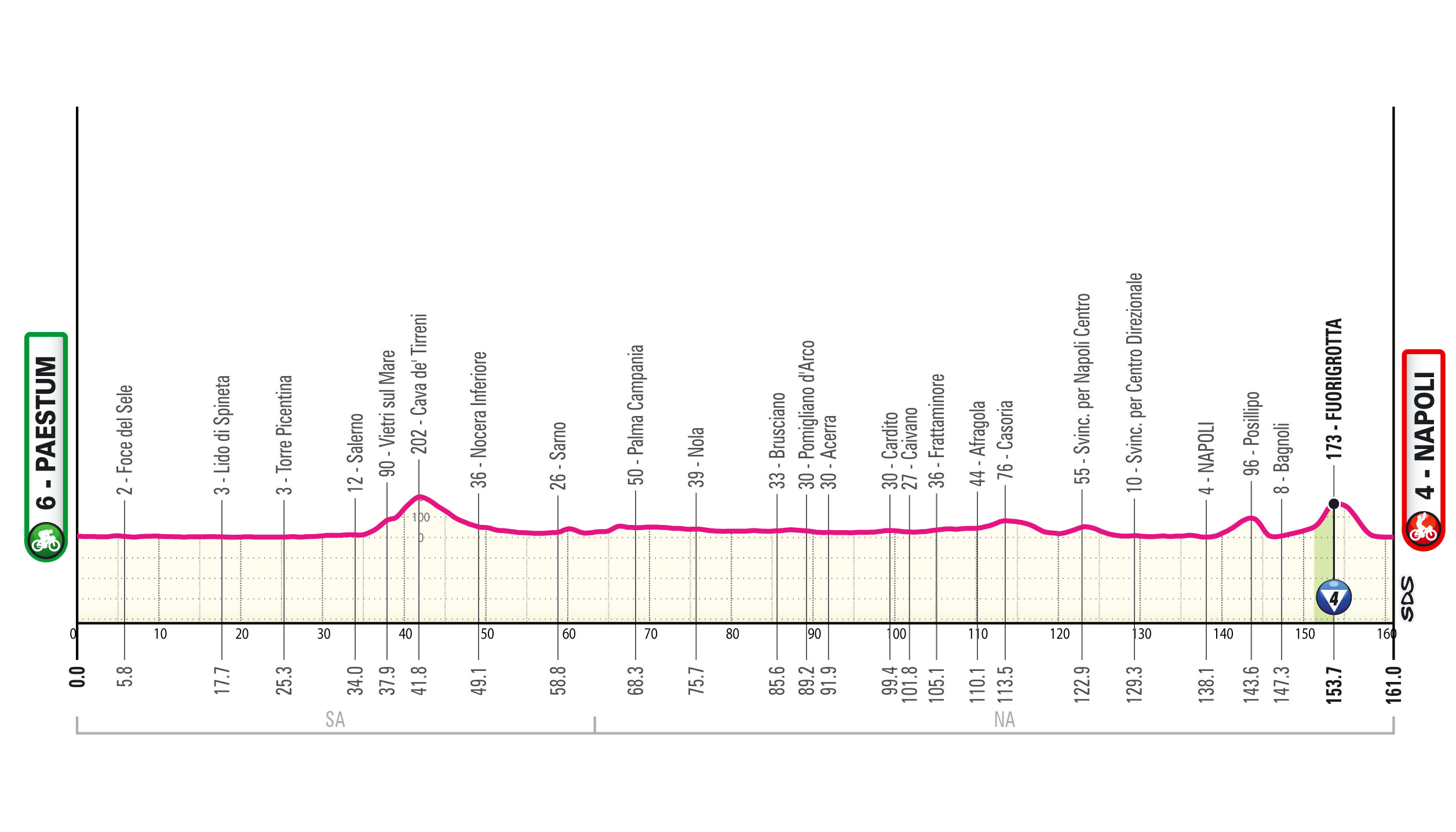 Giro d’Italia 2026 stage 6 profile(Image credit: RCS)
The Giro returns to the magnificent Naples seafront in 2026, offering the sprinters another opportunity for victory. The stage starts near the Greek temples of Paestum and then passes behind the Vesuvio volcano before entering Naples from the south. A final 23km circuit includes the short climb to Fuorigrotta but the sprinters and the teams should be able to control any attacks.
Stage 7: Formia – Blockhaus (246km)
Image 1 of 2
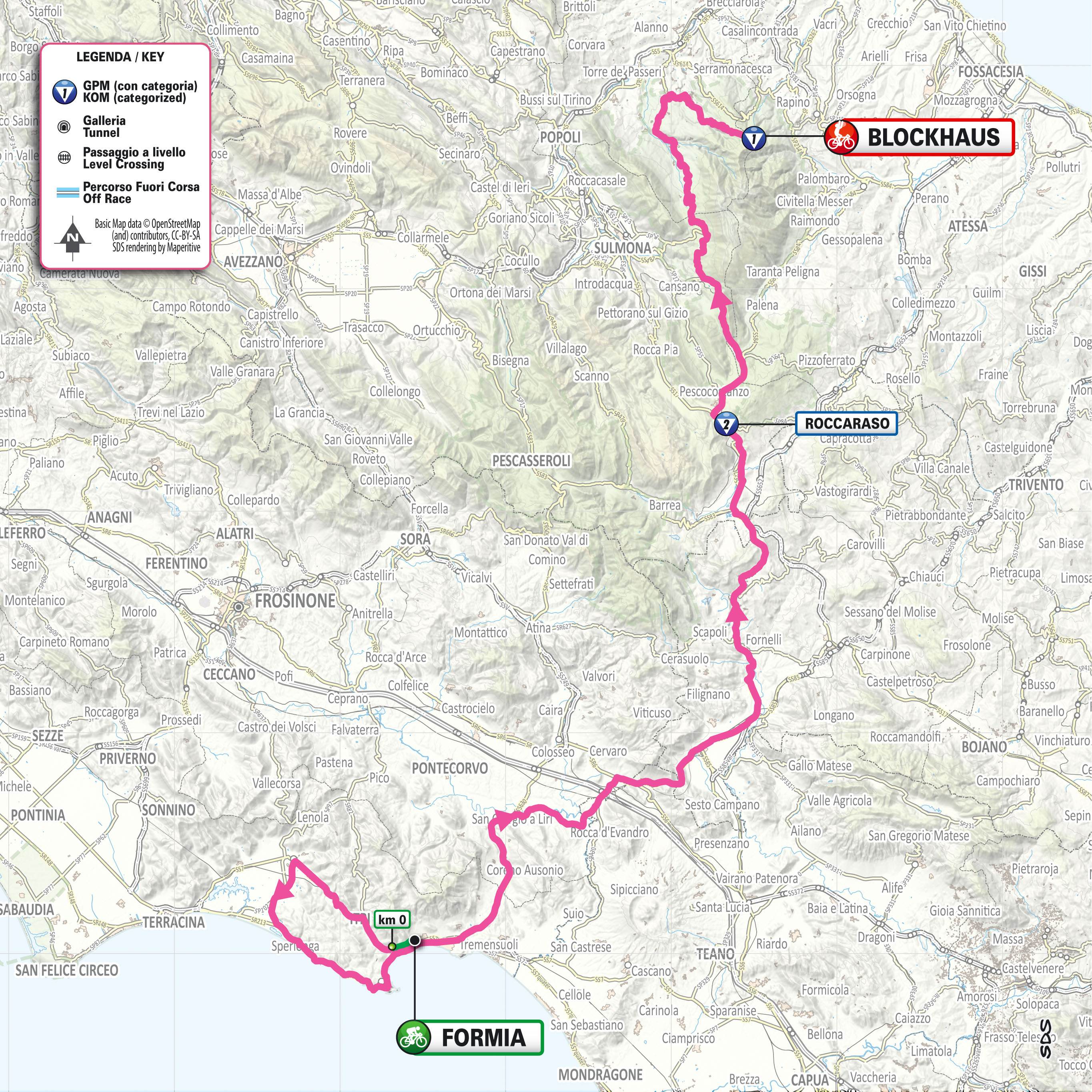 Giro d’Italia 2026 stage 7 map(Image credit: RCS)
 Giro d’Italia 2026 stage 7 profile(Image credit: RCS)
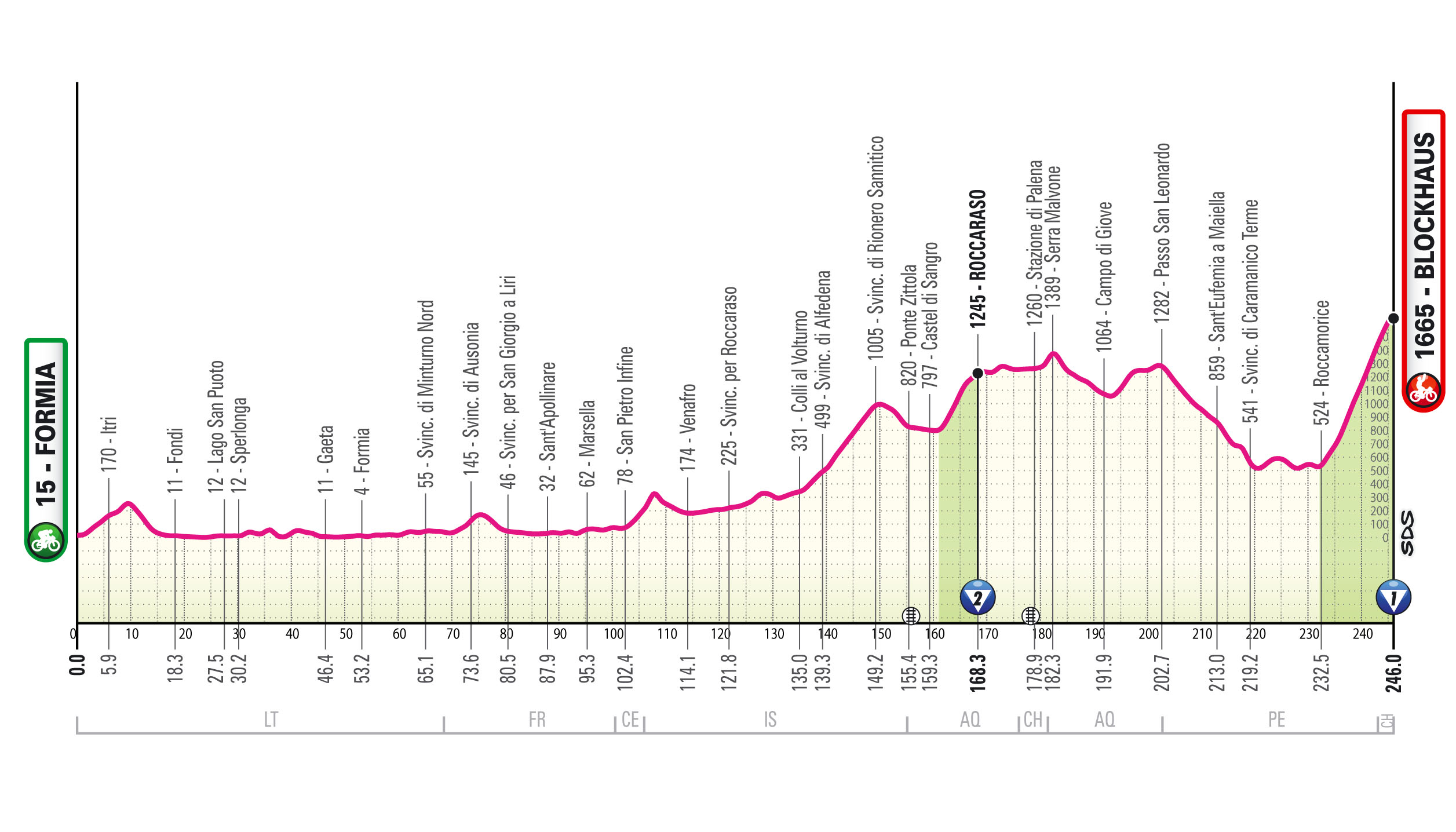
The riders climb into the high mountains for the first time on stage 7 and also race the longest stage of the 2026 Giro on the road to the Blockhaus. The 246km stage includes 4,600m of altitude gain, the second highest of the race. It will be the first true GC day of the 2026 Corsa Rosa.
The climbing starts after 135km and continues all the way to the summit finish at 1,665 metres, high in the central Apennines, using the steeper and most feared 13.5km-long Roccamorice road.
Stage 8: Chieti – Fermo (159km)
Image 1 of 2
 Giro d’Italia 2026 stage 8 map(Image credit: RCS)
 Giro d’Italia 2026 stage 8 profile(Image credit: RCS)
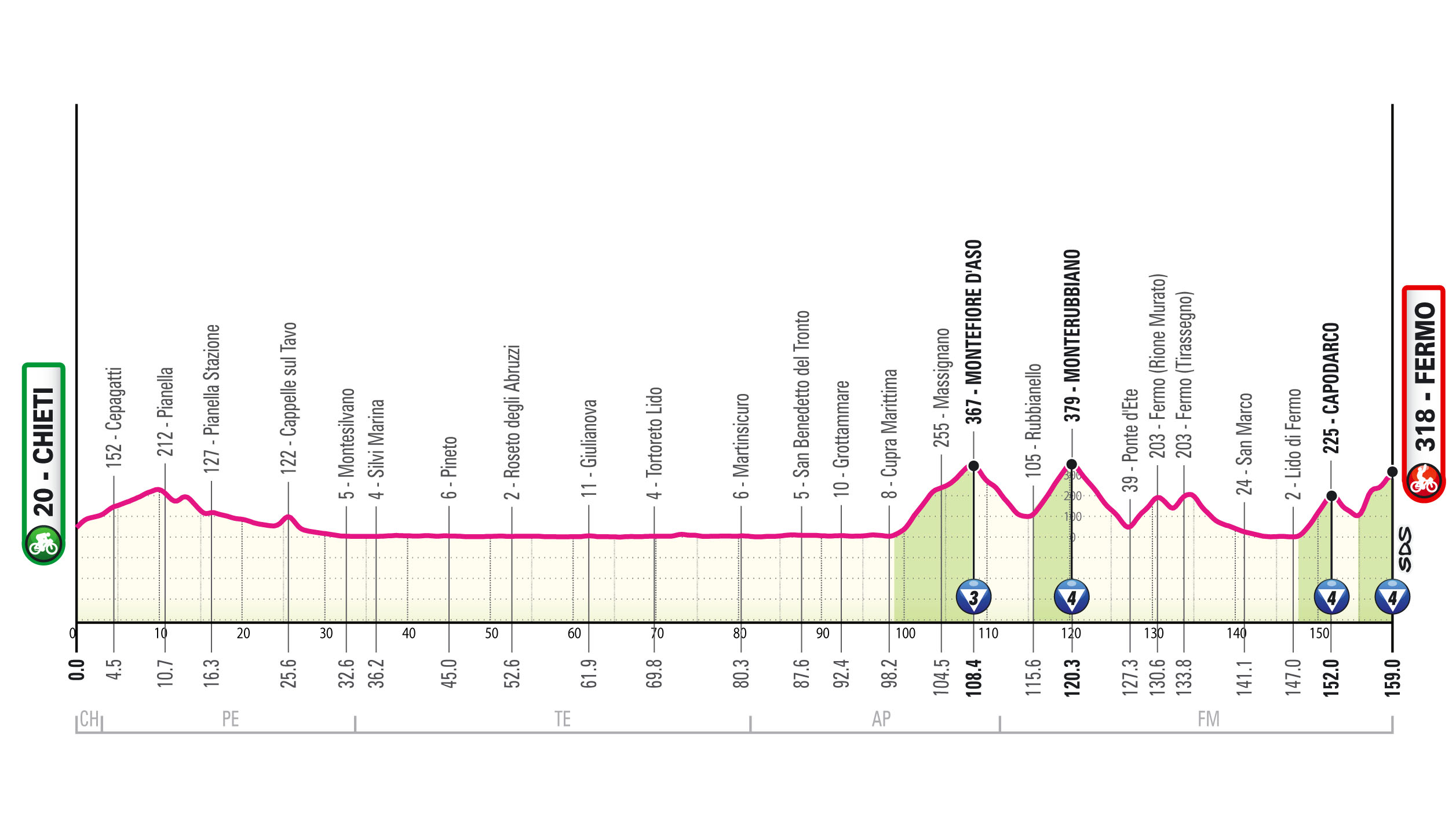
The climbing continues on stage 8, with a testing day on the short but steep ‘muri’ climbs often seen in Tirreno-Adriatico. The 159km stage begins with a 100km ride along the Adriatic coast but then heads into the hills for two steep climbs. There is a first climb up to Fermo and then another ‘muro’ up to Capodarco, which hosts the prestigious under-23 race the GP Capodarco, followed by the final climb to the finish in Fermo.
Positioning in the peloton and descending skills will be as important as climbing ability on a classic Giro stage packed with hidden dangers for the GC rider.
Stage 9: Cervia – Corno alle Scale (184km)
Image 1 of 2
 Giro d’Italia 2026 stage 9 map(Image credit: RCS)
 Giro d’Italia 2026 stage 9 profile(Image credit: RCS)
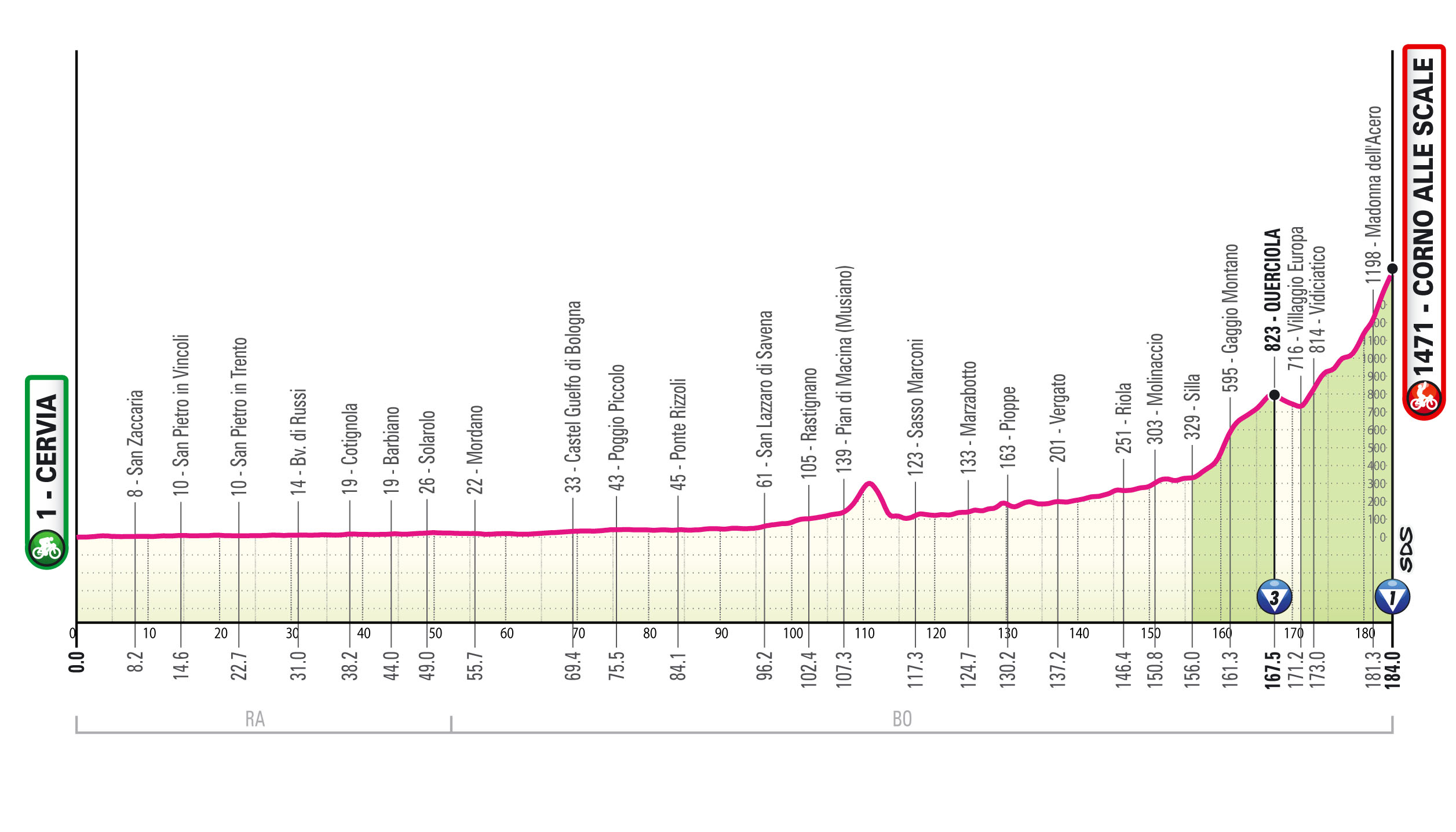
Stage 9 has another flat start but another mountain finish, this time high up in the central Apennines that divide Tuscany and Emilia Romagna. This third consecutive GC stage is all about the climb to the finish after a flat ride from Cervia to Bologna.
The stage includes 2,400m of altitude gain in the final 30km. The first part is to Gaggio Montano, once the home to the Saeco coffee machine brand. A short descent offers respite before the ever-steepening 13km climb up to Corno alle Scale. Gilberto Simoni won a similar stage here in 2004.
Stage 10: Viareggio – Massa (40.2km ITT)
Image 1 of 2
 The stage 10 TT is flat but very long(Image credit: RCS)
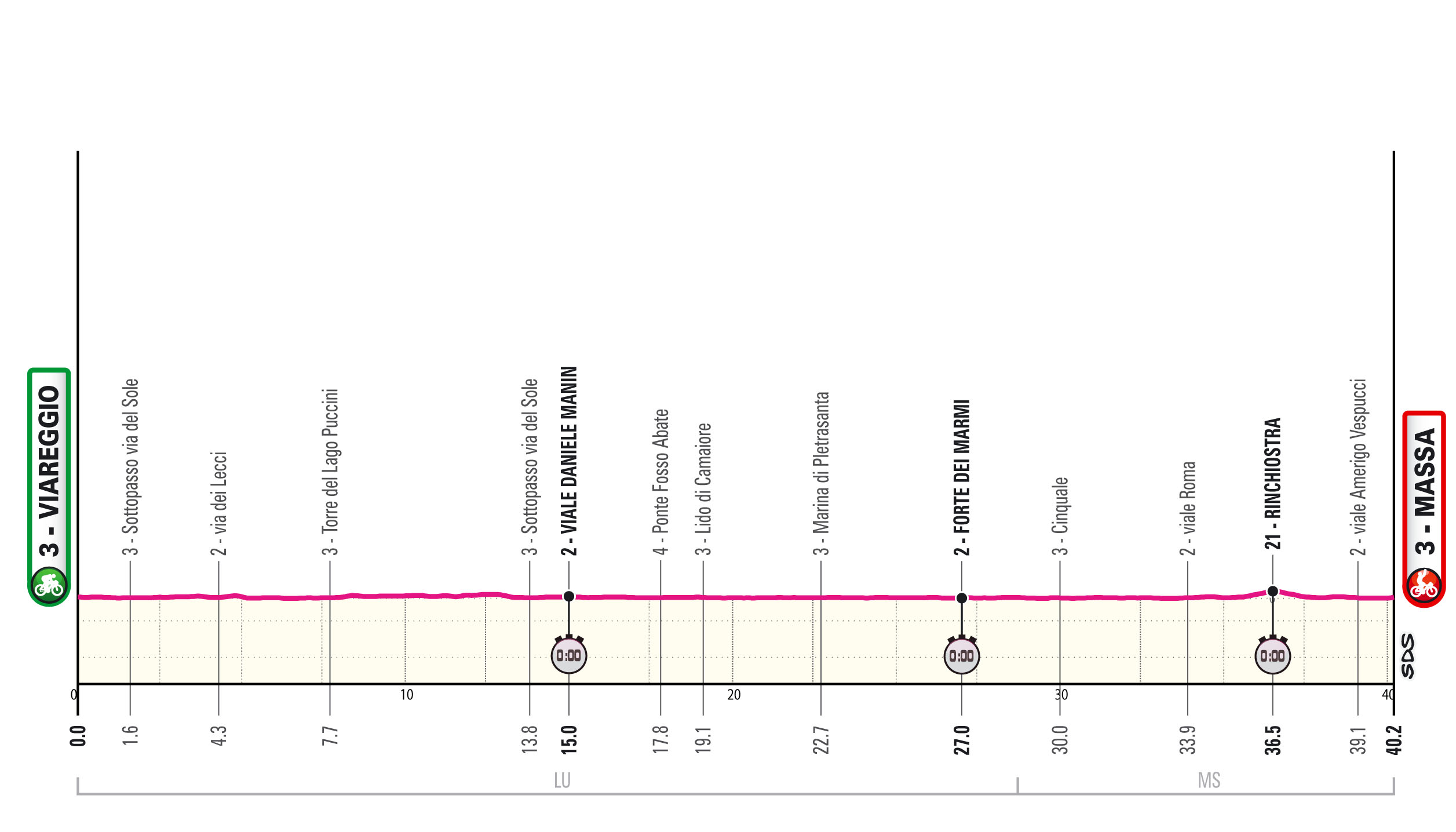 Giro d’Italia 2026 stage 10 profile(Image credit: RCS)
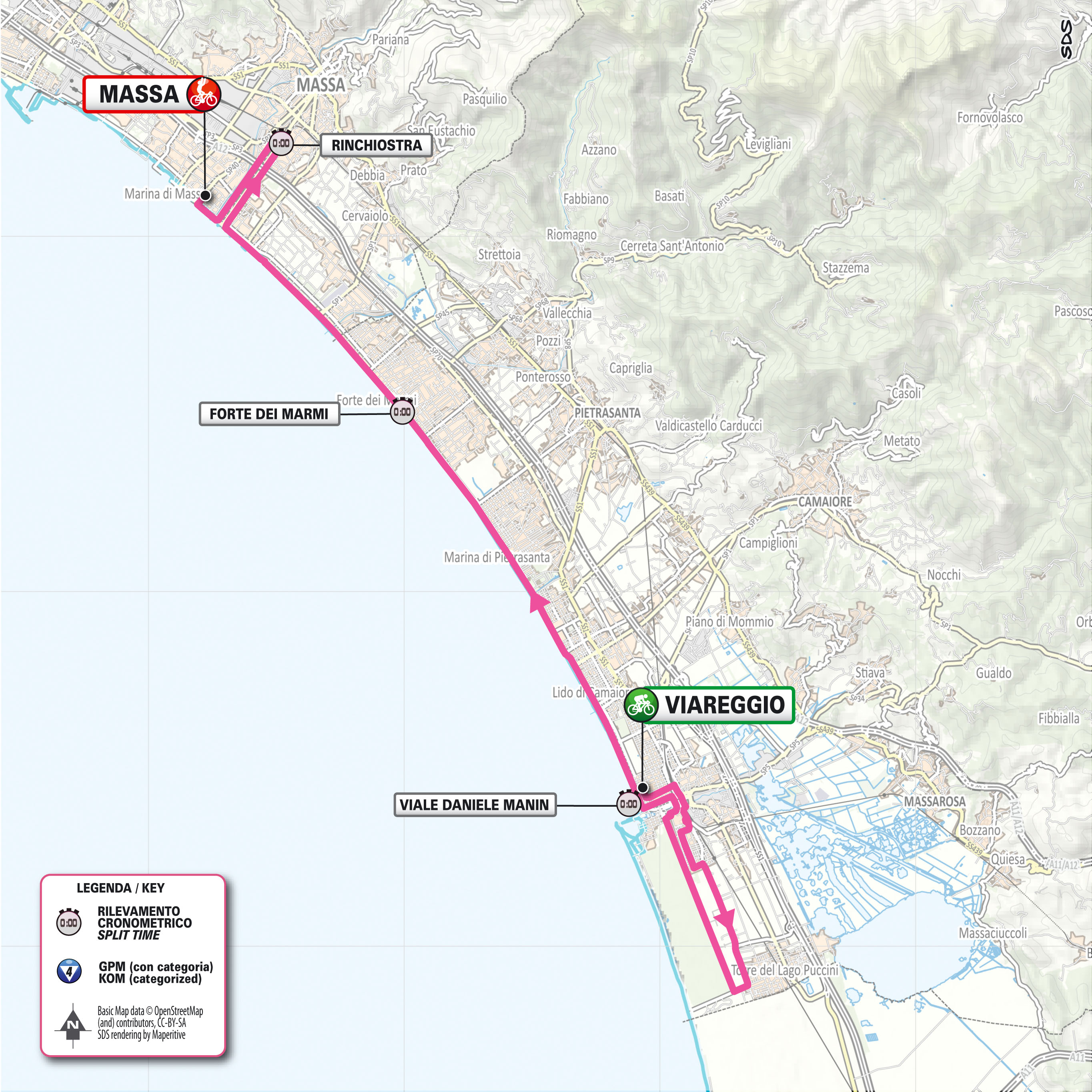
This stage was perhaps added to the Giro route to tempt time trialists such as Remco Evenepoel, Primož Roglič and Jonas Vingegaard but may not be enough to counter balance all the climbing and the seven summit finishes.
It follows a flat and fast route along the beaches of the Tuscany coast, with a loop south of Viareggio and then inland to Massa before finishing on the seafront.
Time gains by some GC riders could be significant but a lot of climbing remains in the second half of the Giro.
Stage 11: Porcari – Chiavari (178km)
Image 1 of 2
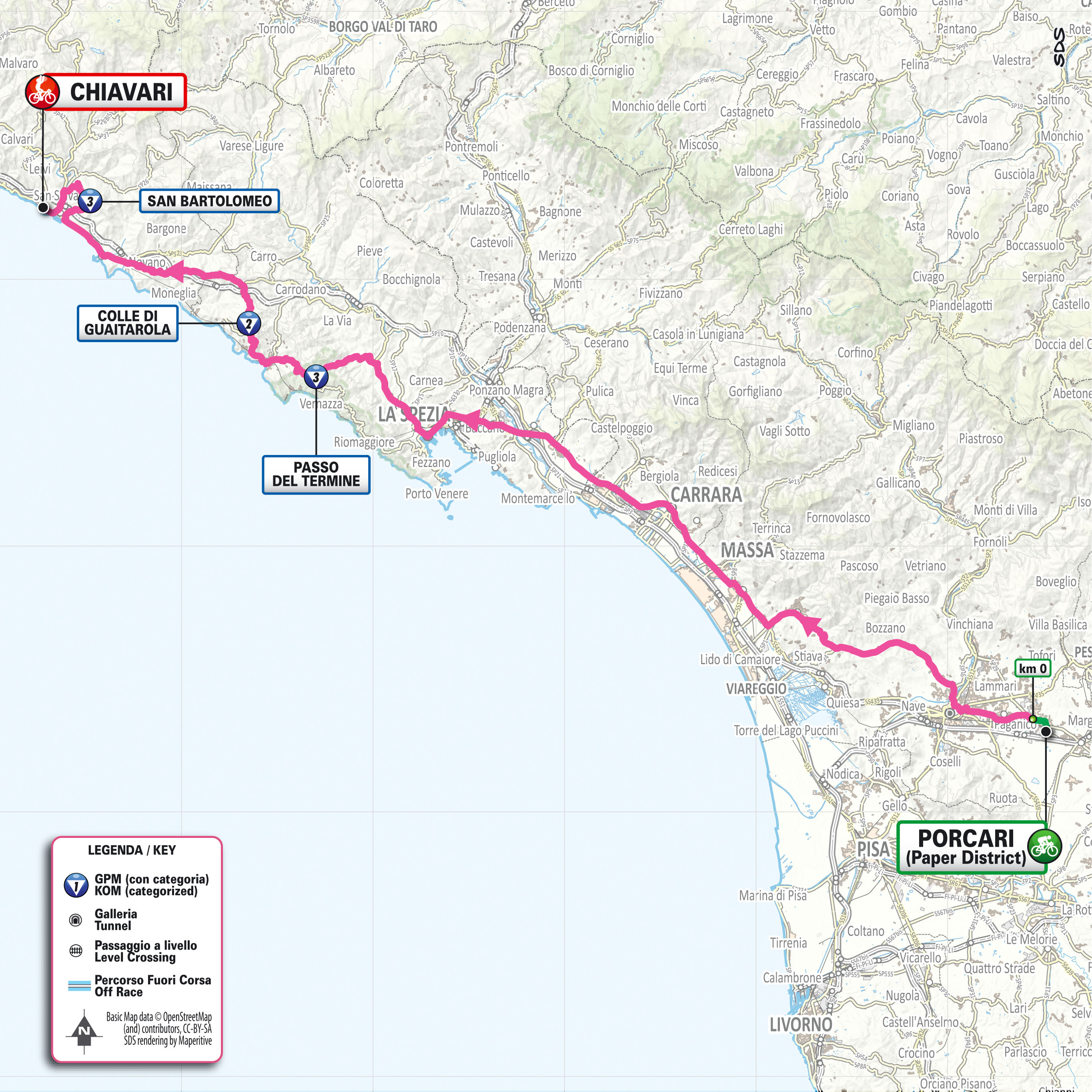 Giro d’Italia 2026 stage 11 map(Image credit: RCS)
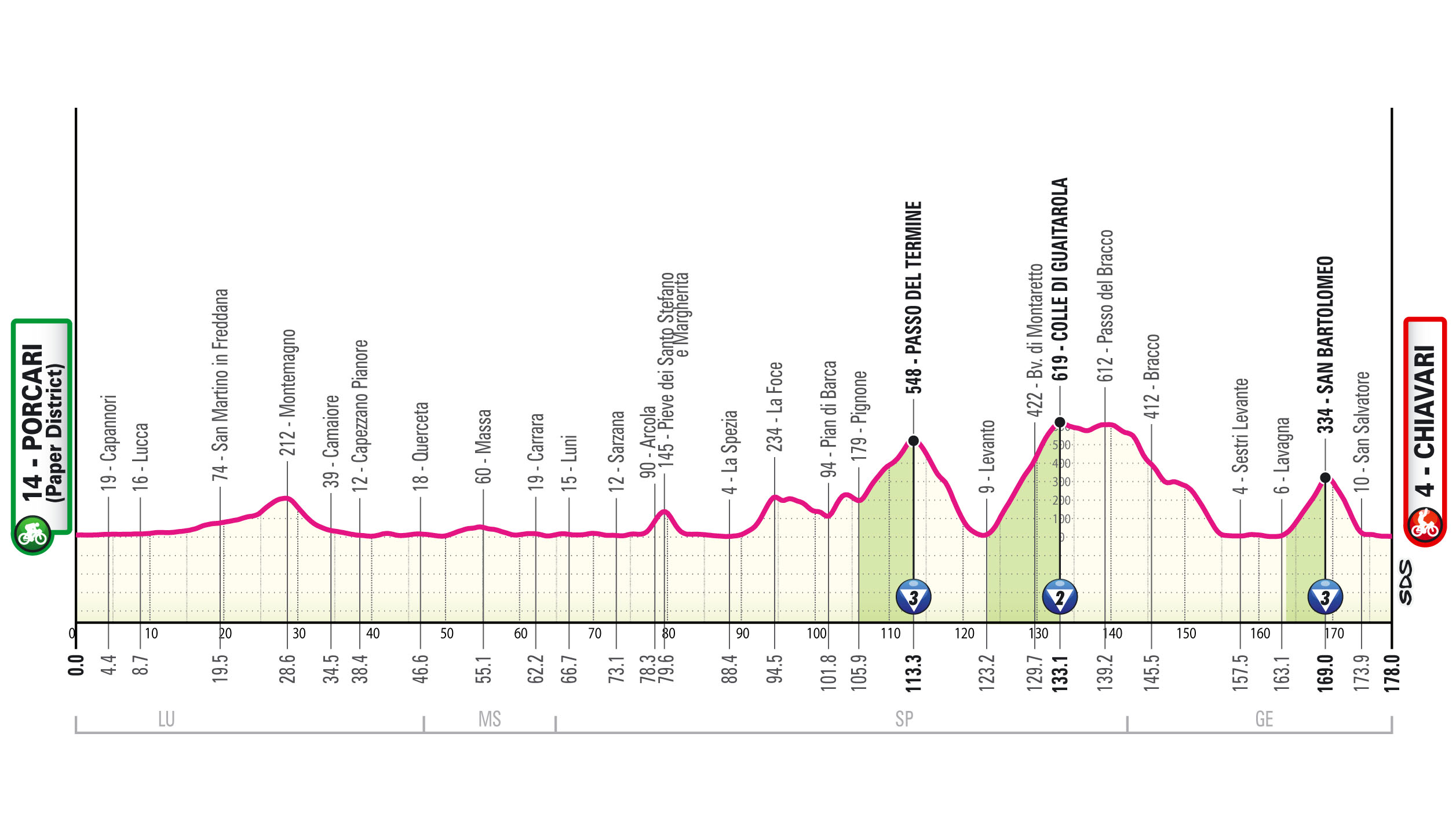 Giro d’Italia 2026 stage 11 profile(Image credit: RCS)
This hilly stage comes after the second rest day in Tuscany and could catch out a GC rider who struggles with the change to their daily race routine.
The 178km stage starts at the factory of race sponsor Regina and then returns to the Tuscany coast and heads north to La Spezia to enter Liguria. The coastal region is packed with twisting climbs and the stage tackles the Passo del Termini and the Colle di Guaitarola before the late San Bartolomeo climb and a white knuckle descent to the finish on the coast in Chiavari.
Stage 12: Imperia – Novi Ligure (177km)
Image 1 of 2
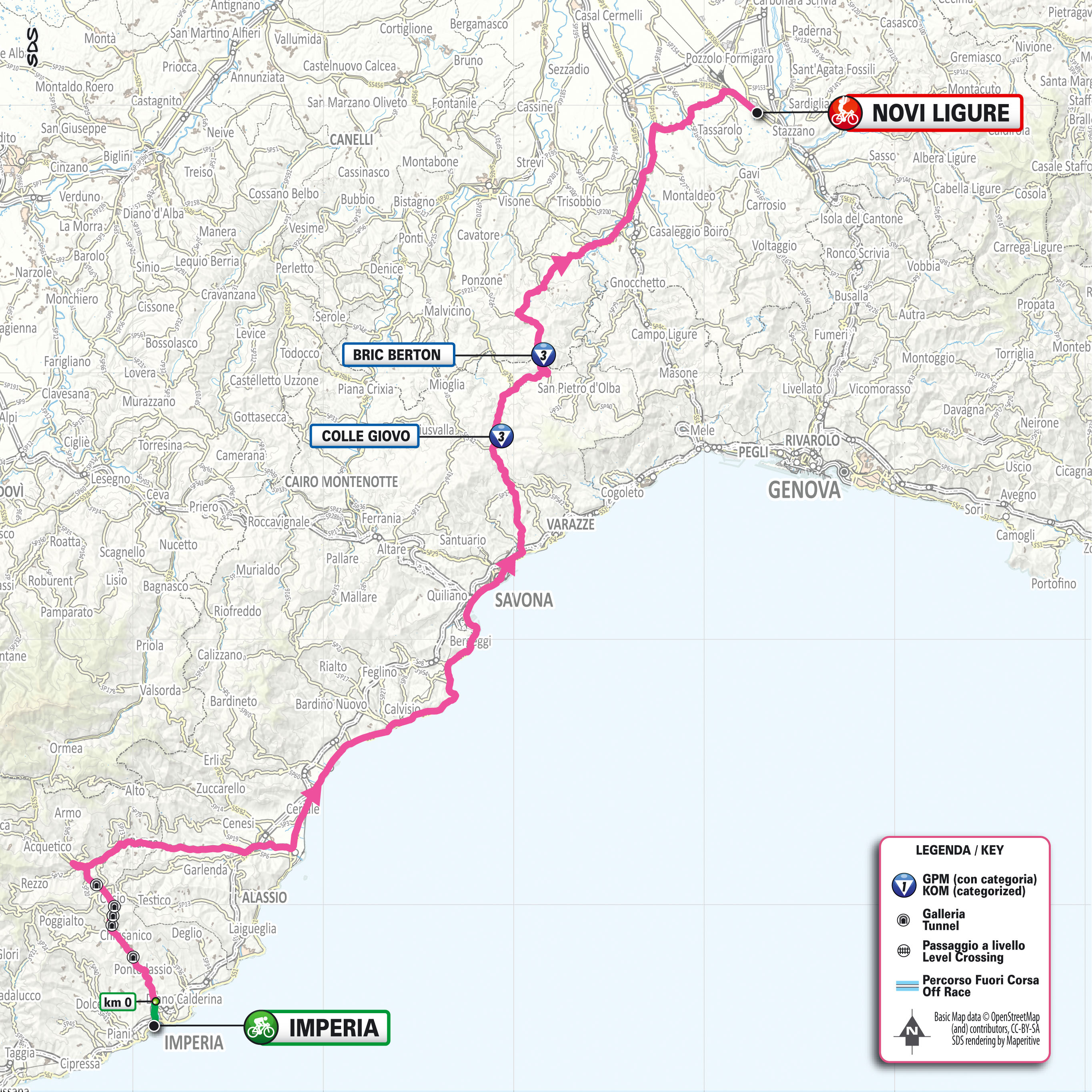 Giro d’Italia 2026 stage 12 map(Image credit: RCS)
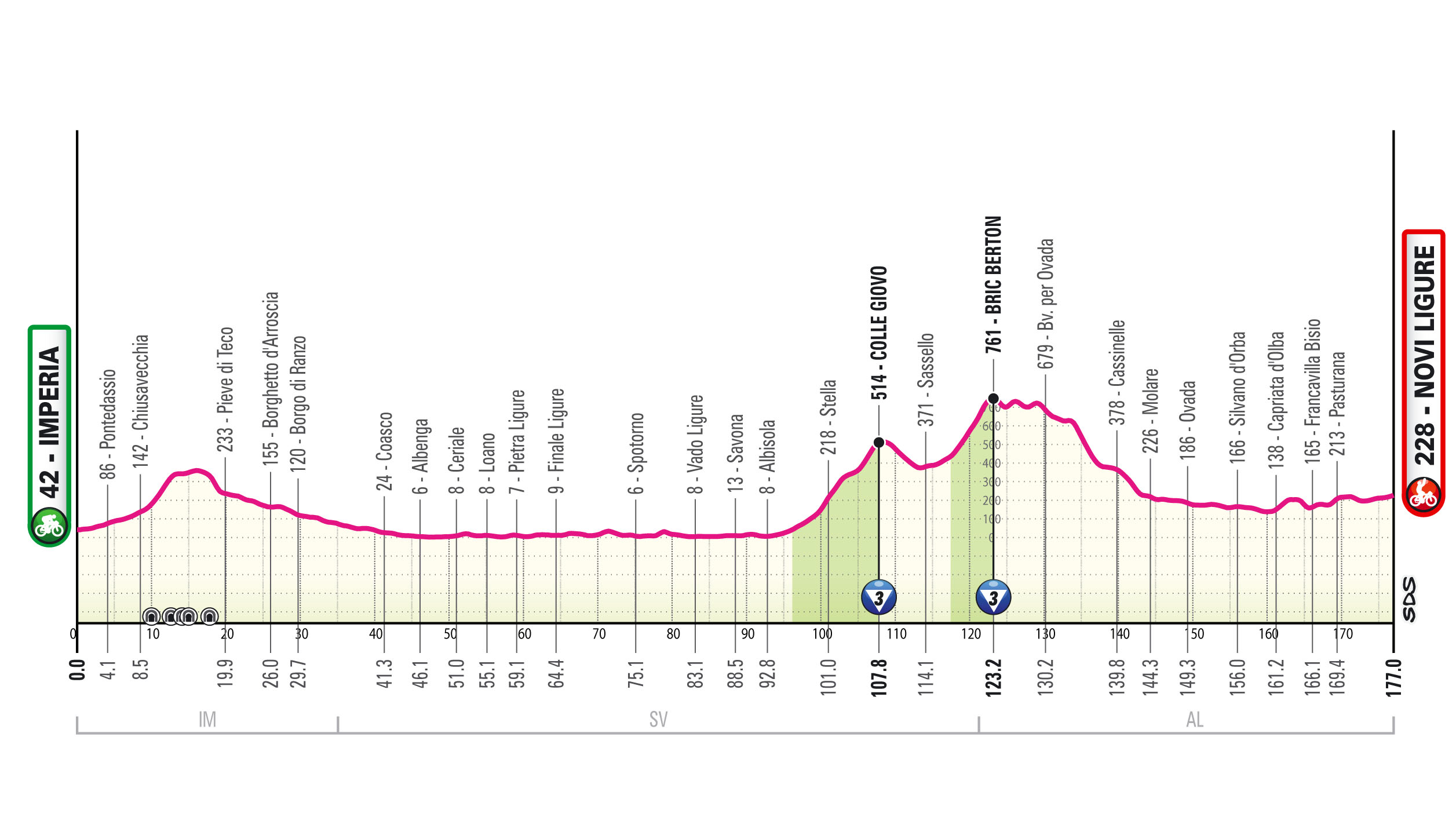 Giro d’Italia 2026 stage 12 profile(Image credit: RCS)
This stage has been dubbed a ‘reverse Milan-San Remo‘ because it starts on the Ligurian coast and then climbs over the mountains for a finish in Novi Ligure on the flat road towards Milan.
Instead of climbing the Passo del Turchino used in Milan-San Remo, the 177km stage climbs the harder Colle Giovo and the Bric Berton but the 50km of descending and flat roads gives the sprint teams plenty of time to chase the breakaway.
Stage 13: Alessandria – Verbania (186km)
Image 1 of 2
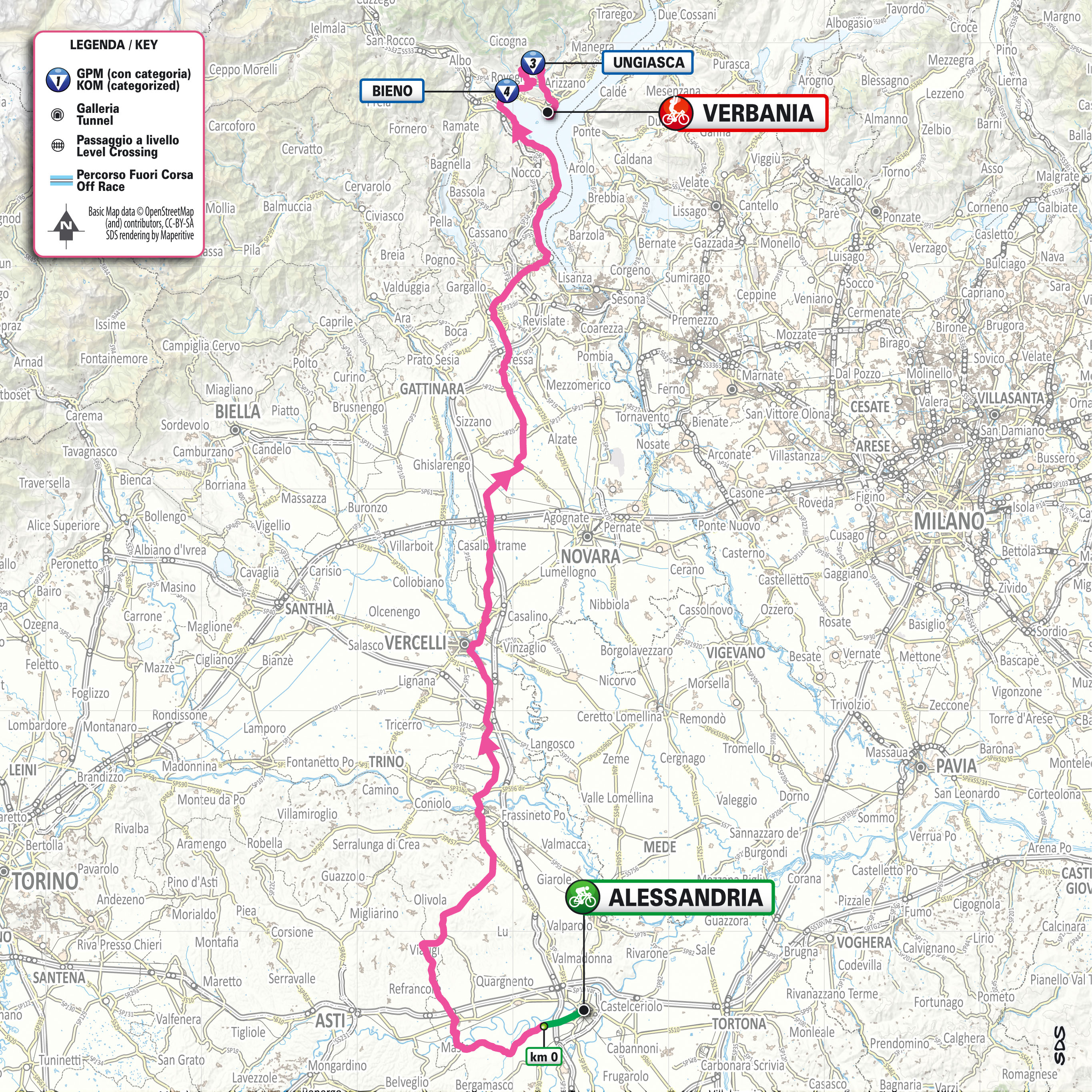 Giro d’Italia 2026 stage 13 map(Image credit: RCS)
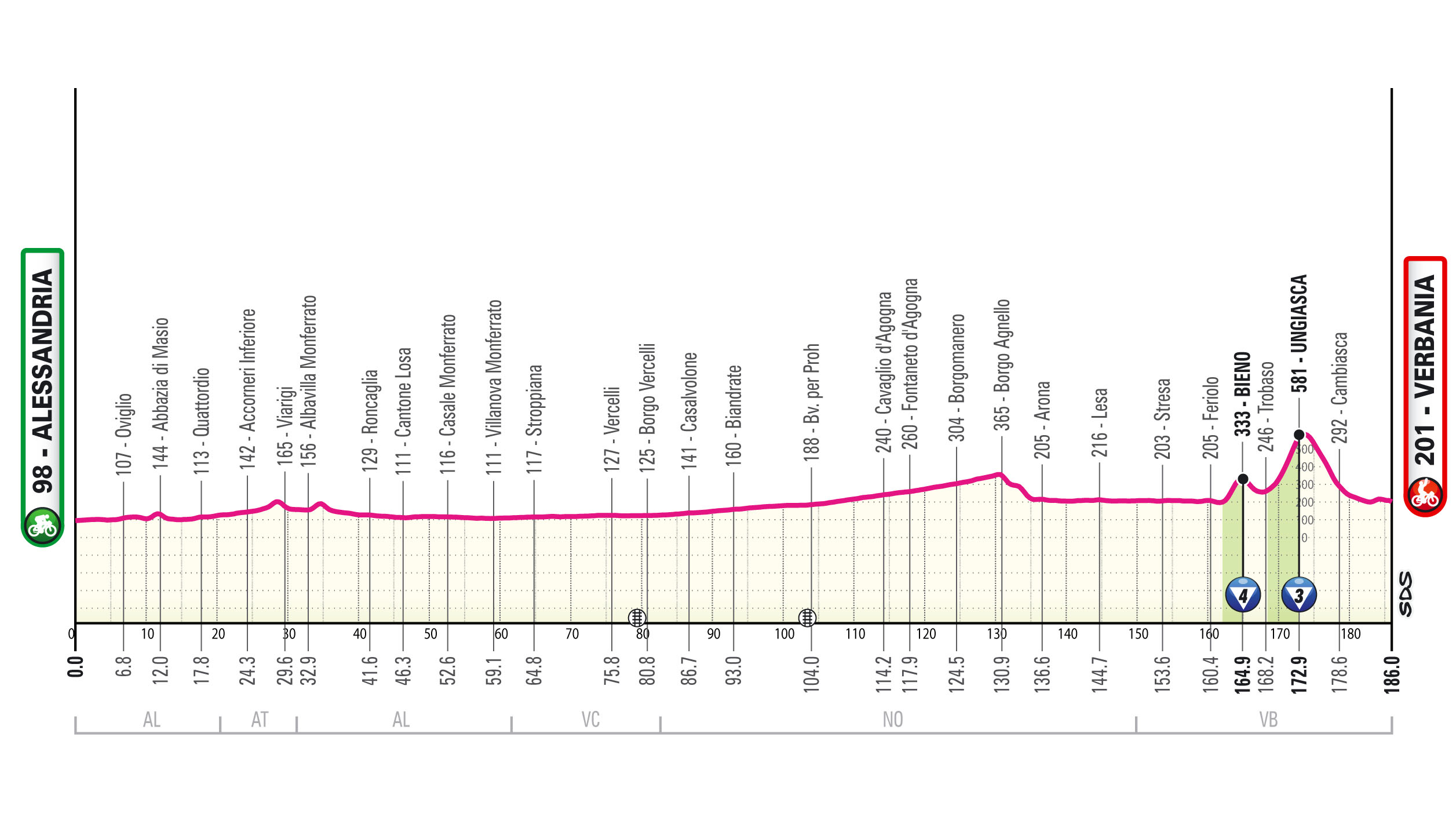 Giro d’Italia 2026 stage 13 profile(Image credit: RCS)
The Giro continues to roll north with this transfer stage to Verbania at the foot of the Alps and the border with Switzerland.
The route is flat as it rolls to the west of Milan and through the rice fields north of Norvara. There are two late climbs overlooking Lake Maggiore, with the road up to Ungiasca, especially steep and ending only 13km from the finish on the lakeshore.
Stage 14: Aosta – Pila (133km)
Image 1 of 2
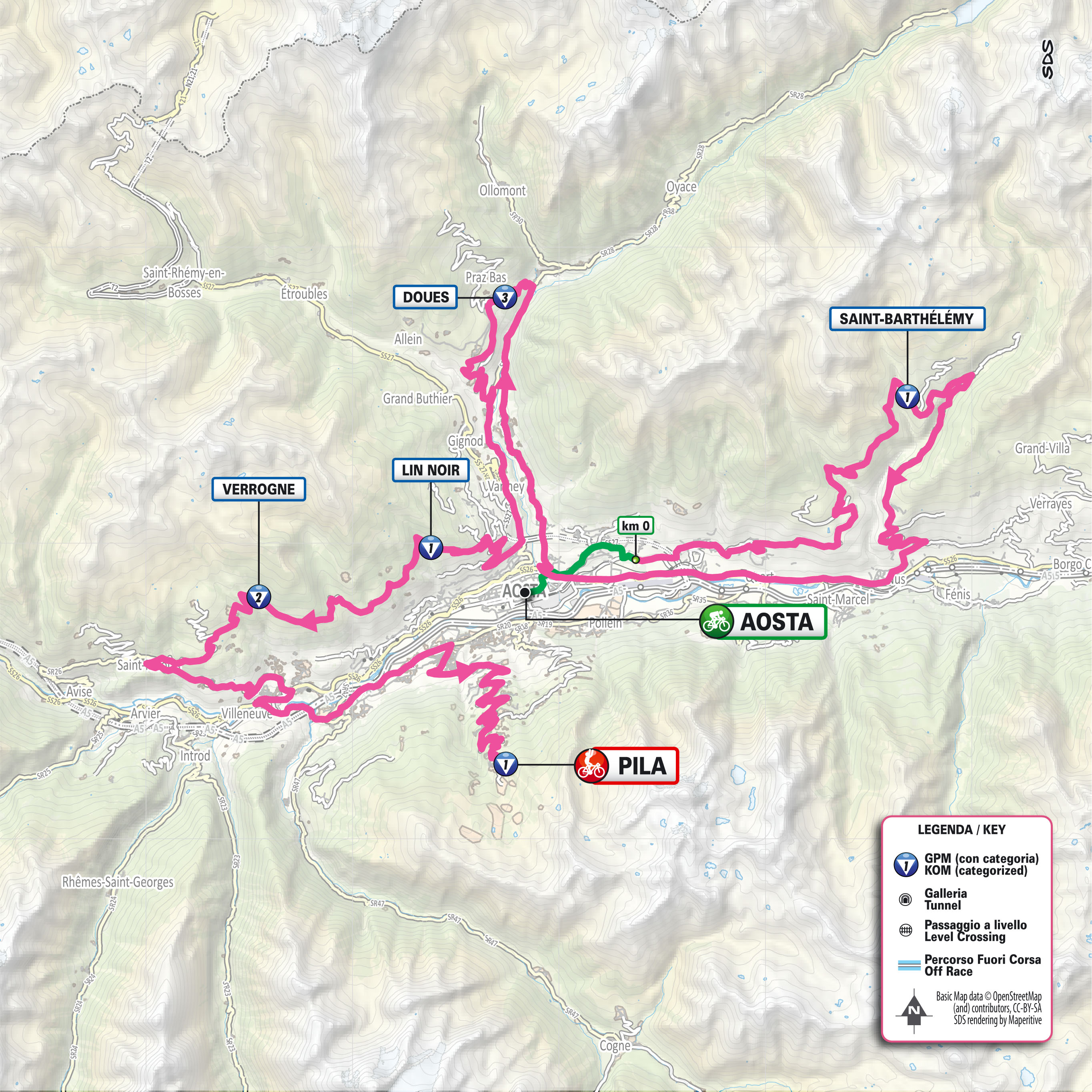 Giro d’Italia 2026 stage 14 map(Image credit: RCS)
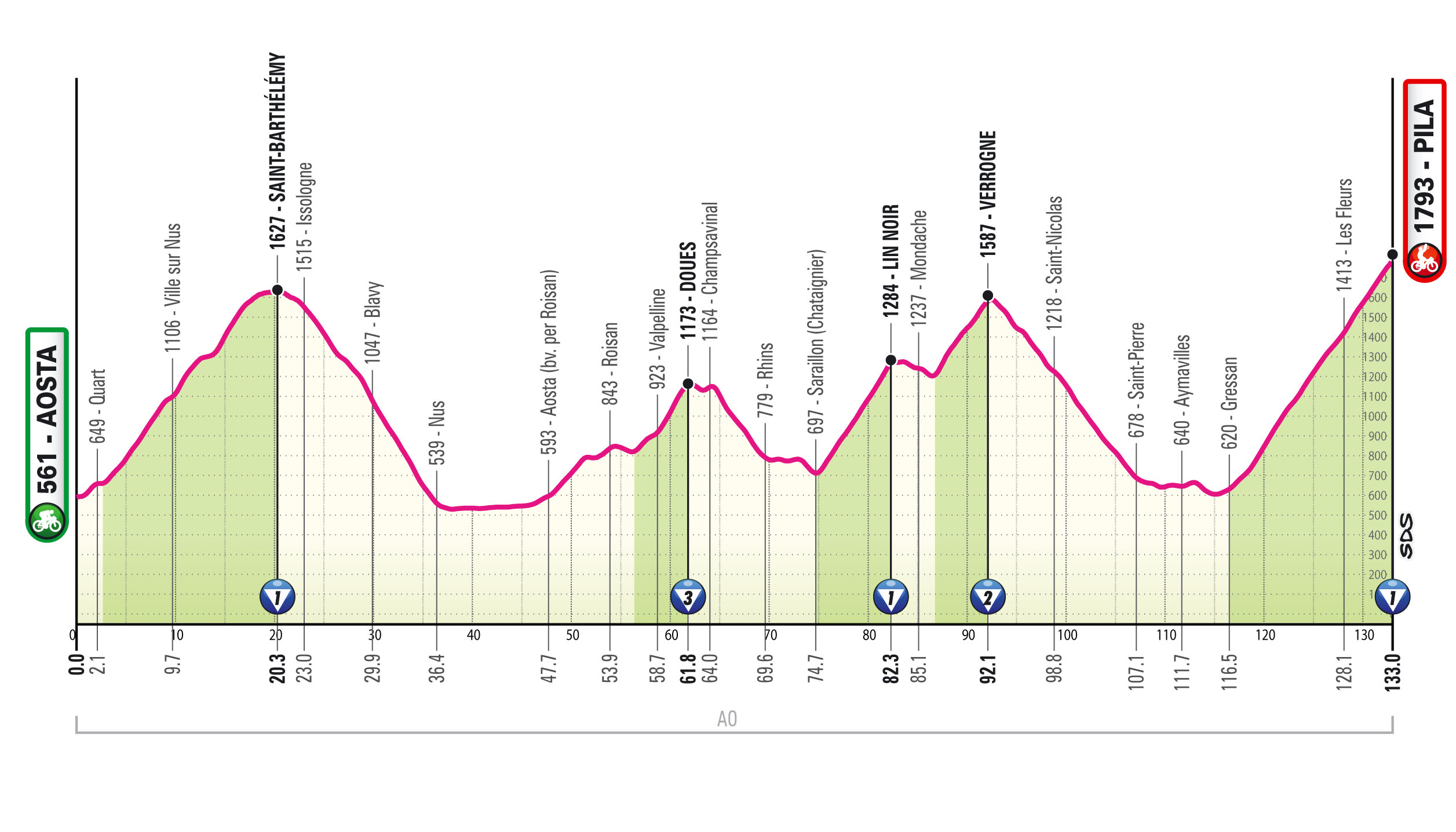 The climbs come thick and fast on stage 14(Image credit: RCS)
The third weekend of the Giro has contrasting stages, with stage 13 climbing high in the Val d’Aosta. The 133km stage is short but includes 4,400m of altitude gain and ends in Pila at 1,793 metres.
Riders will need to warm-up before the start with the 18km long Saint-Barthélemy climb starting in Aosta. The stage then twists and turns between the valley road and the high mountains, with Lin Noir and Verrogne combining to create another hour of climbing. The Giro returns to Pila after a 30-year absence with the 16.5km a constant grind to the finish line. Robert Millar won that day in 1987 and Stephen Roche went on to win overall after his battle of nerves with Carrera teammate Roberto Visentini.
Stage 15: Voghera – Milan (136km)
Image 1 of 2
 Giro d’Italia 2026 stage 15 map(Image credit: RCS)
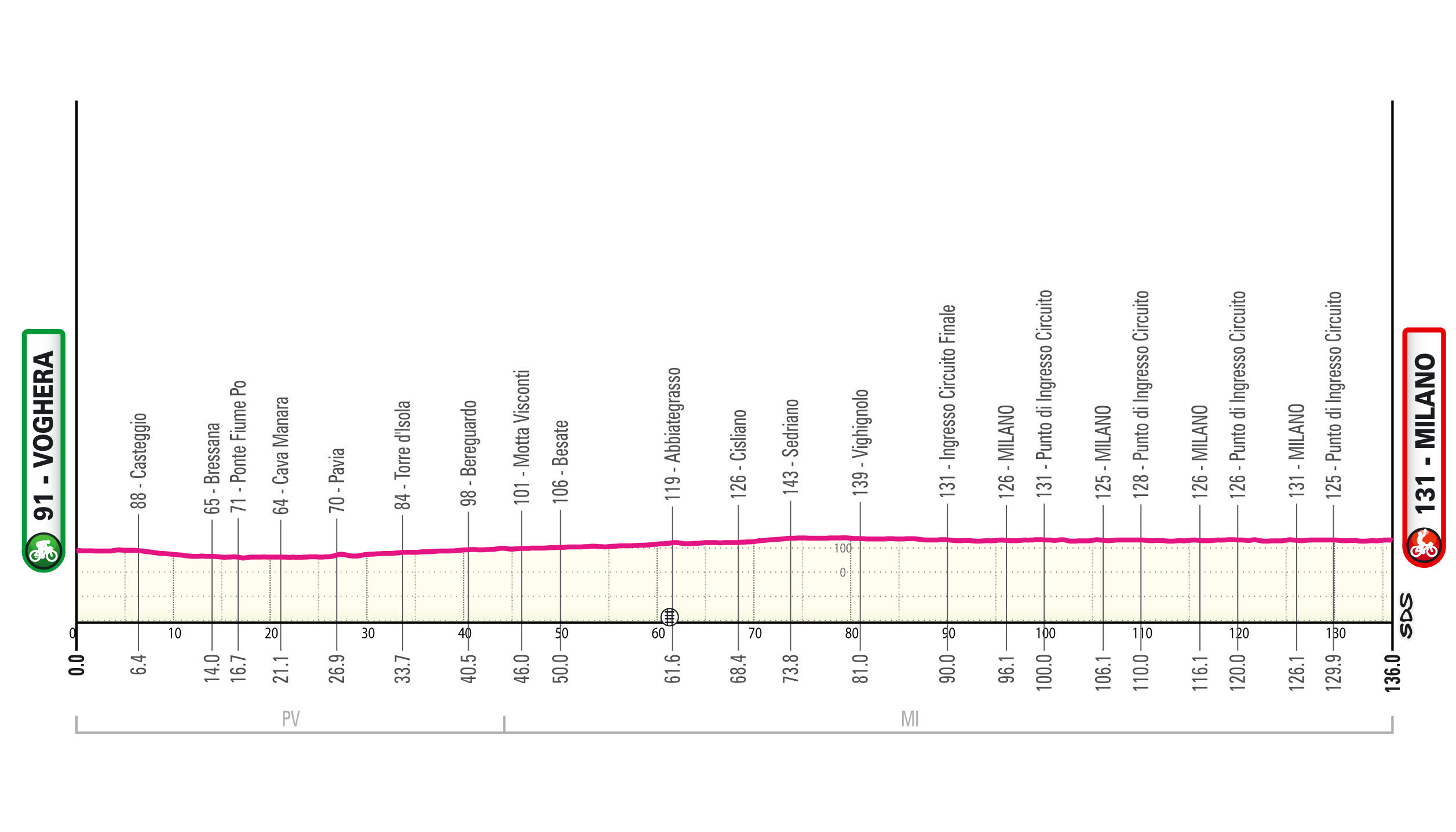 Giro d’Italia 2026 stage 15 profile(Image credit: RCS)
The Giro d’Italia now ends in Rome instead of Milan, the home of La Gazzetta dello Sport and RCS Sport, but the city has historic links to Italian cycling and so has agreed to host a stage finish to mark the end of week two.
It is another opportunity for the sprinters, with four laps of a city centre circuit near the Vigorelli velodrome.
Stage 16: Bellinzona – Carì (113km)
Image 1 of 2
 Giro d’Italia 2026 stage 16 map(Image credit: RCS)
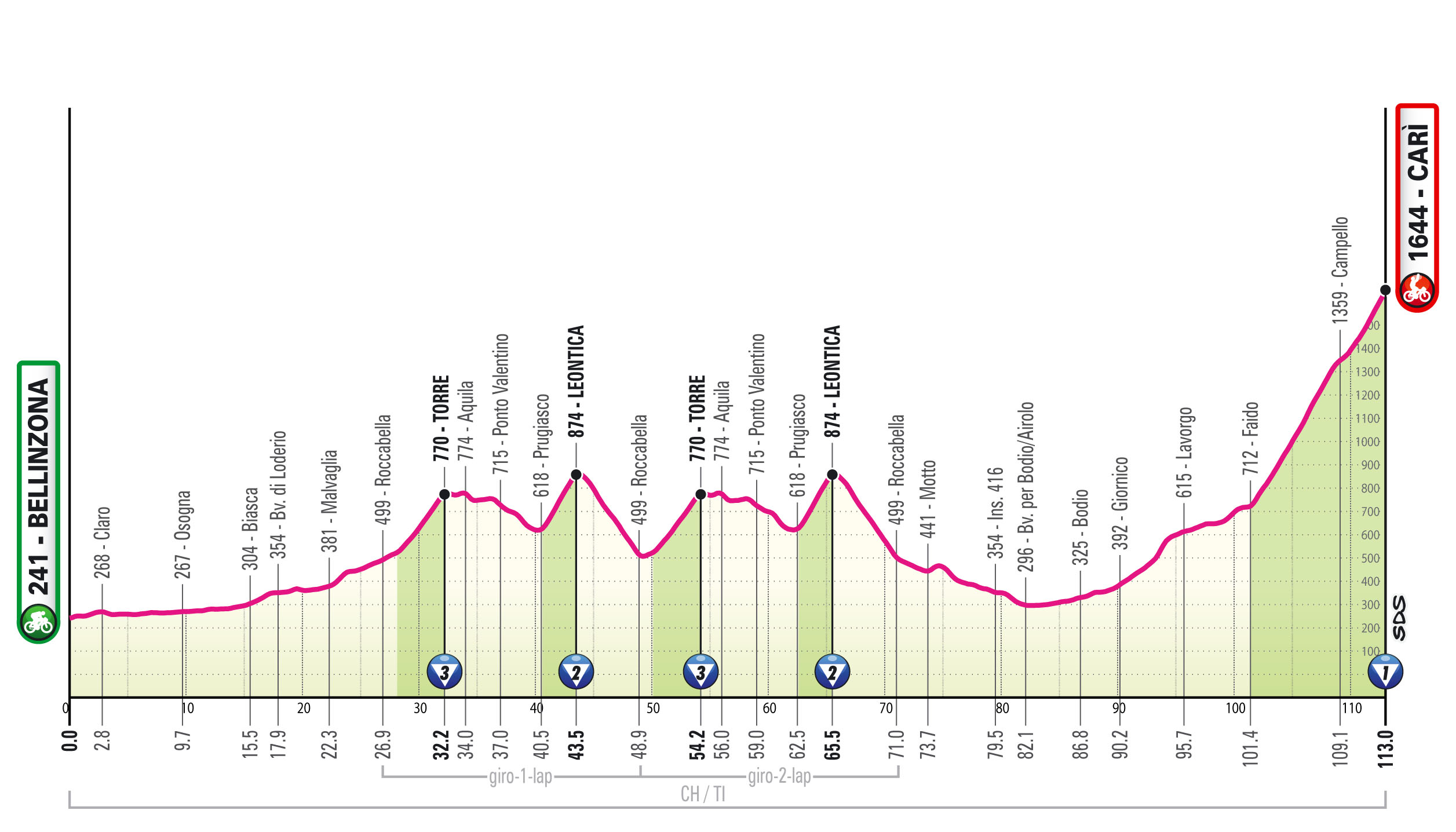 Giro d’Italia 2026 stage 16 profile(Image credit: RCS)
The riders will enjoy the third and final rest north of Milan before another tough day in the saddle immediately after a day off. It is short at just 113km but should make the raving more intense and perhaps have a bigger impact on the GC.
The stage is entirely on Swiss roads and the Italian speaking Canton Ticino. The Leonticas climb is covered twice mid-stage before a mountain finish in the Carì ski resort at 1644 metres after a constant 212km climb.
Stage 17: Cassano d’Adda – Andalo (200km)
Image 1 of 2
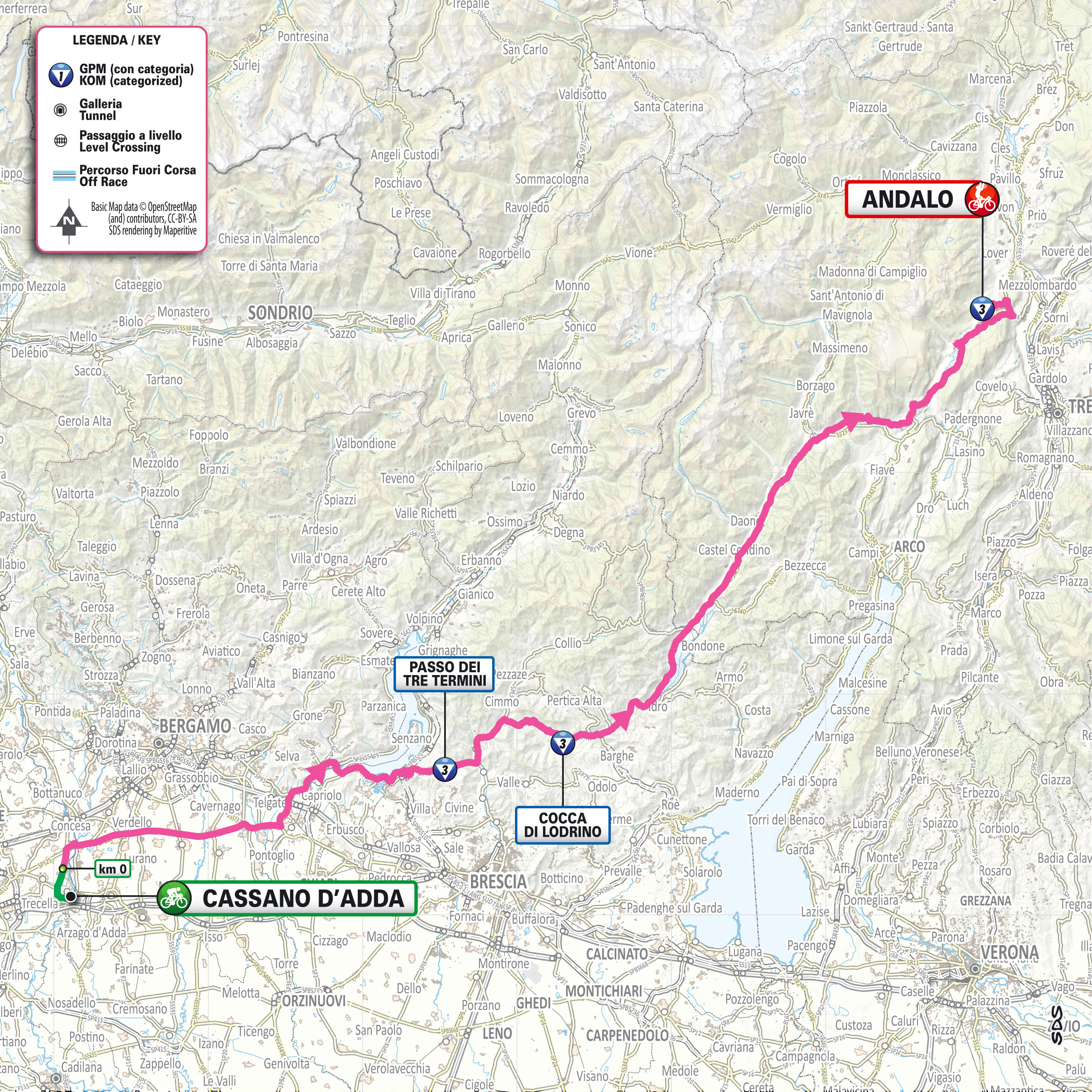 Giro d’Italia 2026 stage 17 map(Image credit: RCS)
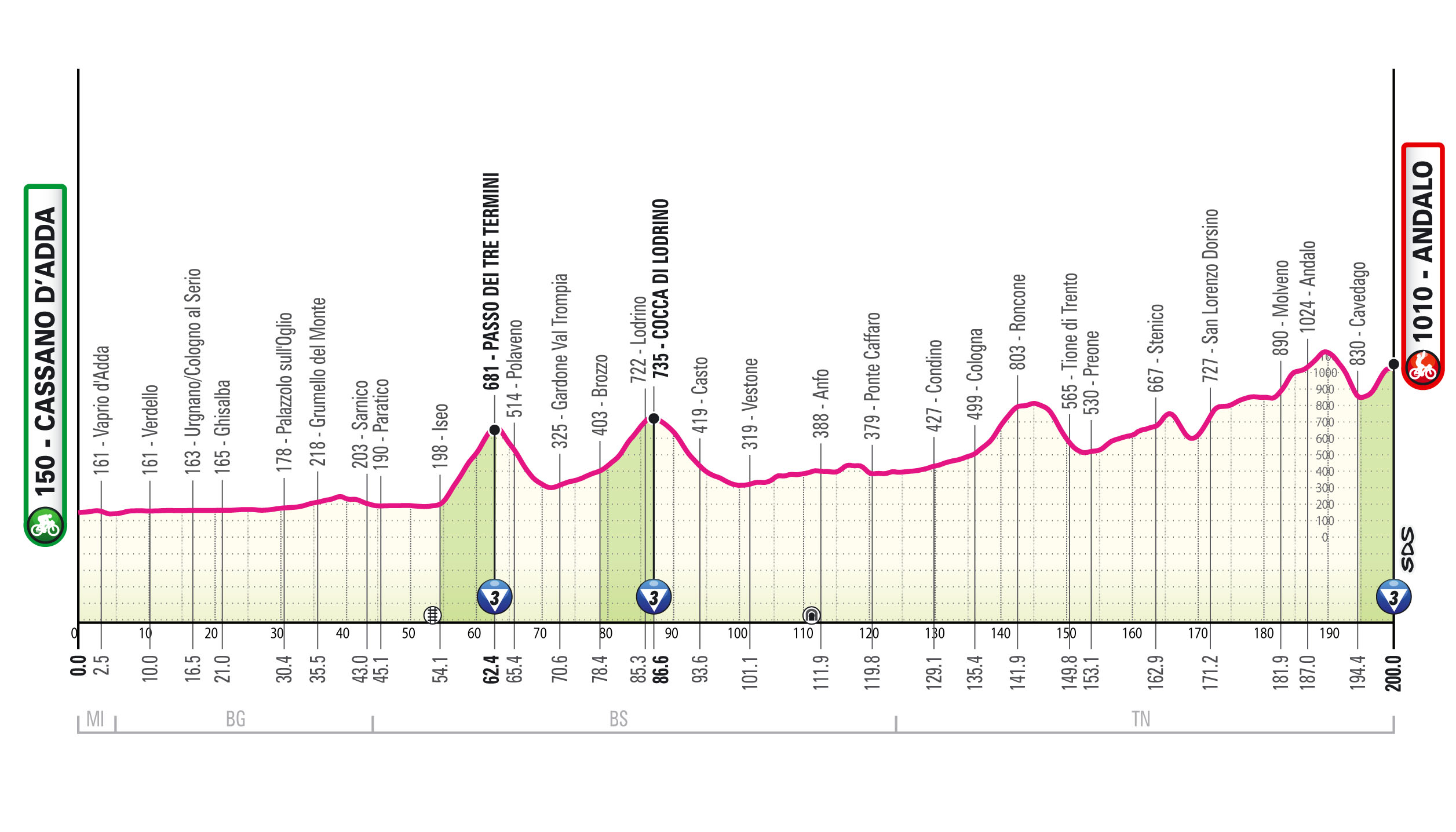 Giro d’Italia 2026 stage 17 profile(Image credit: RCS)
This stage was initially expected to finish at Madonna di Campiglio, perhaps after climbing the mighty Passo dello Stelvio, instead has become more a transition or breakaway stage towards the final high mountains.
The road heads east from Brianza, passing Brescia and then climbing in the valley roads near Lake Garda.
Stage 18: Fai della Paganella – Pieve di Soligo (166km)
Image 1 of 2
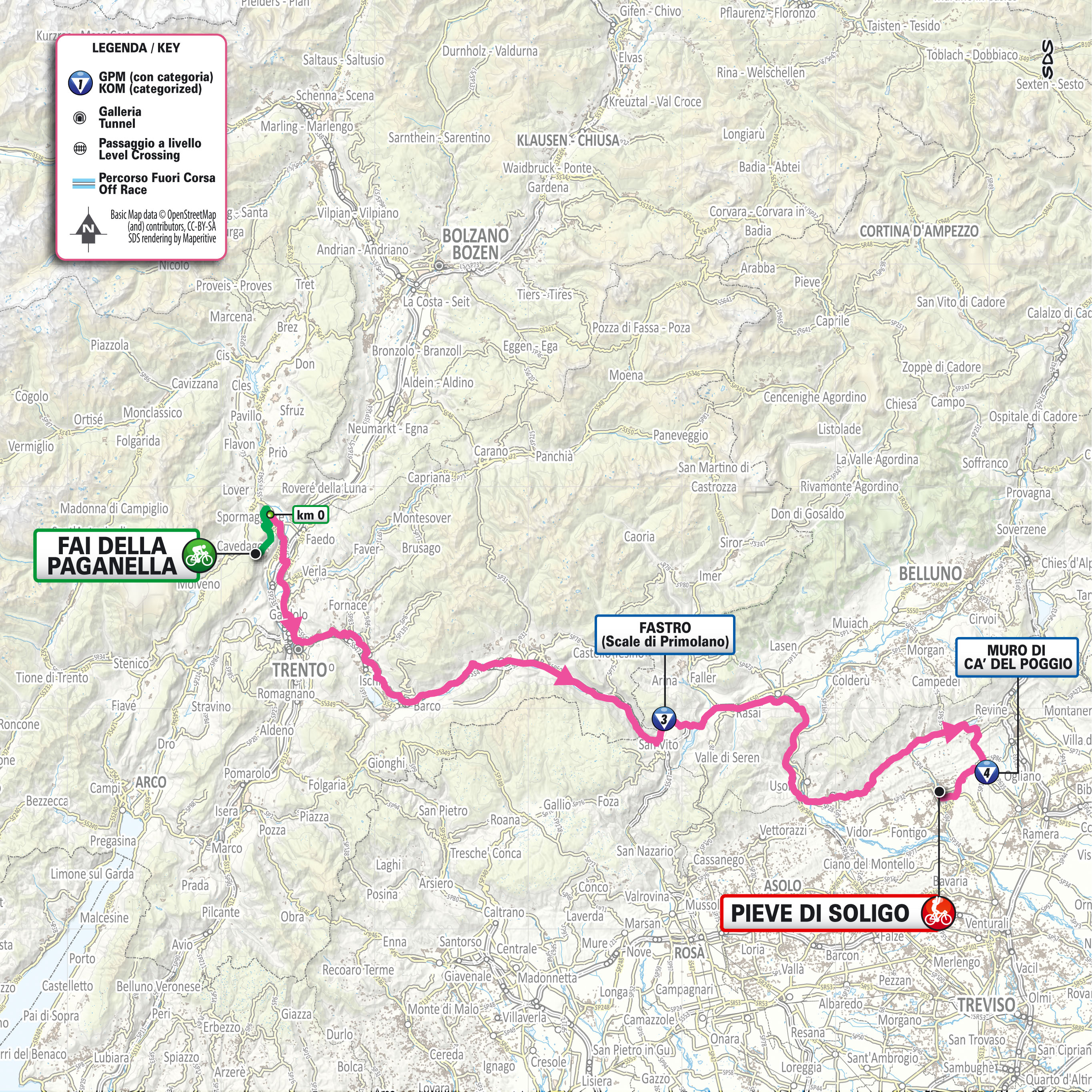 Giro d’Italia 2026 stage 18 map(Image credit: RCS)
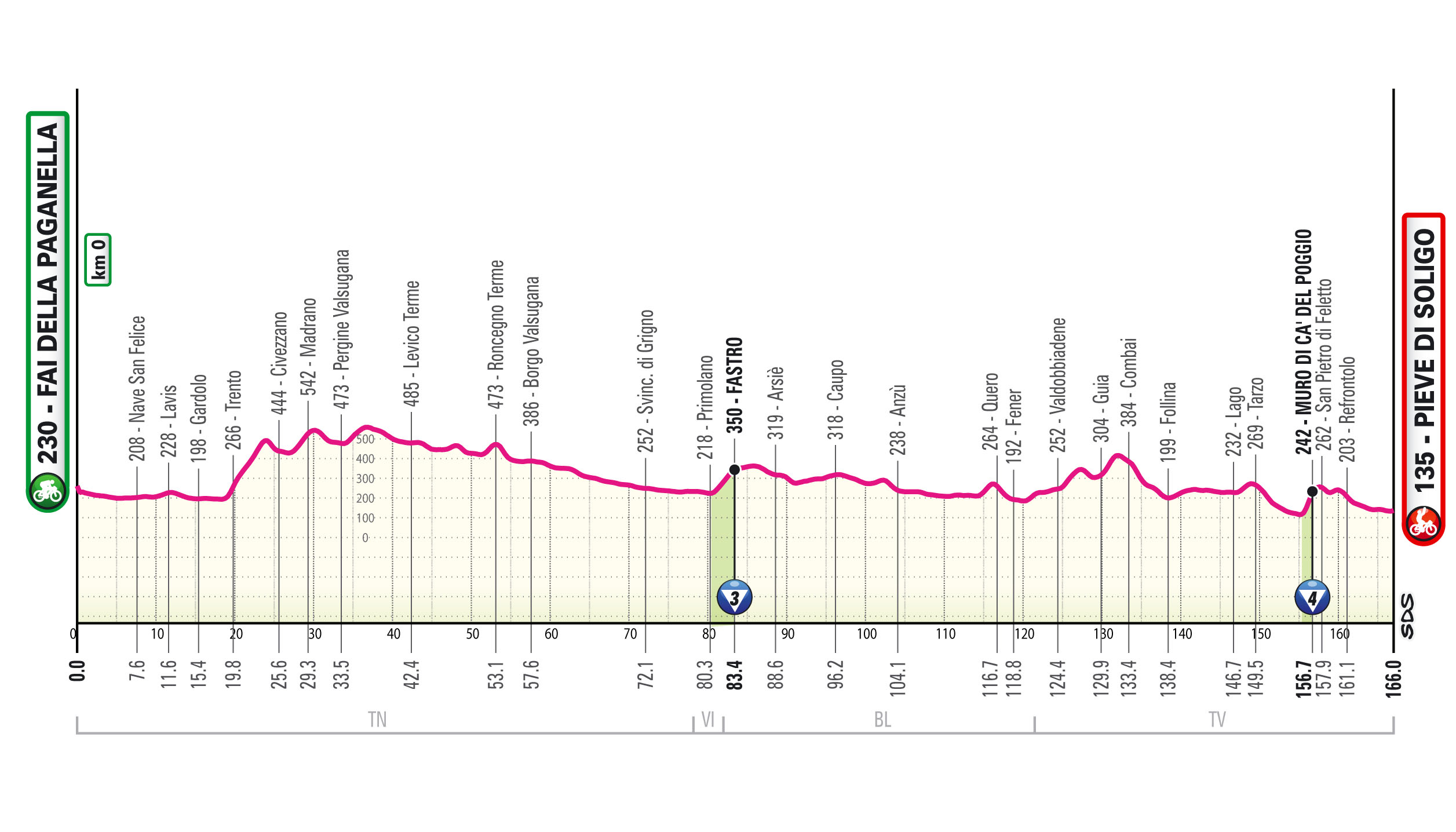 Giro d’Italia 2026 stage 18 profile(Image credit: RCS)
Instead of heading high into the nearby Dolomites and Alps, stage 18 takes the Giro southeast into the Veneto region for a finish in Pieve di Soligo. It is another transition stage, but passes through the hilly Prosecco vineyards and climbs the Ca’ del Poggio hillside just 10km from the finish.
The fight for positioning will be more important than the climb itself and should test the GC riders’ nerves and team strength if not their legs.
Stage 19: Feltre – Alleghe (151km)
Image 1 of 2
 Giro d’Italia 2026 stage 19 map(Image credit: RCS)
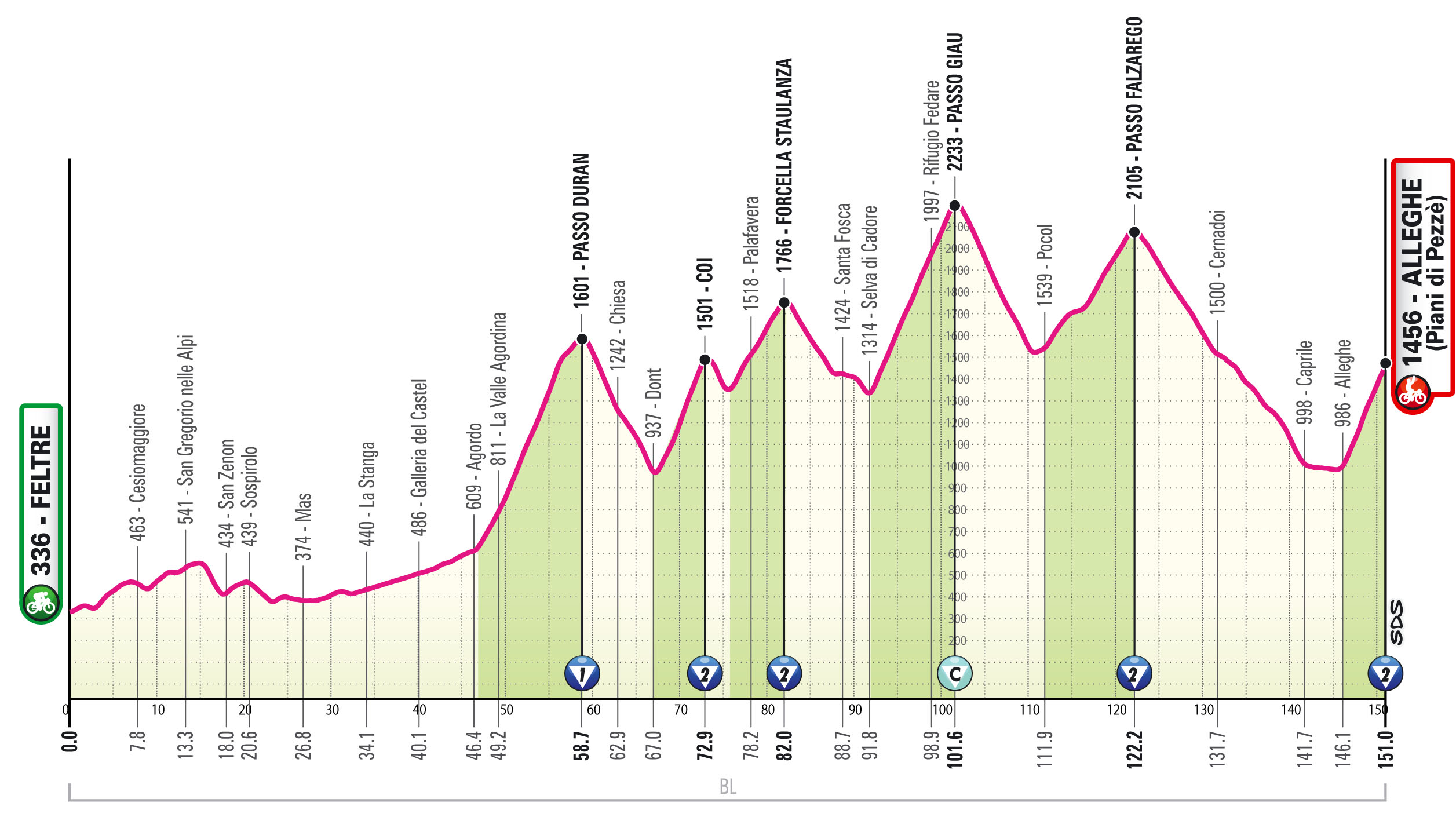 Giro d’Italia 2026 stage 19 profile(Image credit: RCS)
The high mountains finally rear their heads on stage 19, with five climbs in just 152km of racing, making this the Queen stage of the 2026 Corsa Rosa. RCS Sport have designated it a five-star stage due to the 5000 metres of altitude gain, and it should begin the final battle for the maglia rosa.
The stage starts in Feltre, near the race leader jersey sponsor Castelli and then climbs the Passo Duran, the Forcella Staulanza, the steep Passo Giau up to 2233 metres, which is the Cima Coppi, followed by the Passo Falzarego.
A long descent leads to the foot of the final Piani di Pezzè climb. It is short but steep and will surely hurt after the previous climbs. A young and promising Marco Pantani won here in 1992 when he won the amateur Giro.
Stage 20: Gemona del Friuli – Piancavallo (199km)
Image 1 of 2
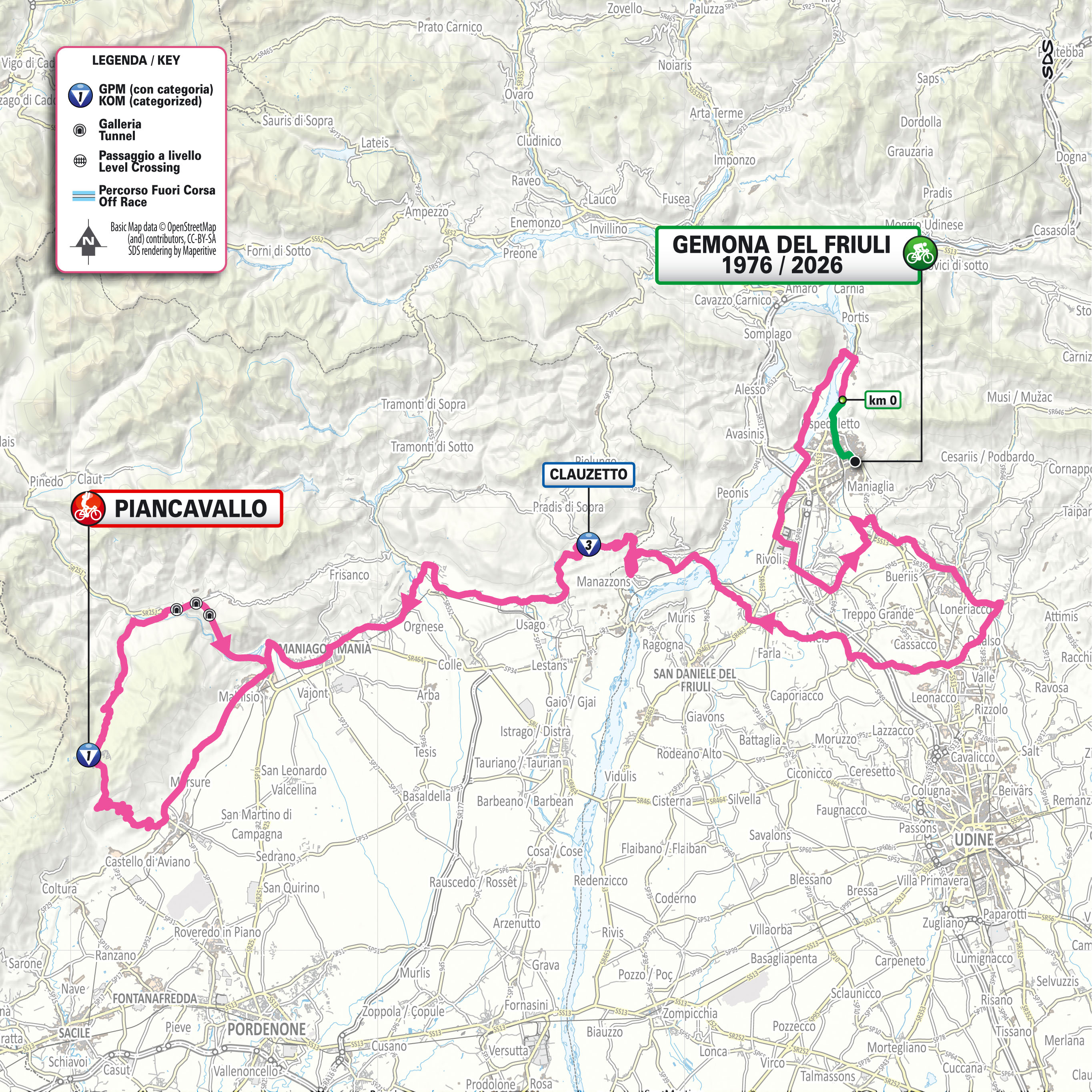 Giro d’Italia 2026 stage 20 map(Image credit: RCS)
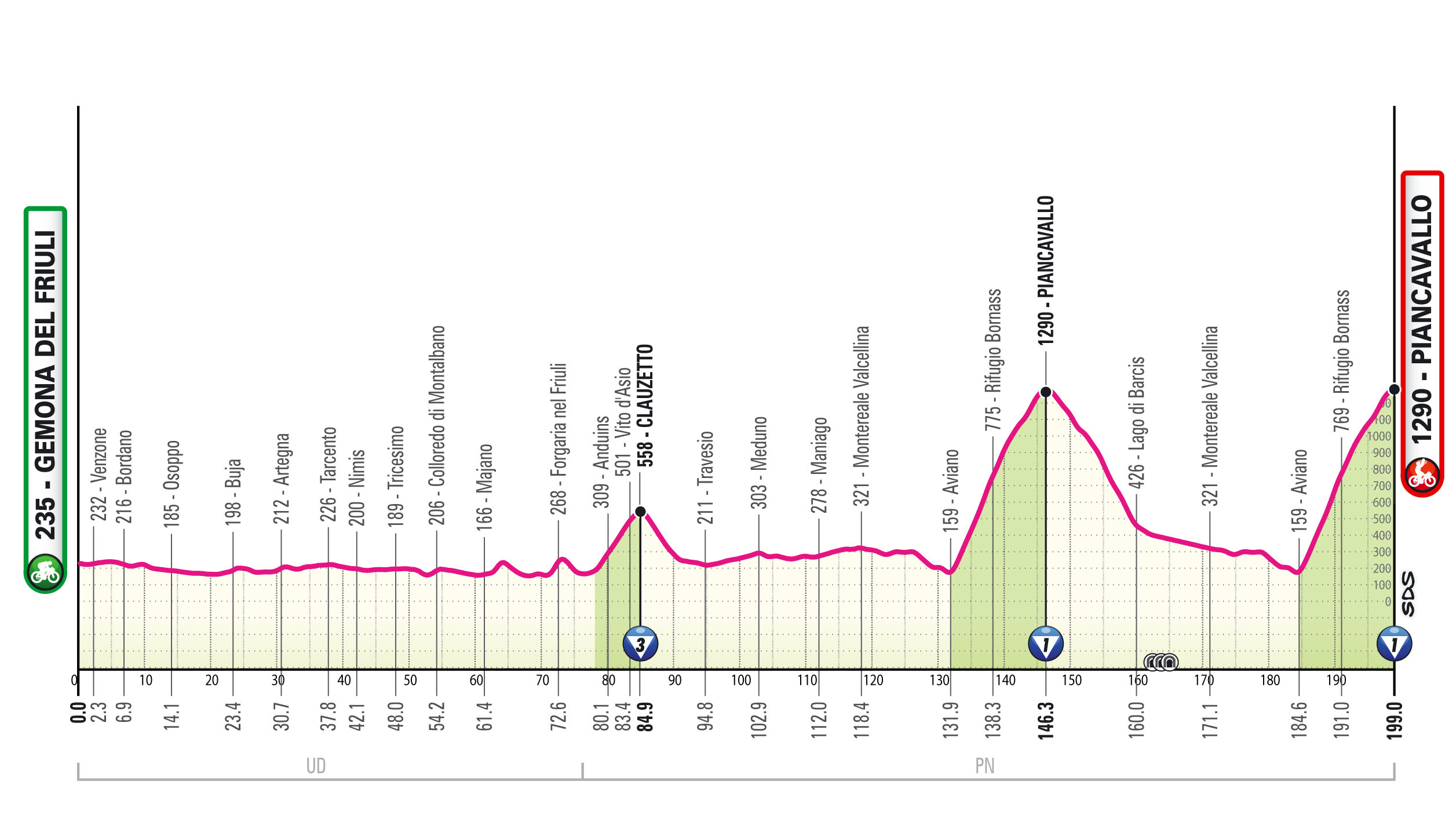 Giro d’Italia 2026 stage 20 profile(Image credit: RCS)
This final mountain stage remembers the terrible earthquake that struck the Friuli Venezia Giulia 50 years ago.
It starts on the flat valley roads but climbs high to Piancavallo twice. The 14.4km climb rises at 8.9%, steeper than most long climbs and certainly harder than anything climbed at the Tour de France. Tao Geoghegan Hart won on the 14.4km, 8.9% climb in 2020 on the way to overall victory.
In 2026 the rider will climb to Piancavallo after 130km, dive down the descent and then climb back to Piancavallo from Aviano after 184km. Race organisers are clearly hoping the 2026 Giro will be wide open until the final climb of the race, with the winner of the Corsa Rosa crowned at the summit.
Stage 21: Roma – Roma (131km)
Image 1 of 2
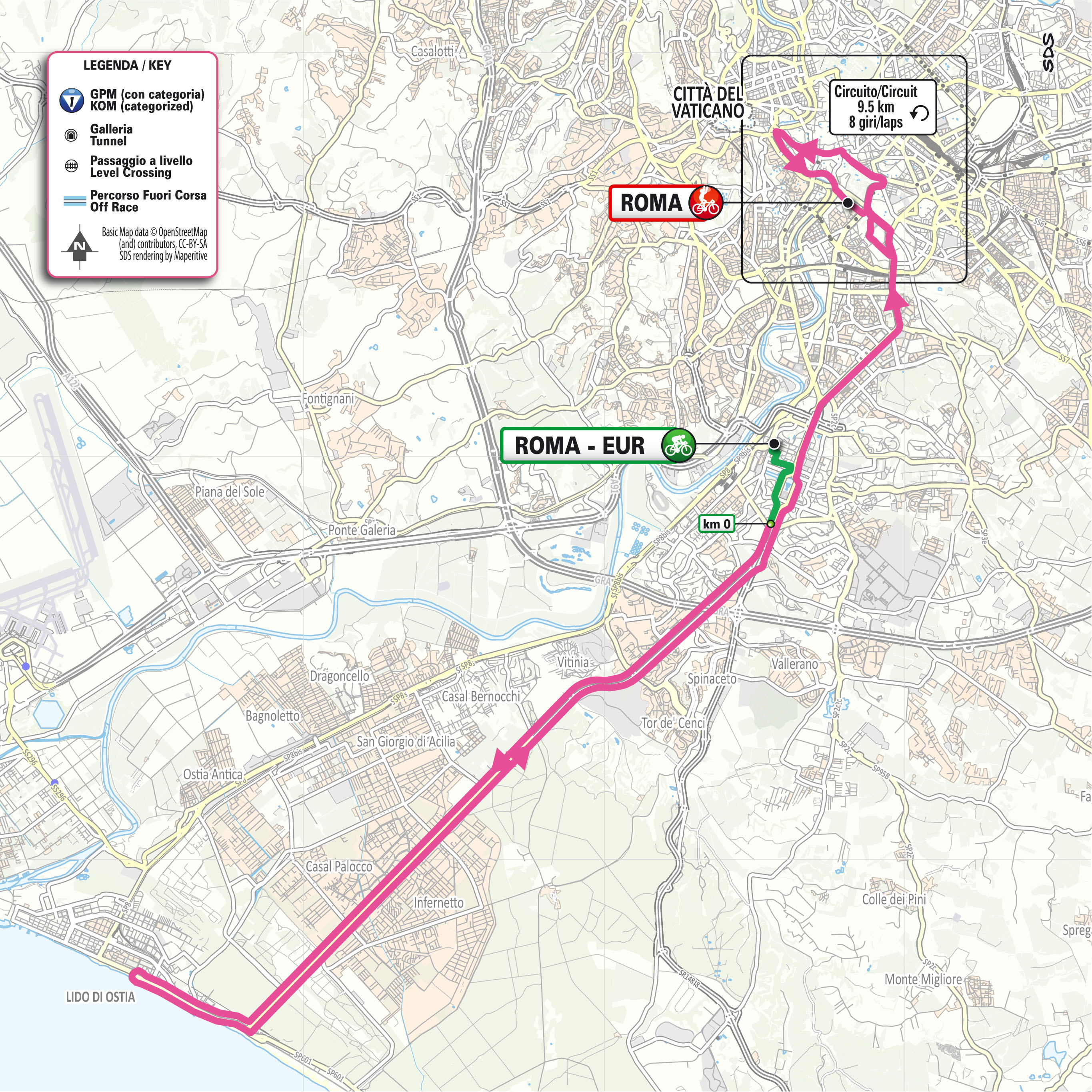 Giro d’Italia 2026 stage 21 map(Image credit: RCS)
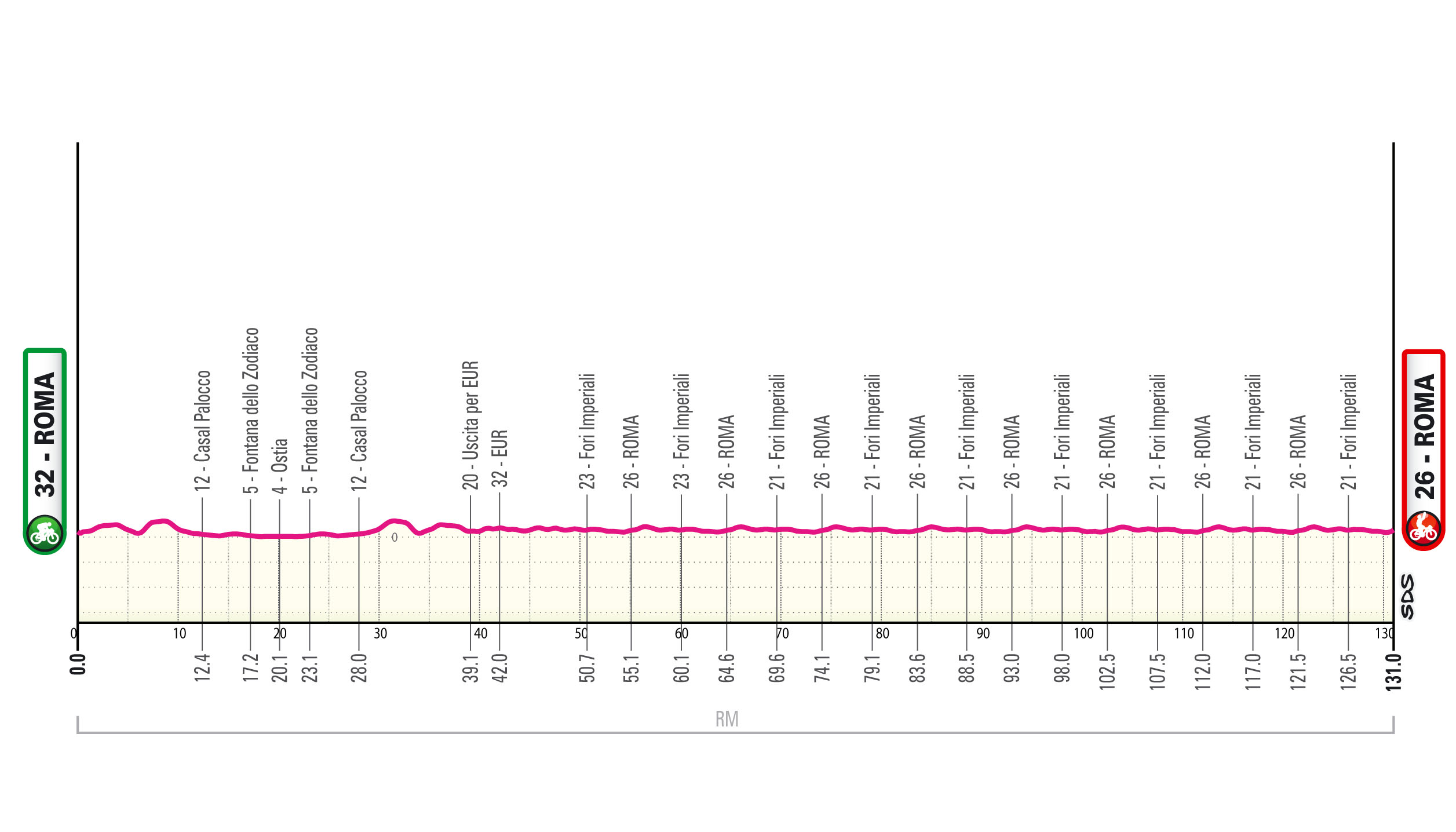 Giro d’Italia 2026 stage 21 profile(Image credit: RCS)
The final ceremonial stage in Rome comes after a flight or high-speed train south from the northwest of Italy.
The 131km stage heads out to the coast before returning to the city centre for nine finishing circuits around the Roman ruins of the Fori Imperiale and the Colosseum, with some rough cobbled sections included in the ride around the Eternal City.
A sprint finish is assured as the peloton celebrates the end of the Giro in front of thousands of surprised tourists and then heads for a plate of well-deserved Roman pasta.