
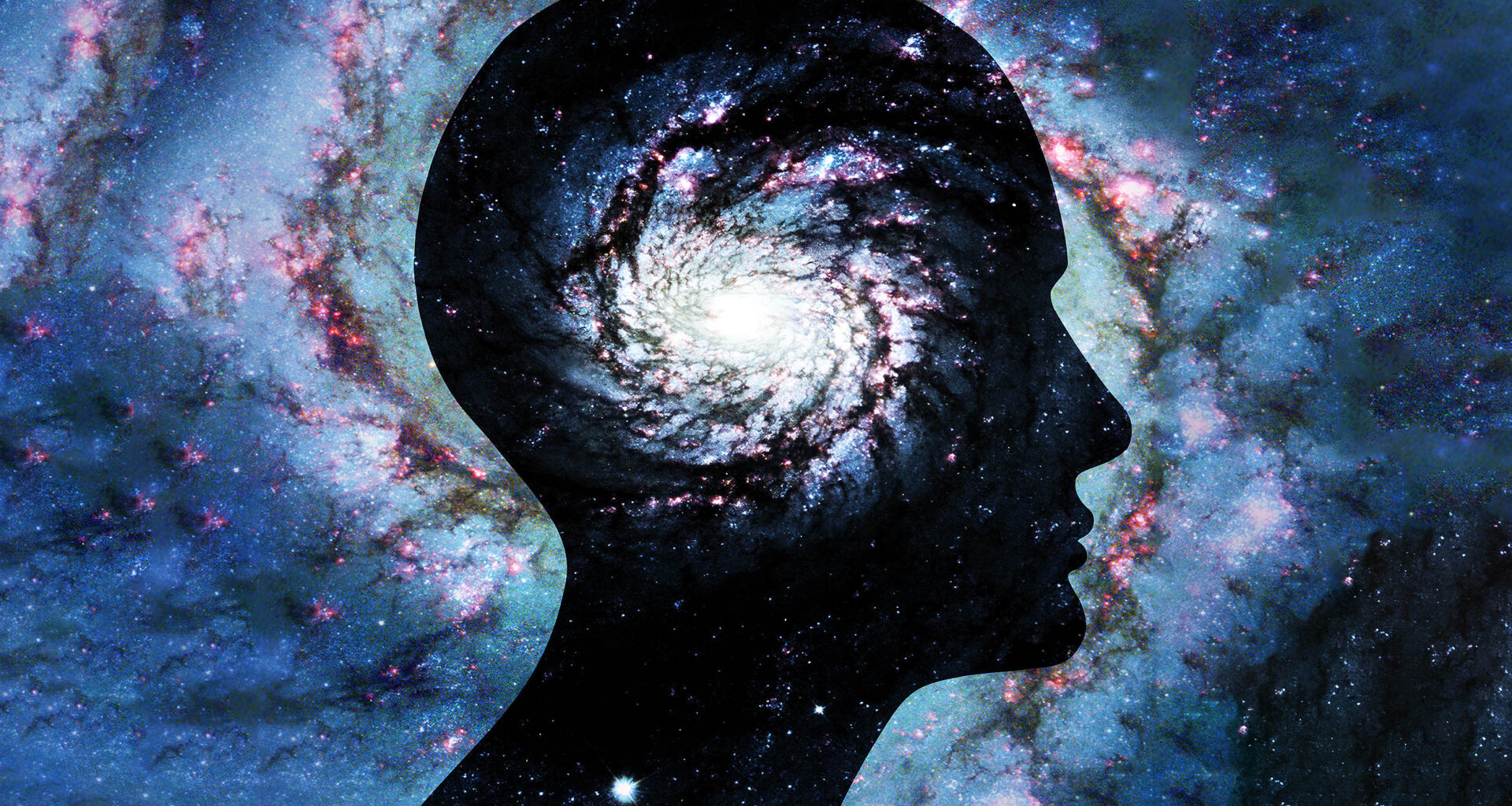
Most school science lessons start with particles and forces. Matter comes first. Atoms build molecules, molecules build cells, cells build brains, and only then, when a nervous system becomes complicated enough, experience appears as a side effect.
In that familiar picture, the “field” of consciousness rides on top of physics rather than sitting at the base of it.

Maria Strømme, a materials science professor at Uppsala University, outlines a new theoretical model in AIP Advances that begins with a central claim: consciousness is fundamental field, and time, space, and matter develop from it.
Her paper treats conscious experience not as a late add-on, but as the basic “stuff” that reality is made of. In that picture, your brain, your body, and even space and time grow out of a deeper kind of “mind” that fills the whole universe.
Tearing up the textbooks
Most neuroscientists still ask, “How does the brain produce consciousness?”
Professor Maria Strømme asks instead, “How does a conscious universe produce brains, matter, and space-time?”
In her model, a universal, all-pervading awareness already exists. Physical objects such as electrons, planets, and nervous systems appear as organized patterns within that deeper field of awareness.
She borrows tools from quantum field theory, where particles look like ripples or excitations in invisible fields, and treats consciousness itself as a fundamental field of that kind.
In physics, a field is something that has a value at every point in space and time, so this consciousness field is meant to be present everywhere, all the time.
Parts of a conscious universe
To give this picture some structure, she relies on a modern philosophical framework known as the “Three Principles”: “universal mind,” “universal consciousness,” and “universal thought.”
These terms first appeared in psychology, but she reuses them as basic ingredients in a physics-style model of reality.
In her adaptation, “universal mind” stands for an underlying intelligence or potential that saturates the universe.
“Universal consciousness” marks the bare ability to have any experience at all, before anything specific shows up.
“Universal thought” acts as a creative process that shapes that pure awareness into particular experiences: seeing a tree, feeling sadness, imagining a song.
In the paper, these are not loose metaphors; each one plays a defined role in the mathematics. Philosophers sometimes group ideas like this under panpsychism – the view that consciousness belongs to the basic furniture of the universe rather than being added on top.
From awareness to space-time
Cosmology textbooks usually start the universe with a Big Bang: an extremely hot, dense state from which space, time, matter, and energy expand.
Strømme suggests an earlier stage, a kind of undifferentiated, timeless consciousness in which no distinctions exist yet.
From that starting point, she proposes tiny fluctuations in the consciousness field, followed by processes similar to “symmetry breaking” in physics, where uniform states tip into more structured ones.
In ordinary particle physics, “symmetry breaking” explains why the universe ends up with different forces and particles instead of staying perfectly featureless.
Strømme uses that idea to explain how distinctions such as “this vs. that” and “observer vs. observed” can form inside the consciousness field, and how space and time themselves can appear from a more unified field of awareness.
In this theory, basic separations in experience grow together with the physical structure of the cosmos.
Minds, brains, and non-dual ideas
Once space, time, and structure exist in the model, individual minds show up as localized patterns in the universal field.
Each person’s consciousness becomes a temporary, organized configuration of that deeper field, not a sealed-off object.
The feeling that “I am completely separate from everyone and everything else” then counts as a surface impression rather than the deepest description of what we are.
This outlook lines up with “non-dual” philosophical traditions, which say the split between self and world is constructed by the mind.
Strømme notes that many spiritual and religious writings talk about shared or cosmic consciousness, but her goal is not to support any particular religion. She aims to translate that intuition into precise, physics-style language.
She contrasts her proposal with standard materialist models of the mind, which explain thoughts and feelings entirely through neurons, chemistry, and electrical activity in the brain.
In her framework, the brain works as an interface that shapes an already present universal awareness into the specific personal experience of being “you.”
Unusual experiences and death
The paper also touches on reports of telepathy, near-death experiences, and intense moments of connection across distance.
Mainstream science regards these claims as unproven and highly controversial, and Strømme doesn’t present them as established facts. Instead, she asks what kind of physics could even allow them.
In a universe built from a shared consciousness field, information could, in principle, spread through that field in ways that are not limited to ordinary space and time, moving such phenomena from “impossible by definition” to “maybe testable under a different set of assumptions.”
Her model also suggests a particular view of death. If an individual mind is a structured pattern in the field of consciousness, then when the body and brain stop, that pattern loses its organization while the underlying field stays in place.
In that picture, the familiar sense of self can come to an end, while awareness as such continues as part of the universal background it always belonged to.
Strømme uses ideas from quantum mechanics to sketch how a specific conscious state might “merge” back into a more general one, without claiming proof of any definite afterlife or tying it to any single belief system.
Proving a consciousness field
Modern work in quantum gravity and cosmology already hints that space-time might not be truly fundamental. Some approaches say that geometry emerges from more basic ingredients such as quantum entanglement, information, or abstract mathematical structure.
Strømme places a consciousness field at that deeper level, arguing that the foundation is not just bare math but has a conscious character.
She sketches experimental ideas in quantum physics, neuroscience, and cosmology that would look for indirect evidence of such a field, including unusual correlations between mental states and physical systems.
These suggestions sketch how future experiments might look and give researchers possible ways to test the claim that “consciousness is fundamental” in a scientific way.
This model is a theoretical proposal, not a settled description of nature, sitting far outside the scientific mainstream. Many researchers would expect very strong experimental evidence before they even think about changing their current picture of how matter and consciousness are related.
Strømme’s work turns that starting point around while staying within the language of modern physics, using the same style of equations that describe particles and fields.
Whether the universe actually works this way remains an open question that will need years of argument, creativity, and careful testing. Stay tuned.
The full study was published in the journal AIP Advances.