
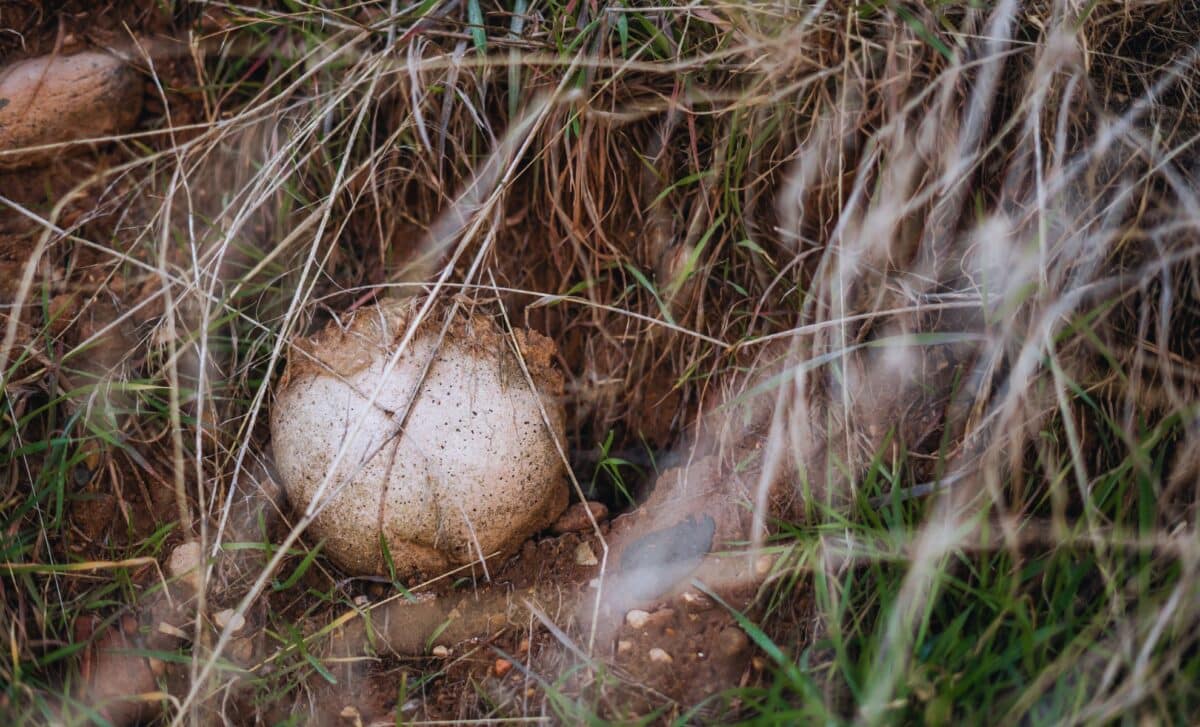
A nest of fossilized eggs discovered in southwest China is turning paleontological assumptions on their head. Preserved alongside three adult skeletons of a previously unknown dinosaur species, the 200-million-year-old embryos suggest these creatures may have laid leathery eggs.
Uncovered in Guizhou Province, the fossils date back to the Early Jurassic and belong to a new sauropodomorph species named Qianlong shouhu. The findings, published in the journal National Science Review, include rare embryonic remains and evidence pointing to social nesting behaviors and developmental shifts between young and adult dinosaurs.
Leathery Shells, Not Hard Shells
The fossilized eggs unearthed with Qianlong shouhu don’t resemble the hard, mineralized eggs typically associated with dinosaurs. Instead, these were described as having leathery shells, thicker and tougher than soft-shelled ovum, yet lacking the rigid structure of bird-like hard shells. According to the study, published in the journal National Science Review, these shells featured a well-developed calcareous layer and prominent mammillary cones, a clear indicator of their distinctive structure.
“Our results show that Qianlong shouhu possessed eggshell microstructures similar to other Cretaceous dinosaur egg fossils, which likely consisted of two layers — the mammillary layer and continuous layer — and had fully developed eggshell units,” the researchers explainec.
Soft and leathery eggs are known in some modern reptiles, such as snakes and lizards, and even in mammals like the platypus. However, finding them so well-preserved from the Early Jurassic is rare. These were large and laid in clutches, suggesting a nesting strategy that favored protection and possibly group behavior. Until this discovery, such early examples of leathery eggs had only been hypothesized based on indirect fossil evidence.
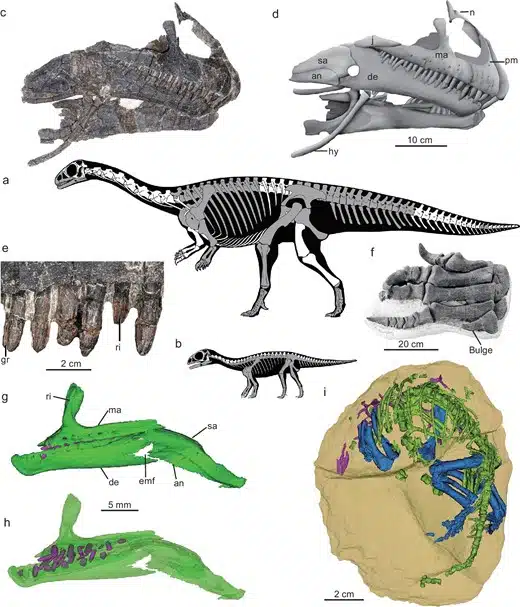 Overview of Qianlong shouhu’s skeletal structure. Credit: National Science Review
Baby Dinosaurs That Walked Differently
Perhaps even more intriguing than the shells are the embryos themselves. Researchers observed clear physical differences between the hatchlings and adult specimens. The young Qianlong shouhu had longer skulls and differently shaped snouts.
“Allometric analyses of limb ratios between the adult and embryonic specimens indicate that adult Qianlong shouhu was able to walk on its hindlimbs, but the babies were likely quadrupedal,” said Fenglu Han, a China University of Geosciences paleontologist.
This change in posture from hatchling to adult shows that these dinosaurs probably grew in ways that were more complicated than scientists used to think. The study mentioned earlier pointed out that these differences really shake up the usual ideas about how dinosaurs moved as they developed.
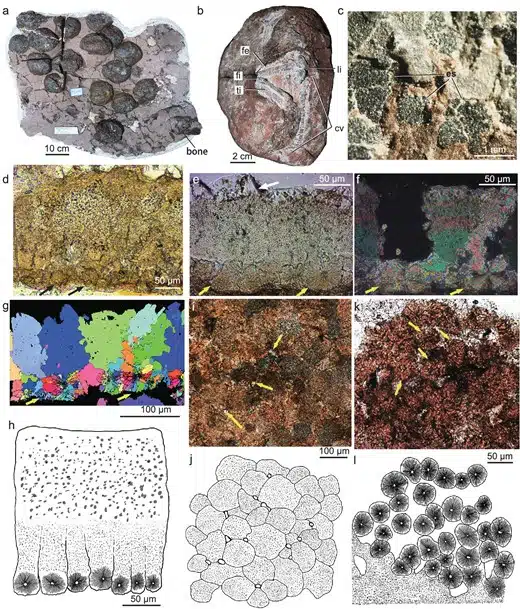 Clutch patterns, egg form, and eggshell microstructure in Qianlong shouhu. Credit: National Science Review
Dinosaurs That May Have Nested Together
Along with the fossilized bones, the way they were grouped and arranged suggests these dinosaurs may have nested together. Researchers uncovered five separate clutches near the adult skeletons, hinting that Qianlong shouhu possibly laid eggs in colonies, a behavior linked to group protection or shared nesting efforts, even if the proof isn’t fully conclusive yet. This kind of social nesting has been suggested before for other sauropodomorphs, but it’s never been clearly documented this early in dinosaur history.