
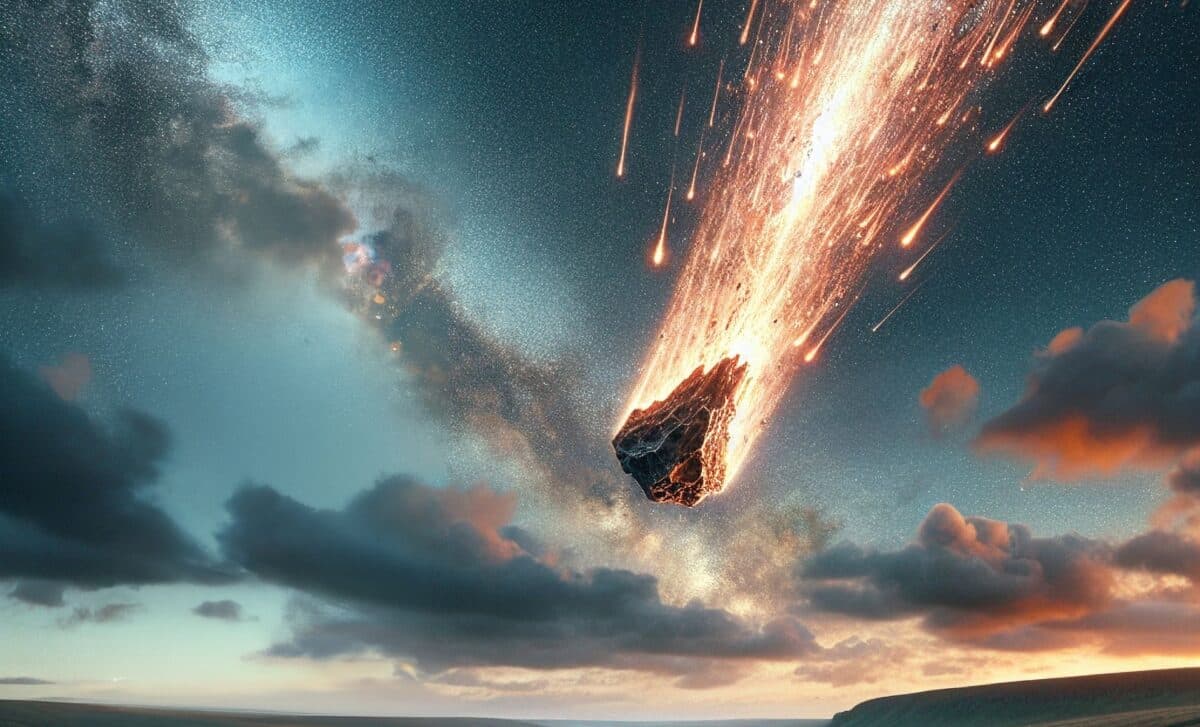
On November 30, 1954, Ann Elizabeth Hodges experienced what would become one of the most bizarre events in the history of space-related accidents. While resting in her living room in Sylacauga, Alabama, she was struck by a 10-pound meteorite that crashed through her ceiling.
The unusual event captured both public imagination and scientific interest. In the aftermath, Hodges was left with a large bruise but no serious injuries, while the meteorite itself was confirmed by scientists to have come from space. According to Space.com, Hodges later donated the rock to a museum, where it remains a historic oddity tied to Earth’s unpredictable interactions with the cosmos.
A Crash From The Sky
As noted by the Space.com, Ann Elizabeth Hodges was resting on her couch when the meteorite tore through the ceiling, bounced off a large radio, and hit her in the side. The impact left a large bruise, but she escaped serious injury.
The object, later classified as a chondrite, weighed around 10 pounds. Its speed and impact were powerful enough to leave a deep bruise on her side, although she didn’t suffer any lasting damage.
“All she knew is that something had hit her,” said Mary Prondzinski, retired Collections Manager at the Alabama Museum of Natural History. “They found the meteorite, this big rock, and they couldn’t figure out how it had got there.”
Hodges was taken to the hospital but released soon after. As the story gained attention, scientists moved quickly to authenticate the space rock, confirming it had indeed come from beyond Earth. The University of Alabama later displayed the bruises and damage in archived images.
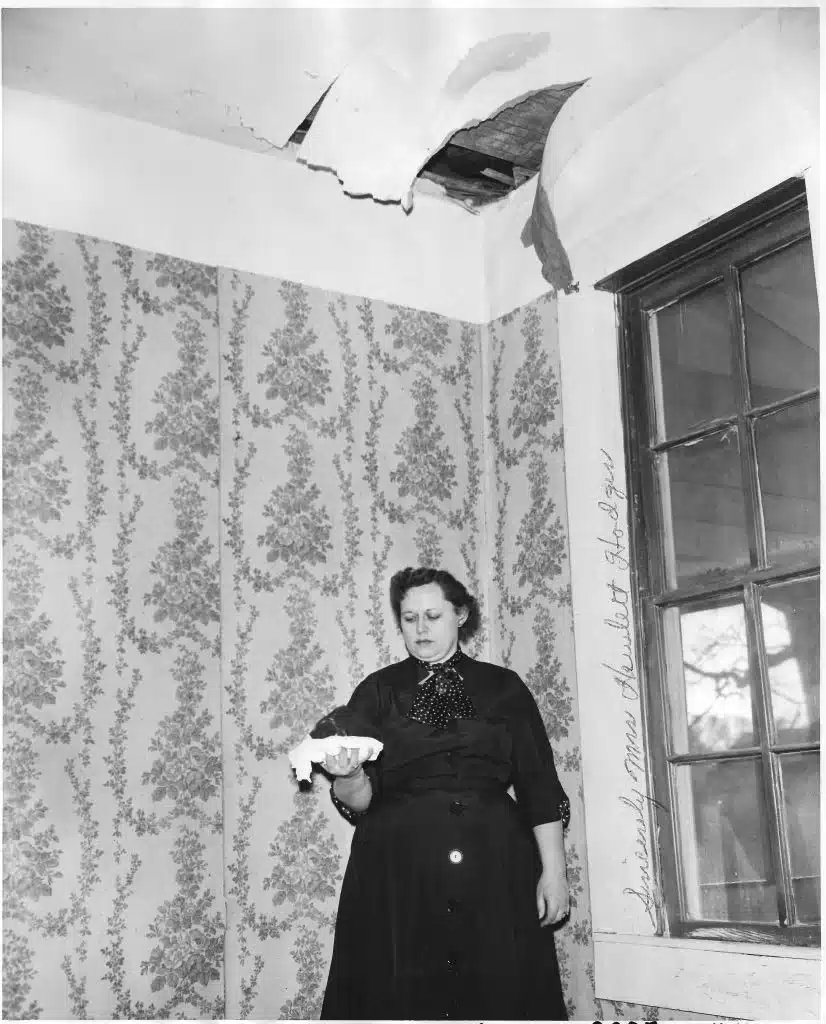 Ann Elizabeth Hodges holding a portion of the meteorite. Credit: The University of Alabama
The Only Known Human Hit
As explained by Gonzalo Tancredi, an astronomer at the University of the Republic in Montevideo, despite thousands of meteorites falling to Earth every year, this case remains the only verified incident of one striking a person.
“About 6,100 meteorite falls per year over the entire Earth, and about 1,800 over the land,” he said. That statistical improbability is exactly what sets Hodges’ case apart.
There was even a local dispute over who owned the meteorite, with both Hodges and her landlord claiming it. In the end, she kept it and chose to donate it to a natural history museum, putting an end to the argument, but not to the curiosity it sparked.
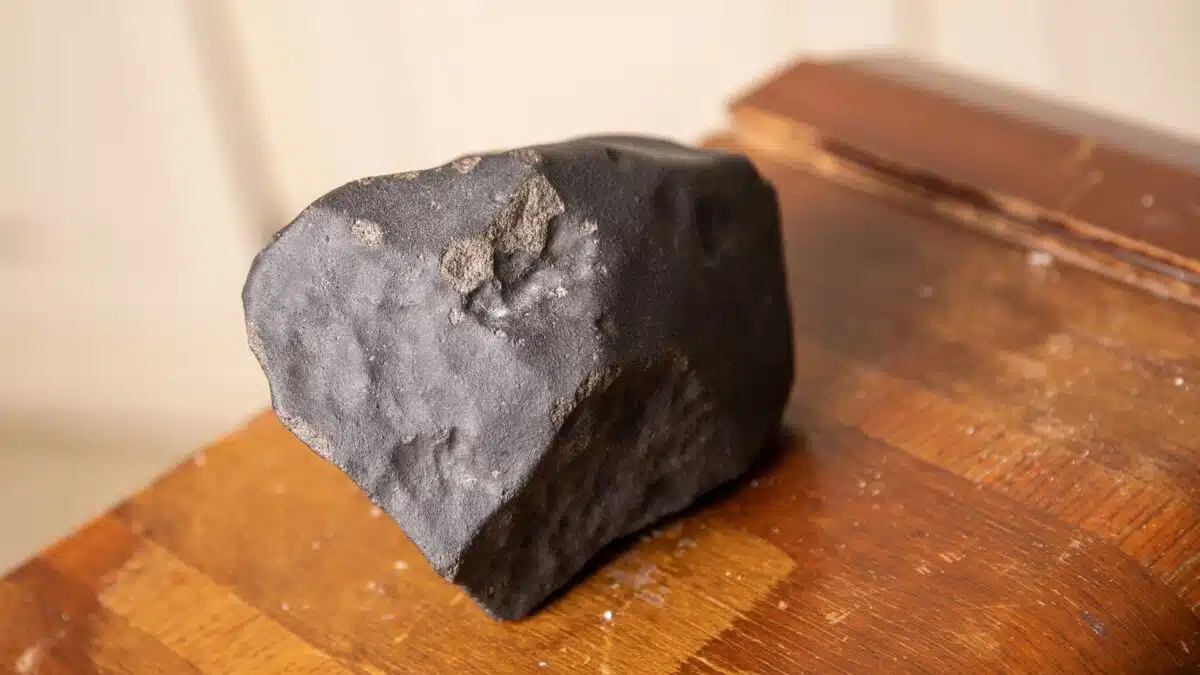 Hodges Meteorite. Credit: The University of Alabama
A Moment That Made History
The impact stuck in people’s minds as a standout moment in space history. The same source also reports that, Elizabeth Hodges’ name is still tied to one of the weirdest recorded encounters between a human and outer space. Her calm reaction, the scientists’ confirmation, and how rare the whole thing was all helped turn it into something close to legendary.
“She’s the only one who’s ever been hit by a meteorite and lived to tell about it. Because of that, the meteorite has been appraised at over a million dollars,” Prondzinski noted.
Today, the Sylacauga meteorite is a reminder of how thin the line can be between Earth and the universe.