
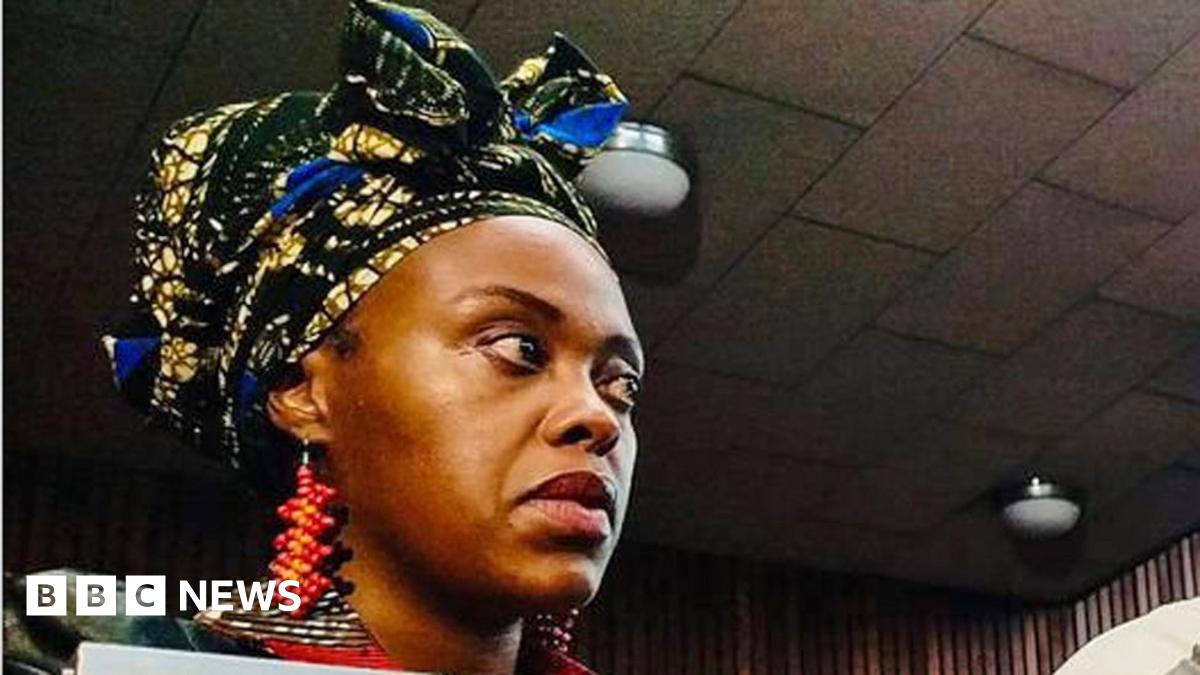
The NPA said it was “committed to ensuring that individuals who violate the laws of the country are held accountable and will continue to work with other law-enforcement partners to protect the integrity and security” of South Africa.
The accused are due to make their next court appearance on 8 December for a bail application.
In November, South Africa’s government said it had received distress calls from 17 citizens who were trapped in Ukraine’s war-torn Donbas region after joining mercenary forces.
It added that it was working through “diplomatic channels” to bring them back, but this has not yet happened.
The men were lured to join the mercenary forces under the pretext of lucrative contracts, the government said, adding that it condemned “the exploitation of young vulnerable people by individuals working with foreign military entities”.
South Africa has an unemployment rate of more than 30%, which is even higher among young people.
Zuma-Sambudla’s resignation as an MP came after her half-sister, Nkosazana Zuma-Mncube, filed a complaint with police, accusing her of tricking the 17 men to fight for Russia as mercenaries.
Zuma-Mncube said that eight of them were members of her family, and they had been “handed to a Russian mercenary group to fight in the Ukraine war without their knowledge or consent”.
South Africa’s elite police unit, the Hawks, said the case was being investigated by its officers who focus on “crime against the state”.
Zuma-Sambudla, who became a member of parliament for the largest opposition party, uMkhonto weSizwe (MK), last year, has said in an affidavit that she thought the men were going to Russia for “lawful” training.
MK says it was her decision to resign as she wants to focus her efforts on ensuring the return of those trapped in a war zone.
In September, Kenyan police said they had rescued more than 20 people from a suspected trafficking ring that had lured them with job offers in Russia but intended to send them to fight in Ukraine.
Ukraine has previously said that it was holding citizens of various countries – Somalia, Sierra Leone, Togo, Cuba and Sri Lanka – at prisoner-of-war camps.
It has also previously come in for criticism for trying to recruit foreign nationals, including Africans, to fight on its side.
In 2022, Senegal’s foreign ministry said it had summoned Kyiv’s ambassador to demand the withdrawal of an embassy post on Facebook urging foreigners to enlist for its war effort.
At the time, Nigeria also warned that it would not tolerate Ukraine’s recruitment drive, forcing it to back-pedal.