
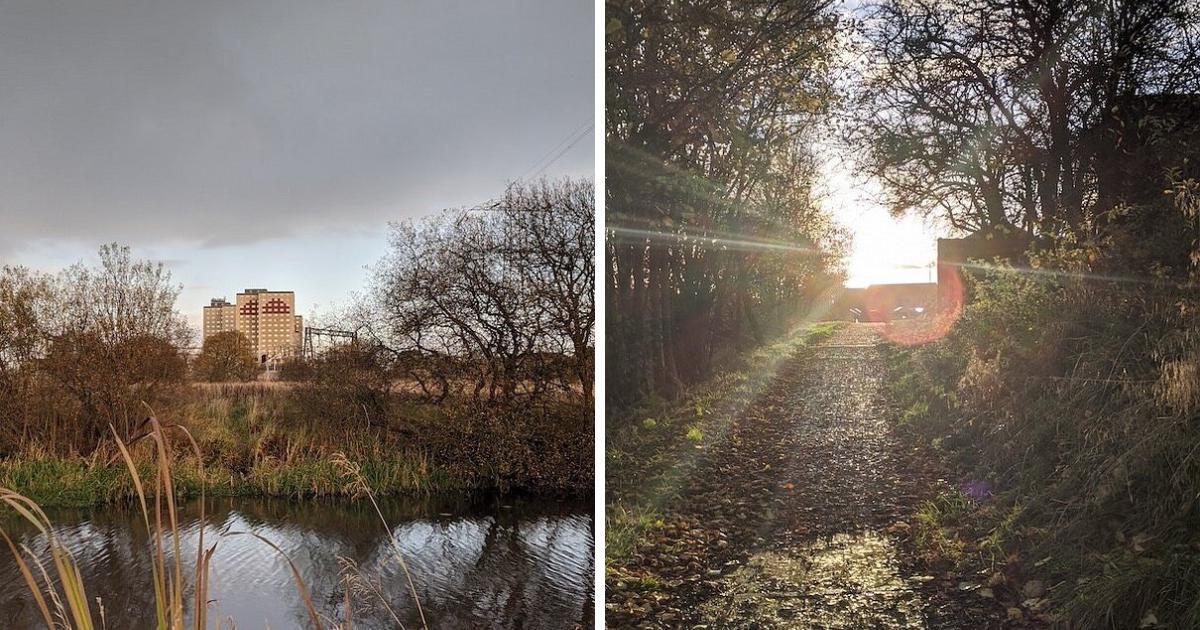
In 2005, a monument was erected within the reserve to mark the bicentenary of the fall, following a series of commemorative events and local celebrations. Although the exact impact point has been lost over time, the marker stands as a tribute to the remarkable moment when a piece of outer space landed in Glasgow.
What happened to the meteorite that landed in North Glasgow in 1804?
The meteorite landed here in 1804 (Image: Andrew Smart/Newsquest)
While the meteorite no longer lies at Possil Marsh, part of it survives. A surviving fragment was donated to the University of Glasgow’s Hunterian Museum in 1810, where it remains preserved today.
Dr John Faithfull, the museum’s curator, said at the time: “This meteorite was the first ever recovered in Scotland, and one of the very first scientifically verified falls anywhere. This important scientific event at last has a fitting memorial.”
Read more:
Today, Possil Marsh Nature Reserve is a peaceful escape for walkers, cyclists and wildlife enthusiasts. Visitors often praise its quiet, “off the beaten track” feel despite its proximity to the city. Birdwatchers in particular value the marshland and natural cover the reserve provides.
The reserve is easily reached by foot, bike or car, and visitors can also stop by nearby Lambhill Stables, which serves hot food, drinks and snacks — a welcome spot before or after exploring one of Glasgow’s most unusual historical sites.