
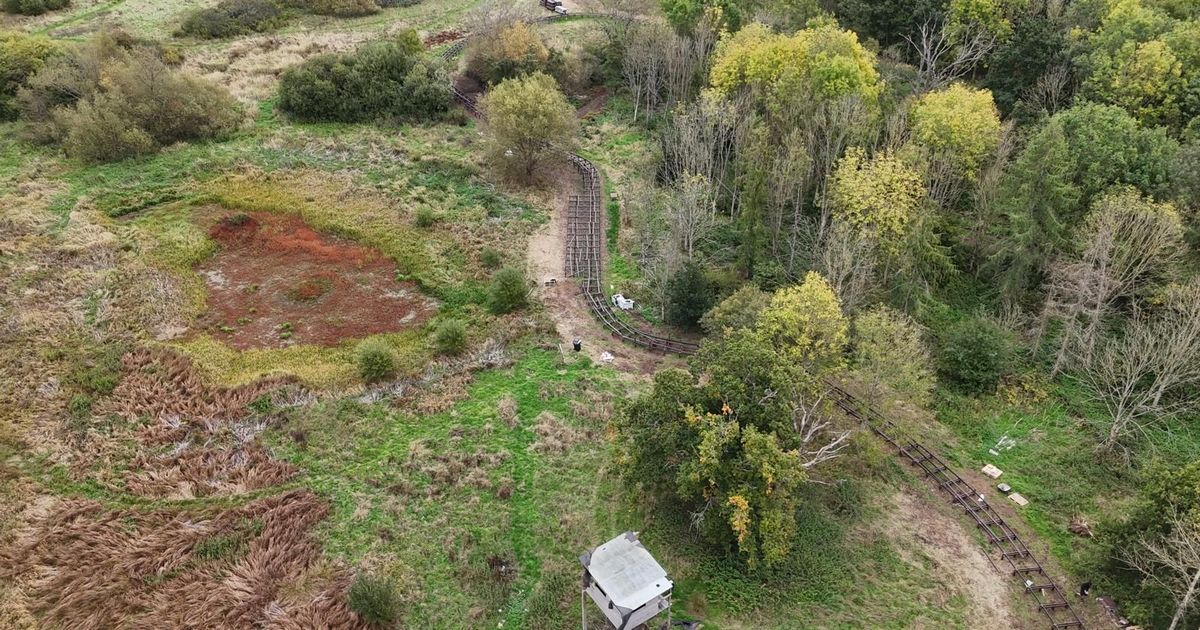
The scheme is part of plans to build the 1,650 home Weyside Urban Village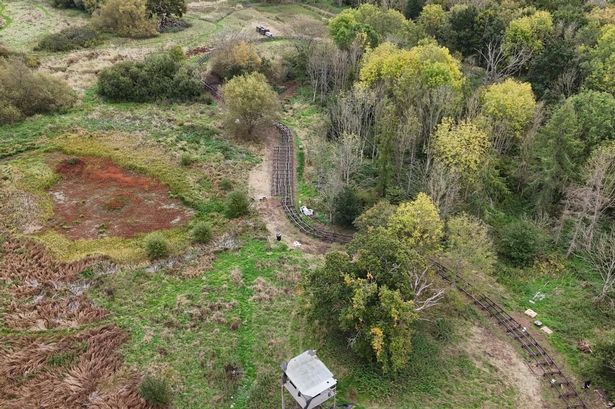 Aerial view of raised boardwalks under construction at Burpham Court Farm nature reserve(Image: Guildford Borough Council)
Work to transform a section of previously “inaccessible” farmland into a “stunning” nature reserve as part of a project that will see 1,650 homes built in an area of Guildford is nearing completion, say Guildford Borough Council (GBC).
Land to the north of the Slyfield Industrial Estate, known as Burpham Court Farm, is being turned into a nature reserve the “size of 32 football pitches”.
Work began on the land in March, with GBC telling the public last week that this is on track for completion in early 2026.
The nature reserve is being created as part of the Weyside Urban Village Project, which is set to see 1,650 homes built on land near Slyfield and Bellfields.
GBC sees the completion of the nature reserve as both a key milestone in the major housing project and something that will “significantly improve biodiversity” in the north Guildford area.
In an update provided to the public, GBC shared that the footpaths and shallow drainage basins have finished construction, with the majority of heavy-machinery being removed from the site.
From now until the planned early-2026 completion of the project, work will focus on planting and finishing the nearly one kilometre of raised boardwalks.
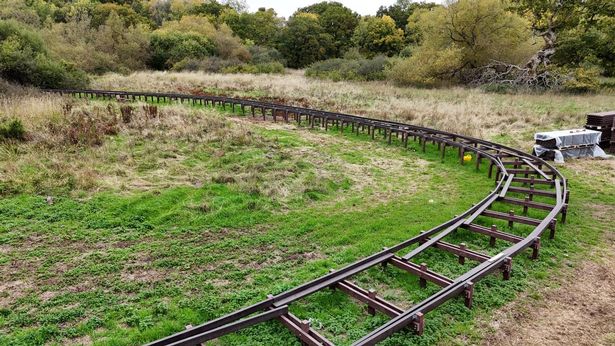 The nature reserve is due to feature nearly one kilometre of raised boardwalks(Image: Guildford Borough Council)
Cllr Tom Hunt, Lead Councillor for Economy and Place spoke on the progress, saying: “The Weyside Urban Village scheme has allowed us to create better access to nature for residents and visitors.
“We’re not only providing beautiful new green spaces but also helping to safeguard Guildford’s natural environment for generations to come.”
Cllr Angela Goodwin, Lead Councillor for Environment and Recreation added: “The new nature reserve at Burpham Court Farm is a fantastic addition to our growing collection of parks and green spaces, strengthening Guildford’s reputation as one of England’s greenest towns.”
Some residents of the area have expressed some concerns with reagrds the nature of the land, claiming that it floods too often, being based next to the River Wey Navigation.
The soon-to-be nature reserve also backs onto the site in which the new Guildford Sewage Treatment Works is being constructed.
GBC state that the nature reserve has been carefully designed to align with the Natural England guidelines with a dedicated Biodiversity Net Gain Plan underpinning the scheme.
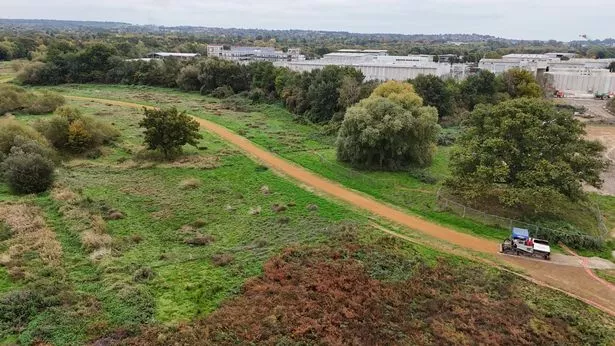 Burpham Court Farm nature reserve backs onto the site in which the Guildford Sewage Treatment works is being built(Image: Guildford Borough Council)
Work on the land will also include creating and preserving natural habitats with the aim of attracting a variety of species such as pollinators, butterflies, amphibians and a range of birds.
To address the long-standing issues of flooding on the land, the scheme includes flood alleviation measures with a drainage system being put in place designed to keep water within the nature reserve.
This will also create more shallow basins in the landscape, to collect rainwater that can drain away naturally through the ground.
The farm, described by the council as currently “inaccessible agricultural land” sits in between the Guildford estates of Slyfield and Burpham adjoining with the nearby Riverside nature reserve to the east and having the Clay Lane road running directly through it.
The borough council hopes to create a green space that is accessible for everyone. It is due to feature a 3.6-kilometre circular walking trail, including nearly one kilometre of boardwalks, as well as a car park.
Plans for this green space to be turned into a nature reserve were first announced in 2016, but work to do so did not begin until 2025, as part of the 1,650-home development coming to the area.
Burpham Court Farm was previously leased for nearly two decades to farmer Bob Dearnley. In May 2009, when facing eviction from the farm; Mr Dearnley committed suicide the day after he was arrested and tasered by police following reports of a domestic disturbance.
Mr Dearnley was declared bankrupt in 2006 after incurring £400,000 of legal fees following a long-running dispute with the National Trust, the Environment Agency and the local authority.
The farmer blamed the organisations for raising the levels of the River Wey, which he beleived resulted in the continual flooding of his rare breeds farm.