
WARNING: This story contains images some may find upsetting
Howard Lloyd Regional content editor
08:29, 02 Dec 2025Updated 10:31, 02 Dec 2025
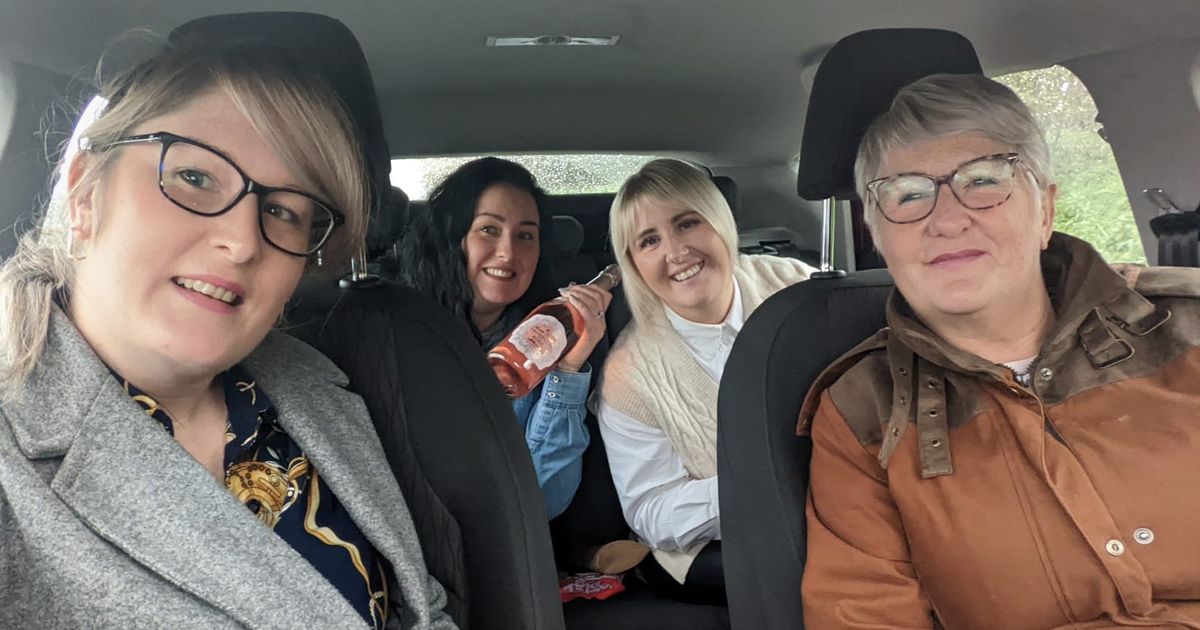
 Pamela Cook (front right) died aged 65
A grandmother died from a brain tumour after her dizziness was misdiagnosed as depression. Pamela Cook, died aged 65, just five months after being diagnosed with a glioblastoma – an aggressive and incurable form of brain tumour.
After her daughter, Clair Bowkett, 42, married her husband Ben in March 2023, Pamela started feeling dizzy but was told by the doctor it was depression and she was prescribed antidepressants. Her symptoms worsened, and Pamela underwent a magnetic resonance imaging (MRI) scan at Lincoln Hospital, where doctors discovered a tumour.
Pamela then underwent surgery to remove as much of the tumour as possible in November 2023, followed by six weeks of chemo and radiotherapy. Sadly, in February 2024, the tumour had returned, and Pamela died peacefully at home on March 24, 2024, surrounded by her loved ones.
Her daughter, Clair, from Lincoln, said: “It is so hard to make sense of how fast mum’s health declined. She went on a cruise in August 2023, looking perfectly well, and by March, she was gone. Glioblastoma is such a cruel and invasive disease. It strips a person of everything: their movement, speech, and independence, piece by piece.
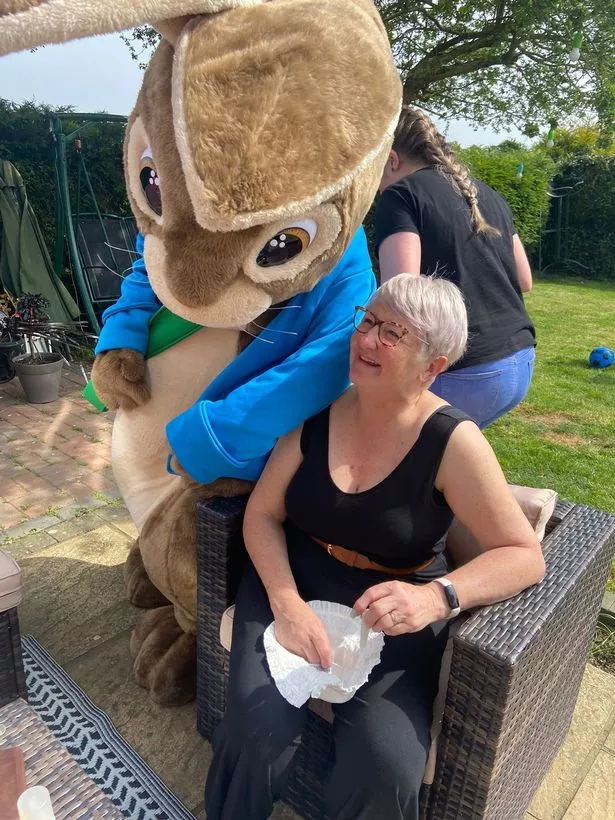 Pamela died in March 2024 just five months after being diagnosed with a glioblastoma – an aggressive and incurable form of brain tumour
“Mum lost her own parents young, but she built everything around her family. She worked hard all her life and never got to enjoy the retirement she deserved. That is why I am determined to keep her memory alive and to raise awareness of brain tumours.”
After experiencing dizziness after Clair’s wedding, Pamela went back to the doctor as the symptoms continued to worsen. Pamela then underwent and MRI scan that has shown a tumour, and went to Queen’s Medical Centre, Nottingham, in November 2023, to remove the tumour.
Clair said: “In March 2023, my husband Ben and I decided to get married, but we kept it a surprise for everyone and mum helped plan it all.
“It was such a wonderful day, but none of us knew that just seven months later she would be diagnosed with brain cancer. When she started feeling dizzy and tired, the doctor told her it was depression and gave her antidepressants.
“Even when she went back because she was getting worse, they told her to keep taking the tablets. When she was finally taken to A&E in Lincoln Hospital for an MRI scan, they found a tumour on her brain. By then, it was too late.”
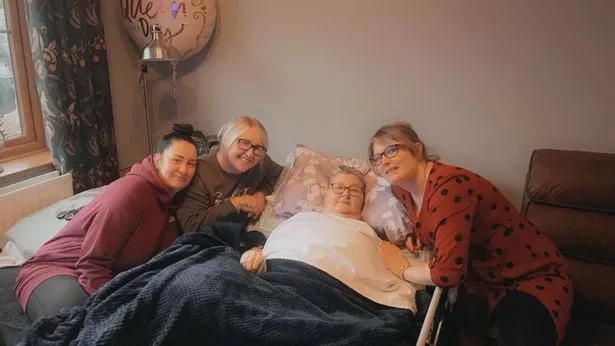 After her daughter, Clair Bowkett, married her husband Ben in March 2023, Pamela started feeling dizzy
After the operation, Pamela underwent six weeks of radiotherapy and chemotherapy. Although surgeons removed much of the tumour, some remained. Pamela became weak, developed infections, and was admitted to the hospital several times.
By February 2024, scans showed the tumour had returned, and doctors told the family there was nothing more they could do. Pamela died peacefully at home on 24 March 2024, surrounded by her loved ones.
Clair said: “My mum, Pamela, was everything you would want a mum to be. She was full of life, funny, and the soul of every party. She was young at heart and always said she was 19 in her brain, and that’s where she was staying. She was a wife, a mother of three girls – Nicola, Lauren, and me – and a grandmother to five beautiful grandchildren.”
Now, Clair is taking part in Brain Tumour Research’s 99 Miles in November challenge. Joined by her sisters, Nicola and Lauren, her husband, Ben, children, and other family and friends, she was keen to support the charity’s Nottingham Centre of Excellence, which will launch in 2026.
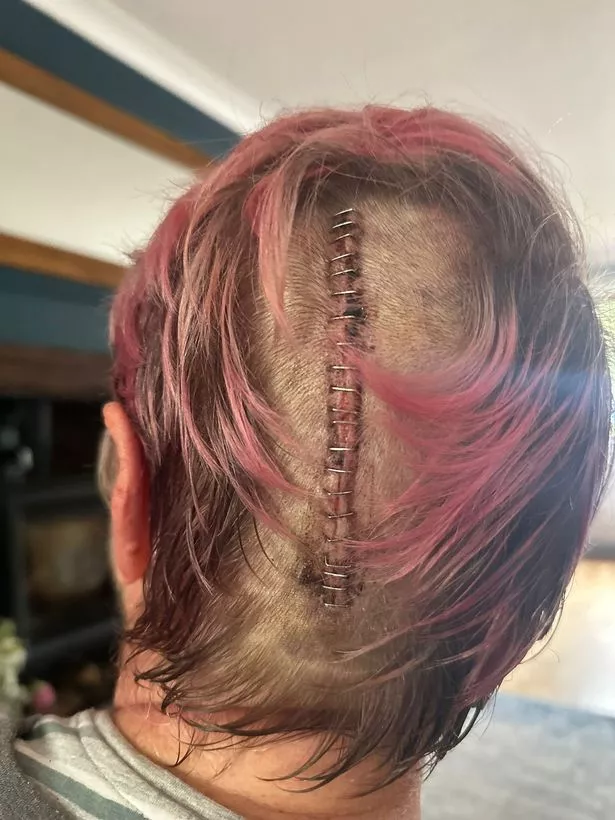 Pamela post surgery
Clair said: “Hearing about the new Nottingham Centre has given me real hope. The centre will focus on glioblastoma, the same type mum had, and aims to find ways to detect when a tumour is returning sooner.
“If research like this had been available when mum was diagnosed, things might have been different for her. Knowing that the money we raise will go towards this kind of research makes every step feel worthwhile.”
Ashley McWilliams, community development manager at Brain Tumour Research, said: “Clair’s strength and determination to share her mum’s story are truly inspiring. Her experience highlights the urgent need for more investment into researching brain tumours so that fewer families have to face the heartbreak she has endured.
“More than 100,000 people in the UK are estimated to be living with a brain tumour or the long-term effects of their diagnosis, yet research into the disease remains severely underfunded.
“We are so grateful to Clair for supporting our Nottingham Centre appeal and helping us raise awareness. By completing the 99 Miles in November challenge, she has helped us fund the vital research needed to find a cure for this devastating disease.”