
I have a rule on my Overnight Success podcast: typically, I wait for a business to mature for at least 10 years before profiling it. After all, an overnight success usually takes about a decade to build. But in this episode, I found myself breaking my own rule.
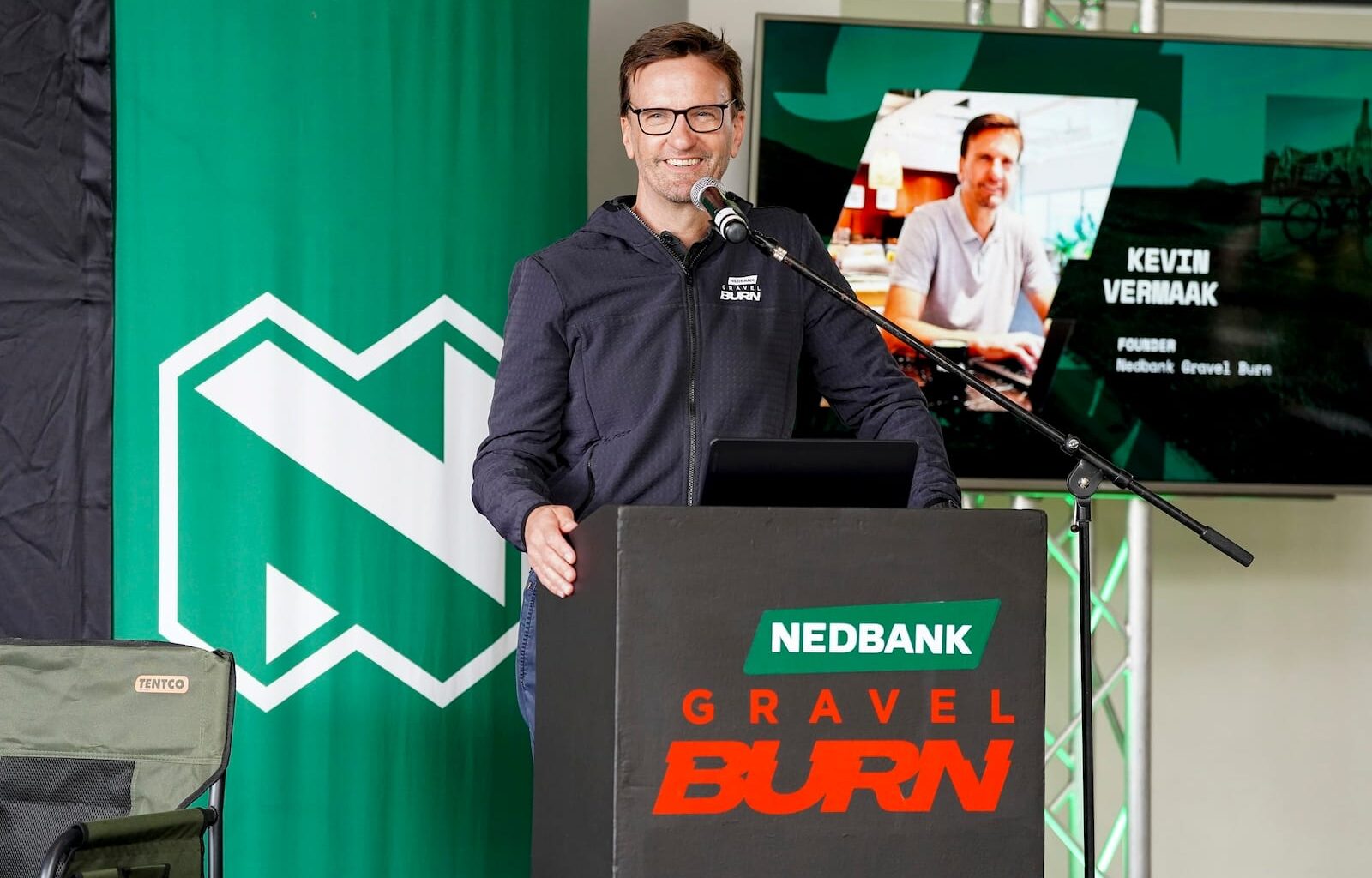
Last month, I traveled to the Great Karoo in South Africa for the inaugural Nedbank Gravel Burn. It’s the latest brainchild of Kevin Vermaak, the man who built the legendary Cape Epic into the pinnacle of mountain bike stage racing. I first learned about Gravel Burn when I interviewed Kevin about his journey building the Cape Epic, and hearing him speak about this new concept reignited a spark in me I haven’t felt in years.
Given the instant impact of this event, I sat down with Kevin to discuss the business model, the critical choices made in its design, and why he believes “scalable intimacy” is the future of the Gravel Burn experience.
This interview has been edited for flow, clarity, and brevity. You can listen to the full version in the podcast below.
Wade Wallace: It’s been just over three weeks since the inaugural Gravel Burn. I’ve just come down from cloud nine, but I’m curious, what was the overwhelming feeling for you a few days after the event wrapped? Was it satisfaction?
Kevin Vermaak: Honestly, Wade, the overwhelming feeling was relief. Relief that we could now move into an iterative phase of improvement. Before the event, we had a vision. We believed that riding gravel bikes over corrugated roads in the Karoo and moving camp every day would be fun, but until you do that first event, you don’t actually know if it’s going to work. It wasn’t a carbon copy of the Cape Epic; we took risks on so many things.
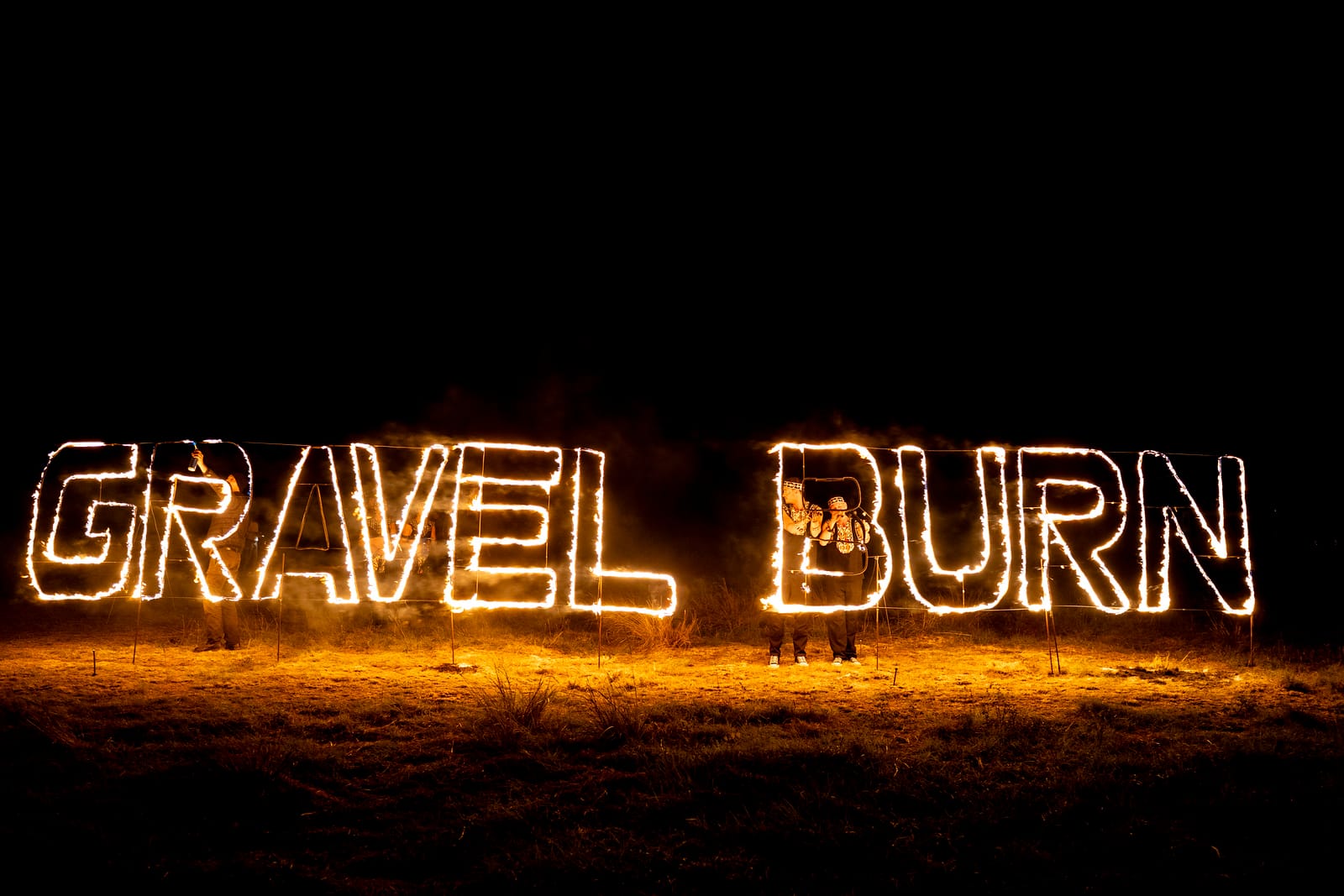
I’d say the satisfaction came in specific moments. One was the Night Burn. I had this dream 20 years ago of racing bikes between bonfires at night. We tried it in Botswana years ago, and it didn’t work. But seeing it come together here … Tom Pidcock racing, doing jumps to overtake riders, laser shows, smoke machines in the middle of the desert – that gave me goosebumps. The other moment was the final 24 hours in Shamwari, finishing a major bike race in a Big Five game reserve. That took a lot of buy-in to pull off.
Seven days in the Karoo: Inside the inaugural Gravel Burn
A reminder of why suffering on a bike still matters
WW: Let’s talk about that evolution. The Cape Epic eventually moved away from point-to-point racing toward a more condensed model for logistics. Gravel Burn went back to that “moving every day” adventure style. Is that the permanent vision?
KV: With the Cape Epic, the goal was always to be a highly competitive international mountain bike stage race. If it was eight days of World Cup racing where riders were bleeding from their eyeballs, that’s what I wanted. But with Gravel Burn, maybe it has to do with the stage of life I’m in personally. I wanted seven days of adventure riding where I’m still competitive. I like to ride fast, but I wanted a more social experience.
If moving every day is crucial for that magical experience of seeing the Karoo, we’ll do it. But maybe the comfort of not moving every night outweighs seeing a new area every single day. We had international riders dropping hundreds of positions on the final stage because they stopped to watch rhinos for half an hour. I love that. So, we might evolve to stay in locations for two nights to increase comfort, but the adventure element remains key.
WW: One dynamic I didn’t expect was the social aspect of the solo format. At Cape Epic, the two-person team dynamic often keeps you in a bubble with your teammate. Here, I felt like I knew 500 people by the end of the week. Was that by design?
KV: We chose the solo format primarily for safety and logistics. In a gravel peloton doing 40 or 50 kilometers an hour, looking back to check on a partner is dangerous. If you hit a pothole, you take down the bunch. Also, gravel is established as a solo discipline.
We didn’t necessarily choose solo specifically to force networking, but we did design for intimacy. We used a concept we call “scalable intimacy.” I didn’t want 1,000 riders in a massive dining marquee. We created “Lapas” – clusters of 20 or 30 tents in a circular formation around a campfire. You eat and share ablutions with that smaller group. It creates these intimate communities within the larger event. Even as we scale the event, we keep that modular design so the intimacy remains.
The 70-year-old who beat 75% of the Gravel Burn field
Paul Furbank redefines what it means to age gracefully on two wheels.
WW: Speaking of scale, let’s look at the business model. The level of detail was phenomenal. The cost would have been extraordinary. How do you make the economics work with only 500 entrants? And how does this scale?
KV: A lot of people look at the entry fee, which is significant, and think it’s expensive [US$3,990 / AU$6,080]. But if you haven’t been there, you don’t appreciate that the entry fee doesn’t come close to covering the cost of what we provide. The costs are linearly associated with the number of riders. So, the answer isn’t just add more riders.
You need sponsorship and media. We had Nedbank as a title sponsor, which was crucial. And you have to invest heavily in the media product. We don’t make money on media directly, but it drives the value. We don’t pay appearance fees to pros, but they want to be there because they see themselves on TV globally. That attracts sponsors. It’s a flywheel. I don’t expect to make an operating profit for the first three or four years. It’s an investment in building a brand.
WW: You mentioned building a brand, and the “no spectator” rule at the finish line was a fascinating part of that branding. It felt like a big risk. Why did you do that?
KV: For me, an authentic sporting event usually implies spectators. At the Cape Epic, we used tricks to make it look crowded. Camera angles, bands, inviting schools. But Gravel Burn is in the middle of nowhere. Even if it becomes the biggest event in the country, you aren’t going to have thousands of fans in the Karoo.
So, I looked at the Dakar Rally. No one flies to Saudi Arabia to watch it, yet it’s a major event. We decided to lean into the isolation. We crafted a finish line shot with zero spectators – just a single windmill, one oil drum with a sponsor logo, and the landscape. It allows the pros to relax. I saw Alistair Brownlee and Tom Pidcock having lunch, just chatting about the day, with no one bothering them for selfies. It creates a very different, very special atmosphere.
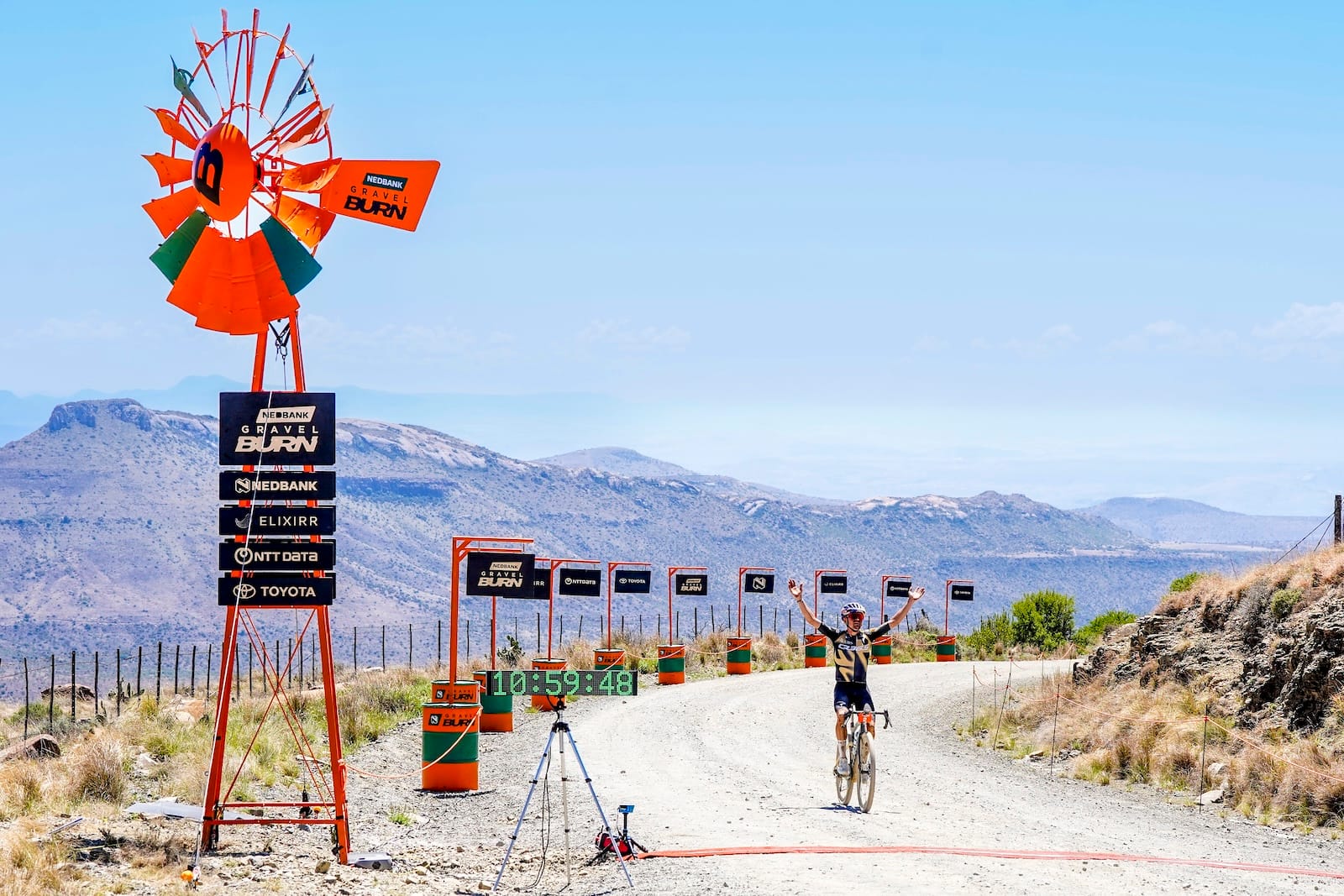 Windmills instead of finish gantries. No spectators in shot.
WW: I have to ask about the elephant in the room. I’m always uncomfortable with the massive inequality I face whenever I come to these events in South Afrcia. We’re sitting in moon boots and getting massages while hundreds of local staff, probably living below the poverty line, are working in the background. How do you square that, and also make sure you’re engaging local communities such that you’re contributing rather than taking?
This post is for subscribers only
Subscribe now
Already have an account? Sign in
Did we do a good job with this story?
👍Yep
👎Nope