
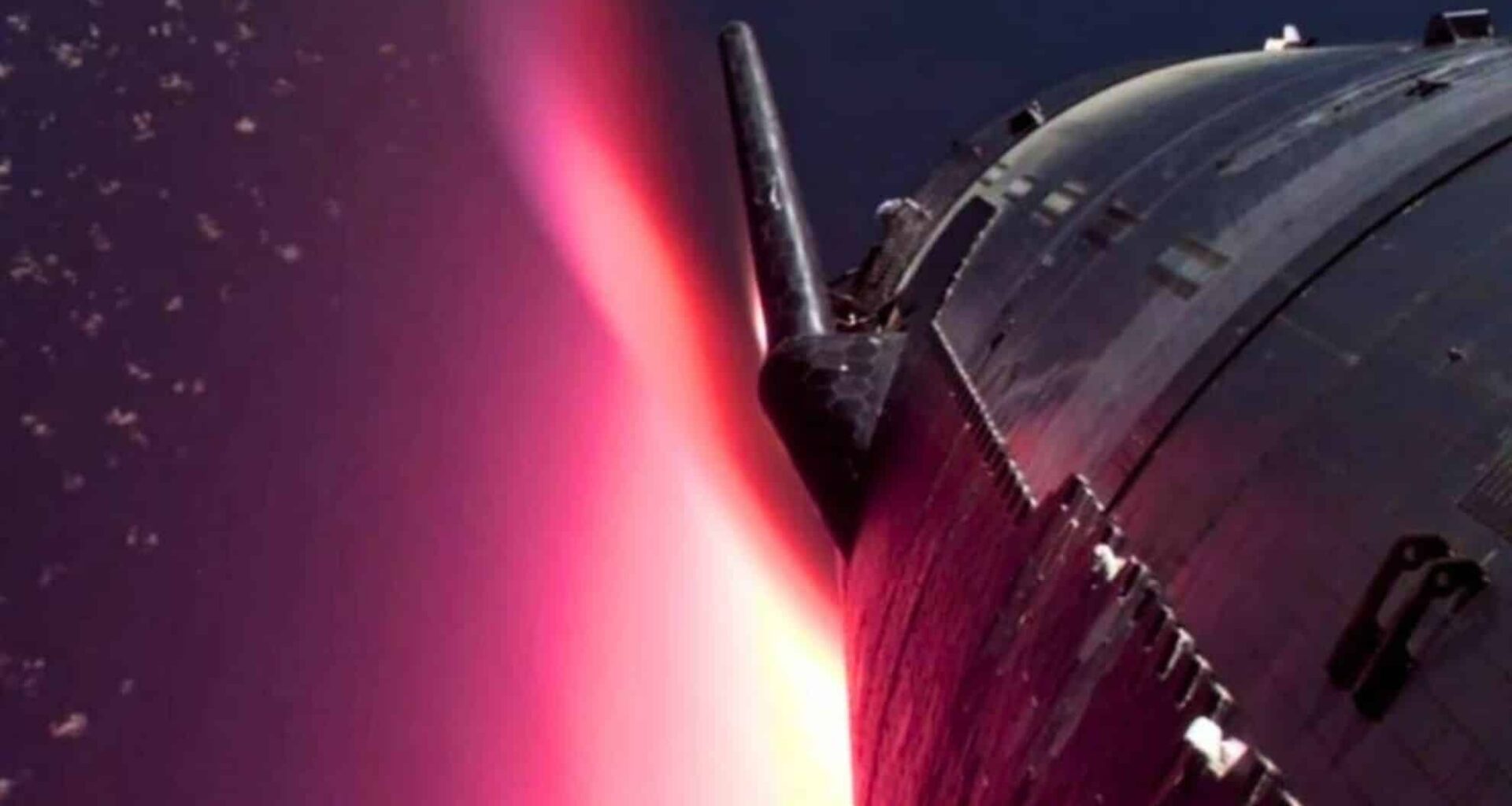
On October 13, SpaceX launched its most extreme test flight yet—a mission engineered not for success but for failure. The Starship Flight 11 test saw key parts of the spacecraft’s heat shield deliberately removed, forcing the vehicle to endure scorching reentry conditions in an effort to gather real-world data under failure stress.
The strategy marked a radical but intentional step for the rapidly evolving launch system, which is central to both SpaceX’s long-term plans for Mars and NASA’s Artemis program. With this final test of the current Starship generation now complete, the company shifts focus to a significantly upgraded variant—Starship Version 3—designed for orbital refueling, larger payloads, and more advanced deep space operations.
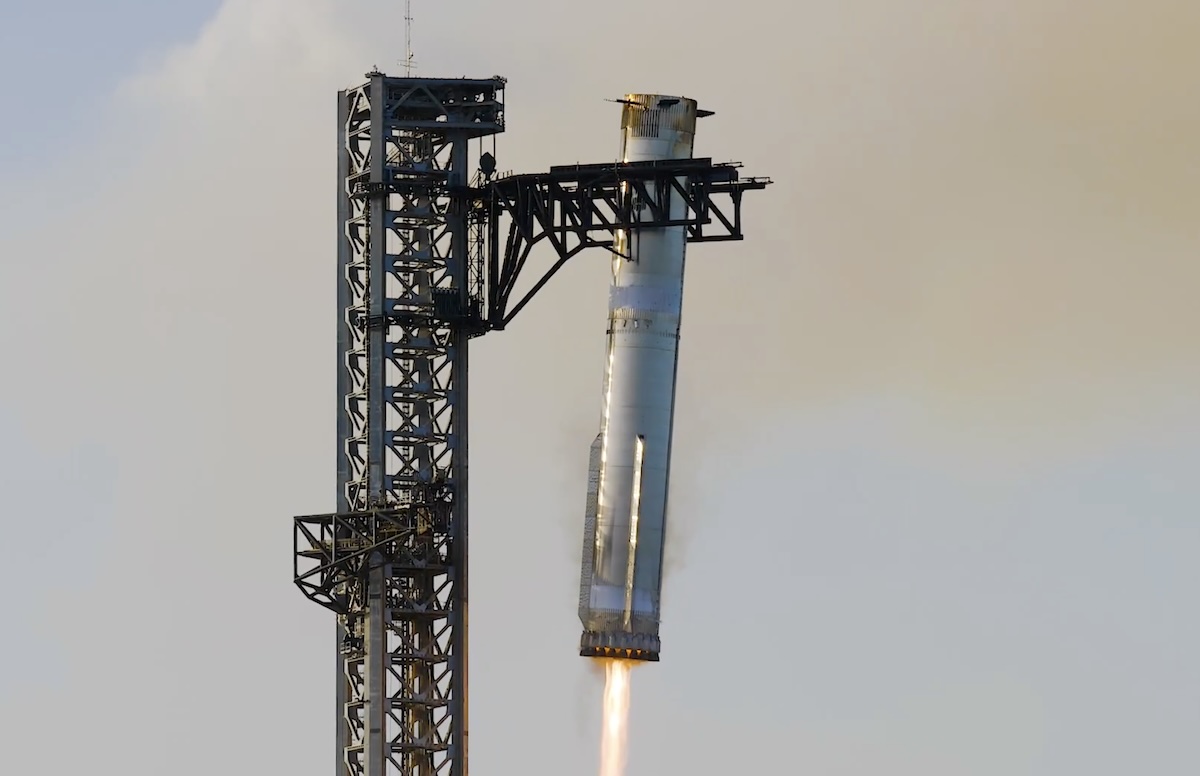 The Super Heavy booster flying next month previously launched and was recovered on Flight 8 in March. Credit: SpaceX
Flight 11 capped a development phase built on high-speed iteration, aggressive flight testing, and calculated risk. The outcomes are poised to influence not only the future of commercial space launch, but also the viability of NASA’s return to the Moon.
Pushing Starship Beyond Its Design Limits
What set Flight 11 apart was not just the success of key mission stages—it was the deliberate removal of thousands of ceramic thermal tiles, creating unshielded zones on Starship’s hull. During reentry, temperatures soared beyond 1,400°C, simulating the worst-case conditions of heat shield failure.
Despite the damage, Starship survived long enough to complete a complex aerodynamic banking maneuver and landing flip, ultimately splashing down in the Indian Ocean. These maneuvers help simulate the trajectory and reentry dynamics expected during future returns to Starbase, where SpaceX eventually aims to land and reuse these vehicles routinely.
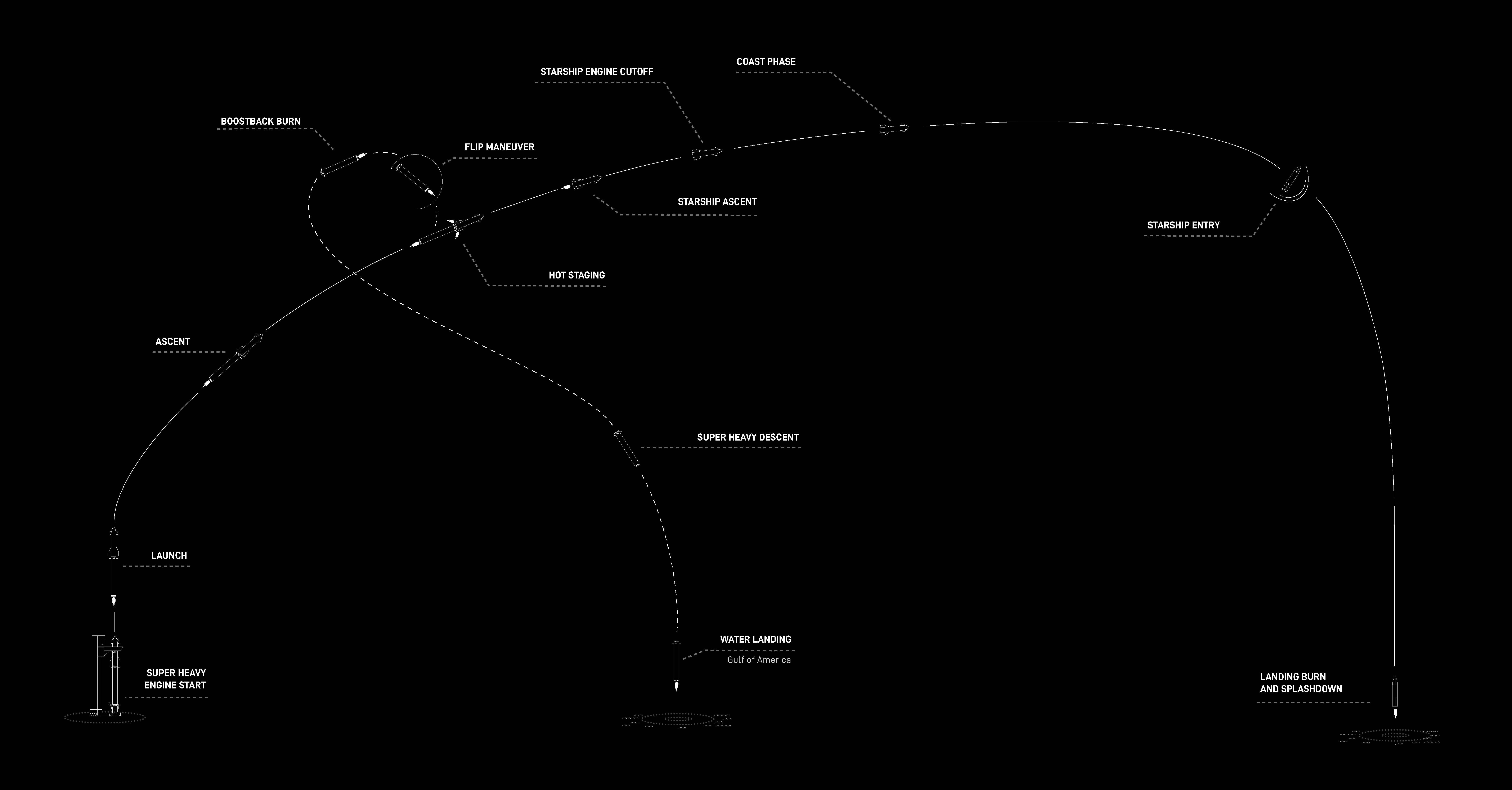 This graphic provided by SpaceX illustrates the flight paths of the Super Heavy booster and Starship upper stage on Flight 11. Credit: SpaceX
The mission also saw successful deployment of eight Starlink payload simulators and marked the third in-space relight of a Raptor engine—a critical capability for upcoming deorbit burns, lunar landings, and interplanetary returns. These milestones were confirmed in SpaceX’s official flight report.
Flight telemetry and sensor data collected during reentry will guide thermal system redesigns for Starship V3, which features a new structure, higher propellant capacity, and dedicated systems for cryogenic fuel transfer in orbit.
Booster B15 Tests New Landing Burn Sequence
The Super Heavy booster, designated B15, also underwent significant evaluation. This stage had previously flown in March and returned with minimal damage. On this mission, it followed a new three-phase landing burn sequence—starting with 13 engines, then transitioning to five, and finishing with three.
This sequence replaces the older 13-to-3 configuration used in earlier tests, providing redundancy to better manage potential engine shutdowns during descent. The booster completed a brief hover over water before a controlled splashdown off the Texas coast.
 A view of the Starship’s upper deck on re-entry on October 13, 2024. Credit: SpaceX
Details of the updated engine strategy were outlined in reporting by Ars Technica, which noted that the new sequence is intended to gather real-world data on engine dynamics and further support booster recovery goals.
The refined descent pattern is part of SpaceX’s strategy to eventually catch returning boosters using robotic arms mounted on the Starbase launch tower. Success will require split-second engine control and precision navigation—capabilities that this test helped validate under near-operational conditions.
New Starship Variant Will Attempt Orbital Refueling
With second-generation Starship hardware now retired, SpaceX is preparing for the debut of Starship V3. This new version, scheduled to fly in early 2026, introduces a wider airframe, increased fuel capacity, and the first configuration capable of performing orbital refueling—a breakthrough required for deep-space missions beyond low-Earth orbit.
No agency or company has yet demonstrated cryogenic propellant transfer between spacecraft in space, but it remains central to the Artemis architecture, particularly for NASA’s Human Landing System (HLS). Without refueling in orbit, Starship lacks the energy margin to reach and return from the Moon.
NASA has detailed its reliance on Starship’s development in its Human Landing System program page, where SpaceX serves as the primary contractor for lunar surface delivery. The system must demonstrate in-space refueling capability before it’s cleared to transport astronauts from lunar orbit to the Moon and back.
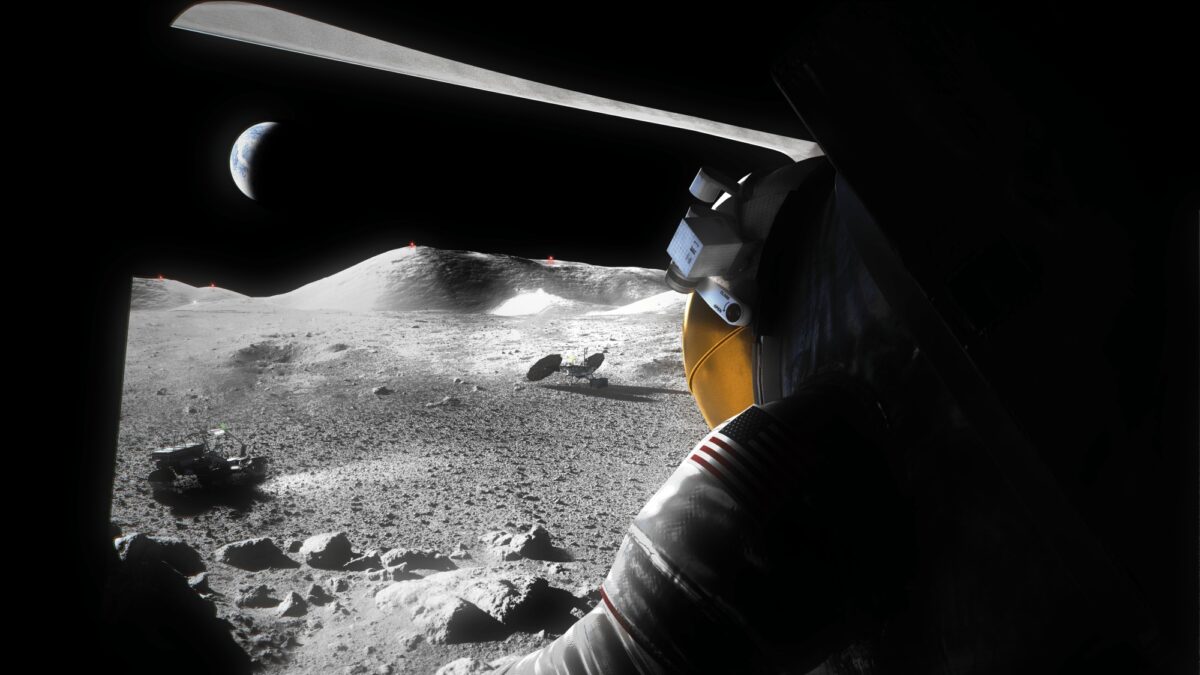 The Human Landing System (HLS) is the mode of transportation that will take astronauts to the lunar surface as part of the Artemis program. Credit: NASA
A successful demo will not only validate Starship for lunar missions, but also redefine what reusable launch systems can do in space logistics, satellite deployment, and interplanetary travel.
The Path Forward Runs Through Orbit
Flight 11 was a pivot point. It pushed hardware to its edge—and in many ways, beyond it—intentionally stressing the systems that future missions will depend on. SpaceX has shown that it’s willing to risk vehicles in order to learn quickly and adapt faster, even if that means courting structural failure by design.
Yet moving from these trial flights to a crew-rated, mission-ready vehicle will require more than engineering grit. It will demand precision, consistency, and mastery of in-orbit operations that are far more complex than getting to space in the first place.
Whether Starship V3 will meet those demands is the next open question. The foundation is in place. The data from Flight 11 is in hand. But until orbital refueling is proven, and booster recovery becomes routine, the system’s long-term viability remains unproven.
The Moon, and eventually Mars, depend on what happens next.