
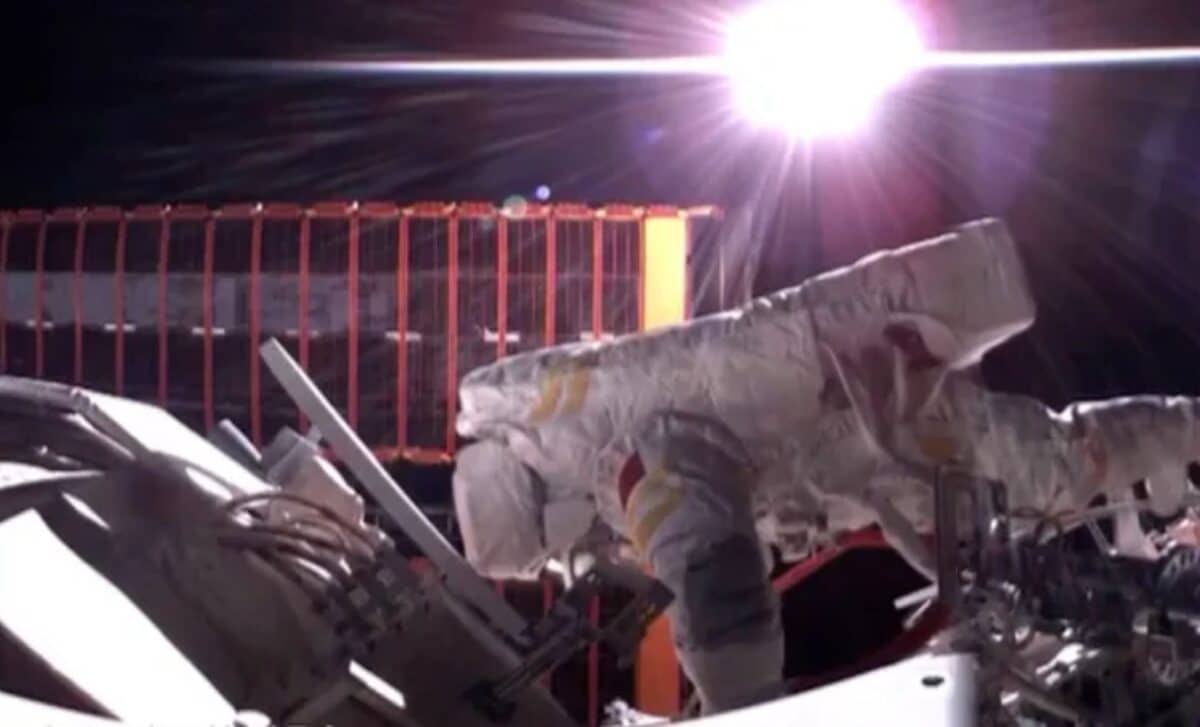
On November 5, 2025, the Shenzhou 20 astronauts were set to depart from the Tiangong space station, but an unexpected announcement from China’s Manned Spaceflight Agency (CMSA) revealed that their spacecraft had suffered significant damage. The damage was caused by a piece of space debris, smaller than a millimeter, that hit the spacecraft at an extremely high speed, resulting in penetrating cracks in the spacecraft’s viewport.
CMSA officials decided that it would be too risky to allow the astronauts to return in the damaged spacecraft, prompting the agency to make the rare decision to bring the vehicle back to Earth uncrewed.
Spacecraft Damage: A Wake-Up Call
According to the CMSA statement, the cracks in the spacecraft’s viewport were deemed to be a serious risk, with the potential to spread during the heat and pressure of reentry. There was even concern that the outer pane of the viewport might detach entirely, leading to a complete structural failure. In light of the risks, the agency made the decision to bring the spacecraft home without the astronauts aboard.
While space junk is often invisible to the naked eye, the sheer speed at which it travels can turn even the tiniest piece into a significant threat. The CMSA explained that the piece of debris that struck Shenzhou 20 was less than a millimeter in size but hit the spacecraft with enough force to cause serious damage.
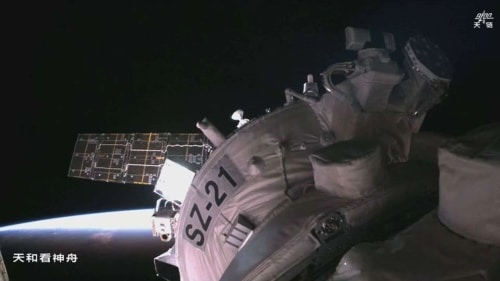 A stunning view of the Chinese spacecraft SZ-21 in orbit. Credit: China’s Manned Spaceflight Agency (CMSA)
Astronauts Stay on Tiangong Station, Mission Extended
In light of the delay caused by the Shenzhou 20’s damaged spacecraft, astronauts Chen Dong, Chen Zhongrui, and Wang Jie will remain on the Tiangong space station for a longer-than-expected stay. Originally, they were meant to return to Earth, but now they will continue their work aboard the station, which will be extended for several more months.
The Shenzhou 21 crew will now remain aboard Tiangong for the full duration of their six-month mission, which will stretch into the early months of 2026. The arrival of the Shenzhou 23 crew in April 2026 will finally relieve them, allowing them to return home.
China’s Shenzhou-20 crew is now approaching the end of their mission, with over 180 days spent in orbit. The crew proceeds with experiment and equipment maintenance aboard the Tiangong space station while actively preparing for their return to Earth. pic.twitter.com/soxWZO7Vg3
— China Science (@ChinaScience) October 28, 2025
How Better Rescue Systems Can Save Lives
As stated in Space.com, the Shenzhou 20 incident has sparked discussions about the need for dedicated space rescue services. Space experts have long warned that such services, much like emergency rescue teams on Earth, are crucial to ensuring astronaut safety during emergencies.
The CMSA’s decision to send Shenzhou 20 back without a crew highlights the lack of established rescue protocols, which could be critical in future scenarios where astronauts are stranded or at risk. Experts agree that, as space exploration continues to grow, international collaboration and improved emergency planning are necessary to prevent disasters.
After a potential space debris impact, the Shenzhou-20 spaceship, currently docked with China’s space station, will make an uncrewed return to Earth, according to Ji Qiming, a project spokesperson with the country’s manned space program.https://t.co/LxFua3IObF pic.twitter.com/etmm4vEgwJ
— CCTV+ (@CCTV_Plus) December 2, 2025