
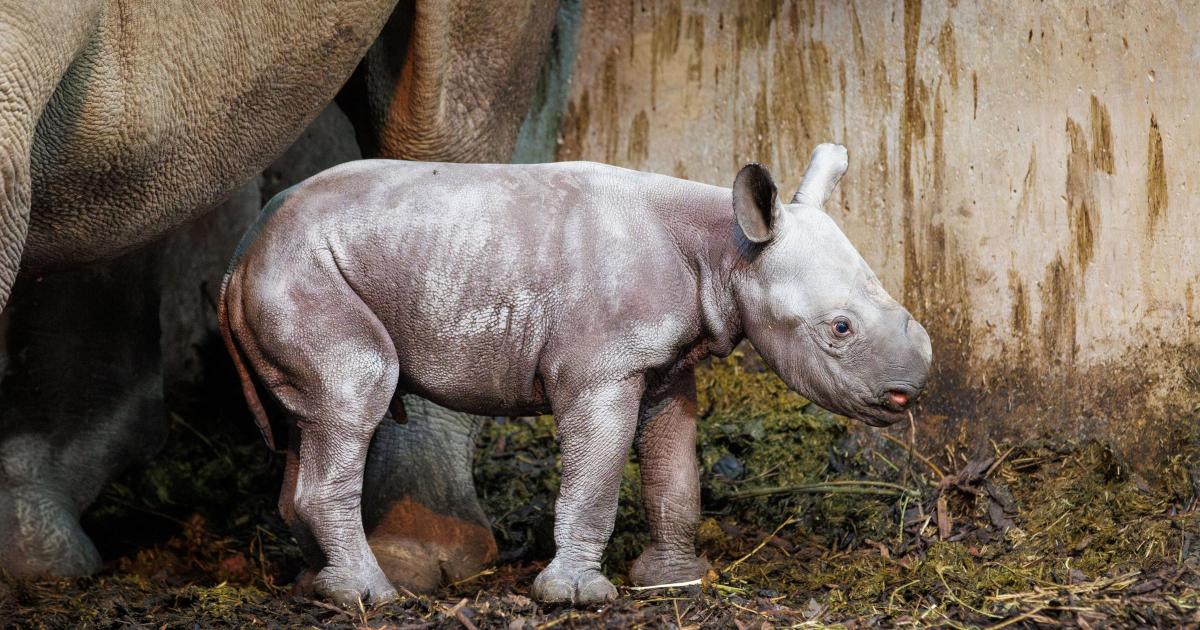
Folly Farm has announced the birth of a critically endangered eastern black rhino calf, the second to be born in Wales as part of the European Association of Zoos and Aquaria (EAZA) breeding programme.
The male calf was born on Thursday, November 27, after a 15-month pregnancy, and is one of an estimated 39 of his kind to be born in the UK in the past 25 years.
Jack Gradidge, conservation officer at Folly Farm, said: “It’s always heart-warming to welcome new arrivals as part of the European Breeding Programme through our membership with EAZA – but it’s even more special when it’s such a significant animal and one whose wild cousins are under threat.
“Dakima was a great mum with Glyn so it’s wonderful to see these instincts are still just as strong the second time around.
“This is such a monumental event for all the staff here and the zoo team have worked incredibly hard to create an environment where the rhinos felt comfortable enough to mate.
“Not only is this calf helping to increase numbers of a critically endangered species, he’s also the second rhino ever to be born in Wales – with his brother being the first.”
The calf’s mother, 12-year-old Dakima, was paired with 14-year-old Nkosi as part of the European Endangered Breeding Programme (EEP).
Dakima previously made history in 2020 with the birth of her first calf, Glyndŵr, the first rhino calf born in Wales.
The new rhino calf was born on November 27 to mum Dakima (Image: Folly Farm)
Eastern black rhinos remain critically endangered due to poaching and habitat loss.
Simon Jones, CEO of the UK-based conservation organisation Helping Rhinos, said: “We are absolutely delighted to welcome news of this beautiful eastern black rhino calf at Folly Farm.
“We are grateful for their support of Helping Rhinos’ efforts, including the care of young calves orphaned by poaching.”
Folly Farm is part of a wider conservation effort across Europe aimed at increasing the captive population of the eastern black rhino, with the long-term goal of supporting wild populations.
The breeding programme is supported by a purpose-built rhino facility, the Kifaru Reserve, which welcomed rhinos to the park 10 years ago almost to the day.
The reserve also educates visitors on the role of modern zoos in conservation efforts.
Mr Gradidge said the immediate focus is on giving mother and calf space to bond and monitoring their early development.
He said: “For us, the next steps are just to keep an eye on Dakima and make sure the calf stays healthy and gets everything he needs from mum.
“It’s exciting to be playing our part in helping to safeguard these amazing animals for future generations.”