
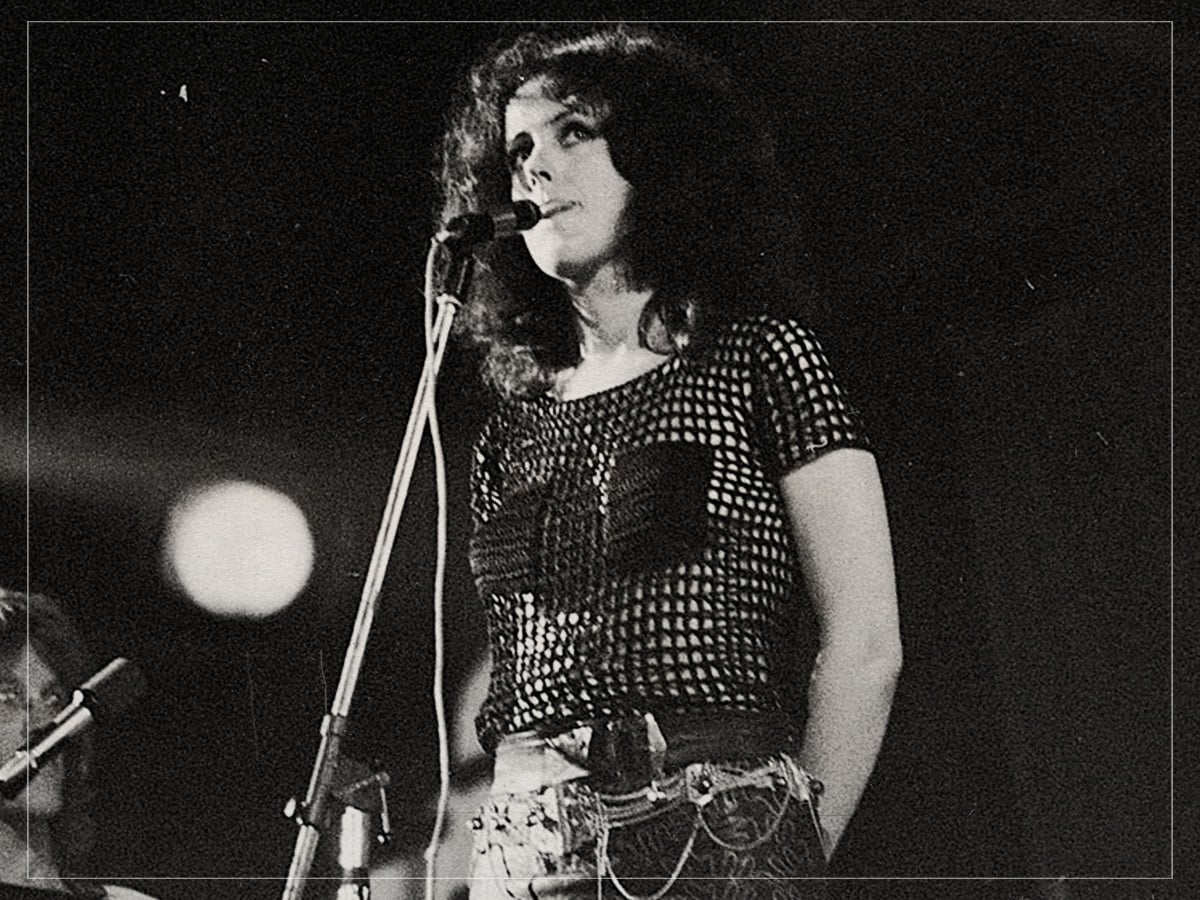
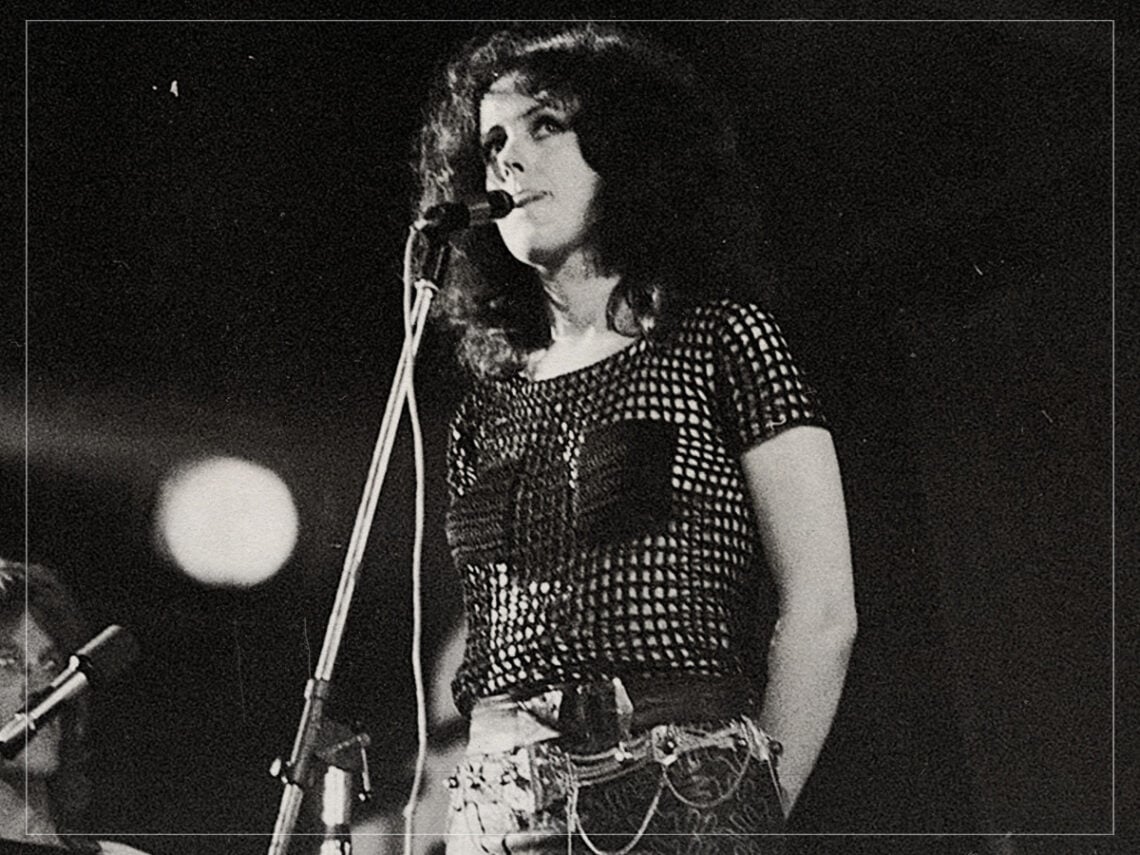
(Credits: Far Out / Noord-Hollands Archief / Fotoburo de Boer)
Thu 4 December 2025 18:01, UK
Grace Wing was born in the Chicago suburb of Highland Park, Illinois, but she would make her mark on the other side of America’s great expanse.
Her father worked in the suited and booted industry of investment banking and shepherded the family around the United States in search of profits. Hers was a life on the road, and this journey would soon bore the great Grace Slick.
Her father’s life of one long capitalist road trip left her searching for something new. She married young to an aspiring filmmaker named Jerry when she was 21. But two years into that marriage, she knew safe domesticity was not the young adulthood for her. Two years into their wedlock, the patent for LSD expired. Thereafter, there was a three-year period when acid was legal. This turned out to be quite a big deal for Grace Slick.
She looked at the world anew, ready to expose the ignorance of her parents. “Well, our parents read to us or we read to ourselves when we got a little older, we read,” she told the US Library of Congress. “And Alice in Wonderland – that little girl takes five different drugs in that story.”
She comincally continues, “Then our parents are asking us, ‘Why are you taking drugs?’ Well, were you listening? WERE YOU LISTENING?” Well, they were certainly listening when Jefferson Airplane hit the airways, and a fair few of them were appalled.
That alone makes the band a great representation of the divisive times. The centre was struggling to hold, casting society into a swirling whirl, and the band made weird music to match.
 The dumfoundingly brilliant Grace Slick. (Credits: Far Out / Alamy)
Their masterpiece, Surrealistic Pillow, stands up as their exemplifying work. Reflecting on its joyous encapsulation of the most revolutionary side of the counterculture movement, Slick commented, “All of the songs were good. Marty Balin wrote good love songs; Jorma and Jack were fans of the blues and early folk music. Paul Kanter wrote about going into space and what we were going to do up there.”
This amalgamation of America’s humble artistic past revivified with fresh, pioneering ideas was a perfect example of how counterculture democratised the arts… and weaponised it, in many ways, it is a call to arms for change. Why be a square when you can be a wavy creative with four old chords?
Surrealistic Pillow, within its odd constitution, contains profound truths too: “When the truth is found to be lies / And all the joy within you dies / Don’t you want somebody to love”. Half a century later, the Coen brothers seemed to think that got pretty close to capturing the meaning of life in their movie, A Serious Man. Who would argue with that?
In an age of disillusionment with bombs dropping, President and peacemakers being assassinated, and men being sent to the moon, the simple answer of love and freedom echoed from the bands of the age. They were like old town criers amplified by an explosion of studio technology and new thinking, both of which blossom on Jefferson Airplane’s astounding album.
“I wrote screwy stuff – ‘White Rabbit’ and ‘Eskimo Blue Day’,” Slick tosses into the mix. “‘Eskimo’ doesn’t relate to love, politics. It’s just what the weather is going to be like as you travel from Scandinavia to Africa. It changes. Everything changes. Things are not going to stay the same. So be ready for it. Count on it,” she said. Ironically, this once-certainty now resides as questionable.
But in the ’60s, change was an inflating currency. That is captured in the mystic sounds of Surrealistic Pillow, and that’s why Slick sees it as not just a good representation of the time, but, frankly, a defining one. She said, “I think it has on it a good representation of the time: it was good, simple and easy for people to get up next to and is [still now] a good representation of that time.”
As she concludes, “You know, I paint. That’s what I do now. And, sometimes, I’ll do a painting of someone and it’s just…off. It’s just not right. But this album was right in its representation.”
Slick is not alone in this appraisal either. Even today the album continues to inspire with the likes of Gary Lucas hailing the title track as “one of the most crystalline, beautiful compositions ever”, Jake Bugg telling us that it’s not only one of his favourite album, but that Slick is als “one of my favourite singers of all time, her voice is incredible”, and their are plenty of scholars who would happily ratify its perfect reflection of the zeitgeist, too.
It’s now an album that will never be forgotten. Whether the band remember it themselves is another matter.
Related Topics