
Companies have been blasted for failing to increase pensions in line with inflation
11:43, 04 Dec 2025Updated 13:23, 04 Dec 2025
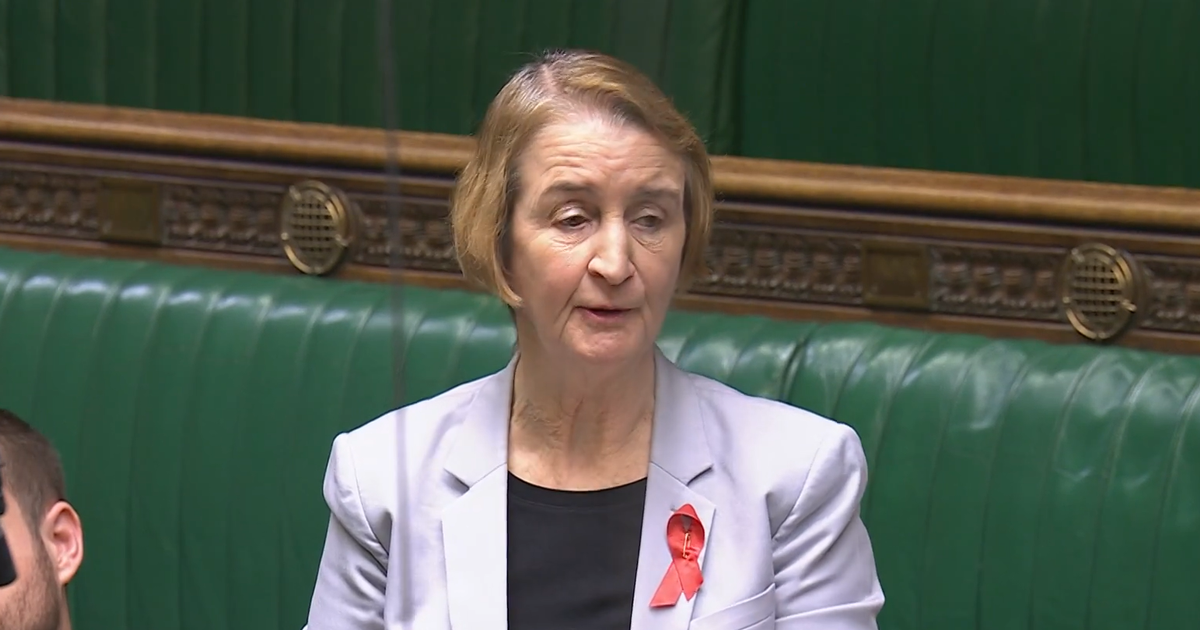
 Dame Nia Griffith said many pensioners have been treated “very shabbily” by companies(Image: Parliament TV)
Companies must “pay up” and provide workers with annual pension increases in line with inflation, according to a former Labour minister. Dame Nia Griffith argued that numerous pensioners have been treated “very shabbily” as she called on the Government to eliminate a loophole in the Pensions Act 1995 that permits employers to refuse inflation-linked rises.
MPs examined pension reforms put forward by the Government, designed to deliver better returns for savers and featuring a £1,000 rule for smaller pension pots.
Work and pensions minister Torsten Bell stated: “The case for this focus is clear, those retiring in 2050 are currently set to do so with lower private pension income than those retiring today.”
The Pension Schemes Bill seeks to offer pension schemes access to a broader spectrum of assets for investment and will enable some to move to what are known as “superfunds”.
The reforms will see the local government pension scheme (LGPS) consolidated, shrinking the existing 86 administering authorities down to six pools.
Furthermore, small pension pots valued at £1,000 or less will be merged into larger pension schemes. The legislation was approved at third reading without opposition and will proceed to the House of Lords for additional scrutiny.
A new initiative is set to address what the government has identified as the escalating issue of small, neglected pension pots that accumulate as individuals switch employers throughout their careers. Currently, there are 13 million such small pots, each containing £1,000 or less, with an annual increase of approximately one million.
The Pension Schemes Bill will introduce reforms to consolidate these individual small pots into a single pension scheme, certified to provide good value for savers. The option to opt out will remain available to individuals.
The government asserts that this move will reduce costs for savers and simplify the process of tracking their pensions, thereby enhancing living standards and financial wellbeing for working individuals. Additionally, it will alleviate administrative burdens for businesses managing these schemes and stimulate economic growth, aligning with the Plan for Change.
Officials anticipate that this initiative will not only decrease costs but also eliminate hassle for savers, potentially increasing the average earner’s pension pot by around £1,000 over time. This will further improve living standards and benefit working individuals.
It will also streamline processes for businesses managing these schemes and contribute to economic growth as part of the Plan for Change.
During the report stage of the Bill, Dame Nia proposed an amendment to the legislation, requiring annual increases to pension payments in line with both the Consumer Prices Index (CPI) and the Retail Prices Index (RPI).
The MP for Llanelli stated that this would apply to the Pensions Service for both pre-1997 and subsequent periods.
She informed Members of Parliament: “These companies have treated pensioners very shabbily indeed, because they are refusing to index the pensions of former employees that were accrued before 1997.
“In other words, people who worked hard to help build up the success of these companies have had no increase for as long as 23 years. Just imagine how much less you can buy with that pension compared to 23 years ago.
“We know from lots of evidence, the only way the companies will listen is through legislation, and they are multinationals these companies, and in countries where there is a law, there is legislation, in fact, they pay up,” she added.
Mr Bell, who also serves as a Treasury minister, had previously acknowledged “the impact of recent years’ high inflation on the value of some pensioners’ retirement incomes”.
“But I also want to be straightforward with the House that we do not support retrospectively changing scheme rules,” he added.
Dame Nia clarified that her proposed amendment would mandate indexation from this point onwards, stating: “This is not about some form of compensation for the past, it’s about going forward, trying to future-proof these pensions.”
Former Labour minister Liam Byrne had put forward a separate amendment aimed at defining more clearly the extent of trustees’ investment responsibilities.
Mr Bell confirmed that new legislation would be introduced “to develop statutory guidance for the trust-based private pensions sector”. The Bill includes a reserve power that could enable the Government to mandate large auto-enrolment schemes to invest a certain percentage into broader asset classes.
Conservative shadow Treasury minister James Wild expressed concerns about the Government’s plan to dictate how pension schemes allocate their assets, such as requiring schemes to invest a specific percentage in a particular type of asset class. He labelled this power as “fundamentally wrong” and urged the Government to provide a report explaining its necessity.
Mr Bell referred to the power as a “backstop”, stating: “We do not currently anticipate it will need to be used, and this is precisely because of the industry’s commitment to the Mansion House Accord.”
The changes to pension pots followed the work of the Small Pots Delivery Group. Their findings, aimed at aiding the design and implementation of the new small pots consolidator scheme, include:
A Small Pots Data Platform to identify and source the pension pots that could be consolidated.A framework setting out the rules a scheme would need to follow to become a consolidator scheme. These would include already being in an Automatic Enrolment qualifying scheme, having a specified level of scale to manage expansion, providing good value for money for their members and providing additional protection for members from flat fee charges.Safeguards for savers whose pension pots would be consolidated, which include a member opt-out option.
To watch the debate click here.