
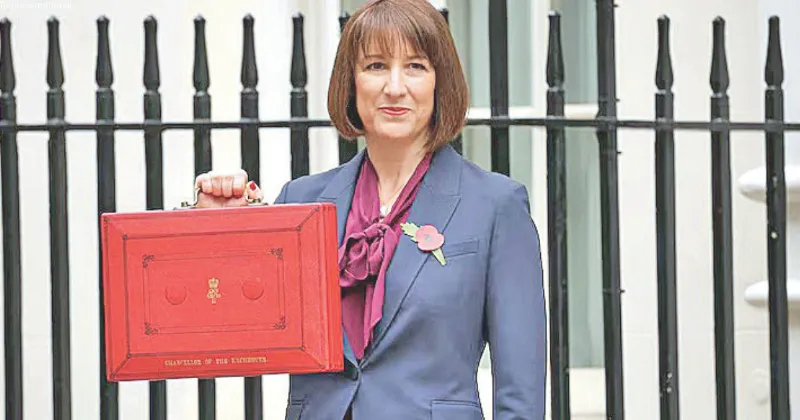
Last Wednesday, all eyes and ears in London were on the occupant of 11, Downing Street, Rachel Reeves. The Chancellor of Exchequer stepped out with her colleagues, posed for the cameras with the red briefcase that has the budget and left for the Palace of Westminster to deliver her second Autumn Budget.
But even before she could unveil what she had planned for the Brits, the Office of Budget Responsibility, let the cat out of the bag. Everyone knew what she was about to deliver.
However, Reeves went out to present a budget that those supporting her would say is sweeping and ambitious. It combines tax rises, reforms to welfare, and measures intended to relieve cost-of-living pressures.
While all eyes were on Reeves, not much was expected from the lady sitting across the dispatch box. But Kemi Badenoch, the leader of opposition, heading the Conservatives took the opportunity and stunned everyone with her scathing response that brought her the kindest media reviews ever since she took charge of the Tories.
Let us look at how the week played out for the two ladies who sit opposite in the parliament and what the future could hold for them.
First, what is in store for Reeves. How does she plan to achieve her ambitious prospects in an economy which is moving at a snail’s pace and where the cost of living looks like moving in a Formula one car.
REEVES HAS PUT
A freeze on personal incometax and National Insurance thresholds for several more years — a move designed to generate so-called “fiscal drag”: as wages rise (even modestly), more people get pulled into paying tax or higher tax bands. This is the largest revenue generator in the Budget.
Tax increases for wealthier households and certain incomes: property, savings, and dividend income will face a 2-percentage-point rise.
Introduced “mansion tax” / high-value property surcharge (on homes above certain value thresholds) and increased tax/ levies on high-value rentals and investment properties.
Reductions in favourable savings/tax-advantaged thresholds for certain savings vehicles: e.g. lowering the annual cash ISA limit for under-65s from £20,000 to £12,000.
For pension contributions entered via salary sacrifice: amounts above £2,000 per year will become subject to National Insurance from 2029.
On the social policy side: the controversial “two-child benefit cap” will be abolished — a significant welfare expansion.
To ease cost-of-living pressures: energy bills are expected to drop, a freeze on rail fares, freezing prescription charges in England, extending fuel-duty freeze until 2026, and other measures aimed at relief.
Her biggest rallying point is that government is building a “fiscal headroom” — increasing flexibility for future spending, while avoiding an immediate return to austerity.
In doing what she did, Reeves has gambled high. Knives are out as Labour breaks its promise and numbers suggest that 1.7 million people will fall into tax slabs as their pay goes up. Secondly, she has reduced the time to claim unfair dismissal by employers to six months from currently existing 24-month period, but it is still far distance from ‘one day’ that Labour had promised.
The government’s move of targeting landlords, property owners and high-value homeowners through the mansion tax and higher property taxes opens a political and personal backlash among a segment of voters who traditionally lean conservative or are asset-rich.
Many critics accuse Reeves of misleading the public. The budget was introduced citing a large fiscal “black hole,” but subsequent revelations from the Office for Budget Responsibility (OBR) showed unexpectedly strong wage growth and tax receipts — making the surplus significantly larger than referenced just before the Budget.
This has prompted calls for her resignation not only from opposition parties including the Conservatives. But also, pressure may build if Labour feels the blow back from voters unhappy with higher taxes. There is a risk of alienating the “just about managing” demographics — historically, a critical swing group.
POLITICAL POSITIONING AND PROSPECTS
For Reeves, the Budget attempts to straddle a delicate balance: delivering social democratic priorities (support for families, welfare, public services) while restoring fiscal credibility. If she successfully frames it as “necessary but fair,” and manages fallout carefully — especially by emphasising the relief measures and future investment — this could consolidate her standing and Labour’s brand for responsible governance.
However, the mounting accusations of misleading the public about the fiscal situation — especially if repeated in public discourse — might erode trust not just in her, but in Labour more broadly. Her political survival may well depend on delivering visible benefits like improved services, tangible cost-of-living relief, quickly.
In the Long term, if economic growth falters or inflation stays sticky, households feeling the squeeze could punish Labour. On the contrary, if the government uses the headroom to invest efficiently (health, housing, growth infrastructure) and avoids further stealth tax hikes, it could stabilise support among progressive and pragmatic voters.
WHAT THE BUDGET MEANS FOR KEMI BADENOCH
The leader of the Conservative Party, Kemi Badenoch, could not have asked for more. The way she responded sharply to the budget in the parliament got a tremendous response. In less than couple of hours of her delivering the speech, its AI generated rap was all over social media.
It was her most effective speech to date, both genuinely funny and damaging to the government. Thanks to the chancellor’s pre-budget interventions — complaining of “mansplaining” and being underestimated — Badenoch had abundant material to work with. Her salvo was sign of her transformation into an effective leader of the opposition.
What works for Badenoch:
The growing public discontent over rising taxes — especially among middle-income earners, pensioners, homeowners, and savers — gives Badenoch a strong narrative: that this is Labour taxing “working Britons” to pay for benefit handouts. That plays well for the Conservatives, especially among homeowners, higher-earners, and those sensitive to fiscal pressure.
The controversy around perceived misleading by the government fuels a broader argument that Labour is untrustworthy. Badenoch can exploit this to paint Labour (and by extension Reeves) as dishonest — a powerful weapon ahead of any future election.
For the Conservative base — especially traditional voters concerned with low taxes, property rights, and economic freedom — Badenoch’s critique may galvanise support. The Budget could consolidate opposition support.
Badenoch’s immediate strategy seems clear: mobilise criticism, cast the Budget as unfair to working people, target Labour’s credibility, and frame Conservatives as protectors of taxpayers and economic freedom. If she can tie the Budget’s burdens to real-life stories she could shape public sentiment strongly against the government.
In the medium run, Conservatives will need to show voters an alternative economic and social model — one which balances support for families and public services with lower taxes and incentives for wealth creation.
That will require policy substance beyond criticism.
At its heart, the Budget tests whether a modern British government can simultaneously tax wealth, raise revenue, protect public services, and keep living standards — and whether voters will reward such a balancing act, or punish what they see as stealth taxation and broken promises.
The next 12–24 months will be critical for both Reeves and Badenoch: whichever side better convinces the public that its path leads to greater stability, fairness, and prosperity will shape British politics for the rest of the decade.
THE VIEWS EXPRESSED BY THE AUTHOR ARE PERSONAL
Avinash Kalla, The writer is Foreign Correspondent First India News