
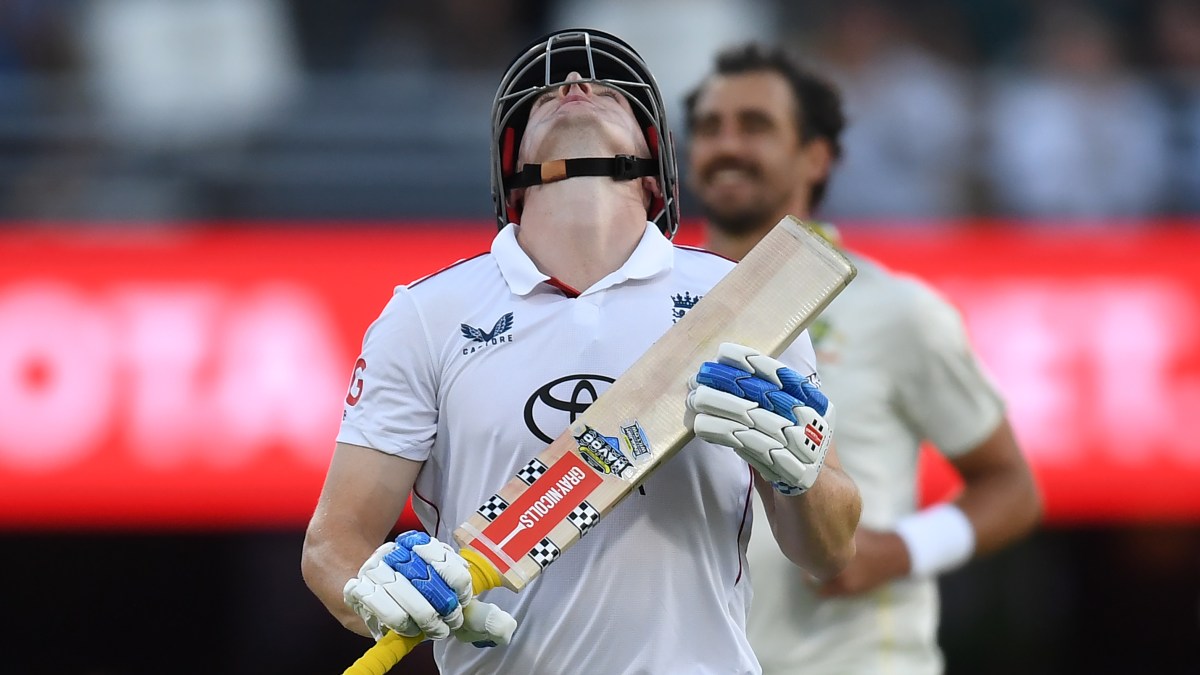
Shortly before Harry Brook made his Test debut three years ago, Ben Stokes was asked for his assessment of England’s newest player. He was clear he thought the young Yorkshire batsman possessed exceptional gifts, but added only half tongue-in-cheek: “He’s a bit dumb.” Asked for a response to his captain’s assessment, Brook conceded: “I wasn’t very good at school, but my cricket brain is all right.”
Well, excuse us, Harry, if we beg to differ. The way in which you got out at the Gabba was the height of cricketing lunacy. As they say here in Australia’s Sunshine State, you looked a prawn short of a barbie.
After a turbulent start, Brook and Joe Root had settled things down in a partnership worth 54 and with the ball almost 40 overs old there was every chance of England’s premier batsmen putting their side in control of the game. Zak Crawley, whose dismissal had brought Brook to the crease, said that he felt at the time that the wicket was getting better and that he had “left a few runs out there”.
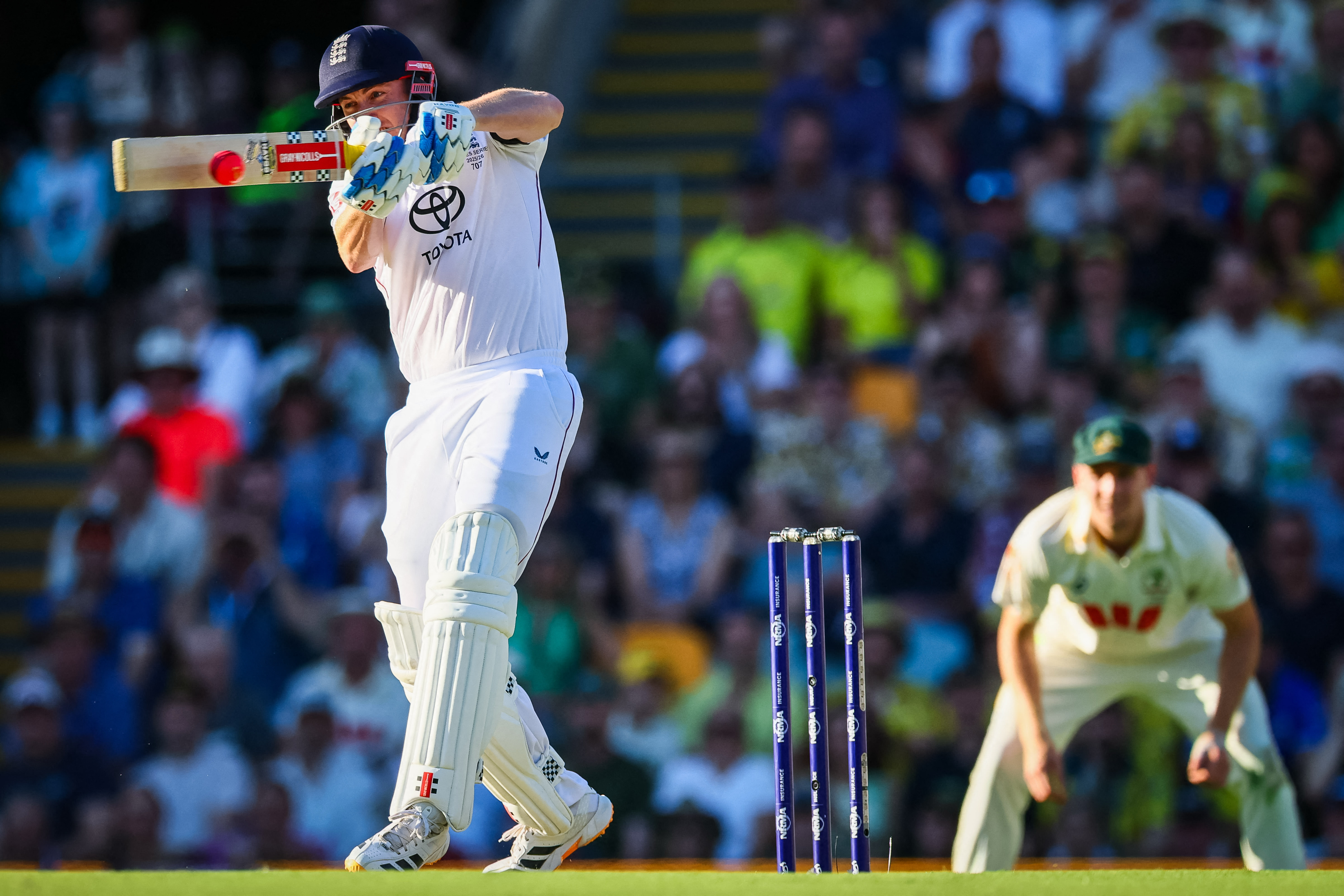
Brook showed his usual attacking intent with 31 off 33 balls and his partnership with Root had steadied England
PATRICK HAMILTON/AFP
Things were at a tricky juncture, though, and care was needed because it was just past 6pm, sunset was approaching and we were literally in the twilight zone, the trickiest period in which to bat in a pink-ball game.
Moreover, Mitchell Starc — the only really threatening bowler on show — had just returned for his first spell of the session. See him off, and England could be in a very strong position. Get out, and those coming in next would be exposed. It was a point of maximum danger.
Did any of these considerations enter Brook’s head after Root took a single off Starc’s first ball? Seemingly not, as he drove extravagantly at a wide pitched-up ball that was so obviously intended to invite a drive that, well, anyone who does not worship at the altar of Bazball would have left it well alone. The edge flew high to second slip where Steve Smith took a smart catch above his head.
Please enable cookies and other technologies to view this content. You can update your cookies preferences any time using privacy manager.
Enable cookiesAllow cookies once
On BBC radio commentary, Michael Vaughan could be heard exclaiming: “A monstrous drive. And he’s gifted Australia a wicket. Oh, Harry!”
The man Brook exposed, of course, was Stokes, whose mind in that moment might have gone back to his original verdict and whether it was not, after all, a fair enough one (Stokes had subsequently apologised for his little dig).
After all, it left Stokes facing the prospect of a lengthy exposure to Starc, the bowler who dismissed him twice in the first Test in Perth and had got him 11 times overall. As it happened, Stokes survived through to the end of the session but not without alarms. It was an ordeal he should not have been put through.
To make matters worse, this is not the first time of late that Brook has left onlookers baffled by his decision-making: a loose drive to his third ball was at the heart of England’s second-innings collapse in Perth which ultimately cost them the first Test, and that was a game for which he had prepared in the most casual of fashions at Lilac Hill.
It would not be unreasonable to assume that when England named Brook as their new Test vice-captain for this tour they were hoping it might instil in him a greater sense of responsibility after the frivolous way he got out during the run-chase in the Oval Test against India. Brook admitted he thought the job was done, but in fact his dismissal triggered a collapse in which seven wickets fell for 66, and England lost by six runs.
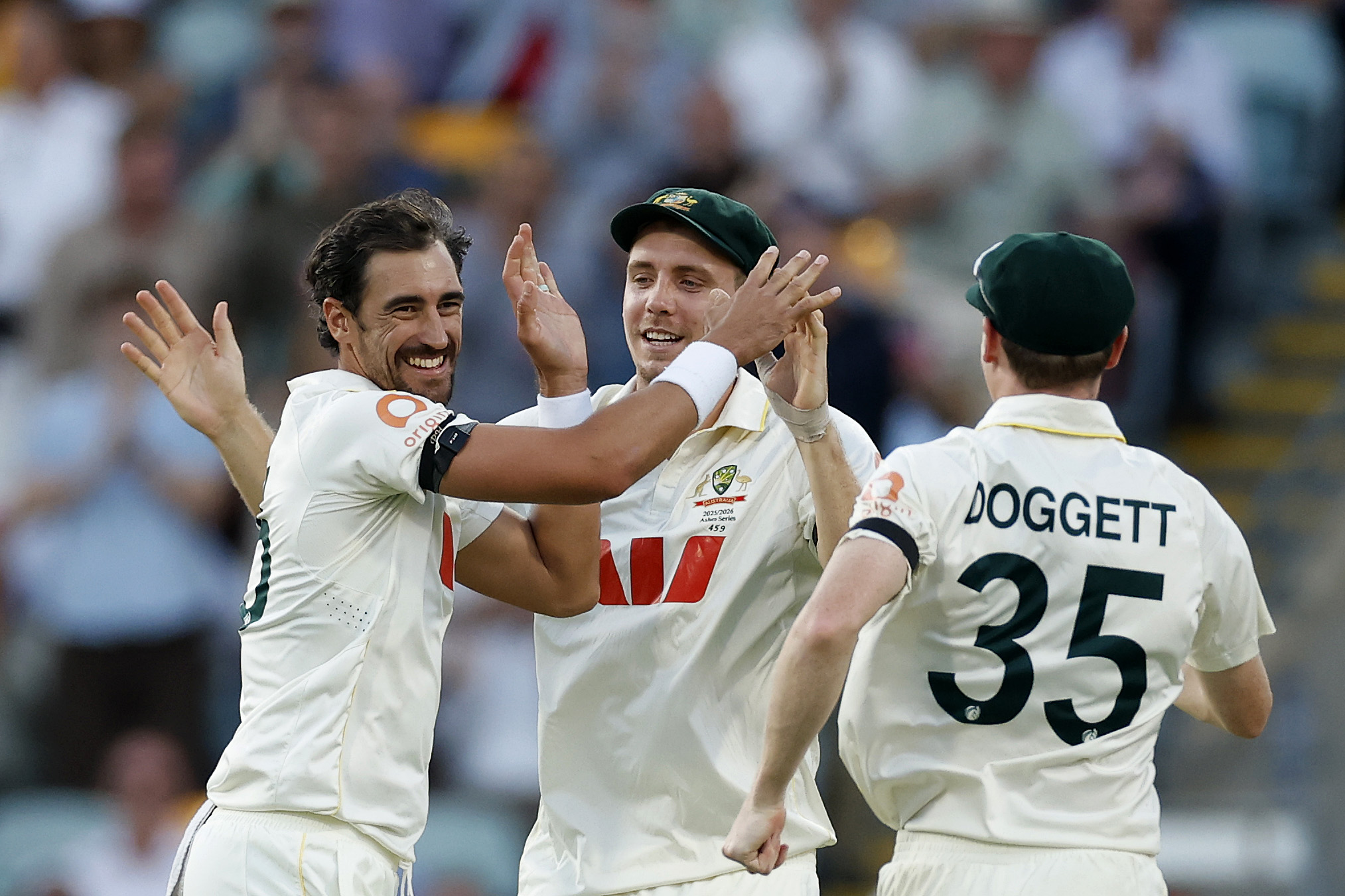
Seeing off Starc — who ended the day with six wickets — after lunch would have left England in a strong position
DARRIAN TRAYNOR/GETTY
Up until the point he was out for 31, Brook had batted — as he does — as though somewhere between madman and genius, the difference not always apparent. He timed the ball superbly and moved around the crease to carve the ball into areas where the fielders were not situated.
He might have been out on 15 when, having thrashed Michael Neser through point, he attempted to scoop the next ball over his left shoulder, only to miss, tumble over and narrowly escaped being stumped. He thrust his back leg into his crease only just in time.
Brook would doubtless argue that had he managed to hit Starc off his length Australia would have been severely under the pump, but as this series has shown, Starc is not an easy man to get after (even if Root and Jofra Archer did take his penultimate over of the night for 15). It was simply not a risk worth taking, certainly not off the first ball Brook faced from him.
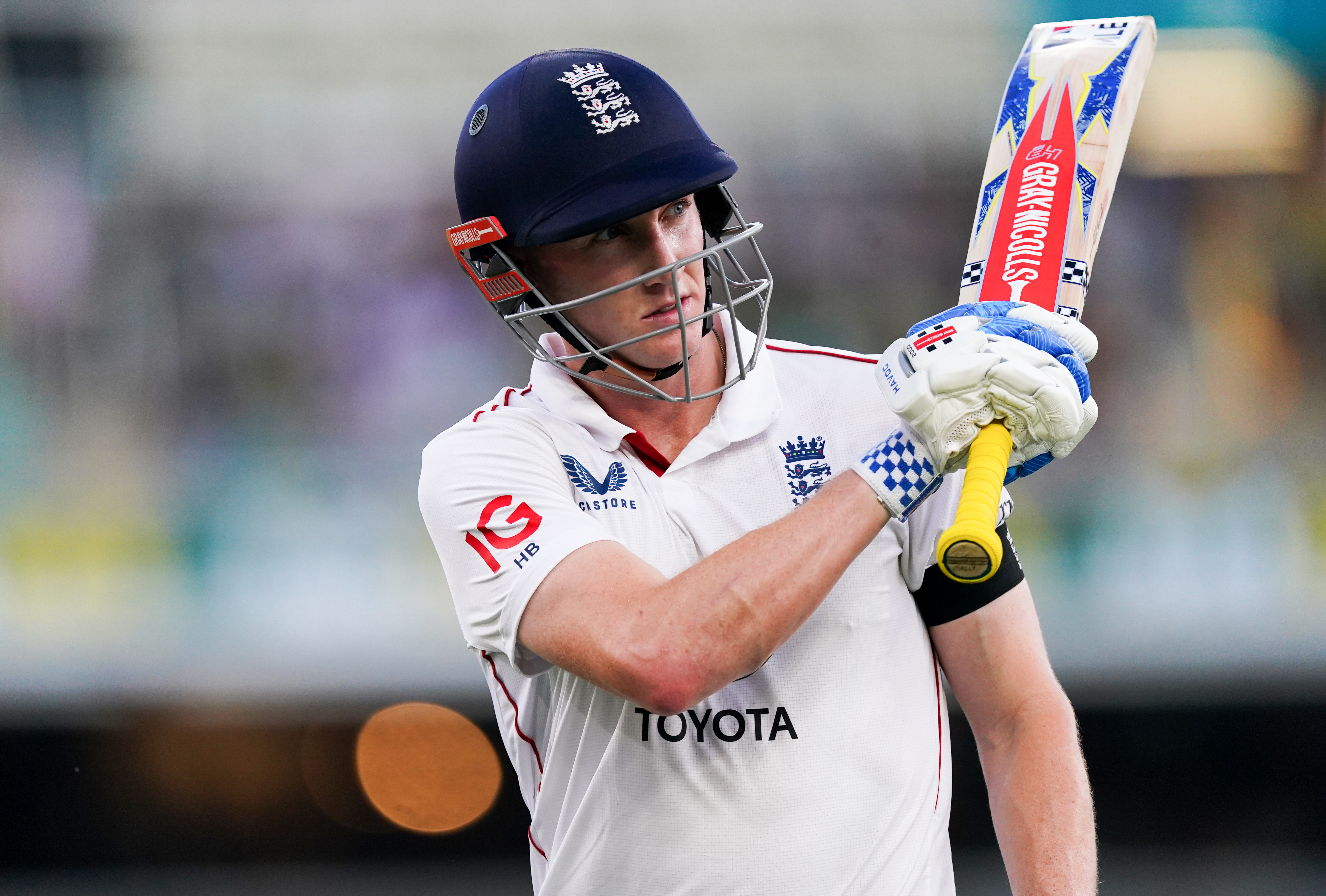
Given the range of shots in his repertoire, there is no need for Brook to gamble as much as he does
ROBBIE STEPHENSON/PA
English cricket has experienced such mavericks before. Denis Compton, David Gower and Kevin Pietersen were all batsmen blessed with extraordinary talent, who had the capacity to excite but also exasperate through a knack for perishing through their own excesses. But there was perhaps a sense with them that they would not have been the players they were without the risk-taking.
Brook has no need to gamble in the same way because he has one of the widest repertoires of scoring strokes ever seen in Test cricket: his strike rate of 87.46 is rivalled by few frontline batsmen in history. It is this breadth of strokeplay that has led Stuart Broad, among others, to claim that Brook “might just be the best batter we’ve ever produced”.
But right now there’s no discernible evidence that Brook is getting better. In fact, his Test batting average this year of 47 is the lowest it has been in any calendar year. Are bowling teams getting wise to him? Have they worked out that if they play on his ego, he is liable to self-destruct?
If he is to fulfil predictions that he can be one of England’s all-time greats, he is going to have to acquire more patience against the best sides. He may be England’s white-ball captain, and Stokes’s deputy in the Test team, but he still seems to struggle to see the big-picture stuff, something he perhaps tacitly admitted around the time of his white-ball appointment when he said captaincy was a role “I’ve never been biting at the bit to do”.