
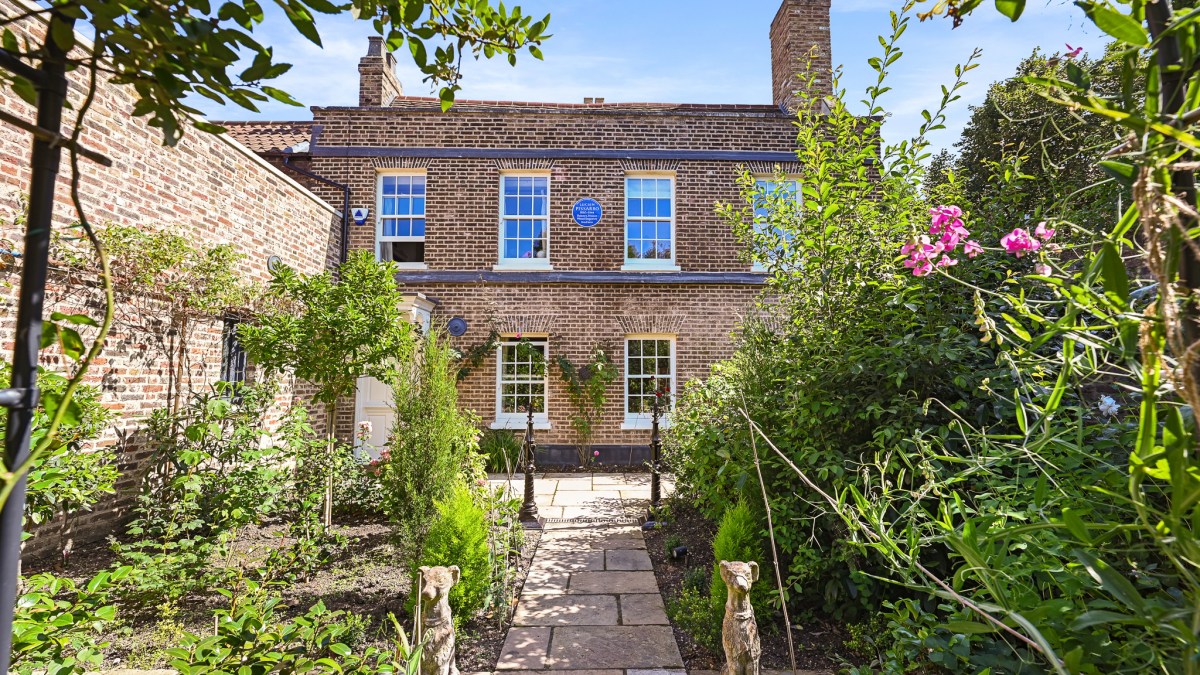
Lucien Pissarro was born in Paris in 1863, the eldest son of the impressionist painter Camille Pissarro. He visited England with his family as a boy and then as a young man. His third visit, in 1890, is said to have been prompted by his admiration for William Morris and the illustrators of the Arts and Crafts movement.
In part, however, it’s likely that he made the trip so that he could be closer to Esther Levi Bensusan, a woman he had met on his previous visit. The couple were married in Richmond in 1892 and lived first in Essex, where they had a daughter, Orovida, before settling down at The Brook, a house on Stamford Brook Road, west London, in 1901.
Lucien was a painter but also an illustrator, wood engraver and book publisher. He worked with Esther on their Eragny Press imprint, which produced several books at The Brook. She also made wood engravings. In 1911 Lucien was a founding member of the Camden Town Group, alongside other notable artists of the day, including Walter Sickert, Henry Lamb, Augustus John and Wyndham Lewis.
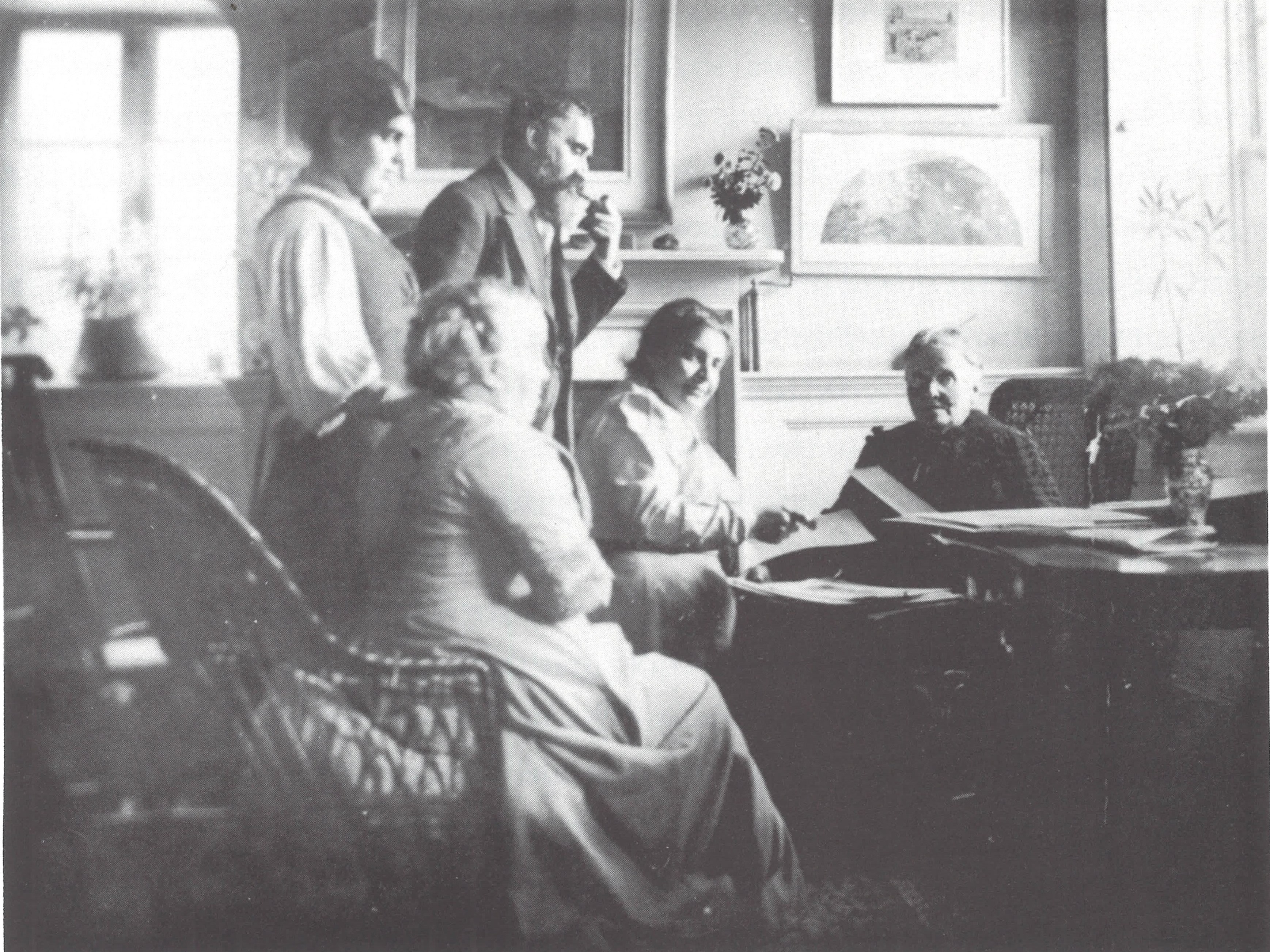
Lucien Pissarro (standing, with a pipe) in the sitting room of The Brook
The 1911 census records Lucien, 48, living at The Brook with Orovida, 17, and Esther’s aunt, 68-year-old Orovida Bensusan (after whom their daughter was named), and one domestic servant — Esther was not at home when the census was taken, according to the house historian Melanie Backe-Hansen. “The Pissarro family continued at The Brook for many years, during which time a studio was also added to the house,” she adds. The Pissarros were initially tenants although they purchased the house after the death of its owner, Thomas Hussey, in 1919.
For the 1921 census, Esther was at home but Lucien and Orovida were away. By this time Orovida had become a professional artist, the first female Pissarro to do so. She was exhibiting in her own right from a young age, including at the New English Art Club in London in 1915, and in 1921 she and the French artist Marie Laurencin held a joint exhibition. She went on to exhibit many times, including at the Royal Academy. Today, her works are held in many well-known galleries, including the RA, as well as the British Museum, the V&A and the Ashmolean Museum in Oxford.
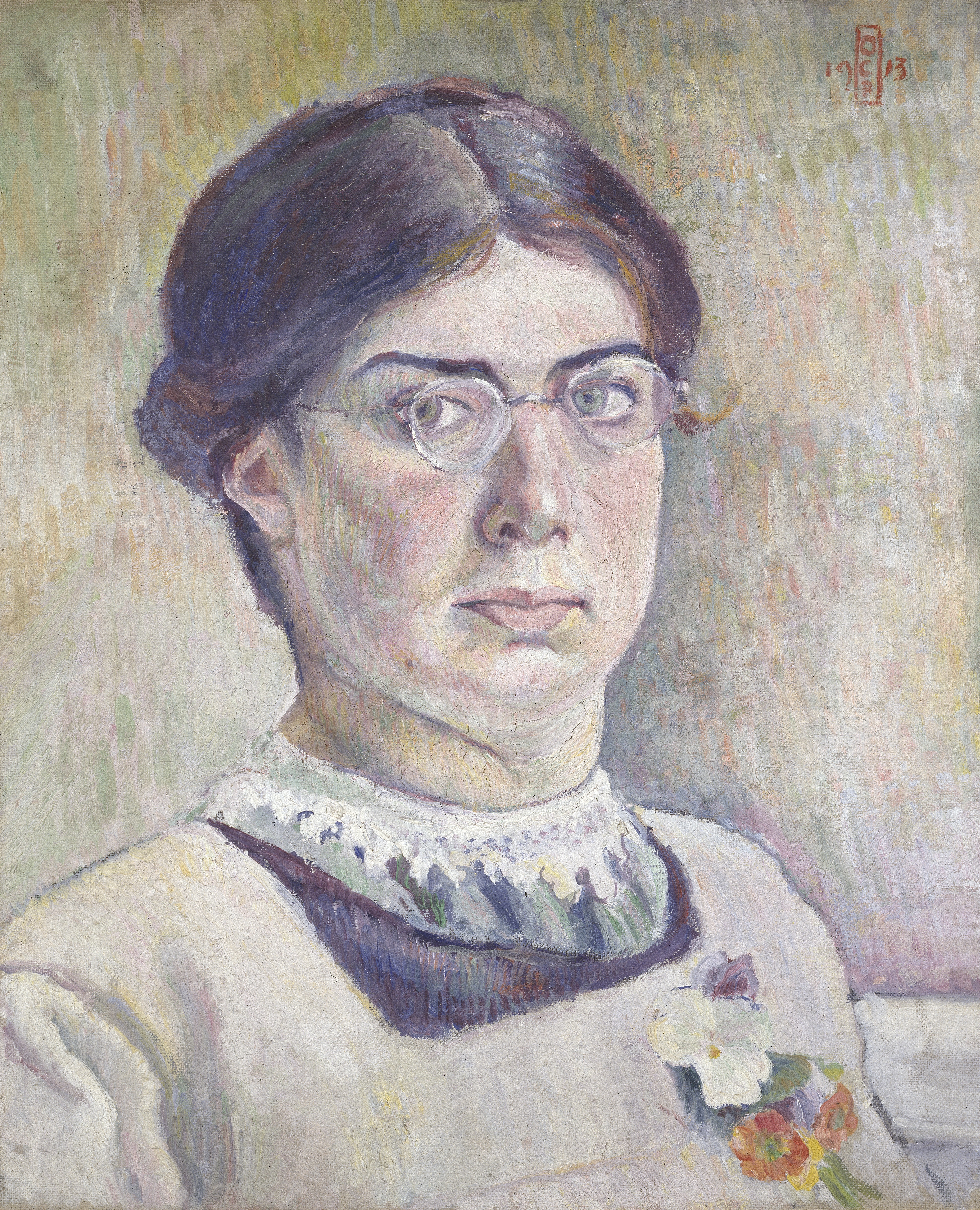
A self-portrait of Orovida Pissarro from 1913
ASHMOLEAN MUSEUM/HERITAGE IMAGES/GETTY IMAGES
The Pissarro family continued to live at The Brook until after the Second World War, although the 1939 national register shows the house as vacant when the war started. Lucien died in July 1944, while away in the West Country. His wife returned to the house but it was also rented at different times — the actor Alec Guinness is thought to have rented part of the house in 1945-46 and is recorded as saying that it was “damned cold”. Esther died at the house, aged 81, in late 1951. A notice in the Marylebone Mercury on December 7, 1951, reveals she “passed peacefully away at her home, The Brook”.
The Pissarros’ time at The Brook is marked by a blue plaque on the front wall. Incidentally, the home had another artist resident prior to their arrival: a painter and glazier named Thomas Moran, who lived there with his wife, Rebecca, and their four children (Thomas, Agnes, William and Elizabeth) at the time of the 1891 census.
• An east London home to royal weavers and working boys
The Pissarros and the Morans would doubtless recognise the house today — it has hardly changed, although the present owners, Justin and Virginia Urquhart-Stewart, stripped the house back during renovations in 2020. Virginia says: “It is a lovely house, originally constructed in the 17th century. It had outer walls put around it in the Georgian age. However, we found that the two layers were not attached to each other.
“We believe that it was once two cottages, and that a new house was built on top. During the renovations we found a well — it’s underneath our fridge now,” she says with a laugh. During one hot summer the couple also discovered that the coolest room was the dining room, beneath which they believe the brook still runs.
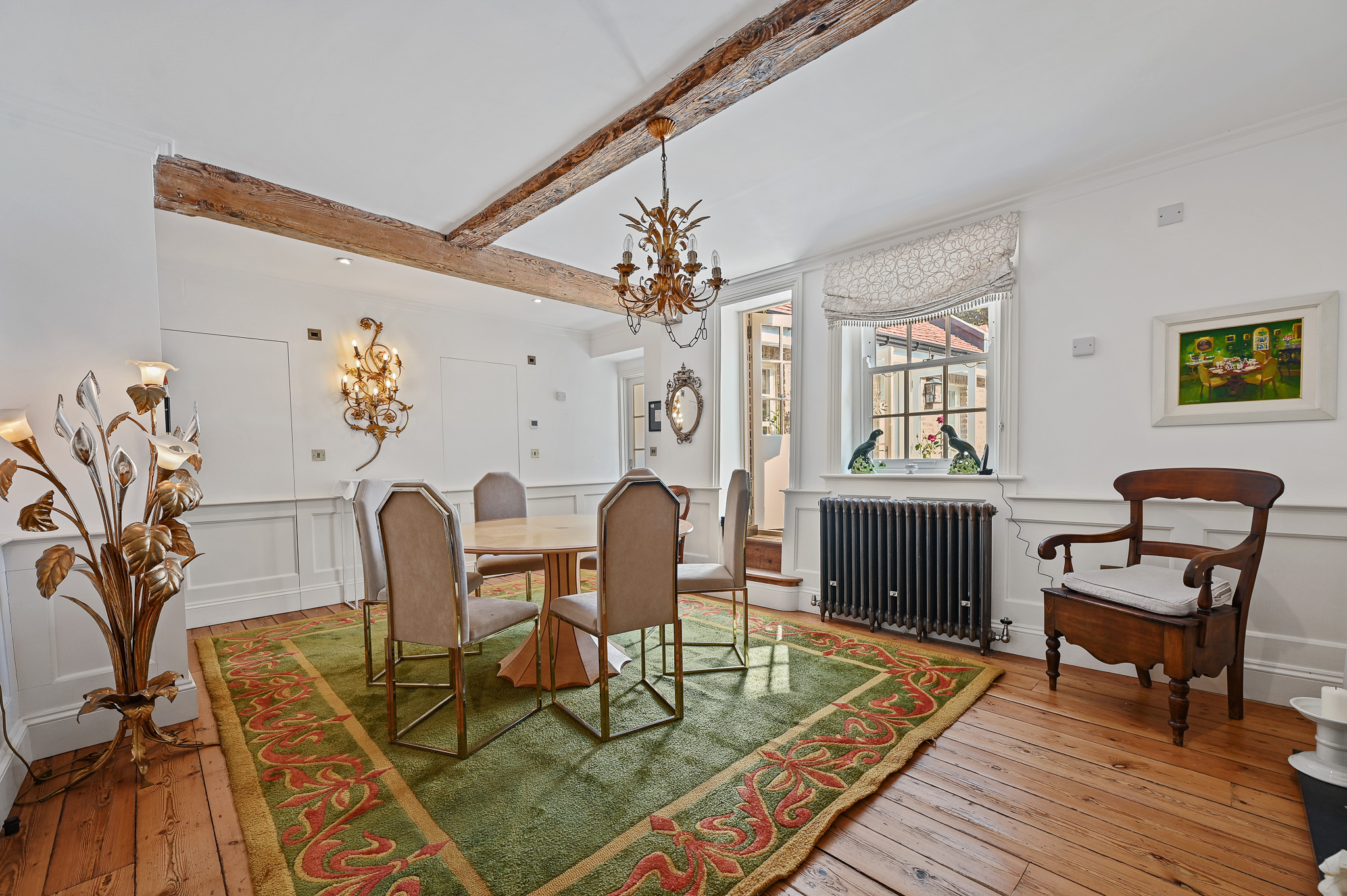
The dining room of The Brook
“From the front it looks like a Georgian house but when you go inside one unusual feature is that we have three rooms which surround the staircase — interlinked rooms with low ceilings and beams,” Virginia says. “In the 1950s or 1960s a brick extension was built but we had that pulled down and built a new one. The main body of the house is low-ceilinged and Georgian, and then you walk into the kitchen which has very high ceilings.”
• The history of a Derbyshire manor house that inspired Charlotte Brontë
Backe-Hansen says: “The house is believed to hold an older timber-framed core dating from the 17th century but this was bricked over during the 18th century. When built, the house would have been surrounded by fields, meadows and gardens, with just a few houses and cottages located nearby. Located in the borough of Chiswick, it sits close to the border of Hammersmith, formerly delineated by the Stamford Brook stream, for which the area gained its name, and which ran along the eastern side of the house.
“The house is recorded as having been two cottages originally, but by the mid-18th century it had become one house, likely undertaken when the house was bricked over.” William and Ann Blackmore and their family, including daughters Ann and Susannah, and sons Edward and William, lived in this new house.
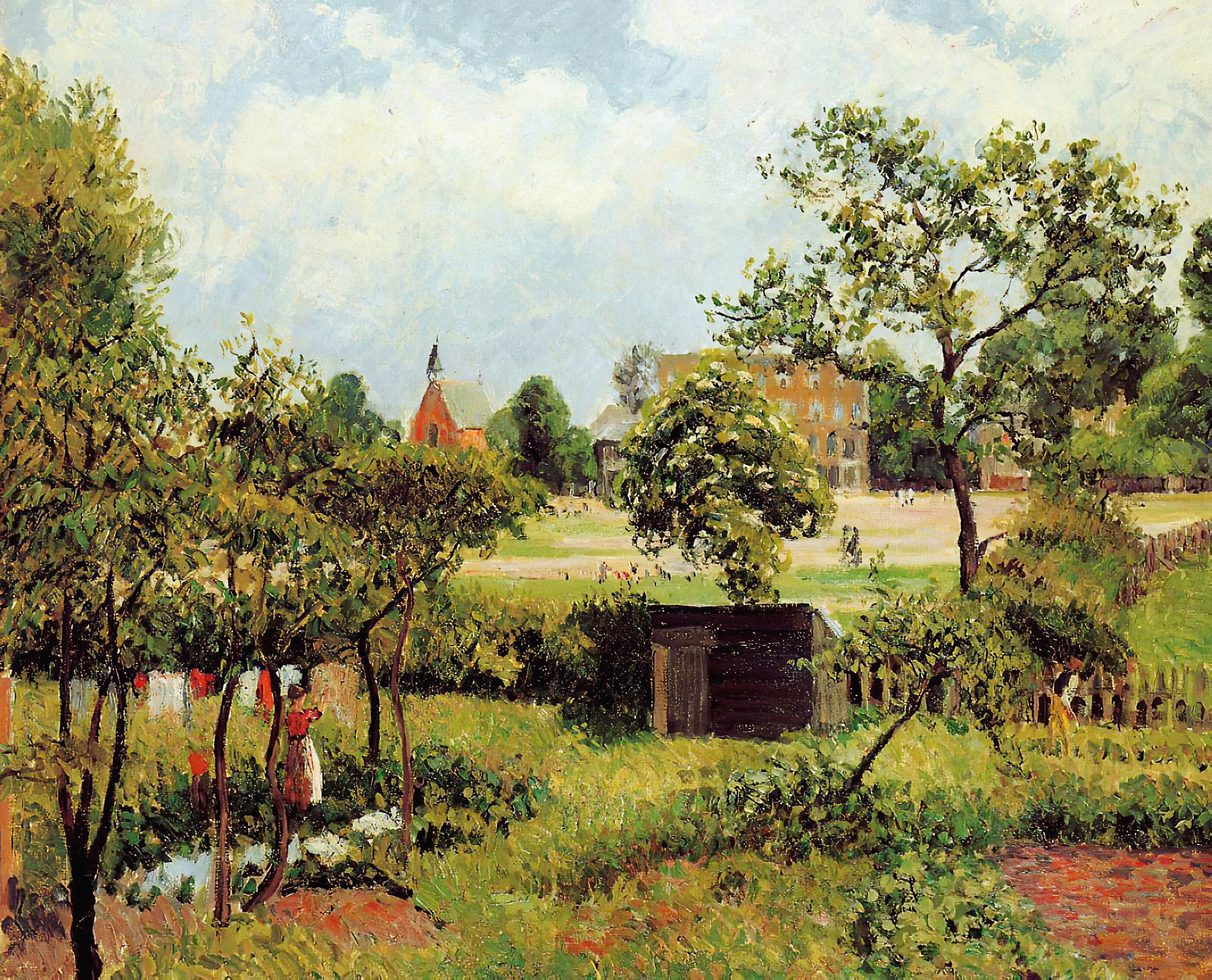
View Across Stamford Brook Common, painted by Camille Pissarro in 1897
ALAMY
Ann died at the age of 74 in 1794 and was buried at St Nicholas church in the original village of Chiswick. In 1798 William decided to leave the house “with the garden, greenhouse … and buildings thereto belonging … enjoyed by me at Stamford Brook” to Ann and Susannah in his will. William died aged 76 in February 1795 and was buried next to his wife.
• Rope-making and murder — discover the story behind a Dorset cottage
Various generations of the Blackmore family then lived in the house for more than 100 years. A notice in the Surrey Advertiser on September 30, 1876, reveals one Elizabeth Blackmore had died. The next year a notice in the West London Observer announced that the house and surrounding grounds were to be auctioned. The house, clearly labelled The Brook, consisted of five bedrooms, three reception rooms, along with domestic offices, brewhouse, stabling, carriage house, outbuildings, extensive gardens and ornamental grounds, “forming a delightful residential property, and suitable for the development of a highly profitable building estate, retaining the detached residence for immediate occupation for the production of income”.
Backe-Hansen says: “It is recorded that the property and grounds were acquired by Thomas Hussey, a local builder and brickmaker. He set about building new houses on the former gardens to the west, now on Stamford Brook Avenue, facing the common. Local history reveals that he planned to demolish The Brook but he ‘lost an action brought by the Chiswick local board for the nuisance and smells caused by his burning bricks’.”