
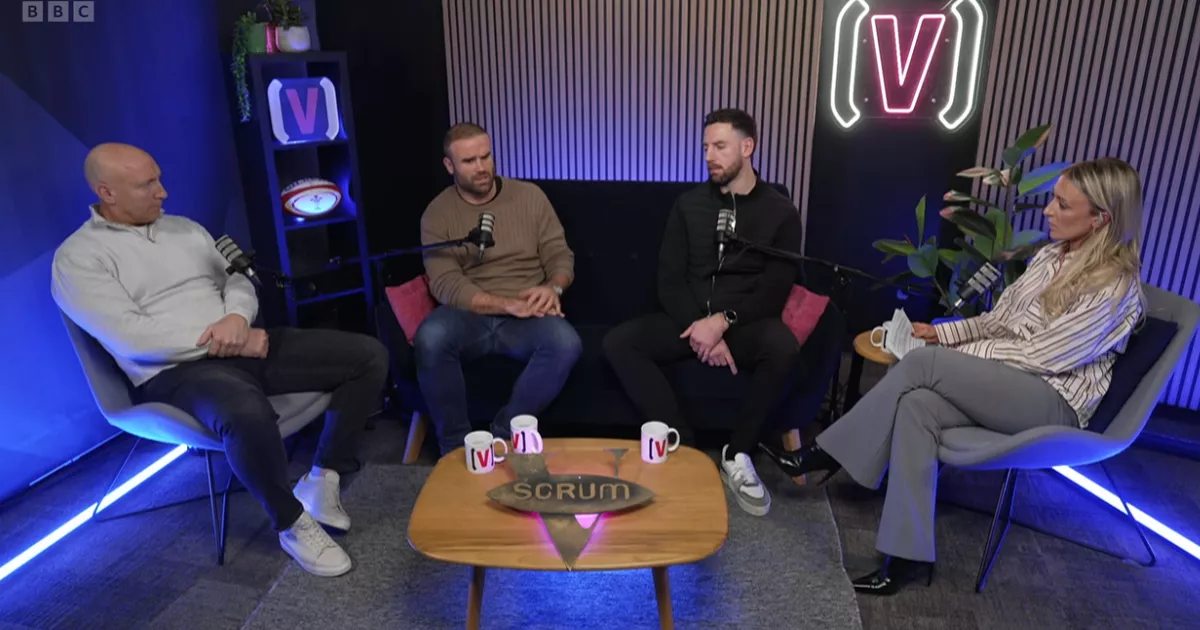
WRU non-executive board member Jamie Roberts was happy to be questioned around the WRU’s plan to cut a region
12:12, 05 Dec 2025Updated 14:05, 05 Dec 2025
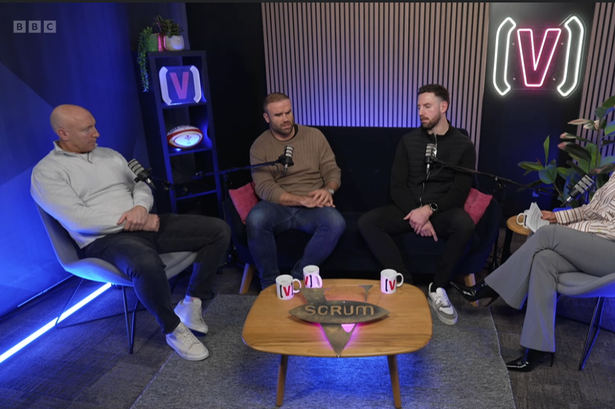 Jamie Roberts answers questions from his former team-mates on Scrum V(Image: BBC)
Jamie Roberts insists the decision made around the future of Welsh rugby has to be driven by data, but admits he understands the levels of emotion involved.
The proposed move to cut the number of regions from four to three has become the central talking point point in the debate around the future of the Welsh game, but Roberts says the union has to act on objective facts when deciding what’s best for the game.
Roberts, who has been a non-executive director on the WRU board for two years, appeared on Scrum V alongside Tom Shanklin and Alex Cuthbert to debate the proposed changes, and says he welcomes the opportunity to talk about decisions in a more public setting.
Indeed, he conceded that a greater level of transparency in the decision-making would potentially be beneficial in helping the public understand the decisions made. But he said the current predicament Welsh rugby finds itself in has only further emphasised the need to be brave in their decision-making.
He also responded to suggestion Ospreys owners Y11 could be buying Cardiff imminently – a scenario that would dictate what the future landscape looks like in terms of teams.
Here’s the full transcript from the Scrum V show, which was hosted by Lauren Salter.
Jamie Roberts: I’m happy to have these conversations because they need to be honest ones and ultimately I think in Welsh rugby at the minute we need to live in reality.
The situation we find ourselves in is the most challenging on facing Welsh rugby in two decades. Hands down, whether you agree with that or not, unfortunately the wrong records have tumbled for Welsh rugby.
So I think the decision-making in the past couple of years, it’s a privilege to be on the board as a non-exec.
My time will pass and I hope the next experienced rugby player will find themselves on that board as well, because you know you can harness your experiences and aid the decision-making.
But the I guess the big thing in the past couple of months is the four to three, and the heavy investment in the pathway.
So I think when we’re going through this period, if there’s ever a time to make radical change in the game it’s now. We need to be brave.
When all that data comes in, whether it be the consultation data, whether it’s the financial data, whether it’s the data around our playing group. The base of our pyramid, you know, everyone in the room is sitting round thinking ‘Where do we best divide the pie here?’ Because the money’s finite and we need to spend and allocate funds accordingly.
The board has decided to consolidate the top of the game, and it’s a tough decision to make. Going from four to three is really, really hard, because you appreciate the impact it’s going to have. But you have to make that decision in the best interests of the game in Wales to get our club sides winning again and to get the Test side dining at the top table again.
Lauren Salter: It may be useful if the Welsh Rugby Union, at some point, presents the data you’re seeing to the public.
JR: I hope so. The public deserve accountability from their governing body and that’s why I’m happy to have that conversation.
People will disagree, but what I would say is that if you were to give all that data to any rational 10 people who all love the game in Wales, which board members do of course, they will come to the same decisions.
We want our teams to be competitive. We want to harness environments where players want to play and thrive and grow.
We also want our Test side to be near the top of the world rankings and competing. It’s just not happened and that’s why we’ve had to make change.
Tom Shanklin: The problem I have with it, is that initially when this was set out, Abi Tierney (WRU CEO) came in and said ‘we’ve got enough resources and money for four teams and we’re still looking at the pathway as well’.
Then for whatever reason the Scarlets and the Ospreys didn’t sign the deal that was on the table.
Then Dave Reddin comes in, scraps all that and says ‘No we don’t. We have enough for two teams’.
That comes out and that doesn’t go down particularly well.
Then they go back and they say ‘Well, we’ve got enough for three teams’. So there’s three different proposals put ahead, and Abi Tierney initially said there’s enough money for four teams.
So I think people are finding it hard to now understand why that isn’t the viable option any more.
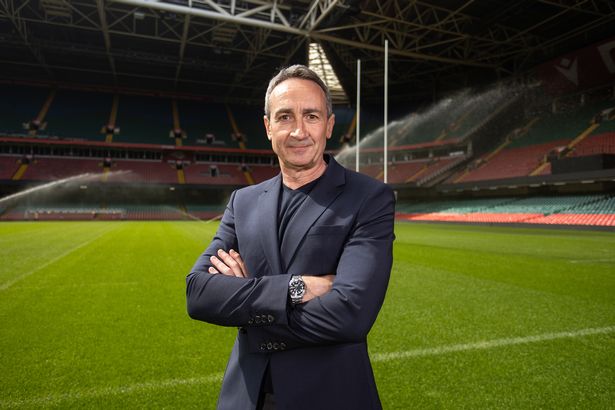 Dave Reddin, Director of Rugby and Elite Performance(Image: Huw Evans Picture Agency Ltd)
Alex Cuthbert: Three teams was, in theory, the worst model because you have to outsource all the funding don’t you, but then still give control to the union.
Isn’t that what the Dragons are getting a bit funny about?
JR: I get that it’s such an emotive topic because people care, right? Of course it is.
I’ve a huge amount of empathy for that. What frustrates me is this clash.
It’s in the name. Welsh Rugby Union. We all want the same thing, but we’ve struggled down the years, I think, to get the right people in the right room to have mature conversations to take the game forward in this country.
TS: Everyone’s got a vested interest in their own club, so it’s hard.
JR: It is hard. So where does the decision-making lie?
We need each other. The union needs private money in the game, and the private money needs the union. It’s a symbiotic relationship or whatever you want to call it.
We have to appreciate that and understand that. Wherever the power lies or decision making lies, regardless, there has to be alignment. We all want the same thing.
The union wants the clubs to succeed, the national team to do well. The clubs want both as well. So we need to sort it. It’s a challenging predicament with all the factors at play as well.
We haven’t even mentioned the URC [who require four teams].
So there’s a whole host of things going on here and it’s important we’re brave in our decision making.
LS: Do you have any idea how we could fill that fourth spot? Dave Reddin mentioned an SRC club stepping up. I cannot see a Super Rygbi Cymru flying out to Pretoria to play.
TS: I think there’s health and safety issues with that as well. You’re playing against a proper professional outfit. World Cup winners in your team. I’ve no idea [how they fill fourth spot]. I’m sure they’ll be looking at other teams. Maybe the likes of London Irish, maybe the Cheetahs, trying to fill that spot.
We’re obviously going through a real bad time in Welsh rugby and we want to cut four teams down to three. I just think that during this unbelievable hard time, you’re not even giving a team a real fighting chance of coming out the other end.
You’re just saying ‘well, we’re going to scrap one team, you’re gone’.
You’re not even giving them a chance, in five or six years time, when we hope the next crop of players come through, the next breed of players, you’re not giving them a fighting chance to play professional rugby.
JR: But there’s an argument that if you do keep that, you don’t have the money to invest in that new breed of players.
TS: But in the initial plan there was money that was put on the table, before Dave Reddin came in.
AC: Did they ever think about just stripping everything back in terms of finances. Where is our point of difference?
It’s our men’s game isn’t it? And the stadium. We’re trying to resource everything, aren’t we across the game.
Has there been chat around trying to streamline it?
JR: The amount of data I’ve sat across is frightening. It’s not the back of a fag packet stuff. A serious, serious amount of work is going in to guide this decision making.
LS: Data is a word some fans have become disillusioned with. Is there a risk emotions are being discounted or objections are being dismissed as emotion?
JR: Data should always guide human decision-making, and ultimately that’s why you’re in the room, right?
Going from four to three is arguably the decision in Welsh rugby. How you get there, it’s the decision in Welsh rugby. Where those clubs are based. That has to be driven by objective data.
You sit any 10 people in the room, they’re all going to have a different opinion around that. But that decision has to be based on objective factors, right?
So whether that’s population, whether that’s registered players, clubs, schools, universities, all that factors at play, they’re going to enable a professional team to shoot for the stars, and enable an environment where your players can succeed and aim high.
This is the elite side of the game. I get the data and decision making. They have to work hand in hand. But I think if there’s any decision in the game in Wales it has to be driven by objective facts.
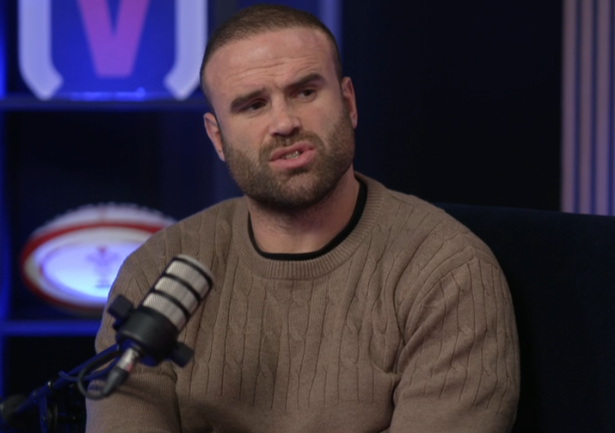 Jamie Roberts syas the WRU needs to be brave in their decision-making(Image: BBC)
LS: There are rumours Ospreys owners Y11 are interested in buying Cardiff, is there anything you can say to ease those concerns?
JR: Not so much ease concerns. It’s really, really hard isn’t it.
We’ve all played the game. So we have a massive amount of empathy and going four to three means someone is going to have to miss out doesn’t it.
As far as that transition and how you get there, it’s very complicated.
It’s an ongoing process, so it’s confidential stuff. So I can’t really divulge that much.
LS: Can you see it working?
AC: I can’t see Ospreys supporting it. As players you’re looking for contracts and livelihoods.
There’s a lot of staff I know at the Ospreys that are looking elsewhere and have already moved on because the uncertainty for staff is a little bit different to a player.
I think it happened with the Celtic Warriors however many years ago.
It’s going to be an unbelievable decision in terms of the history they’ve have had. But Swansea is a pretty big area for Wales, and the amount of Wales internationals and British and Irish Lions they’ve produced.
You’d hope it’s not going to dent that area.
TS: The Ospreys is Swansea and Neath’s professional team. They amalgamated before and that’s the team they support.
I think the biggest issue will be what the team’s going to be called if they amalgamate. Where they’re going to be playing from, because I think that will have a big factor in it.
If you want the Ospreys supporters to come, there has to be some give and take.
JR: It’s important to mention the fans because they’re the most important stakeholder. Without fans there’s no professional rugby.
However this process is managed, it’s so important that fans are involved in the process.
The consultation period from the Welsh Rugby Union did connect with the fans and it’s important they’re kept abreast of all the decision-making.