
Time changes perspective. What was once viewed as bad or distasteful can become highly favored over time, as tastes change. It’s not just healthy foods like broccoli we’re talking about: films have to stand the test of time like few other works of art have to. Sometimes that means having to endure years of criticism or outright ridicule before a film gets discovered, re-discovered, or finally just respected for its accomplishments.
Case in point: There is one Marvel movie that got abysmal reviews from both fans and critics when it was released in theaters 17 years ago. However, since time has passed and the flavors of the superhero movie genre have changed, that once-reviled film suddenly looks a lot better. In fact, it now stands as a blueprint for what future Marvel Cinematic Universe projects should do.
Punisher Movies Have A Troubled Tradition
 Lionsgate/New World Pictures
The Punisher seems like he would be one of the easiest Marvel characters to adapt for the screen: He’s a vigilante action hero whose foes are (mostly) your standard form of mobsters, assassins, thugs, or other crime and/or terrorist organizations. The entire action genre is built on hard-edged heroes (or antiheroes) picking up guns and taking matters into their own hands, from the heyday of Sylvester Stallone’s Rambo to the modern run of Keanu Reeves’ John Wick. Taking that formula and applying it to the fantastical world of Marvel should’ve been an easy flip, every single time. So has it gone so wrong, so often?
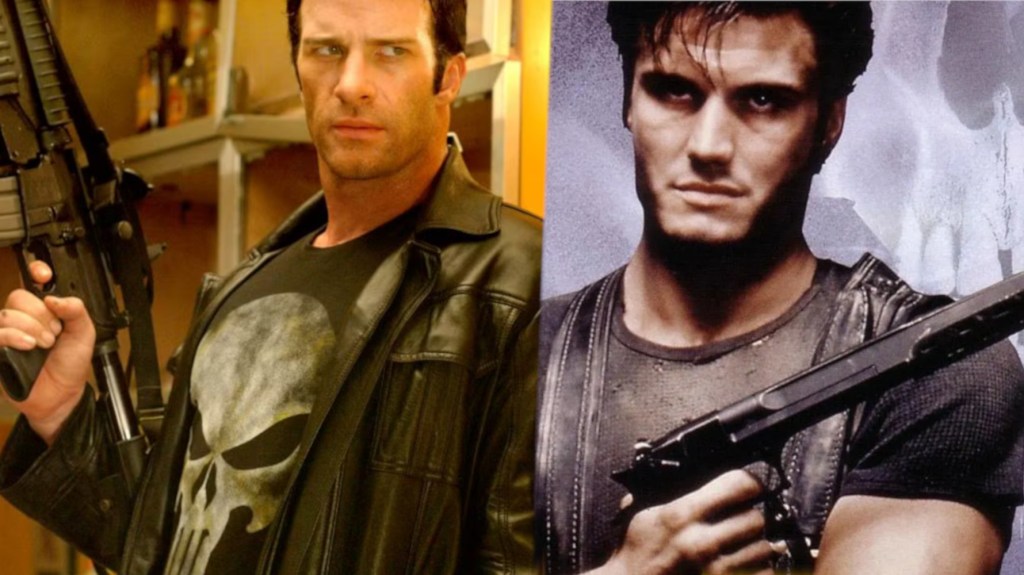
Before Punisher: War Zone ever hit theaters in 2008, Frank Castle/The Punisher had been adapted for the screen in two previous films, as well as an unauthorized short from the “Bootleg Universe” series. The Punisher (1989) saw action movie icon Dolph Lundgren step into the titular role of Frank Castle. That version was your standard ’80s testosterone action flick, which cut away a lot of the Marvel lore for a standard cop/soldier revenge tale, a la Rambo. While not a complete flop, the film never got a real chance at success: distributor New World Pictures started to falter, which resulted in The Punisher not getting released in the US. With the most critical market for a Marvel Comics film not being available, Punisher ’89 didn’t light the box office on fire, earning $30 million against a $9 million budget.
By the time The Punisher (2004) came around, comic book movies were much more established, with X-Men (2000) and Spider-Man (2002) convincing moviegoers that Marvel was the next big cinematic wave. But before Iron Man (2008) firmly established the Marvel Cinematic Universe brand, a handful of standalone superhero films tried to establish themselves, including Universal’s Hulk (2003), Sony’s Daredevil (2003), Lionsgate’s The Punisher (2004), and Fox’s Fantastic Four (2005). With The Punisher, Lionsgate cast fan-favorite actor Thomas Jane in the role and tried to do a more direct adaptation of the comics. The result was a more comic book-y take on Punisher lore, specifically writer Garth Ellis’s (Preacher) modern classic storyline, “Welcome Back Frank”. However, the studio also spent much more ($33 million) to produce the film like a proper superhero blockbuster; even though it earned $54.7 million at the box office, that wasn’t a big enough margin to justify continuing the franchise.
Punisher: War Zone Was Seen As Rock Bottom For Marvel Movies
 Punisher: War Zone / Lionsgate films
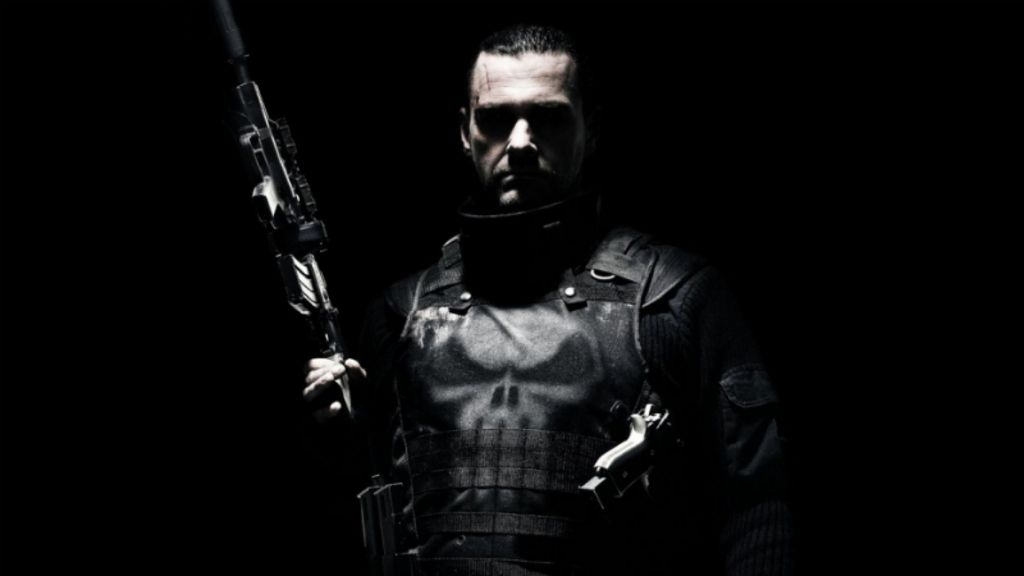
When Punisher: War Zone arrived in December of 2008, the MCU had just launched on the backs of Iron Man and The Incredible Hulk. Lionsgate apparently thought that the ground was fertile to once again invest blockbuster budget in a Punisher movie, putting up $35 million and tapping a female director (a rarity at the time) to helm the film. Unfortunately, the production proved to be too big and complex for Alexander to wrangle it. Even with arguably the biggest favorite actor in the lead role (the late, great Ray Stevenson), an acclaimed character actor Dominic West (The Wire, The Affair) playing an unhinged version of Punisher nemesis Jigsaw (sporting some of the wildest makeup work in a comic movie), and a Hard-R rating that delivered violence and blood galore, War Zone still flopped. In fact, it crashed so hard that Lionsgate gave up on the franchise entirely, and Lexi Alexander took a hit that her career never really recovered from. She would go on to direct episodes of superhero TV in the Arrowverse franchise,
Punisher: War Zone wasn’t only a box office disappointment; for years, it was forced to be the poster child for the “worst of the worst” in comic book movies, and the antithesis of everything fans saw in the “authentic” adaptations of Marvel comic books. However, flash-forward to 2025, and comic book movies have exhausted so much of the creative capital that they once had. Nowadays, fans are looking for wild stylistic swings and creator-driven visions in their comic book movies, not the standard movie experience that gets by just for having authentic costumes and cool CGI action sequences. In those changed circumstances, Punisher: War Zone is slowly but surely gaining newfound respect from a new generation of fans, who are starting to discover it as a weird, wild, violent gem of an obscure Marvel movie. It captures the dark hell of Frank Castle’s world and existence (without at all glorifying it) arguably better than the MCU even has, with Jon Bernthal’s volatile oscillation between sensitive bear and snarling attack dog.
You can check out Punisher: War Zone, which is streaming on Tubi, Roku, Pluto, and Sling TV. Let us know your thoughts on your favorite Punisher movie on the ComicBook Forum!