
As we head into the holiday season, the seminal film National Lampoon’s Christmas Vacation has been an annual fixture at our house on Cape Cod since the movie was first released 36 years ago.
My wife Mary Catherine and I, and our kids, repeat keynote lines in great anticipation before they’re even delivered. We all laugh like little children, as if it’s the first time we’ve ever heard the uproarious lines.
To paraphrase Clark Griswold, played by Chevy Chase: if we all woke up tomorrow with our heads sewn to the carpet, we wouldn’t be more surprised.
Laughter is among the coins of life.
Hands down, our favorite scene is the incessant chaos when all goes wacko in the Griswold house from the burning Christmas tree to the dog chasing a squirrel that has invaded the house, and wife Ellen then urges everyone, all the crazy relatives, to leave “before things get worse!”
“Worse,” rebuts Clark. How could things get any worse? Look around here, Ellen. We’re on the threshold of hell!”
And they were…
… As we all have been at times in life.
By another measuring stick, few understand these words—professionally and personally—more now than my close friend Heidi Levitt, who was one of the casting directors for Christmas Vacation. Levitt is an award-winning Hollywood casting director with more than 100 feature films to her credit—working with visionary filmmakers Oliver Stone, Wayne Wang, Sally Potter, among others in films The Artist, (Academy Award winner), JFK, The Rock, Natural Born Killers, The Last Word, and so many others.
The threshold of real-life hell opened wide for Levitt seven years ago when her husband Charlie was diagnosed at 57 with Early Onset Alzheimer’s—a disease, that experts say, can take 20 years or more to run its twisted course. Yet a diagnosis is not confirmation of the onset of Alzheimer’s. Like cancer, one doesn’t get Alzheimer’s on the day of a diagnosis; the disease creeps in slowly.
The challenge is in learning how to live with Alzheimer’s not dying with it. The dying part comes later. We are all born with an expiration date…
Following her gut instinct, Heidi became Charlie’s selfless caregiver—a new calling that led to her writing and producing a remarkable Alzheimer’s documentary: “Walk With Me”. The documentary chronicles her husband’s serpentine journey and the intense, exhaustive caregiving required. The film has been shown in Los Angeles and New York and will be distributed next year through Outsider Pictures.
“Alzheimer’s doesn’t just happen to one person,” says Levitt. “It happens to the entire family. Family caregivers barrel along, solving problems, chasing hope, forgetting to breathe. Until something else breaks. Caregiving is love work. It’s invisible work. And it’s exhausting!”
To add to the agony, home caregivers are not compensated for their heartbreaking efforts.
The numbers are staggering. Today, an estimated seven million in the United States suffer from Alzheimer’s, a disease for which there is no cure. And there are an estimated 12 million unpaid family caregivers for Alzheimer’s and other forms of dementia— valued at more than $400 billion annually in unpaid care.
Total estimated caregivers nationally who provide unpaid care to family members on all fronts of disease total an estimated and startling 38 million.
Caregiving, sadly, often leads to grim burnout.
Reports the Cleveland Clinic,“Studies show that more than 60 percent of caregivers experience symptoms of burnout… Caregiver burnout is a state of physical, emotional and mental exhaustion that can happen when you dedicate time and energy to manage the health and safety of someone else. Caregivers who experience burnout may feel tired, stressed, withdrawn, anxious and depressed. Caregiver burnout can impact a person in various ways, including physically, psychologically, financially and socially.”
Levitt says that caregiving of any kind “shouldn’t be an afterthought. It should be a national conversation.”
There is some help on the horizon. At present if approved in Congress, the bipartisan Credit for Caring Act—introduced by House Ways and Means Committee members Congresswoman Linda Sánchez (D-Calif.) and Congressman Mike Carey (R-Ohio), along with Senators Shelley Moore Capito (R-W.Va.) and Michael Bennet (D-Colo.)— would allow for up to a $5,000 nonrefundable federal tax credit for eligible working family caregivers.
Caregiving Essential Reads
“It’s a drop in the bucket,” says Levitt, “but it would make a difference.
And yet the proposed federal legislation is mired in Capitol Hill bureaucracy.
So how to break up this luckless political logjam?
Continued pressure is needed on Congress, and lots of it and from all directions and sources—caregivers at large, organizations like UsAgainstAlzheimer’s (a DC-based organization for which I serve on the board), the Cure Alzheimer’s Fund of Boston, the Alzheimer’s Association, and others devoted to this essential cause.
“In America, we tend to prioritize care institutions rather than caregivers,” says Levitt. “Care belongs in the home and supported by public policy. If we can have a childcare tax and social security, certainly we can afford the Credit for Caring Act, which would bring some relief and acknowledgment that caregiving should be a national priority, a basic right.”
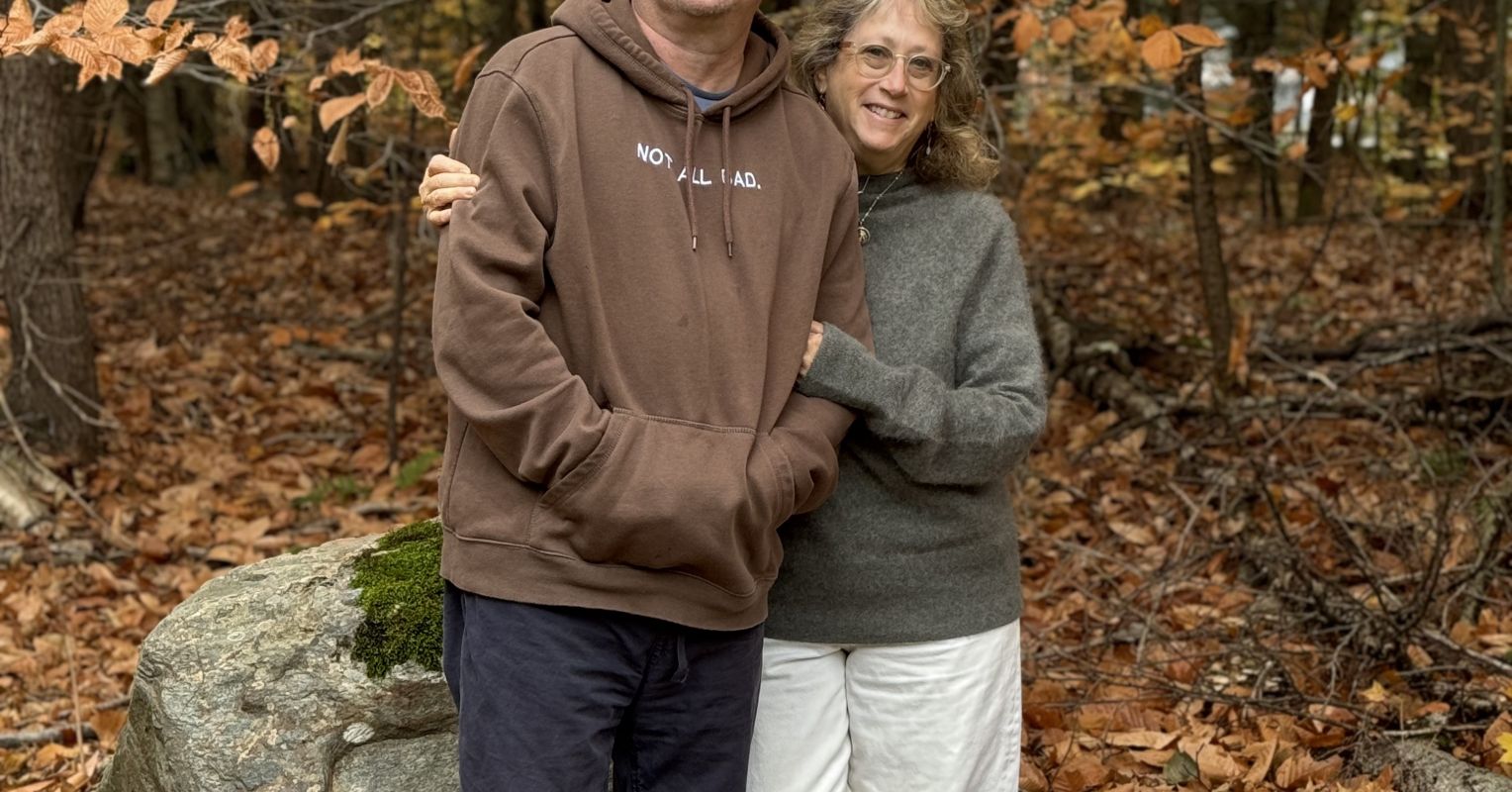
My wife of 47 years fully agrees. She has been a dedicated caregiver to me for several years. Alzheimer’s is embodied in my family tree. The killer has taken several family members, including my mother, my father, and maternal grandfather. I was the family caregiver on the Cape for both my parents, and present at their deaths.
Over the years, I’ve lost many close friends to Alzheimer’s. The disease has now come for me.
The challenges of home caregiving are anticipated to grow exponentially in years to come as Baby Boomers continue to age.
Caregiving, says Levitt, is a “universal experience, affecting all of us at some point. Caregivers indeed are the backbone of this country, and they are in crisis.”
As late First Lady Rosalynn Carter once said, “There are only four kinds of people in the world: those who have been caregivers, those who are currently caregivers, those who will be caregivers and those who will need caregivers.”