
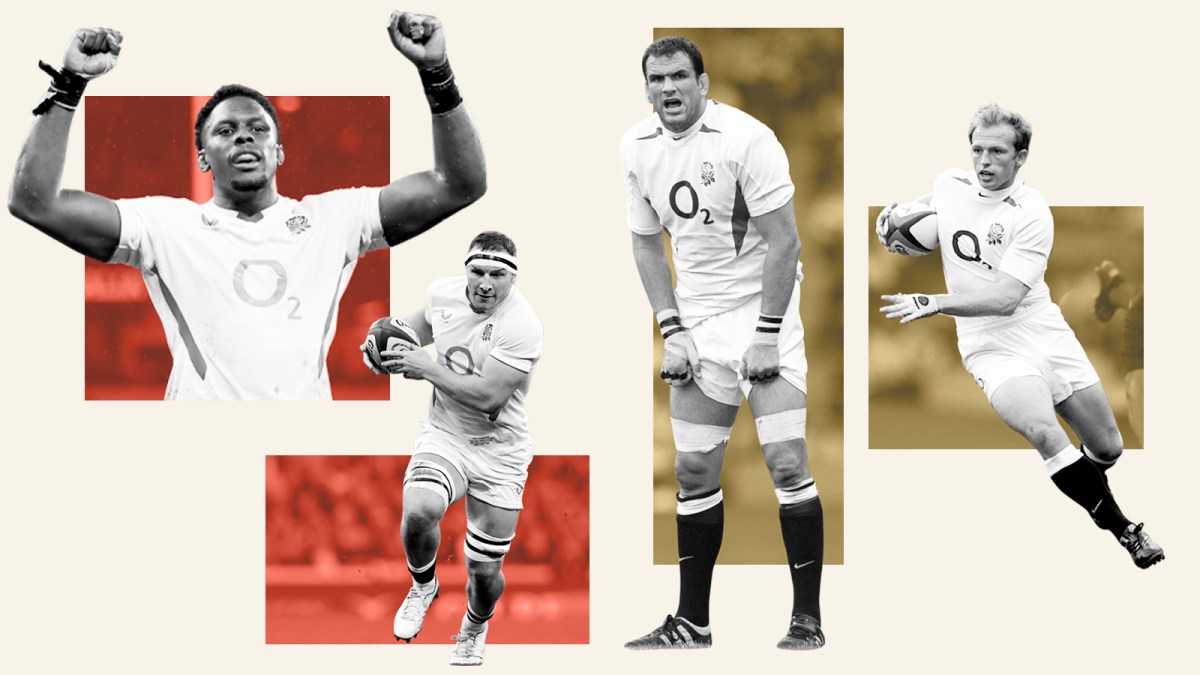
The draw for the next World Cup in Australia in 2027 has prompted some heady predictions, and assertions that there is every chance of England repeating the glorious triumph of their 2003 team, also in Australia. Possibly for now, the predictions are too heady.
However, it is a good job the spotless character of the great Dan Carter, who made the draw, is not in doubt as that immediately shuts down any suggestions that he took a bung from English rugby. Otherwise, suspicions might be raised that the draw for our heroes is relatively comfortable, in that they will most likely not meet South Africa until the final.
South Africa, bless them (and their legion of abusive online fans/idiots), are actually still improving, although their squad is ageing. After winning two World Cups on the trot, they really should be in decline — but it is quite possible that when they arrive at Australia 2027, they will be at a new peak.
There is no doubt that England would have welcomed the draw. Indeed, you feel that the main danger to them until the closing stages may well lie in the weakness of the opposition in their pool hurting momentum — Wales, Tonga, and Zimbabwe really should be easy meat, possibly even for England’s second team.
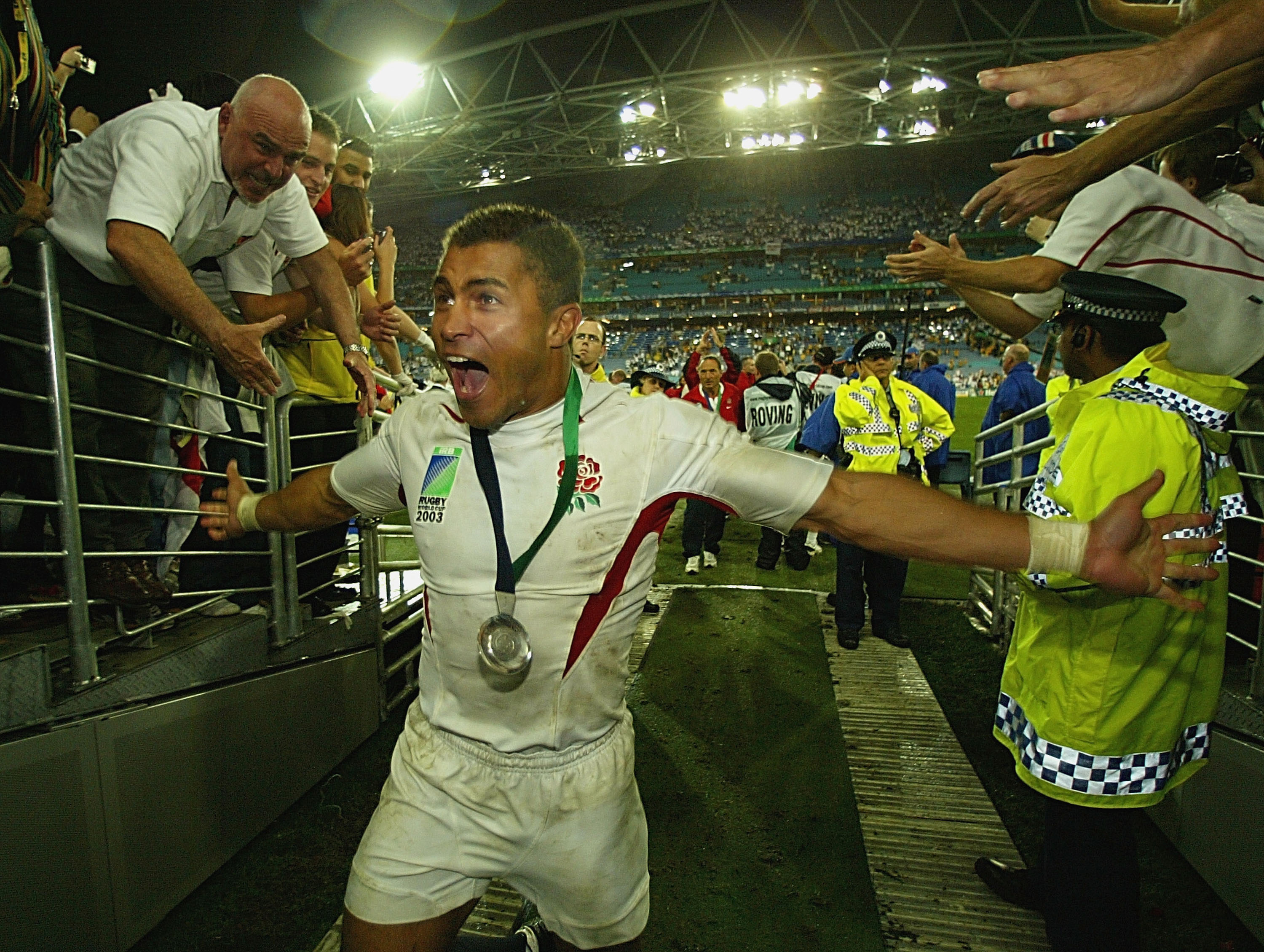
Robinson and his team-mates achieved immortality by winning the World Cup in Australia 22 years ago
DAVE ROGERS/GETTY IMAGES
It is true that England still have time on their hands, still have many matches in which to develop — always provided that their development happens in a straight line without reverses. They have done well, so much so that we can stop worrying for the moment about their assertion that some of the forwards can play in the backs, and that they need not necessarily start big matches with their best team.
As they build up to the World Cup they can restore the fierce lock George Martin to the pack after injury, they can further develop their front-row forwards, and they can assimilate the glorious Max Ojomoh in the midfield alongside players such as Ollie Lawrence. They are looking increasingly well coached providing they do not try too hard to be too different.
But they need to accelerate. As yet they are not on the same planet as the 2003 team. Anyone who was anywhere when England won the World Cup will point out some severe home truths. That England team included Martin Johnson, Lawrence Dallaglio, Jonny Wilkinson, Richard Hill, Steve Thompson and possibly others who would have walked into a world XV at the time — Jason Robinson and Ben Cohen would also have been contenders.
Furthermore, the make-up of the team was sorted by Sir Clive Woodward nearly two years before the tournament, only Josh Lewsey was added in the months before it started. England, what is more, won an absolutely thunderous Six Nations grand slam in 2003, playing brilliantly. And they won away in New Zealand and Australia. Compared to the worthy efforts of the present England team, they were on a different level. That is some measure of the gap Steve Borthwick’s side have to bridge.
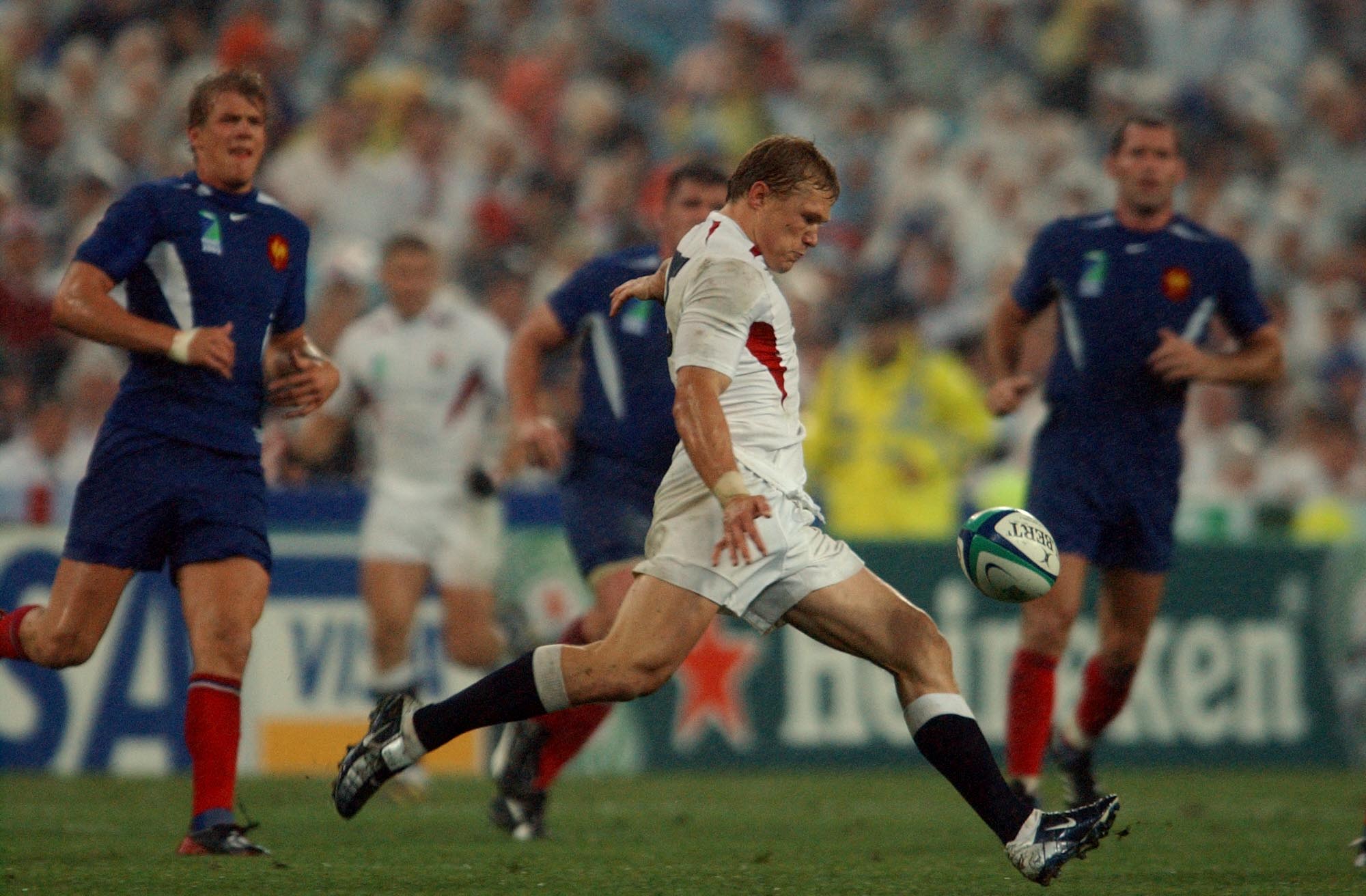
Lewsey worked his way into the 2003 side, but most of the team had been well-established in the run up
PHIL WALTER/GETTY IMAGES
And yet despite the pure class of that England outfit, and despite the fact they had easily the best coaching group and preparation in English rugby history, they won the World Cup only with the penultimate act of extra time in the final. The margins are absolutely tiny, the gap between success and the narrowest of failures is enormous. The new England must remember that.
Perhaps it is unfair to compare the two teams as yet because England have some polishing to do before 2027. There is plenty of time for their bolters to come right up to speed, for the assistant coach Lee Blackett to hone the attacking skills and for Borthwick, the head coach, to produce an outstanding pack.
But just as a guide to the progress they should make, let’s compare the two teams: the England side which played so well during the recent autumn internationals, and the England which won the ultimate prize in 2003. Say you could travel in time and bring Johnson’s team back to contend with the present team. Everyone is deemed to be in their best form. How many players from 2003 would not be chosen for a combined team?
The answer? It ranges between one and three. The rest would all be from 2003 — and not only because they had more time to develop. With respect to Ben Kay, that fine forward, you would probably insert Maro Itoje in alongside Martin Johnson in the second row, although as Woodward pointed out at the time, Kay was the key man for his rugby wisdom.
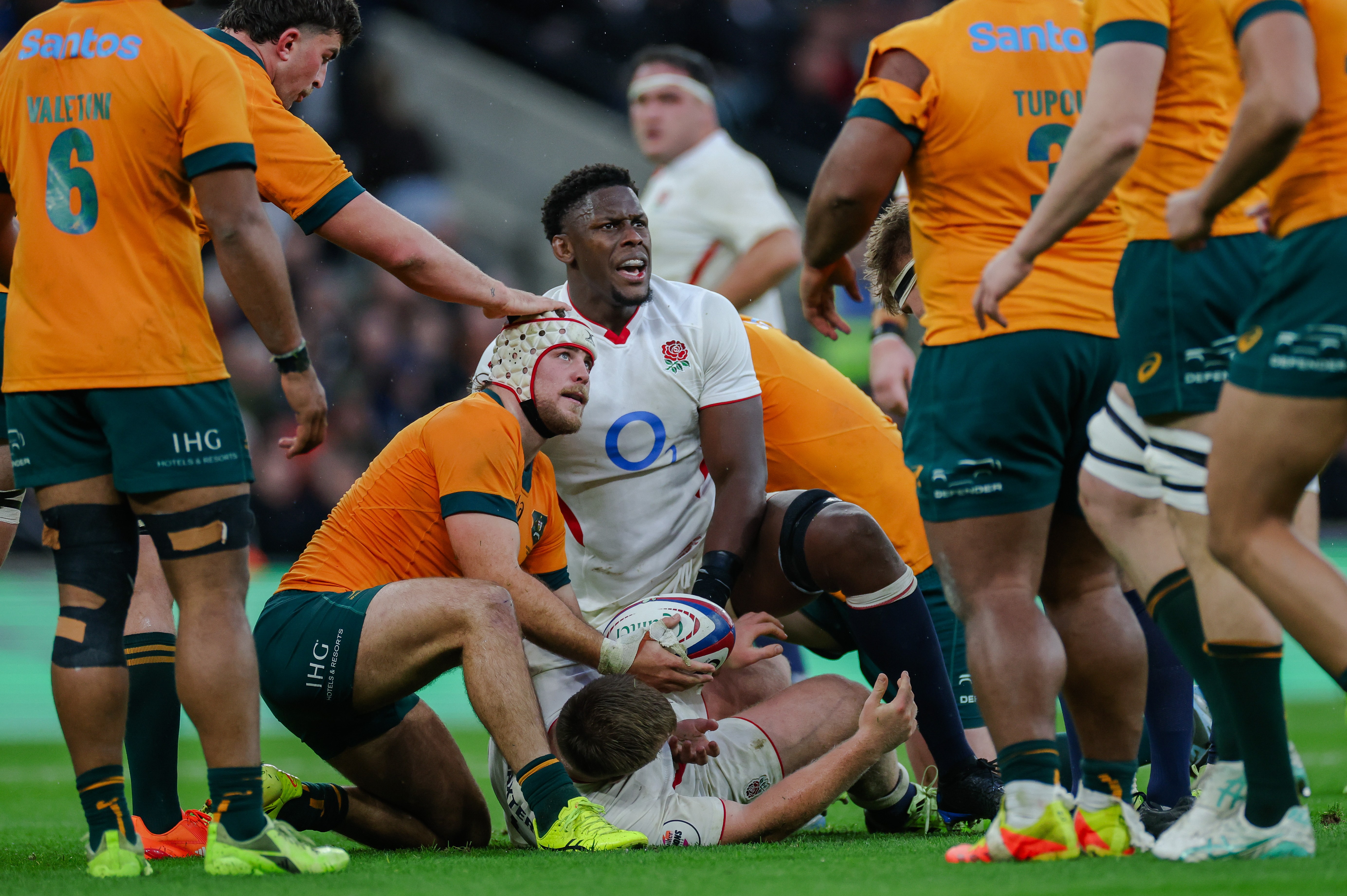
Itoje would slot in alongside Johnson in the second row
TIMES PHOTOGRAPHER MARC ASPLAND
Who else? Behind the scrum, Josh Lewsey at full back was a beautiful all-round footballer and a hard-hitter. By those standards, the likes of Freddie Steward and George Furbank have a distance to travel.
Take scrum half. Matt Dawson had already played what I considered to be the greatest game any Englishman played in any position, with his performance for England when they won the grand slam in Ireland in 2003; but as for the rest of that team, it is remarkable how they all reached a career peak in that summer down under, and then again at the World Cup.
Where else would the present team get a look-in? Immanuel Feyi-Waboso is developing rapidly but, in terms of the left wing, Cohen was in his pomp in 2003, sweeping majestically in for tries. Robinson on the other wing was also at a peak.
Up front, there might be a case for Ellis Genge squeezing in at loose-head instead of Trevor Woodman, but Genge is still a little fitful. At hooker, Thompson remains for me the greatest England have ever had — he was massive, powerful, and could play rugby too. Right towards the end of extra time, he delivered a brilliant long lineout throw to Lewis Moody, the replacement flanker, which led to the move which took Wilkinson within range to drop the glory goal.
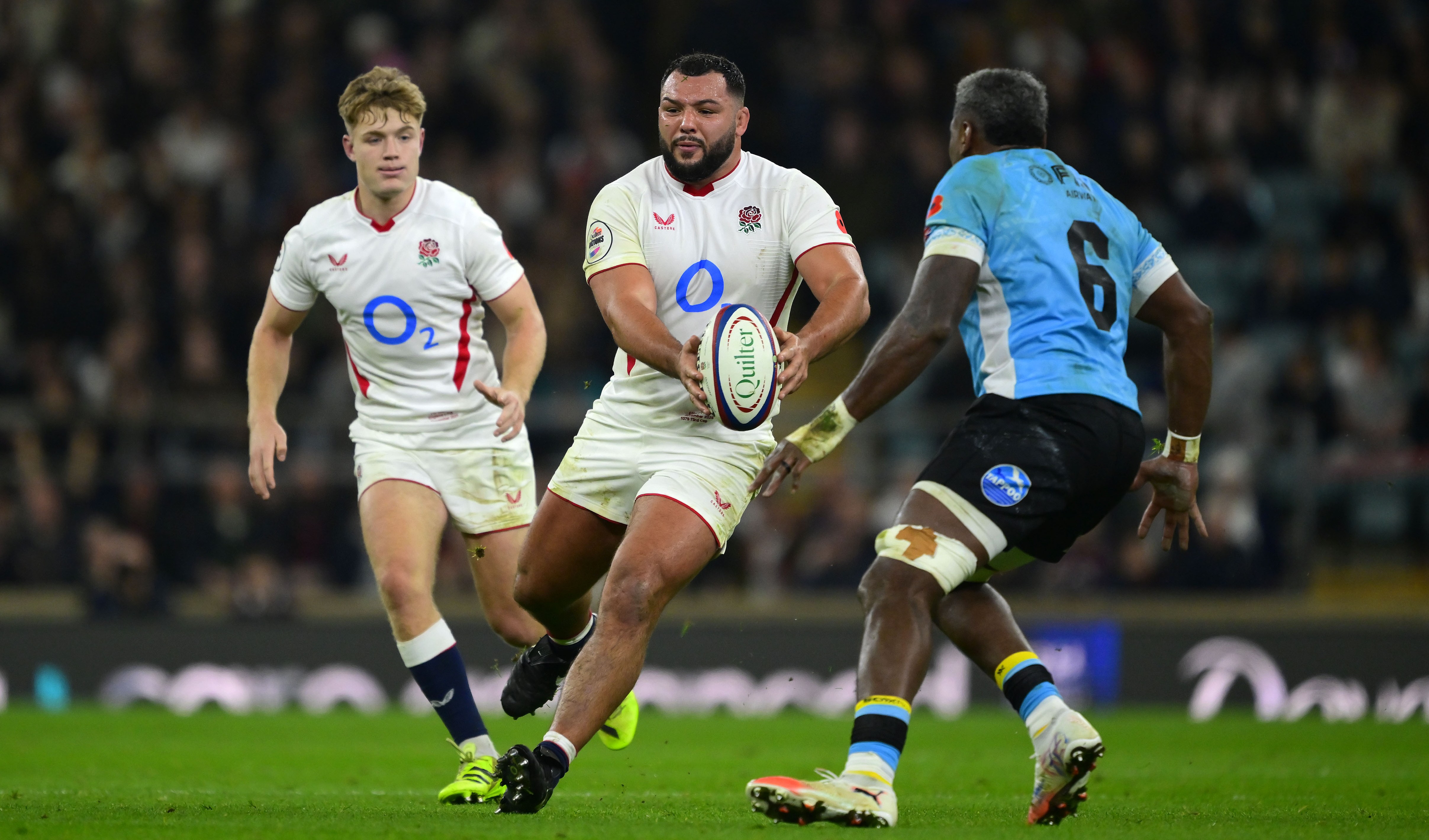
Genge is one of three players who could perhaps squeeze his way into the vintage of 2003
FRANKIE OKEEFFE/PPAUK
Elsewhere, Tom Curry and Sam Underhill would be strong contenders to replace Neil Back, but then you recall how well Back played in extra time in 2003.
It is only a bit of fun, but probably indicates that this promising England team have to carry on, and speed up. They have to start taking southern scalps on southern fields. People sometimes forget that Woodward’s team dominated the southern hemisphere like no one else has ever managed.
England can have optimism for the World Cup now that the draw has been made. They are good enough, in all probability, to get to the semi-finals and to beat some very serious teams. But, at present, they are significantly short of the necessary to join their compatriots of old in the pantheon of greats.