
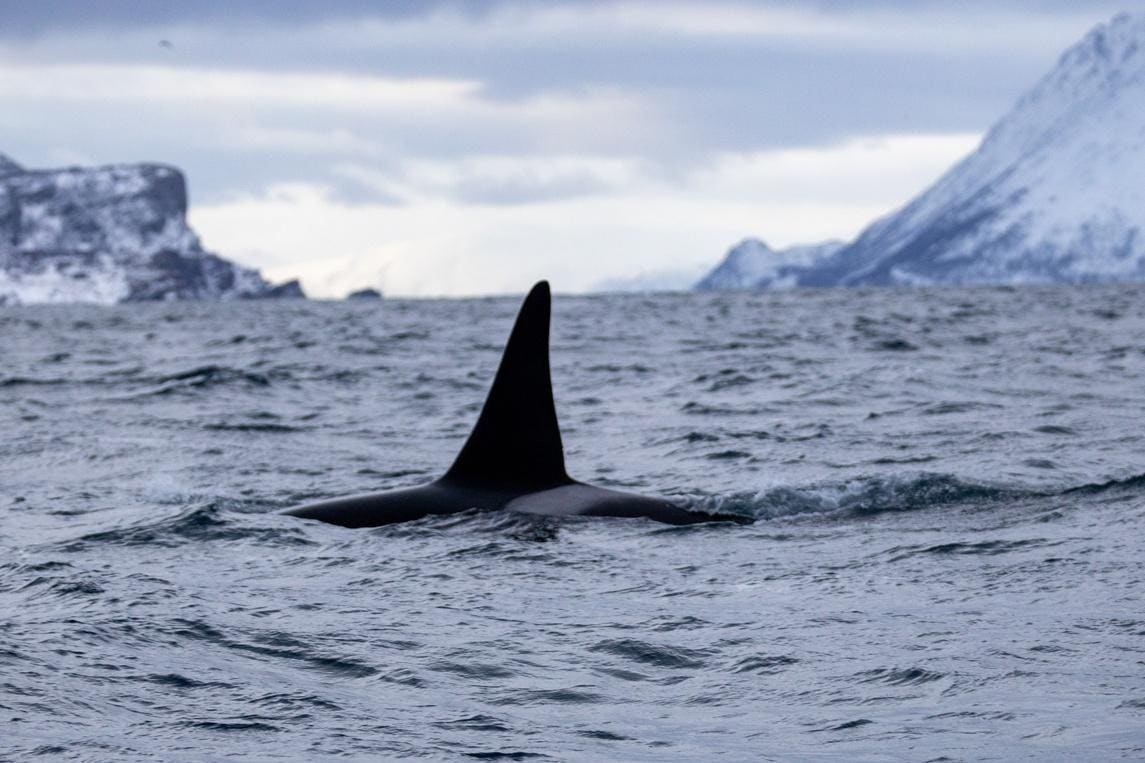
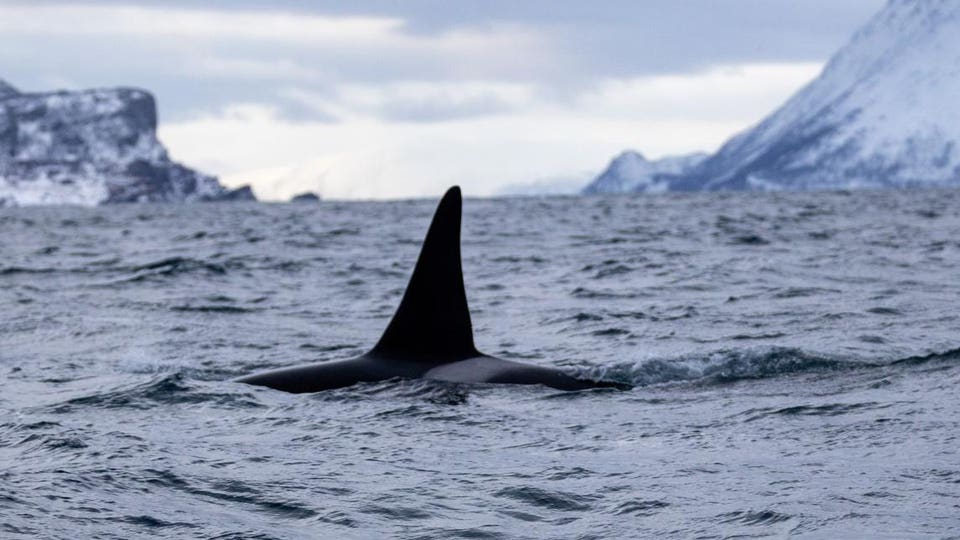
Even apex predators can become prey. Here’s how orcas are flipping the script on the ocean’s most feared predator: the great white shark.
getty
The great white shark (Carcharodon carcharias) is regarded as the king of the ocean. It’s highly feared, incredibly powerful and seemingly untouchable. However, a growing body of evidence is beginning to suggest otherwise. In coastal waters from South Africa to Mexico, killer whales (Orcinus orca) are no longer just competing with great whites as hunters; great whites have inexplicably become their prey.
Here’s a breakdown of what we know about this new phenomenon, and how these orcas’ behaviors are becoming more refined, widespread and impactful than we once believed.
When Orcas Moved In, White Sharks Moved Out
A seminal turning point came with a 2022 study published in the African Journal of Marine Science. The authors of the study tracked patterns around a site near Gansbaai, Western Cape. This came after after a pair of orcas — in the local cetacean community known as “Port and Starboard” — had been seen killing great white sharks.
At the time, multiple great-white carcasses had washed ashore with missing livers. In turn, great white shark sightings dropped dramatically, and telemetry data confirmed that many tagged white sharks abandoned the area altogether.
As the lead author of the study explained, “Initially, following an Orca attack in Gansbaai, individual Great White Sharks did not appear for weeks or months.”
Two orcas patrolling waters together; researchers believe coordinated hunting is key to their success against great whites.
getty
Continuing, she noted, “What we seem to be witnessing though is a large-scale avoidance (rather than a fine-scale) strategy, mirroring what we see used by wild dogs in the Serengeti in Tanzania, in response to increased lion presence. The more the Orcas frequent these sites, the longer the Great White Sharks stay away.”
Then, in 2024, there came a new shock. In a follow up study that year, the same team of researchers recorded, for the first time ever, a single orca successfully killing a great white shark. The orca was completely solo; there was no pack and no prolonged chase. The kill happened near Mossel Bay, and reportedly took less than two minutes from first contact until the liver was in the orca’s mouth.
The Shark Hunt Spreads From South Africa To Mexico
Until recently, most well-documented orca-on-white-shark events clustered around South Africa, and only a rare few around Australia. This changed only a few weeks ago, on November 3rd, 2025, with a study published in Frontiers in Marine Science.
The research describes a pod of killer whales — dubbed “Moctezuma’s pod” — that had been repeatedly hunting juvenile great whites in the Gulf of California. What caught the researchers’ eyes was the precision and method used by the pod. Specifically, by flipping the sharks upside-down, the orcas were able to induce tonic immobility in the sharks, or a temporary paralysis.
A great white shark cruising near the surface — a species now abandoning prime hunting grounds when orcas move in.
getty
As soon as the sharks were immobile, the orcas then surgically removed and consumed the liver, also sharing it among pod members. The rest of the carcass was totally discarded.
In two separate hunts (August 2020 and August 2022) the orcas targeted juveniles. This is most likely due to the fact that their inexperience as hunters and swimmers makes them much easier to subdue than full-grown adults. The authors of the study note the victims came from known shark nurseries, which may be shifting location as water temperatures change.
However, what’s worth noting is that these events took place very far away from the orcas’ “traditional” shark-hunting grounds in the southern hemisphere. This suggests that the behaviour may be spreading both geographically and across different pods.
Why The Liver? And Why Great White Sharks?
Shark liver is a highly energy-dense reservoir of nutrients and fats; to a predator like a killer whale, it’s essentially a caloric jackpot. This means that orcas can maximize their energy gain while simultaneously minimizing effort and risk by stripping the liver and discarding the rest of the carcass. And as the recent Mexican observations show, orcas are doing just that: extracting livers and discarding the rest.
What makes these attacks especially striking is the orcas’ consistency in only taking the sharks’ livers:
In Australia, genetic analysis of shark carcasses revealed bite wounds consistent with the orcas extracting liver tissue, with liver DNA confirmed in the primary wounds.In South Africa, scientists studying stranded sevengill sharks and white sharks have documented distinctive tooth marks around the shoulder area — the kind of incision needed to access the liver without damaging other organs.In the Gulf of California, the orcas were filmed flipping juvenile sharks upside down to induce a trance-like state called tonic immobility, making it easier to extract the organ.
As to why exactly the orcas are opting for sharks over their regular diet of fish and seals, researchers suggest several overlapping factors:
Opportunism and intelligence. Orcas have long been known for having highly flexible diets, as well as adaptive strategies. This could mean that once a pod discovers a high-value prey and a reliable technique (like liver extraction), that behavior could, in turn, be taught and repeated across individuals and generations. Changing prey availability. Climate-driven changes (i.e. warming seas, altered currents, changing nursery-site distributions) may be pushing juvenile sharks into waters shared with orcas. This would naturally increase how frequently these species encounter one another.Low-risk, high-reward tactic. Targeting smaller or juvenile sharks reduces risk for the orcas, while also still providing the necessary rich nutrition. The coordinated flip-incapacitate-eat-discard strategy is both highly efficient and repeatable.
That said, the authors of the 2025 study caution that data remains limited, as it only describes only a handful of events. Whether or not this is an emerging trend or just rare opportunism remains to be seen. The authors themselves warn: more monitoring is required before drawing conclusions about long-term ecosystem impact.
What This Means For Shark Conservation And ‘Apex Predators’
For a long time, the great white shark was a name synonymous with marine power: the top dog (or fish) in the sea. However, these new findings challenge that notion entirely. Evidently, even the mightiest of predators can be vulnerable — especially to a more intelligent, socially sophisticated rival.
For conservationists, the implications of this new finding are complicated. On one hand, orcas are natural predators; they have a rightful role within our oceans’ ecosystems. But on the other hand, shifting predation patterns could exacerbate existing threats to white shark populations, especially considering that juveniles are being targeted.
But what’s just as important is that when apex predators shift their behavioral patterns, the entirety of the food chain risks being overhauled. Seal populations, fish communities and even kelp beds could feel the impact. It underlines the fluidity of ecosystems, as well as the need for adaptive management based on real data, not outdated assumptions.
Are you an animal lover who owns a pet? Take the science-backed Pet Personality Test to know how well you know your little friend.
Do you have an eye for nature photography? Join my Nature Photography Club and take your photos to the next level.