

If we haven’t made this clear enough yet, it’s been a banner year for new shows. Of our picks for the 10 best episodes of 2025, only three came from returning series, while the rest came from shows that premiered this year. And great ideas could come from anywhere; more than half the series represented on our best episode ranking didn’t make it onto our ranking of the best shows of the year (although some came very close). It all amounts to a delightfully unpredictable year in television that consistently kept us engaged.
This list contains standout episodes that are alternately ruminative and explosive. Some are devastating, some are exceptionally funny, and some are a little bit of both. Two excellent — and completely different — first episodes highlight just how confidently some of the year’s coolest shows began. Plenty, including our No. 1 pick, got creative while playing around within the framework they’d created: using theater to tell their story, taking a dizzying journey through a character’s memories, recreating the entire life of a certain famous pilot. There were so many outstanding options to choose from; look no further than our honorable mentions section to see just how tough it was to narrow these down. Too much good TV is a good problem to have.
These are TV Guide’s picks for the 10 best TV episodes of 2025.
Honorable mentions: “Episode 2,” Adolescence; “In Space, No One…,” Alien: Earth; “The First Circle,” Devil May Cry; “Casting,” The Studio
For more, check out our list of the 10 best TV shows of the year.
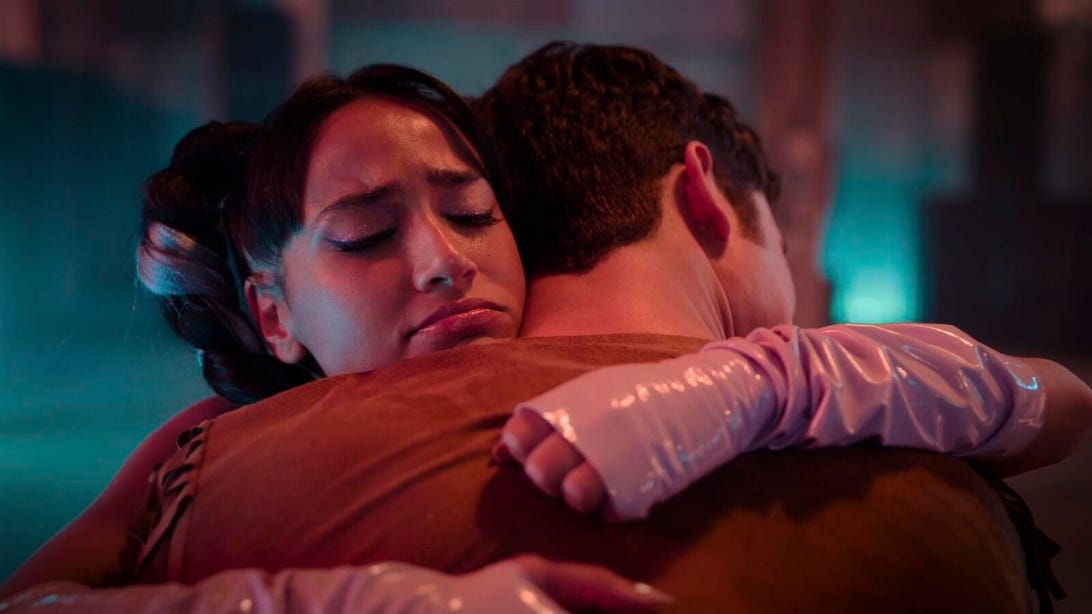 Courtesy of Prime10. “Scary Monsters and Nice Sprites,” Overcompensating
Not every show has an obvious “best” scene. But in Benito Skinner‘s semi-autobiographical comedy Overcompensating, one moment stands out for staying with viewers long after the credits roll. In the last minutes of “Scary Monsters and Nice Sprites,” Skinner’s Benny and Wally Baram‘s Carmen embrace. In a series where everyone is overcompensating for everything everywhere, it’s a rare moment when they each feel that maybe their honest self is enough. And the hug is both climactic and poignant because of how this episode develops Benny and Carmen’s parallel stories. Carmen forms an unexpected bond with campus jock Peter (Adam DiMarco) and seems to be the first person to see who he actually is beneath the fraternity robes and macho persona. But at the annual Halloween Chem Party, it becomes clear that Peter’s eyes never left his on-and-off girlfriend, Grace (Mary Beth Barone). Meanwhile, Benny has been crushing hard on his friend Miles (Rish Shah). A closeted man, Benny has good reasons to believe Miles is also gay — he got them a couples costume! — but when Miles is more interested in hooking up with a girl from the party, Benny decides that his feelings aren’t reciprocated. Carmen witnesses Benny’s devastating rejection, finally sees him for who he is, and turns the moment into one of overwhelming acceptance. When their arms wrap around each other and everyone else literally disappears, it’s an image of belonging so palpable that it invites anyone yearning to be seen, known, and loved to also find refuge. -Kat Moon
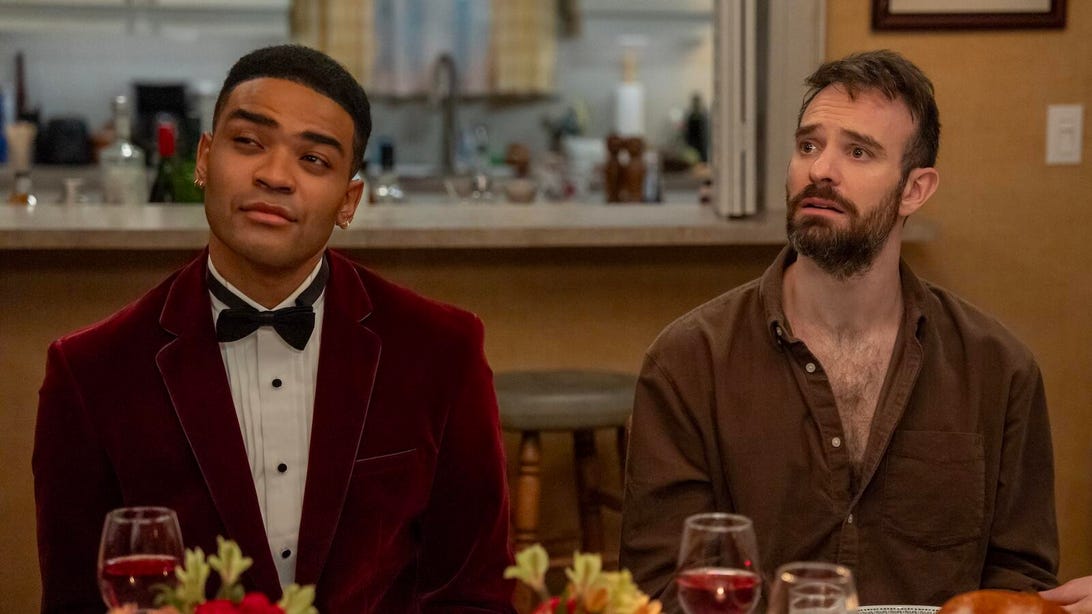 Rafy/FX9. “Roast Chicken,” Adults
At the start of Adults‘ sixth episode, Billie (Lucy Freyer) makes a very serious declaration: “We are in the roast chicken phase of life.” She’s always been the responsible one, but tonight it’s paramount to have her sh– together because Mr. Teacher (Charlie Cox), her former high school teacher, whom she’s dating, is coming over. And nothing says you’re a well-adjusted adult like pulling off a dinner party with a roast chicken, right? Across the first season of Rebecca Shaw and Ben Kronengold‘s FX comedy, which follows five twentysomething friends — Billie, Samir (Malik Elassal), Issa (Amita Rao), Anton (Owen Thiele), and Paul Baker (Jack Innanen) — living together in Queens, there are plenty of moments that flaunt the undeniable chemistry of this ensemble. That’s why “Roast Chicken” is such a standout. After earlier episodes give the characters more separate arcs, “Roast Chicken” brings everyone together at the dinner table for one evening. Though nothing goes according to Billie’s meticulously crafted plan, it’s clear that figuring out how to adult is so much better as a group project than as an individual assignment. And while the core quintet shines in this episode, guest stars Julia Fox and Charlie Cox heighten the comedy. Cox’s unabashedly messy portrayal of Mr. Teacher offers the comforting reminder that maturing has nothing to do with age. -Kat Moon
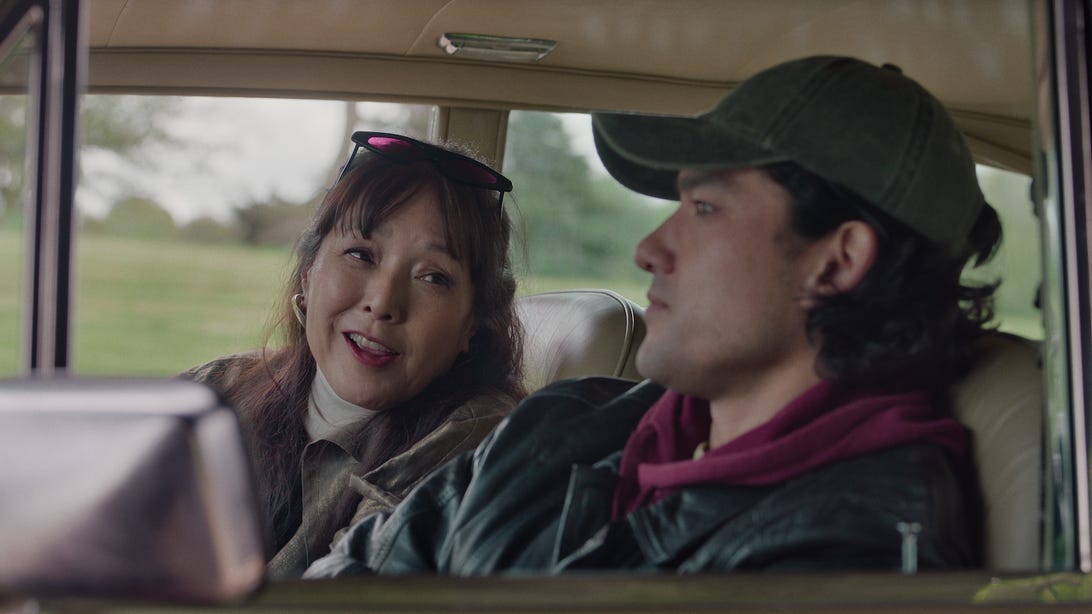 Netflix8. “Terms of Resentment,” Too Much
A charmingly elusive male romantic lead is a staple of a Lena Dunham show, and Too Much‘s droll musician Felix (Will Sharpe) is her most dynamic version of that character trope yet. The first leg of the series is spent seeing him mostly from Jess’ (Megan Stalter) perspective as she wonders why he’s holding back in their realtionship, meaning that by the time “Terms of Resentment” arrives, we’re as ready for a Felix-centric episode as she is. The ruminative interlude sends him off on his own as he returns home to the suburbs to visit his parents and sister. His family has long since lost the substantial wealth that got Felix into boarding school as a child and allowed him to grow up in a palatial estate, though the Remens have learned nothing from their fall from grace: Felix’s father (Stephen Fry) feels entitled to a loan from his son, while his mother (Kaori Momoi) still drives a Rolls-Royce. The episode packs three striking sequences into just 30 minutes: one in which the adult Felix excavates his repressed memories by observing his child self in his former home, one that finds the Remens gathered around the dinner table, and a heavy-hitting closer in which Jess sings Bob Dylan’s “When the Ship Comes In” to Felix after he confesses the truth about his family. A quietly wrenching performance from Sharpe ties it all together, and he’s a knockout in the episode’s final moments as Felix pushes through his most stubborn wall, finally giving Jess the rom-com moment she’s been yearning for. -Allison Picurro
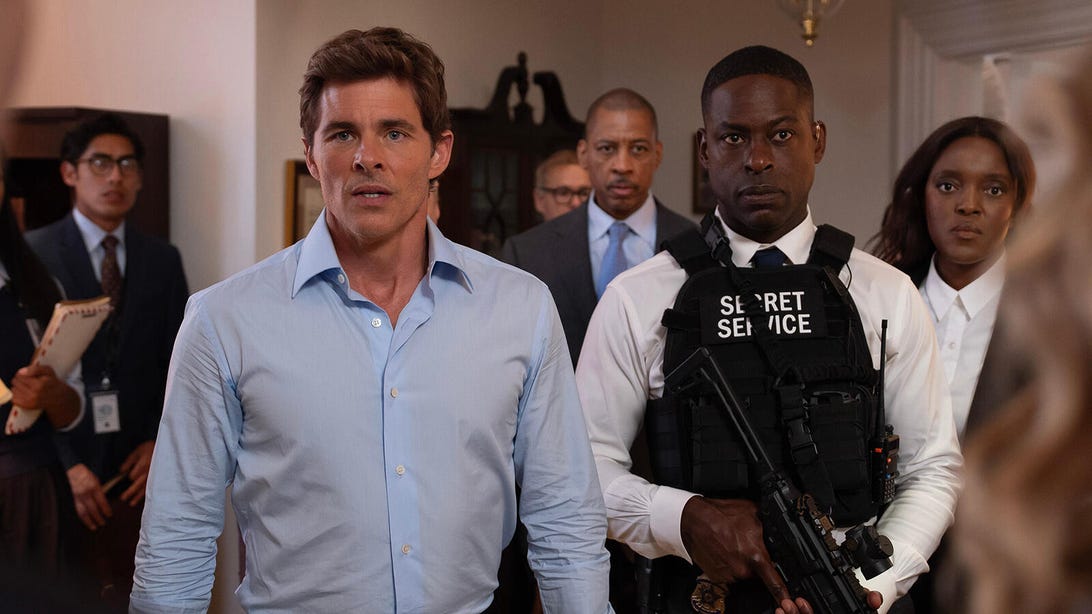 Disney/Brian Roedel7. “The Day,” Paradise
Phew! Television’s most stressful hour of 2025 filled in the biggest gap of Paradise Season 1 — how did the last semblance of society end up in a high-tech underground bunker while the surface of the planet became a barren wasteland? — by flashing back to the worst day in the history of Earth, as seen through the eyes of U.S. President Cal Bradford (James Marsden) and his trusted Secret Service agent Xavier Collins (Sterling K. Brown). Following the characters in near real time, “The Day” drops us into a world of slowly developing anxiety after a subterranean volcano erupts in the Antarctic, setting off a chain of natural disasters, threats of nuclear war, and violent survival instincts among a panicked populace. But it’s the emotional anchors, especially Xavier’s quest to make sure his wife is safe and the tough conversations between Cal and Xavier, that elevate “The Day” into more than disaster porn. Creator Dan Fogelman tees up one of his trademark gut-punching reveals, while Brown, Marsden, and Julianne Nicholson deliver some of their best performances. As the season’s penultimate episode, “The Day” recontextualizes everything that came before it and sets up all the changes coming in what Fogelman has promised will be a wildly different Season 2. -Tim Surette
 John Johnson/Max6. “6:00 PM,” The Pitt
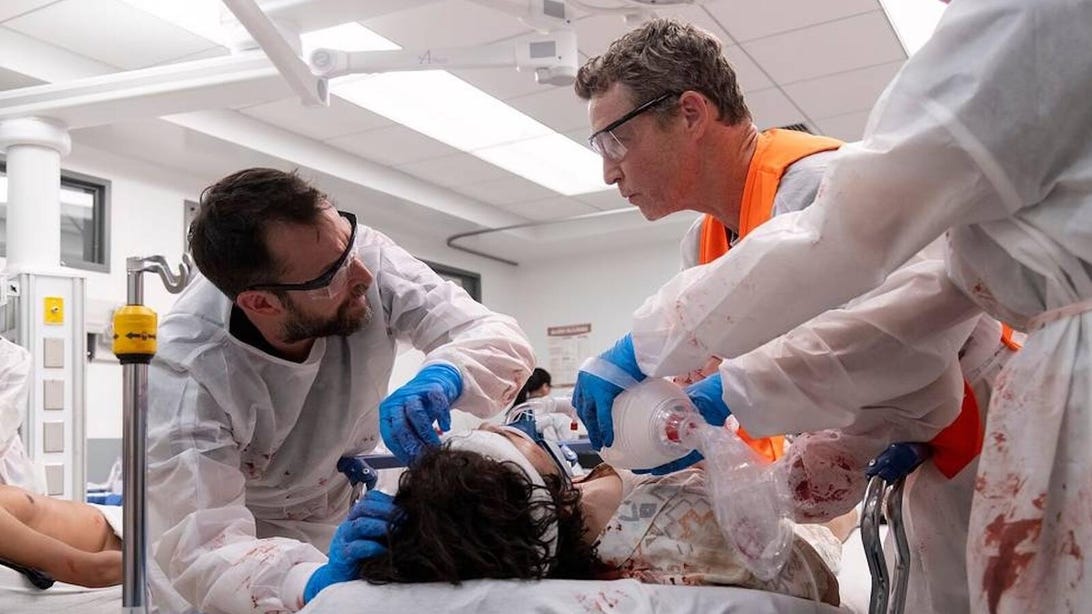
Coming 12 episodes into its first season, and 12 hours into a never-ending shift at the Pittsburgh Trauma Medical Center, “6:00 PM” is almost a reset for The Pitt. Protocol is disrupted when news of a mass shooting at a nearby music festival turns the ER into, as Shawn Hatosy‘s Dr. Abbot puts it, a “no-frills combat zone.” Written by Joe Sachs and R. Scott Gemmill and directed by Amanda Marsalis, “6:00 PM” begins in the calm before the storm, an eerie stillness settling over the always-moving series as Dr. Robby (Noah Wyle) snaps into action, calmly giving instructions and delegating tasks to his staff. This slow trickle of inevitable chaos creates a monster under the bed-type tension, where we know what’s coming but not quite what it will do to the characters. The reactions of the staff range from alarmed, like Dr. King (Taylor Dearden), who learns she’ll be leading the extremities unit, to indifferent, like Dr. Shen (Ken Kirby), who blithely sips a Dunkin’ iced coffee while musing about the weather. As injured civilians stream in en masse, the staff is forced to get creative with their rapidly dwindling resources and make lightning-fast choices to save lives. They can’t slow down and therefore neither can the audience, meaning that the full breadth of the devastation doesn’t entirely begin to set in until Robby gets a second to breathe. Marsalis’ camera tracks him as he hurries through the scene, observing the ballet of doctors urgently treating patients and looking for anyone who needs his assistance, illustrating exactly what the series does best: thoughtful character work, even as all hell breaks loose. -Allison Picurro
 John P. Johnson/HBO5. “Pilot’s Code,” The Rehearsal
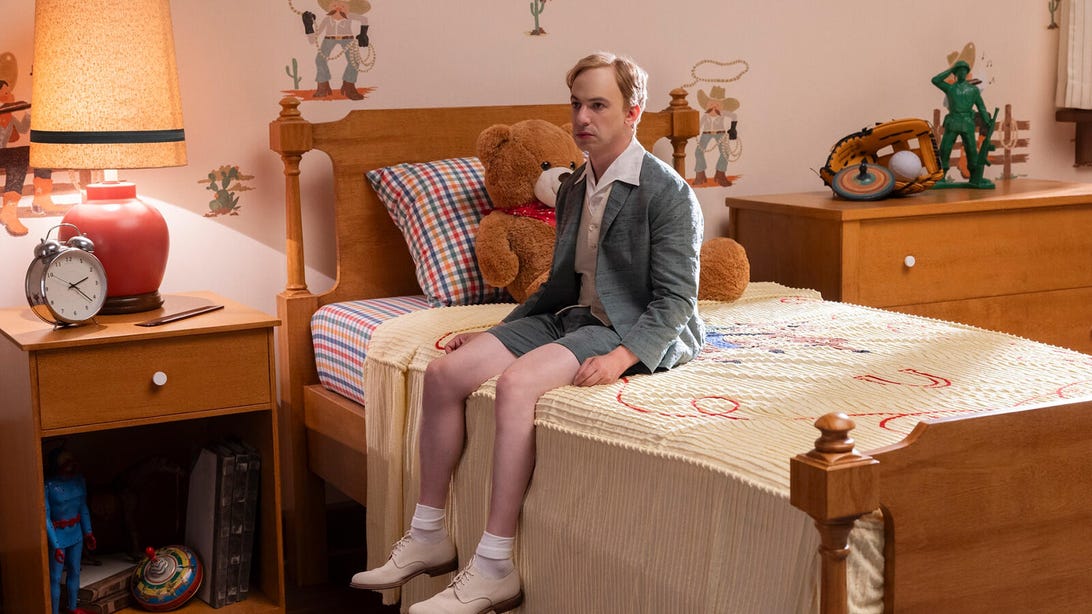
By the time you realize what’s happening in “Pilot’s Code,” the third episode of the wonderfully absurd second season of The Rehearsal, it’s already too late; Nathan Fielder is pulling you into the deep end. “What you’re about to witness is going to seem weird,” Fielder understates as he shaves off his body hair to portray Sully Sullenberger, the commercial pilot who saved hundreds of lives by making an emergency landing in the Hudson River in 2009. In his quest for aviation safety reform, Fielder attempts to absorb some of Sully’s personality by reliving his life, since Sully’s memoir stated that his whole life led him to his heroic feat; this follows an experiment Fielder conducts with cloned dogs. (He did warn us that it would be weird.) The elaborate rehearsal involves Fielder being waterboarded with breast milk from a gigantic marionette of Sully’s mother in an oversized version of a child’s room, reenacting infamous plane crashes using local actors and a state-of-the-art flight simulator, and examining the lyrics of Evanescence and Sheryl Crow, leading Fielder to presume that pilots have emotional walls that hinder their judgment on the job. “I’m not sure what it means, but it’s interesting,” he concludes. Fielder’s greatness comes from his ability to commit to a process no matter how ridiculous it is, and this was his best rehearsal yet. He won’t say it, but we will: It’s a lot more than just interesting. -Tim Surette
 Shane Brown/FX4. “Pilot,” The Lowdown
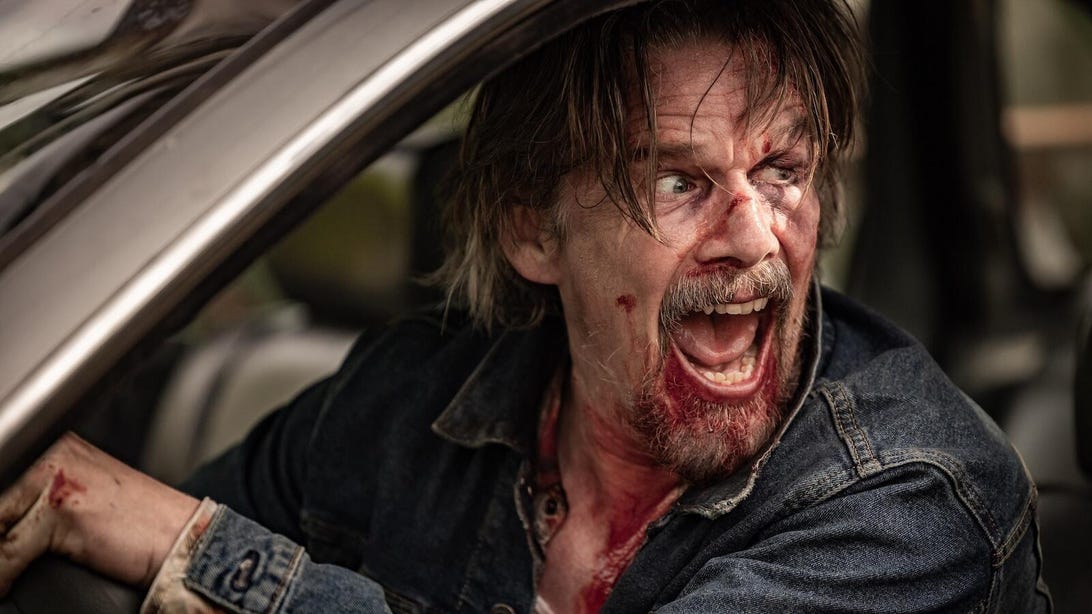
A show about journalism wouldn’t dream of burying the lede. Reservation Dogs creator Sterlin Harjo returned to TV this year with The Lowdown, a Tulsa-set noir about crackpot “truthstorian” Lee Raybon’s (Ethan Hawke) dogged pursuit of answers surrounding the mysterious suicide of Dale Washberg (Tim Blake Nelson), the black sheep of a powerful local family. The seeds of Lee’s interest in Dale’s death are planted minutes into the first episode, but Harjo, who wrote and directed the pilot, takes his time setting up the world. Much of the hour is spent following Lee as he cruises around town in his big white van, pissing off just about everyone he crosses paths with. He steals an expensive painting, gets beaten up (twice), and has interactions both warm and hostile with the show’s colorful cast of supporting characters, from enigmatic diner-goer Marty (Keith David) to stone-faced contractor Allen (Scott Shepherd). The Lowdown meanders forward with amused patience until it crescendos to a bloodied and wild-eyed Lee being thrown in the trunk of a car by a pair of neo-Nazis, screaming desperate pleas at passersby. (“I’m not a murderer, I’ve been murdered!”) The fact that all that mayhem concludes with a reminder of why Lee is doing what he’s doing — his genuine love of Tulsa, and his hope that it can become a better place for the people who built it — is nothing short of elegant. -Allison Picurro
 Apple TV+3. “We Is Us,” Pluribus
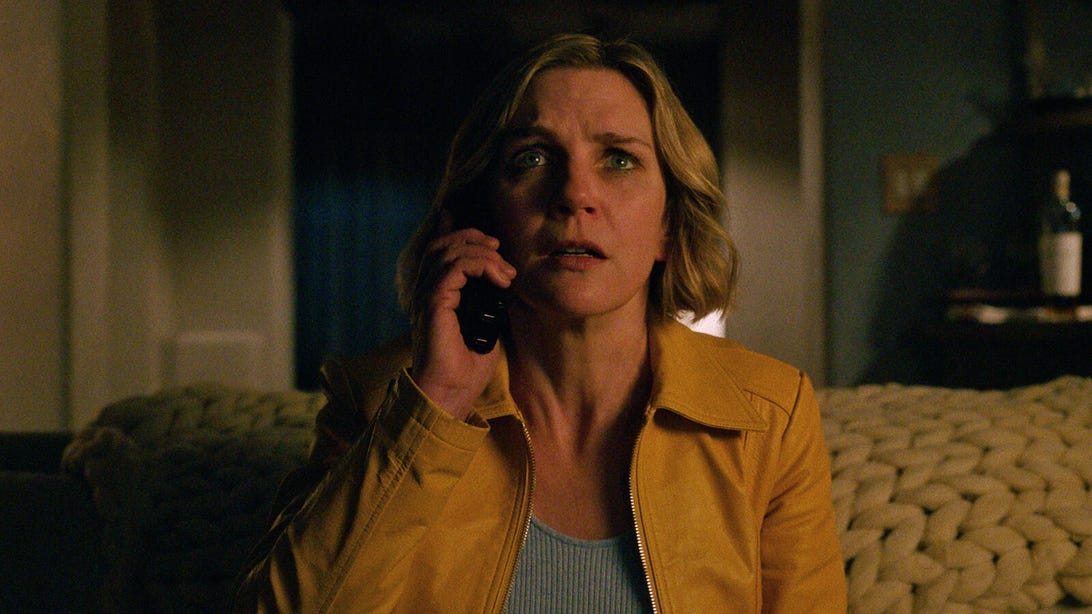
Pluribus didn’t just premiere; it arrived. In broad strokes, Vince Gilligan‘s ambitious new series begins with a classic apocalypse scenario: An extraterrestrial virus sweeps the planet, leaving almost everyone changed in its wake. But in its strange, thought-provoking details, Pluribus is unlike anything else on TV. “We Is Us,” written and directed by Gilligan, works on both of those levels at once. It’s a big-budget disaster movie with the soul of The Twilight Zone. Picture, if you will, curmudgeonly romantasy author Carol Sturka (Rhea Seehorn) having a conversation with the government official on her TV screen. But first, watch her try and fail to save the woman she loves as the city burns. Seehorn sells it all — the horror, the peculiarity, the devastation, and the offbeat humor — and the episode’s wisest move is to stick close to her as catastrophe strikes. When Carol loses Helen (Miriam Shor, also excellent), it plays like the exact moment when the world ends, because it is. And because “We Is Us” is so full of affection for Helen and for all of humanity, every future episode can trust the audience to understand Carol’s fury. Now that Pluribus has us in its thrall, it can go anywhere. -Kelly Connolly
 Apple TV+2. “Chikhai Bardo,” Severance
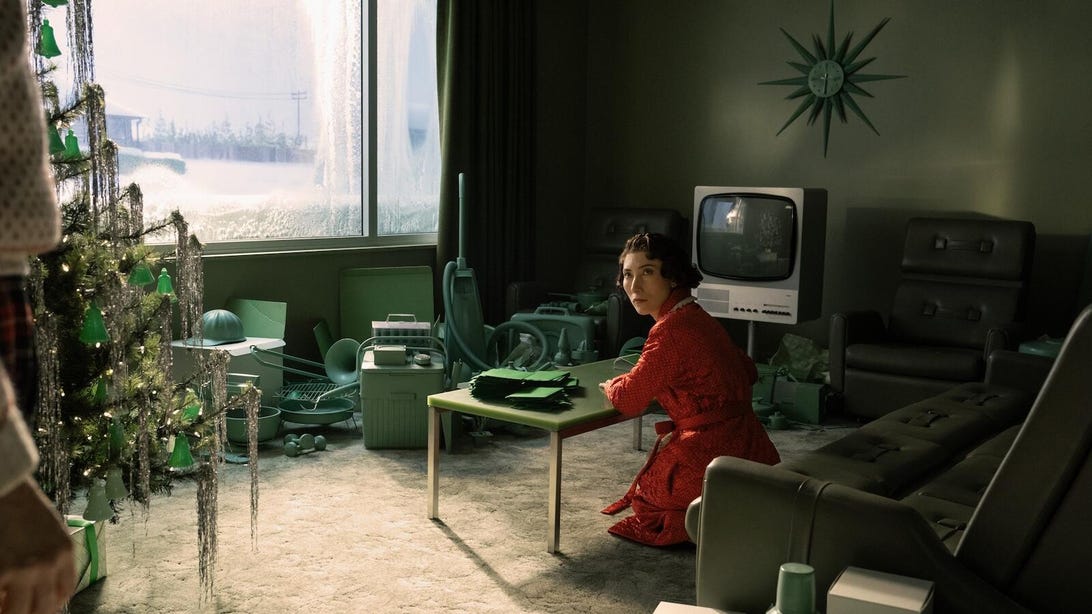
The Tibetan Buddhist term chikhai bardo, as Gemma (Dichen Lachman) explains it, is about ego death. “It’s the same guy fighting himself,” she tells Mark (Adam Scott), seated at the dining table in their sun-drenched home. “Defeating his own psyche.” This is battle at the heart of “Chikhai Bardo,” the seventh hour of Severance‘s second season, which goes back to the beginning of Mark and Gemma’s love story to explain why he cut his brain in half after her supposed death. Directed by Jessica Lee Gagné, the series’ longtime cinematographer, the episode is one part sci-fi, one part romance, and one part tragedy. The entire conceit of Severance relies on this episode being as affecting as it is. As an unconscious Mark reintegrates, he remembers the years he and Gemma were married, how they dreamily fell in love as professors who happened to be donating blood at the same time and the fertility struggles that threatened to break them. His memories are intercut with brutal scenes in which we get glimpses of the different innies Lumon has split Gemma into while keeping her locked away on a mysterious floor: women whose whole lives are spent at the dentist, or writing thank you cards, or heading up the company’s wellness department. It’s both an introduction to Gemma as a character and an introduction to Mark and Gemma as a couple, and it’s elevated by Scott and Lachman’s easy, lived-in chemistry. The episode’s achievements and wonders can’t be overstated, from Gagné using her own home as a set and giving the flashbacks texture by shooting them on film to the frankly shocking decision to cut Scott’s hair. Tender and devastating, “Chikhai Bardo” follows two halves of a grieving couple trying to defeat their own psyches in the hope of getting back to each other. -Allison Picurro
 Michael Moriatis/AMC1. “Ábidoo’niidę́ę́ (What We Had Been Told),” Dark Winds
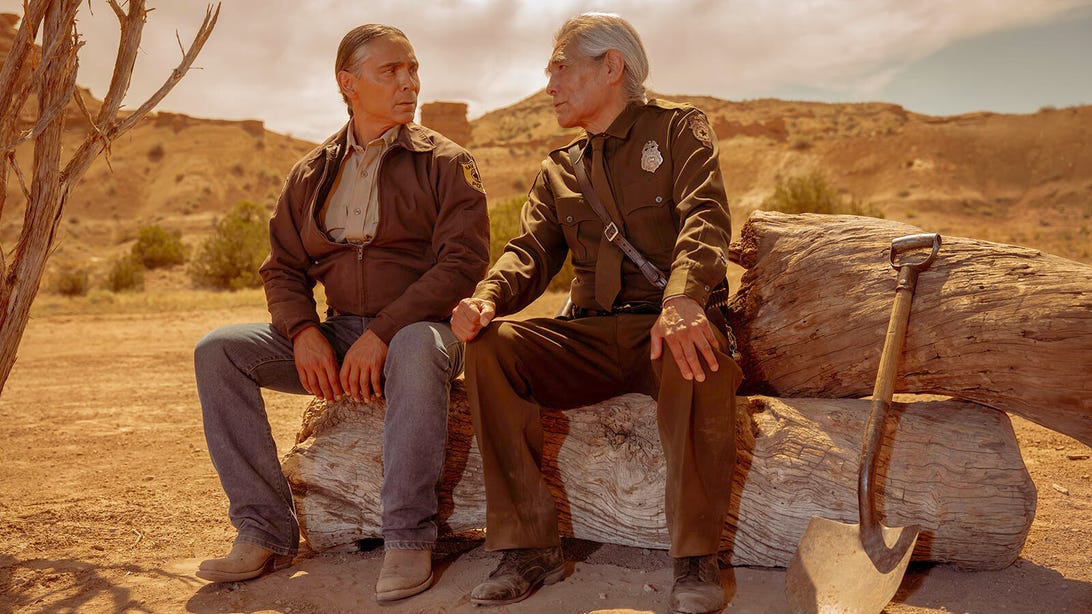
Dark Winds has a habit of sending Joe Leaphorn (Zahn McClarnon) into the desert to test his mettle, but never like this. “Ábidoo’niidę́ę́ (What We Had Been Told)” is a stunner — a sublime, Lynchian hour set mostly inside Joe’s hallucinations. Since he left a man to die in the desert at the end of Season 2, Joe has been having visions of a monster, a Ye’iitsoh. Maybe the monster is all in his head, a manifestation of his struggle to make sense of his own actions, or maybe it really is responsible for the disappearance of two teenage boys on the reservation. When he returns to the desert at night to save one of those boys, Joe finally finds clarity, but only after being shot with a ketamine-laced dart. The truth is so heavy that it takes a surreal dream to hold it.
Writers Max Hurwitz and Billy Luther and director Erica Tremblay nestle stories within stories. The episode’s main framing device is a stage play, narrated in the Diné language by Margaret Cigaret (Betty Ann Tsosie), telling the Navajo creation story of the Hero Twins, who set out to hunt the Ye’iitsoh. The play, which casts kids in the role of the Hero Twins, mirrors not only Joe’s current duel with the monster but also his dream about his childhood, when a priest (Robert Knepper) preyed on Joe’s young cousin (Enzo Okuma Linton). In the depths of the dream, Joe realizes that his father (Joseph Runningfox) killed the priest after trying and failing to get the white justice system to act. That revelation reshapes Joe’s own guilt, turning the hour into a reckoning with what it takes to survive under violent oppression, and with the fact that this story has echoed across generations.
Every choice in the episode’s production links old monsters to new ones. Bodhi Okuma Linton, who plays the boy Joe is trying to rescue, also plays a young Joe, and the show’s usual sets play home to his memories. But what really sells the blurring of past into present is how vulnerable and childlike McClarnon is, even in hero mode. For all of this episode’s striking set pieces, the image that has stuck with me the most is relatively simple: Joe in the desert, leaning over with his eyes closed, breathing into his walkie. At the end of a long night, he’s just shot the apparent Ye’iitsoh, who left behind a bloody handprint — proof that the suspect is just a man after all. So much painful history under colonization is represented in that handprint. Joe’s relief is bittersweet; seeing the situation clearly also means facing what human beings are capable of. For a long time, he holds himself at an angle in a way that makes it look like the whole world is tilting. As he collapses, the stage play ends with the Hero Twins, having slain the monster, returning home to a mother who is no longer able to recognize them, and who is frightened by their beauty. Joe has been changed like that, and all of Dark Winds is now transformed along with him. -Kelly Connolly
Find more of the best TV of 2025 with our list of the year’s 10 best shows.