
Infections increase the risk of stroke and heart attack according to the chief medical officer
Robert Rowlands Deputy editor, Money and lifestyle hub and Lee Garrett Content Editor
10:13, 08 Dec 2025
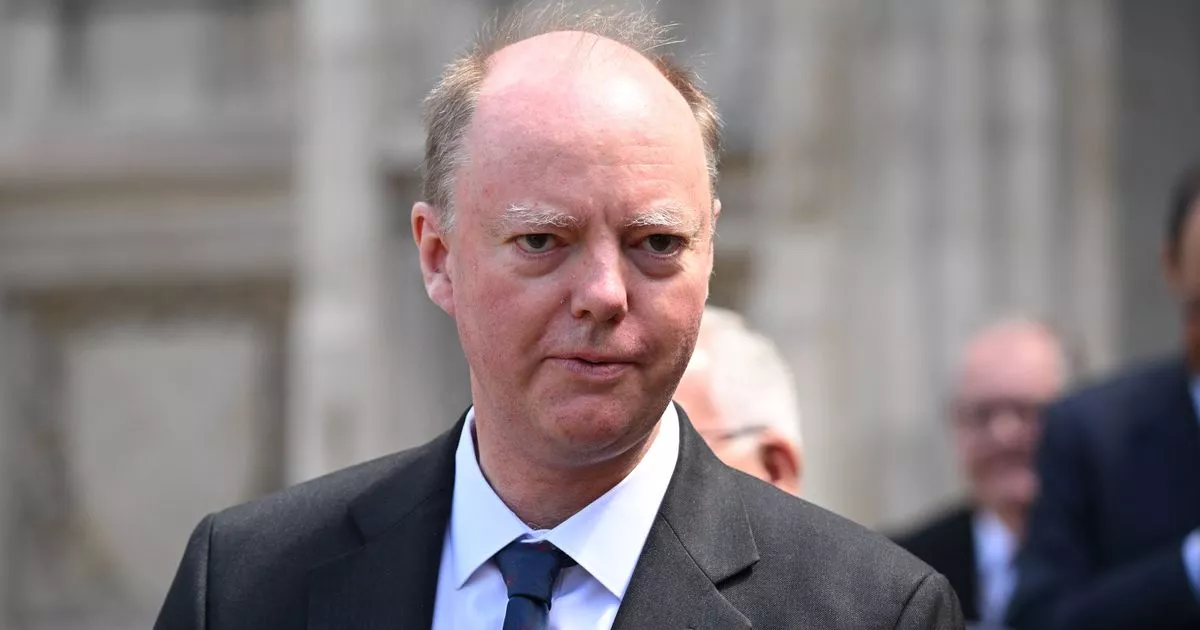
 Sir Chris has spoken out(Image: Leon Neal, Getty Images)
Infections amongst elderly people must be treated with greater urgency, with existing methods proving “hit and miss”, according to England’s chief medical officer.
Professor Sir Chris Whitty, who played a pivotal role in Britain’s Covid-19 response, stated that older adults are “under-served” regarding healthcare and research into conditions that affect them, suggesting that medical professionals should adopt a lower threshold for antibiotic prescription compared to their approach with younger patients, reports Lancs Live.
He indicated that the medical profession has historically been “nihilistic” towards infections in elderly people, noting that “people have assumed it’s one of those things that happen in old age – in fact, we can do a lot about it”. Sir Chris also encouraged older individuals to strengthen their own defences against infections through practices including hand hygiene, careful food preparation and accepting NHS-offered vaccinations.
Statistics reveal that individuals over 70 face higher risks of contracting infections, developing severe illness and mortality. When discussing his latest annual report, which centres on infections, Sir Chris said: “Whilst we are very systematic about reducing infections and preventing infections in children and in young adults, in older adults it is often a lot more hit and miss.”
Research examining infections amongst elderly individuals is “much smaller proportionally” than one might anticipate, despite its significance, he noted.
Fatalities from infections are “overwhelmingly dominated by older adults” and this will become increasingly problematic due to our ageing demographic, Sir Chris explained during a briefing,
Infection warning
“Since this demographic is expanding, if we take no action, the volume of infection will rise,” he stated. Using influenza as an illustration, Sir Chris noted the “significant pressures over the next few weeks in the NHS is because flus are ramping up, and it really affects the elderly”.
He also highlighted “clear evidence” that “having an infection increases your risk of a stroke, particularly in the first two weeks, but it can extend out to as long as a year afterwards”.
Sir Chris explained that stroke risk rises from “a whole range of infections”, including urinary tract infections, pneumonia, flu and HIV.
“There is slightly less strong evidence that this is true for heart attacks,” he stated, though added that studies suggest individuals are more prone to experiencing a heart attack in the days and weeks after infection. The chief medical officer continued: “What’s the importance of that? Well, if we could reduce the infections, we would reduce strokes and heart attacks, and I think also certainly at this moment in time, if someone’s got a severe infection in older age, we should be looking to modify all the risk factors they have to reduce the risk of stroke and heart attack.”
Sir Chris explained that infections can also trigger delirium, stating that “for all these reasons, my view is that we should be taking infections in older people much more seriously”. Throughout the broader population, medical professionals must exercise restraint when prescribing antibiotics, as excessive use is contributing to drug resistance, where treatments become ineffective against infections, he noted.
Sir Chris warned against antibiotic prescription when “someone has almost certainly got a viral infection” for which such medication proves useless, but emphasised: “We shouldn’t give blanket rules across the entire age spectrum.”
He highlighted that amongst elderly individuals, the likelihood of an infection developing into sepsis is significantly elevated.
“So the risk benefit is more in favour of (antibiotic) treatment in older people than it is in younger people.”
When questioned about preventative measures individuals could implement, Sir Chris said: “There are a significant number of things that older people can do to reduce the risk of infections.
“A lot of those are common sense. They’re things like reducing the risks by hand washing, by careful preparation of food – that’s a very important one – and encouraging people who’ve recently had an infection themselves not to come and visit them until they’re completely clear of that. And then there’s vaccinations.”
He stated that individuals should also strive to minimise their likelihood of strokes and heart attacks through various methods, including maintaining healthy blood pressure levels and quitting smoking.
Vaccination rates across the UK
The study additionally examined immunisation rates amongst youngsters and expectant mothers, alongside preparations for future health crises and emerging threats. Sir Chris described childhood vaccines as “vaccines in childhood are amazing”, noting that during his medical training, Haemophilus Influenza B (Hib) frequently caused meningitis in children, yet following the vaccine’s introduction, cases plummeted substantially.
Discussing paediatric vaccines more broadly, he said “they’re drifting down a bit, but they’re not falling off a cliff, as is sometimes said”. Sir Chris continued: “Some of the people who are keen to spread disinformation like to give the impression that the UK is becoming a vaccine-sceptical nation.
“That is absolutely not true. If you look at these numbers, over 90 per cent of parents will bring their children for vaccination. But there has been a drifting down, and we need to reverse that. Importantly, a lot of this is to do with the practicalities of getting hold of the vaccine.
“If you examine closely why individuals aren’t receiving vaccines, frequently it relates more to accessibility rather than any significant shift in people’s willingness to get vaccinated.”
He encouraged expectant mothers to receive their flu vaccination this winter, noting that flu immunisation amongst pregnant women “is not as high as we would want it to be”.
Sir Chris continued: “This is a real issue, because flu in pregnancy is a dangerous combination… so I would certainly encourage anybody who is pregnant to get their flu vaccination. That is a very sensible thing to do, and we’re going into a quite a tricky flu season, so now is a good moment to remind people of that.”