
AST SpaceMobile is hoping to launch a second next-generation prototype satellite “as early as January” as it races to compete with SpaceX’s cellular Starlink service.
The company disclosed the launch timing in a new Federal Communications Commission filing. AST is already on track to launch its first prototype satellite, FM1, later this month. However, it appears that it’s also scrambling to launch the FM2 as soon as possible.
“As part of its proactive efforts to secure sufficient launches for its satellite constellation on an expedited basis, AST SpaceMobile was able to secure an accelerated launch slot capable of launching a BlueBird satellite as early as January 2026,” the company wrote.
Interestingly, AST has tapped rival SpaceX to launch the satellite using a Falcon 9 rocket. But the filing notes: “In order to meet quick turnaround launch requirements, AST SpaceMobile was constrained in the available orbital parameters for launch. The alternative was to forgo the launch opportunity.”
The company secured FCC clearance in August to fly up the FM2. However, the “constrained” orbit parameters are leading AST to request regulatory permission to launch the FM2 satellite at a lower orbit, from 520 kilometers down to 460 kilometers.
AST describes the lower orbit as part of “a few minor changes” that won’t lead to increased radio interference. “Grant of this application will serve the public interest by facilitating expeditious deployment of a new, groundbreaking space-based cellular network that will deliver direct-to-device broadband connectivity across the United States,” the company added.

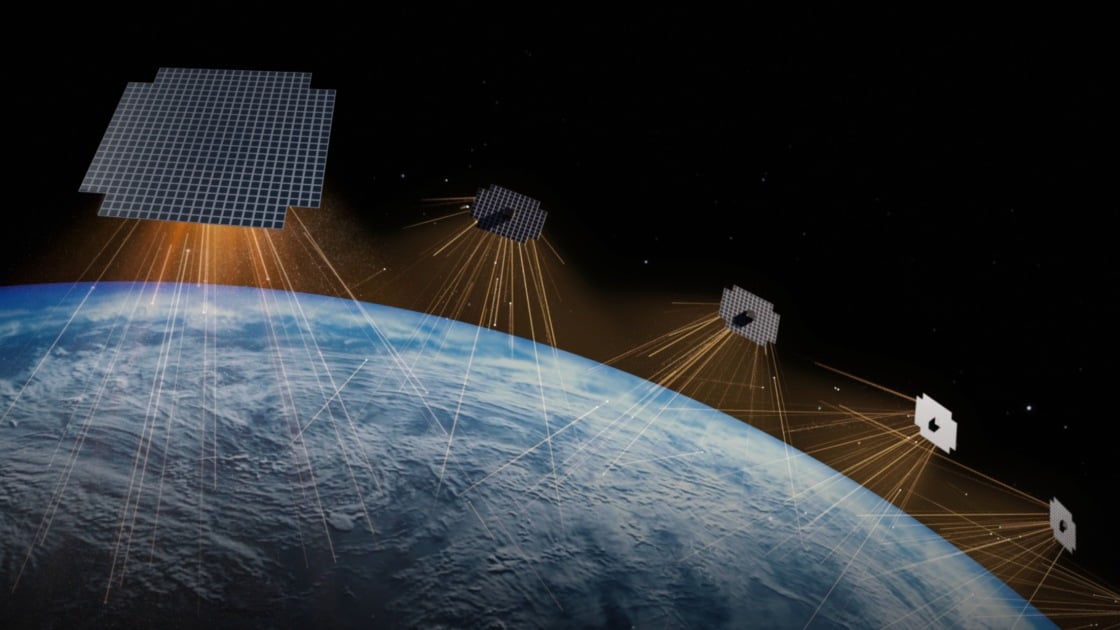
A company rendering showing the next-gen BlueBirds compared to the first-gen. (Credit: AST)
Still, the company’s application might face opposition from rival companies, such as SpaceX. It could also take time for the FCC to review and clear the application, although the Commission has been working to fast-track satellite approvals.
AST’s first prototype, the FM1, is currently scheduled to launch on Dec. 15. The company has tapped India’s space agency to launch the satellite, which is about three times larger than AST’s first-generation BlueBirds. The square-shaped satellites have been designed to act as cell towers in space, capable of powering high-speed broadband to phones on the ground.
Recommended by Our Editors
The goal is to operate 45 to 60 BlueBird satellites by the end of next year—enough for the company to provide continuous coverage through partners such as AT&T and Verizon. In addition, “AST SpaceMobile expects five orbital launches by the end of Q1 2026, with launches occurring every one to two months on average,” the company told the FCC.
Hence, the launch timing is crucial when AST faces heightened competition from SpaceX. The company’s own cellular Starlink system launched through T-Mobile earlier this year, and can already power text messaging, app data, and even video calls for phones in cellular dead zones.
Now SpaceX is preparing to bulk up the system’s capabilities after acquiring valuable radio spectrum from Boost Mobile’s parent, EchoStar. Elon Musk’s company has even gone as far as to file the trademark for “Starlink Mobile,” suggesting SpaceX might try to become a global carrier, but primarily through satellites.

Get Our Best Stories!
A Smart, Bold Take on the Wireless World

Sign up for the Fully Mobilized newsletter to get our top mobile stories delivered right to your inbox.
Sign up for the Fully Mobilized newsletter to get our top mobile stories delivered right to your inbox.
By clicking Sign Me Up, you confirm you are 16+ and agree to our Terms of Use and Privacy
Policy.
Thanks for signing up!
Your subscription has been confirmed. Keep an eye on your inbox!
About Our Expert

Michael Kan
Senior Reporter
Experience
I’ve been a journalist for over 15 years. I got my start as a schools and cities reporter in Kansas City and joined PCMag in 2017, where I cover satellite internet services, cybersecurity, PC hardware, and more. I’m currently based in San Francisco, but previously spent over five years in China, covering the country’s technology sector.
Since 2020, I’ve covered the launch and explosive growth of SpaceX’s Starlink satellite internet service, writing 600+ stories on availability and feature launches, but also the regulatory battles over the expansion of satellite constellations, fights with rival providers like AST SpaceMobile and Amazon, and the effort to expand into satellite-based mobile service. I’ve combed through FCC filings for the latest news and driven to remote corners of California to test Starlink’s cellular service.
I also cover cyber threats, from ransomware gangs to the emergence of AI-based malware. Earlier this year, the FTC forced Avast to pay consumers $16.5 million for secretly harvesting and selling their personal information to third-party clients, as revealed in my joint investigation with Motherboard.
I also cover the PC graphics card market. Pandemic-era shortages led me to camp out in front of a Best Buy to get an RTX 3000. I’m now following how President Trump’s tariffs will affect the industry. I’m always eager to learn more, so please jump in the comments with feedback and send me tips.